
While adults argue about AI rules, teenagers have found a new way to think, learn, and finish schoolwork faster than ever
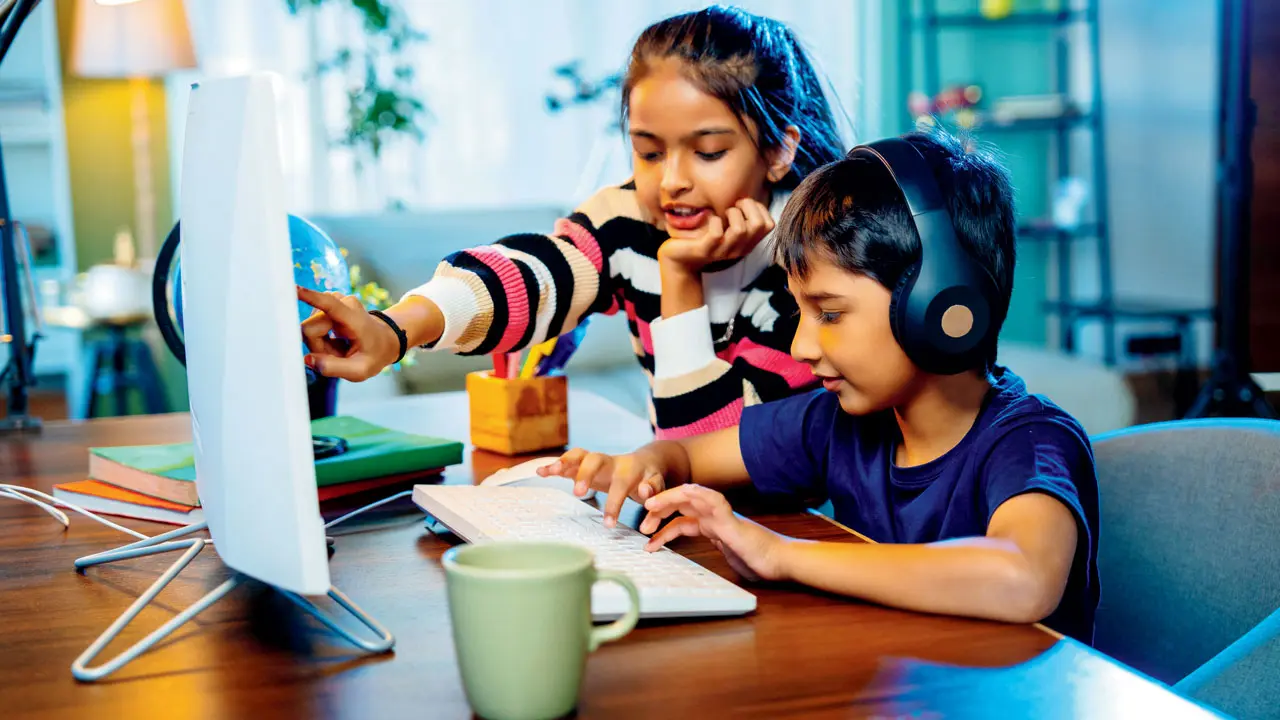
A recent survey by the Pew Research Center makes AI usage hard to ignore. Most teenagers in the United States now use AI chatbots. More than half use them for schoolwork. About 1 in 10 say they rely on AI for most or all of their homework. Pic/iStock
Homework has changed. Not through any formal reform, but in practice. Late at night, at study tables and on bedroom floors, students stopped struggling alone with blank pages and started using tools that respond instantly.
Parents still ask if homework is done. Teachers still assign it. But how it gets completed, how much time it takes, and what counts as understanding are no longer what most adults remember. To many parents, this feels disturbing. To most teenagers, it just feels practical.
There’s a moment in Phaedrus where Plato worries about a new invention. Writing, he fears, will weaken memory. People will stop thinking for themselves and rely on marks on a page instead. It’s an old anxiety, but a familiar one. Every generation meets a new thinking tool and mistakes change for decay.
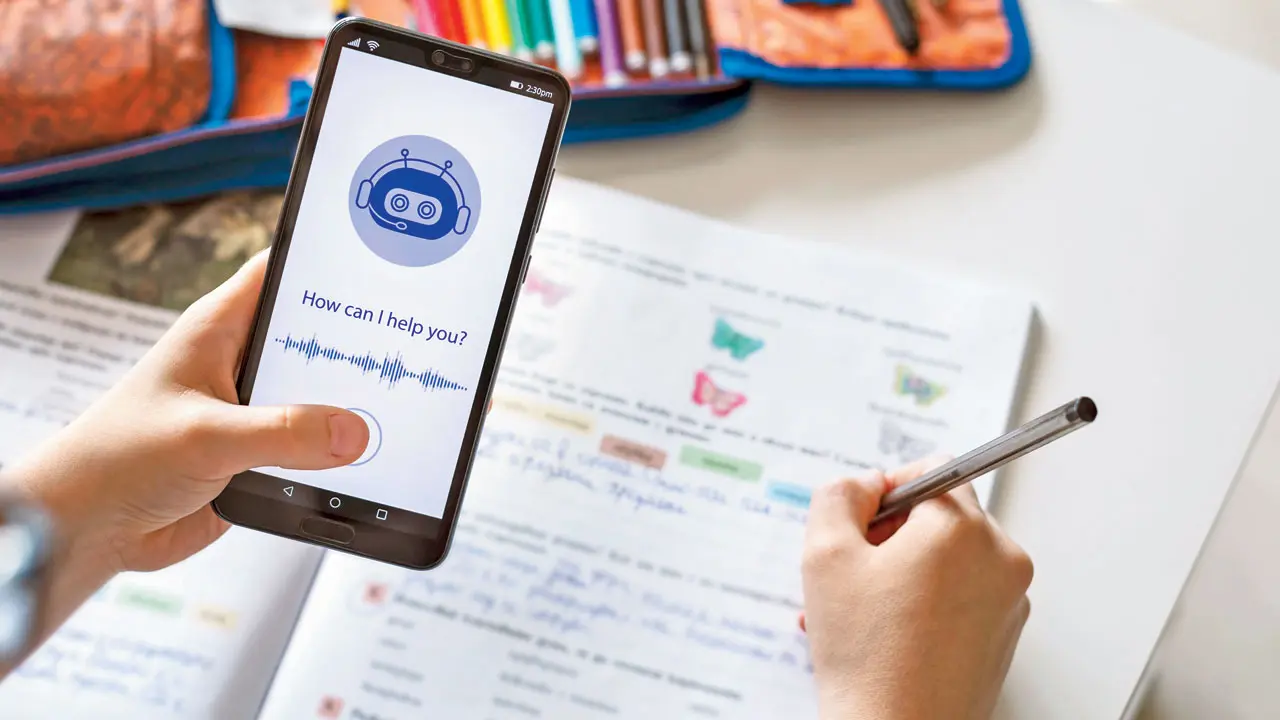
Plato was wrong about what writing would do to the human mind. But he was right about one thing: it would change how thinking works.
Artificial intelligence is doing the same — only faster, and without waiting for your permission. A recent survey by the Pew Research Center makes this difficult to ignore. Most teenagers in the United States now use AI chatbots. More than half use them for schoolwork. About 1 in 10 say they rely on AI for most or all of their homework. Nearly 60 per cent believe AI-based cheating is common in their schools. Those numbers are usually read as evidence of dishonesty or decline. They make more sense as evidence of adaptation.
Adults use AI at work to save time. They already know what they’re doing — the tool just helps them move faster. A report is drafted more quickly. An email sounds smoother. A spreadsheet becomes clearer. If something goes wrong, the cost is usually embarrassment or delay.
Teenagers use AI while they are still figuring things out. That difference matters.
When a teenager takes a wrong explanation, the mistake doesn’t just affect the assignment. It’ll impact how the subject settles in their mind. A fluent answer can feel convincing even when it’s incomplete. A polished paragraph can hide a shaky idea. This isn’t about laziness. It’s about formation.
For the first time, large numbers of young people are learning in conversation with something that sounds confident, patient, and endlessly available. They aren’t just looking up facts. They’re drafting with it, rephrasing with it, sometimes leaning on it before they’ve had time to sit with confusion on their own.
Homework used to measure endurance as much as insight. You struggled, got stuck, tried again. Now, that stuck moment can be outsourced in seconds. For some students, that feels like relief. For others, temptation. For most, it’s simply efficient.
What complicates the picture is that teenagers themselves aren’t blind to the risks. In the Pew survey, many say they worry about relying too much on AI. They’re comfortable using it to explain a concept. They’re far less comfortable imagining it making decisions about hiring or medical diagnosis.
They seem to sense — instinctively — that help is not the same as control.
There’s another detail in the data that deserves attention. Teenagers from lower-income households are more likely to rely heavily on AI for schoolwork than their wealthier peers. For some students, AI isn’t a shortcut. It’s a stand-in for help they don’t otherwise have — a tutor that doesn’t charge, doesn’t judge, and doesn’t disappear when the clock runs out.
That doesn’t make AI a solution to inequality. But it does make the old moral story — that “doing it yourself” builds character — harder to defend when access to support has never been equal to begin with.
Adults often respond by saying they used tools too. And that’s true. But earlier tools helped with memory or calculation. They didn’t walk you through your confusion in full sentences. They didn’t suggest better wording. They didn’t sound reassuring.
What schools are really struggling with isn’t rule-breaking. It’s recognition. The familiar signs of effort — time spent, rough drafts, visible struggle — no longer mean what they used to. If a piece of homework is good, it’s harder to tell where the thinking happened.
Maybe that’s the wrong thing to measure now. If students can arrive at answers quickly, then homework can no longer be treated as proof of thinking. It has to become a starting point for conversation — in classrooms and at home. Talking through why an answer works may matter more than producing it. Asking what felt confusing may matter more than asking whether help was used.
Pretending students aren’t using AI helps no one. The real problem isn’t AI use. It’s silent AI use.
The most useful question parents can ask now isn’t, “Did you do it yourself?” It’s, “Which part didn’t make sense at first?” That single change keeps responsibility with the student without demanding a kind of isolation that no longer exists.
The future won’t reward people for avoiding AI. It will reward people who know when to question it, when to push back, and when to ignore a confident answer that doesn’t quite ring true. Adults are learning that lesson slowly, often awkwardly, in workplaces.
Teenagers are learning it while their habits of thought are still forming. That makes this moment delicate — but not hopeless. Plato feared writing would weaken the mind. Instead, it expanded human possibility. It allowed ideas to travel, accumulate, and outlive their creators. Writing didn’t make people less intelligent. It changed what intelligence looked like. AI may turn out to be a similar turning point. Or it may expose how much of what we once called “thinking” was always more mechanical than we liked to admit.
Either way, the change isn’t waiting for permission. Homework has already changed. Teenagers know it. The machine knows it. Parents are just catching up. The real question now isn’t whether AI belongs in the classroom. It’s whether we’re willing to rethink what learning looks like — not just for children, but for ourselves.
Nishant Sahdev is a theoretical physicist at the University of North Carolina at Chapel Hill, US, AI Advisor and the author of the forthcoming book The Last Equation Before Silence.
 Subscribe today by clicking the link and stay updated with the latest news!" Click here!