


As Borivli’s Sky Mall restricts rooftop access and Kala Ghoda Arts Festival attendees complain of being pushed aside for social media content, Mumbai’s events have become an unregulated content farm

Mumbai’s Kala Ghoda Arts Festival in 2026 drew in huge crowds and social media coverage. Pics/Ashish Raje
The Rooftop at Sky City Mall in Borivli right now feels like a checkpoint. Guards stand at every access entry. Visitors are stopped and asked one question: Do you have a restaurant reservation?
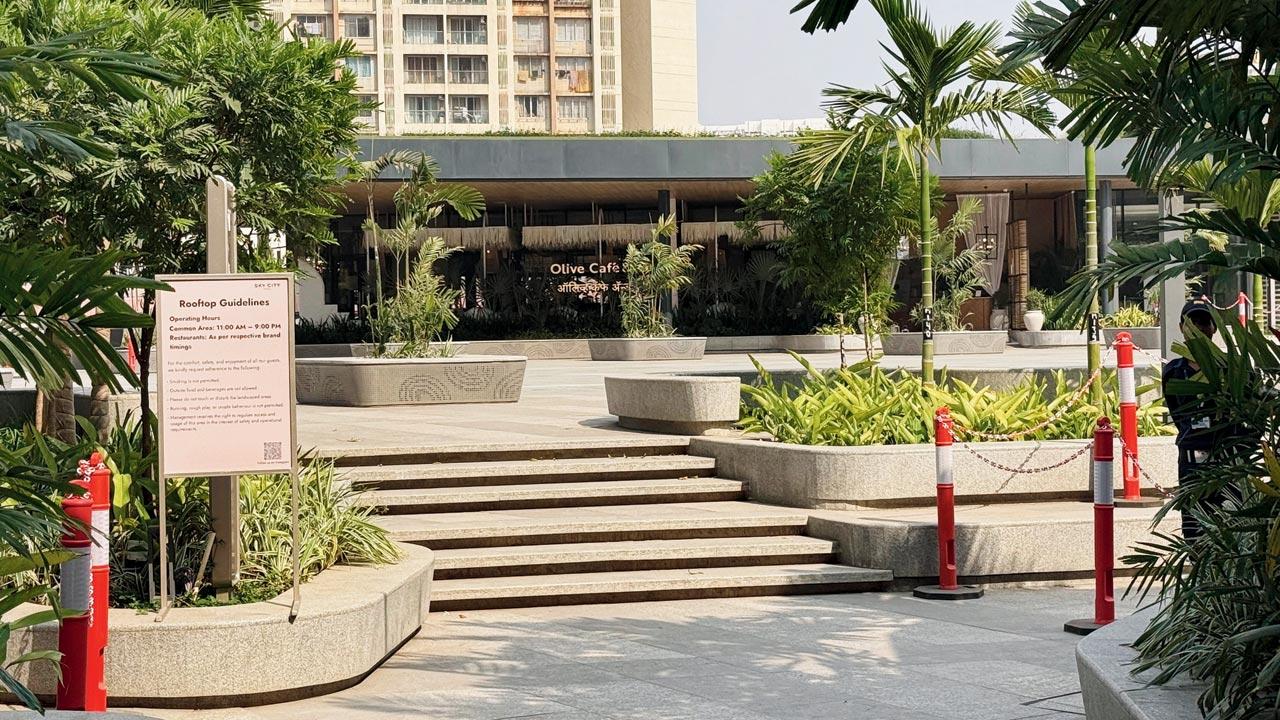
From February 5, 2026, the rooftop has been restricted to customers with confirmed bookings after it faced extreme overcrowding due to people constantly filming social media content there. “Our priority is to ensure a comfortable and high-quality experience for our customers,” said Tanu Prasad, CEO of Malls, Oberoi Realty. “To maintain these standards and streamline visits, we have introduced exclusive access. We believe this approach will help us offer an exceptional and memorable experience.”

On the ground, the shift is visible. We saw tight security. Guards at every corner. No reservation, no entry. The move comes as many Mumbaikars say cultural spaces are becoming content zones.
Shruti Limaye, 36, used to attend Kala Ghoda Arts Festival from 2017 to 2020. She remembers when people “would walk around and actually explore.” Her last visit, during the 150th birth anniversary celebrations of Mahatma Gandhi, changed her mind. “My friend and I were not even able to walk,” she says, “People were just pushing and clicking pictures. They weren’t observing anything.”
She recalls trying to stand at a booth and absorb the detailing of an artwork. “If you stand for five minutes, you’ll get pushed for 10. They just want to click pictures. They don’t even look at the art.” For her, the problem is intent. “I do miss going, but to travel one-and-a -half hours for this? It’s not worth it.” Even The Lil Flea feels different now. “Everywhere you look, it is all about social media content.” She also worries about privacy. “I don’t want to be recorded. You don’t know when you are in someone’s video.”
Photographer Harshad Pawaskar shares the frustration. The last time he attended Kala Ghoda Arts Festival in 2024, he was drawn to optical illusion installations. “As a photographer, I wanted to capture it fully,” he says. “But people were just standing in front of it to take selfies.” He was struck by the indifference. “They weren’t capturing the full essence.”
 Shruti Limaye and Harshad Pawaskar
At a vintage car showcase at the World Trade Center last year, the scene repeated itself. “I went on a Saturday afternoon thinking it would be less crowded. It was packed.” He could only photograph logos and emblems. “I could not capture a whole car.” Guards tried to move people along, but many continued posing. “Carrying my camera in that crowd is a nightmare,” he says, “I have to hold it above my head like Rajmata Sivagami holding the baby in Bahubali [The Beginning (2015)].”
When someone is working in the music marketing and social media industry, the pressure is visible to them from both sides. Shreya Khaladkar, 35, marketing and communications lead at Believe India and co-founder of K-pop in India Podcast, explains how the issue runs deeper.
 As of February, general rooftop access is heavily restricted due to overcrowding, and entry is primarily for patrons with reservations at the restaurant. Pics/Nimesh Dave
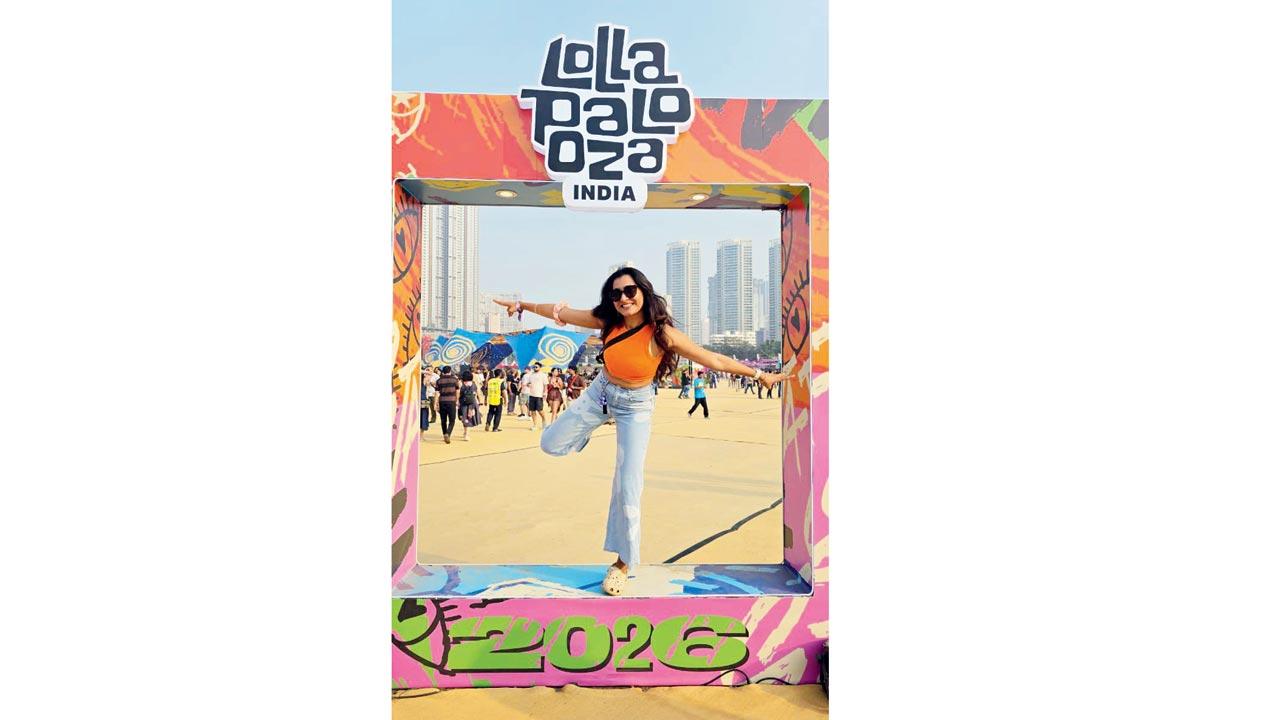
“Even artistes get fed up,” she says. “At Lollapalooza, people turn up just to take videos. They don’t know the music. They have no idea who this artiste is.” According to her, social media has become “social currency.” “People want to show they are up to date. It becomes a way of justifying social status.”
She attends cultural events as part of her job, but admits, “If I didn’t love music, I’d prefer something smaller. Some events are exhausting.”
Brands, she says, amplify the cycle. “They invite creators to events and encourage them to create content to increase relevance.” Many attendees come hoping brand visibility will lead to collaborations. “Some are not even influencers. They attend just for content. And in the process, disturb others experience.”
Organisers are aware, she believes, but benefit from the visibility. “They are getting free content, ticket sales, and brand partnerships. Sometimes they even reshare the content.”
The culture spills beyond festivals. At the TATA Marathon, she saw strangers pointing cameras at runners and asking questions without consent. “Creators who are not organisers film without consent. It’s annoying.”
Social media has widened access. More people are attending art shows and music festivals than ever before. But when presence becomes proof and proof becomes performance, the experience shifts. Sky Mall’s guarded rooftop may be one response. It’s an unfortunate reminder that sometimes, to protect the experience, you limit the access.
‘Guardrails should be placed’
 Ayesha Parikh
Ayesha Parikh, founder of Art and Charlie and co-chair of Mumbai Gallery Weekend, sees the social media wave with cautious optimism. “I choose to see the positive,” she says. “So many more people who were left out of looking at art are now participating.” Even if some arrive for selfies, she believes exposure can evolve into engagement. “Once you start looking, some of them will be converted to understanding more. That’s what art should do — create impact.”
At the same time, she admits the shift is disruptive. Regular gallery-goers may stop coming because of the inconvenience. “Every new cultural shift creates a free-for-all for a while,” she says. “Then guardrails have to be placed.” Those guardrails are not yet defined. She floats ideas, even radical ones. “Collect phones outside an art fair. Massive storage. No phones inside. We can’t undo this culture. We have to manage it.”
At her own space, full-fledged shoots take over the façade without permission. Some influencers ask for barter deals. Others don’t ask at all. “There’s a certain entitlement,” she says. “Using a space for commercial gain without consent or credit is disrespectful.”
Still, she insists art has power. “Materiality changes everything. When you see the work in person, it’s a different feeling.”
‘The live moment still comes first’
 Naman Pugalia
Naman Pugalia, chief business officer of Live Events at BookMyShow, believes the idea that concerts exist for Instagram is reductive. “To suggest that audiences are coming to live entertainment purely to create content is an oversimplification of a far more layered cultural shift,” he says, adding that social sharing is “only one part of a much deeper emotional and social experience.” According to Pugalia, while consumer preferences have evolved, “the sense of belonging remains incredibly strong,” with fans not just streaming music but “showing up in overwhelming numbers” to experience it live. “Culture isn’t being replaced by content. Culture is what gives content meaning,” he says. “The live moment still comes first.”
‘All about art and culture of blues’
 Jairam VG
Mahindra Blues is all about the art form and the culture of blues,” says Jairam VG, founder of The Hyperlink Brand Solutions and promoter of the Mahindra Blues Festival. “We’ve never moved away from that. That has always been at the core.”
At a time when many large-scale festivals are marketed as lifestyle spectacles, Mahindra Blues has chosen a different route. Its social media is used, he explains, “to drive awareness and share information about the lineup and the experience.” The tone is deliberate. “It’s not about screaming out loud. The language and tonality are different. That’s our strategy.” He acknowledges that every concert has two kinds of attendees: the hard-core fan and the “social listener.” The latter may come for the experience or out of curiosity. “I wouldn’t hold it against them,” he says. “You’ve made the effort to come and listen.” Sponsors are part of most festivals, but he insists the Mahindra Blues approach remains immersive rather than transactional. “It’s not about selling products. It’s about the genre, the culture, the experience.” Even the merchandise — vinyl records, themed food — stays rooted in the blues.
 Subscribe today by clicking the link and stay updated with the latest news!" Click here!