











From suburban parks to global skating ramps, these girls are setting the scene for skateboarding in Mumbai
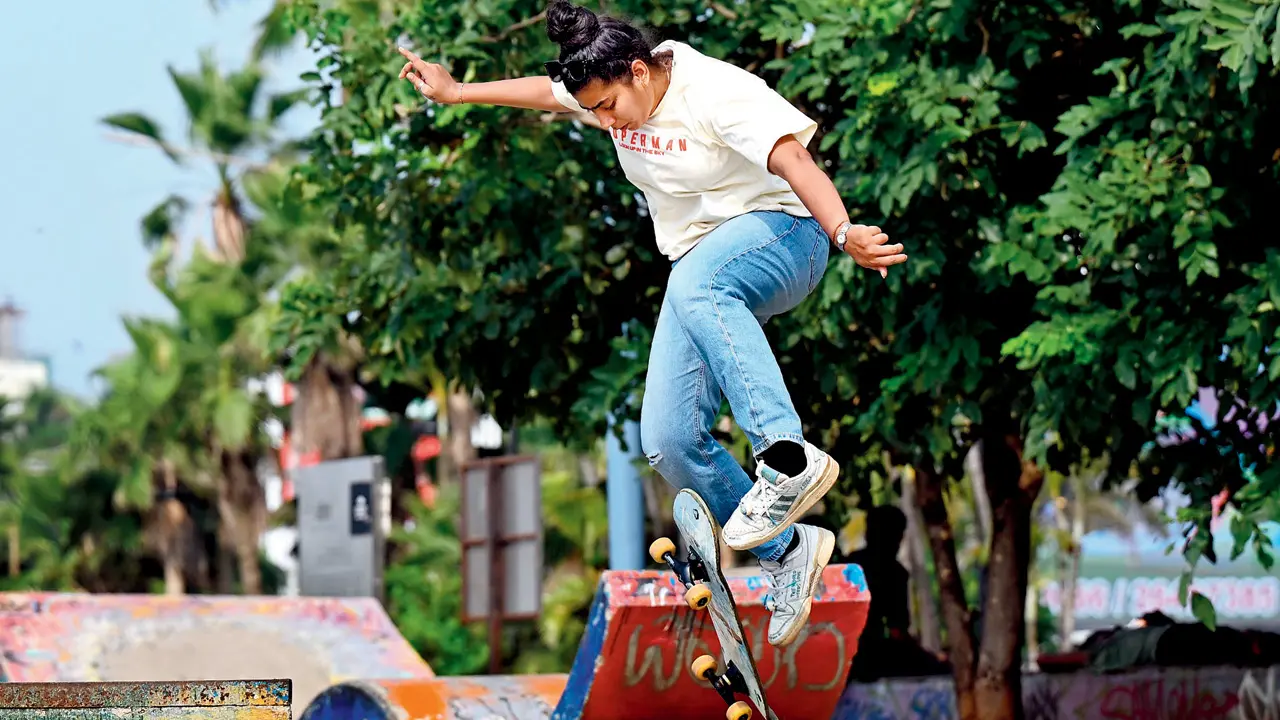
Skateboarding is a way of life for Sareena Coutinho. Pics/Satej Shinde
What began as a pastime in parking lots and on railway platforms has found a firm footing in Mumbai’s skateparks. Once a subculture known to few, skateboarding is gaining a lot of momentum. In graffiti-splashed spaces where wheels whir and skateboards knock on the concrete, beginners try balancing on their new boards while seasoned professionals chase new tricks.

Shruti Bhosle has been skateboarding since she was 14
Among them are girls from the Mumbai skateboarding scene — unafraid, unapologetic and fierce. While the hip-hop artistes and the streetwear brands dig this revolution, social media has amplified it to another extent. Videos of girls skateboarding are taking the internet by the storm, and rightfully so, social media has become a platform for them to self-express and spread awareness about the sport. As a matter of fact, these girls are not simply skating, but claiming space and redefining what skateboarding looks like.
Sisterhood for the skate-gals
As a growing subculture, skateboarding is gradually drawing more girls to be a part of the sport, not just as an aesthetic to be practised but as a shift in the cultural dynamics of the sport. For many of them, it has become a form of self-expression along with being a sport. While some people prefer to customise their skateboards with their favourite forms of art, others make it a lifestyle by pairing it up with streetwear clothing — oversized tees and baggy jeans. Some prefer to make it more desi by adding in a flair of jhumkas,or going all out and skateboarding in a saree.
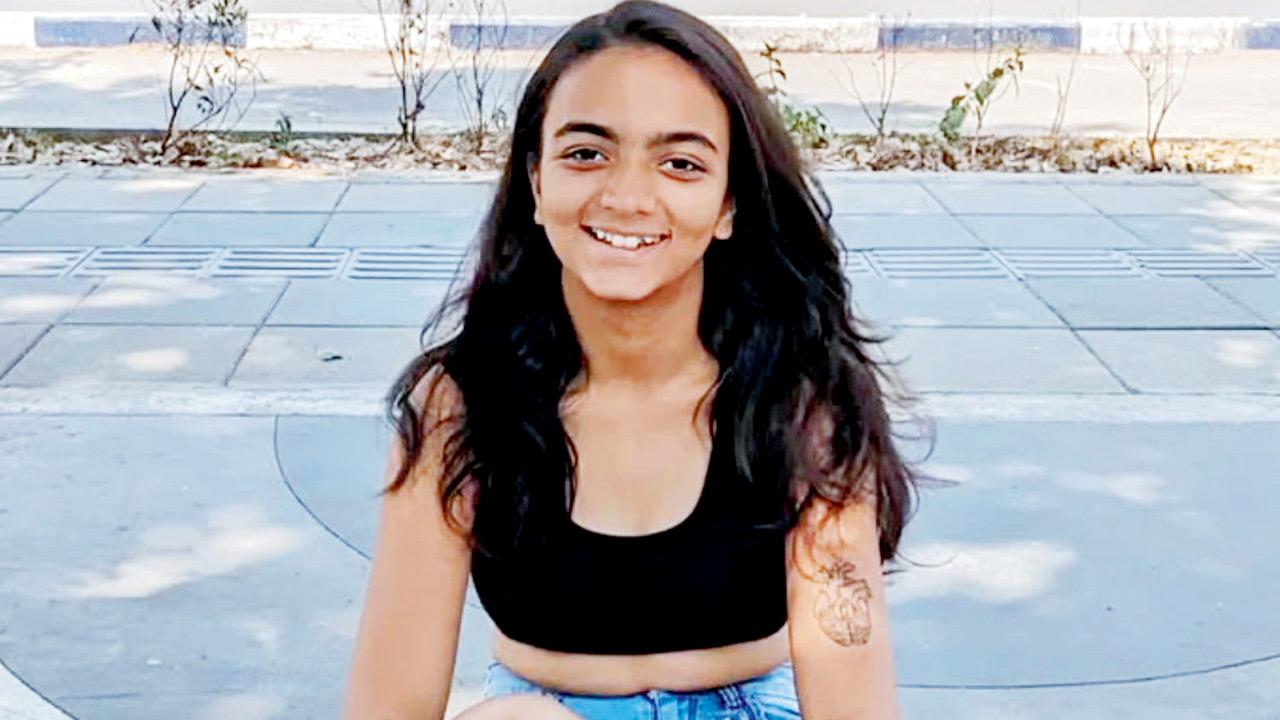
Tulika Naag
As Shruti Bhosle notes, “When I first draped a saree and went skateboarding, it was a very unusual experience for me. It felt like I was embracing my roots while doing what I love to do.” The girls in the skateboarding community have formed a support system that is very heartwarming to note. “Meeting girls who share the same interests, or just simply enjoy skateboarding, is always very special,” says Tulika Naag, a 22-year-old who is a part of the Girls Skateboarding Community of Mumbai. “The scene is definitely growing now,” she adds, “Girls are enjoying it, and I can see more of them getting into skateboarding. It’s not a huge number, but it’s something.”
Repping it internationally
Shruti Bhosle, 21, has represented India at international tournaments, winning eleven medals across national and international games. “There is barely any financial funding for women in sports,” she says, “I’m due for a knee surgery before I can be back on the board again.” The injury has interrupted her training schedule for the time being.
Bhosle began skateboarding when she was fourteen, overcoming her family’s hesitancy towards her pursuing the sport due to the uncertain career path, and the lack of safety involved. However, she pushed through that doubt with a lot of hard work and practice. Her resilience and dedication led her to hone her skills in the field, and win the title of the national champion at 19. When she was selected to represent India in the international games, a lot of gaps in the support for women athletes became clearer.
“I was overjoyed to see the Indian women’s cricket team get the amount of love and appreciation that they did,” she adds, “I just wish it was the same for other women’s sports as well.” Since last year, Bhosle has also been a part of the Wild Wild Women team — an all-women group of five rappers, two B-girls, one graffiti artist, and her as the skateboarder.
Who says it’s not for women?
As one of the first girls to learn skateboarding in her locality, Sareena Coutinho, 20, was taught by her sister’s friend. While it was extremely intimidating for a girl to enter a space dominated by men, Coutinho knew that she had to carve out a space for herself there. To her surprise, most of the men in the community were open to teaching her new tricks and helping her out.
“The boys in the park have never made me feel like an outsider. They had been mastering this art for years, some of them were the pioneers of the Mumbai skateboarding scene. Skating with them was a huge thing for me, and they never made me feel any less,” Coutinho recollects. “However, the world outside the skating park still seems to be stuck in the same mindset — I have heard various comments being passed on how I should not be skateboarding, that it is not a women’s sport, or that I’ll get hurt easily.”
For Coutinho, the community that came with the sport mattered the most. “I am trying to expand the community by teaching girls how to skateboard without any fees,” she adds, “I want to create the same community that had backed me up when I first began. Truly, the support around you matters the most.”
A transformative experience
Ahmedabad-based Shivangi Mishra does not see skateboarding only as a sport, but as a way of life. What started off as a mere hobby to add to the list seemed to stick in a way that nothing else had. “I was never a ‘sporty’ kid,” she says, “My parents were worried if I would ever stick to skateboarding, because I was so scared of getting hurt in the process. Somehow, skateboarding felt very liberating. It gave me this high that I could not seem to get out of anything else, and it transformed the way I viewed myself and the world around me.”
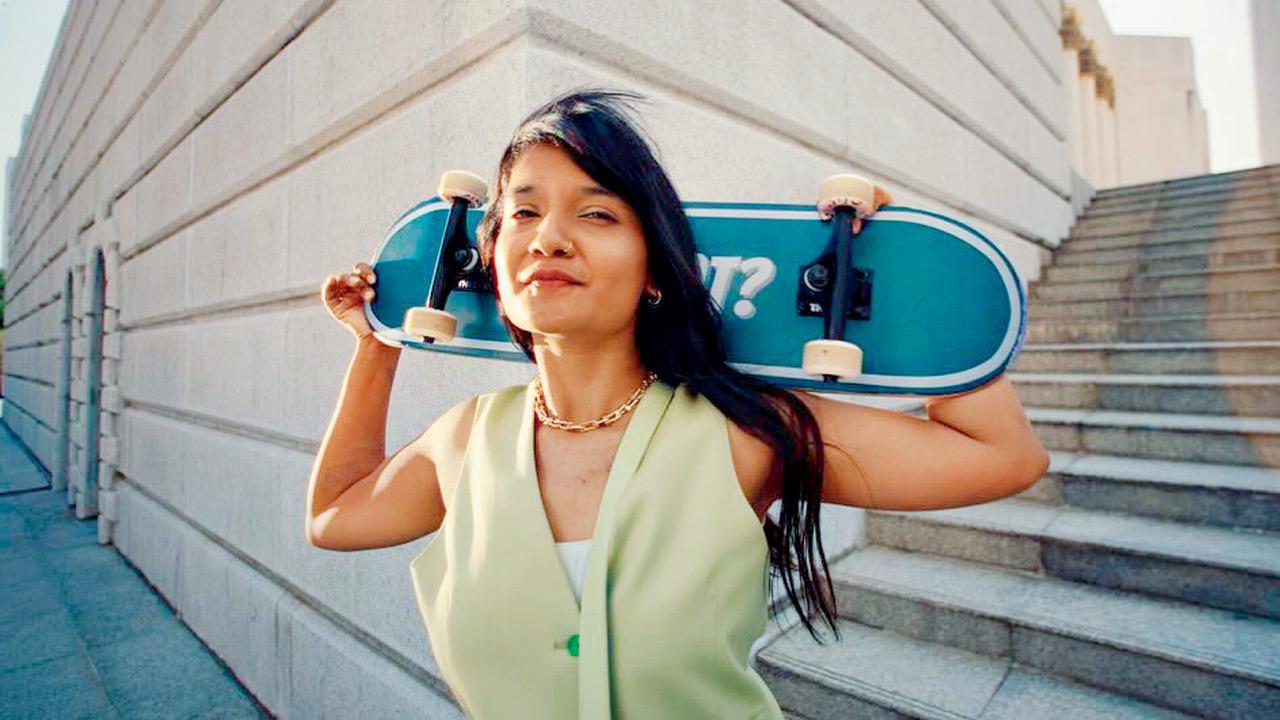
Shivangi Mishra
Mishra further adds, “Skateboarding is also one of the things that keeps me coming back to Mumbai over and over again.” At 22, she is now working towards She Skate, an initiative that she has taken to teach skateboarding completely free of cost to young girls. With the expanding hip-hop culture in Ahmedabad, Mishra is trying to incorporate this element into the scene.
Art passed down generations
Antima Bisht, 29, takes great pride in the skateboarding workshops that she conducts. As a professional who began her journey in 2014, going skateboarding with her friends in the locality drew her to the sport. “There were no coaches at the time,” she says, “It was all a community effort. I joined a crew that I found at the time and continued skateboarding with them.”
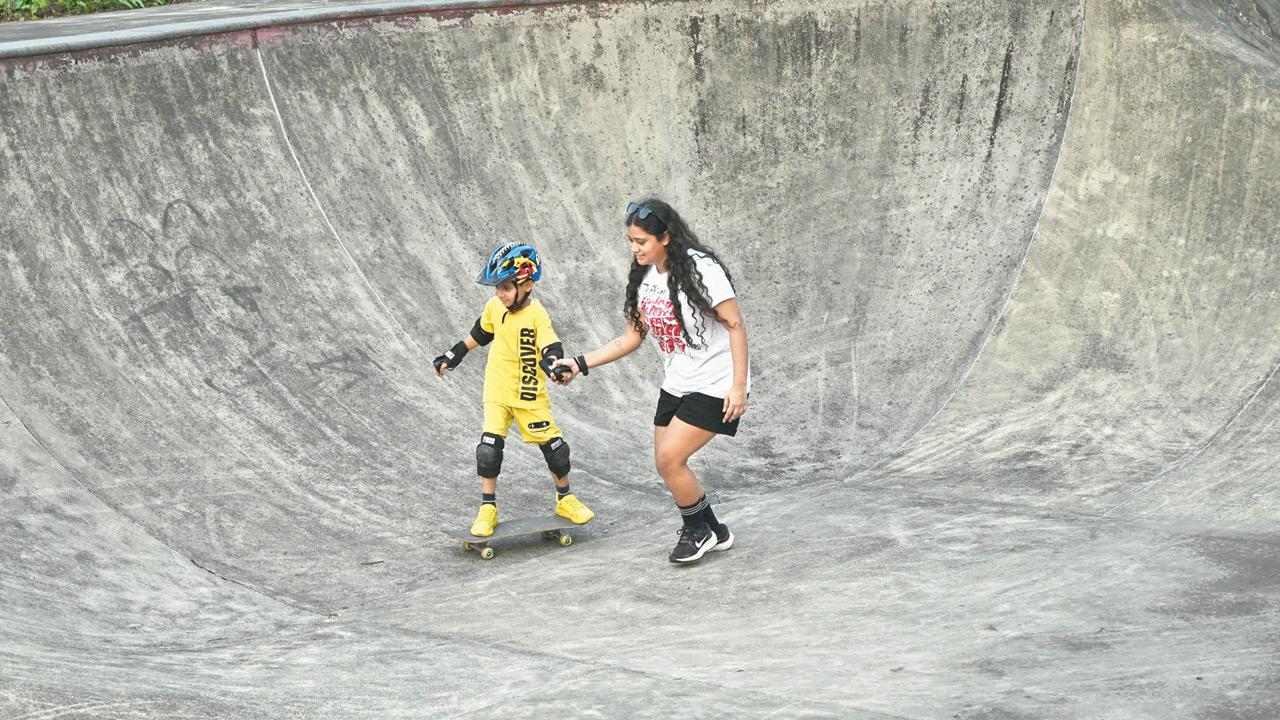
Antima Bisht teaching skateboarding to her students at Nerul Skatepark. PIC/SAYYED SAMEER ABEDI
While she has witnessed 35-year-olds trying to experience the sport, her most enthusiastic learners are ones aged 7-9 years. She began her journey by longboarding, which is a sister sport that includes a longer skateboard and skating downhill. Bisht also remembers that skateboarding was a novelty for Mumbai back when she started. “When I started out, it used to be an exclusive sport,” she smiles, “I never wanted to keep it to myself. My motto was to have fun, but also make the sport accessible to as many people as possible.”
She has been conducting workshops since the last seven years. Bisht shares, “It’s always been something I love to do — passing the sport on to others.” She claims that more resources need to be put into the maintenance and upkeep of skateparks to foster a better learning environment for the sportspersons-in-the-making.
A long way to go
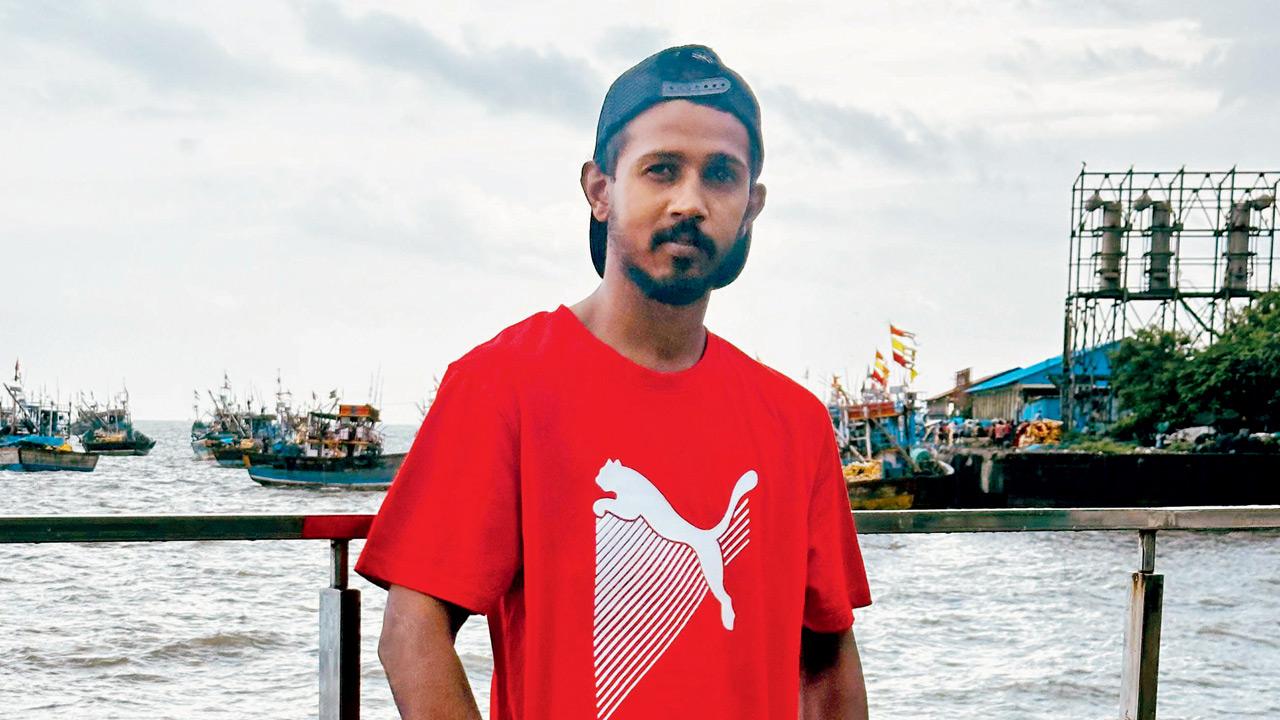
Sayyed Azharhussain
“There are still fewer girls in the sport than what I had expected,” says Sayyed Azharhussain, a 30-year-old skateboarding coach who founded the Bombay Skate Academy. “I just hope that skateboarding as a sport gets more traction, from the people as well as the government.” Skateboarding as a sport still has a long way to go, and there is a lot of talent in the city that could represent the sport both locally and globally. As Bisht notes, “It has changed quite a lot since we began skateboarding,” the revolutionised version of the sport has bold women at the forefront — performing kickflips and ollies, and making everyone proud.
 Subscribe today by clicking the link and stay updated with the latest news!" Click here!


