13 May,2026 02:24 PM IST | Mumbai | mid-day online correspondent
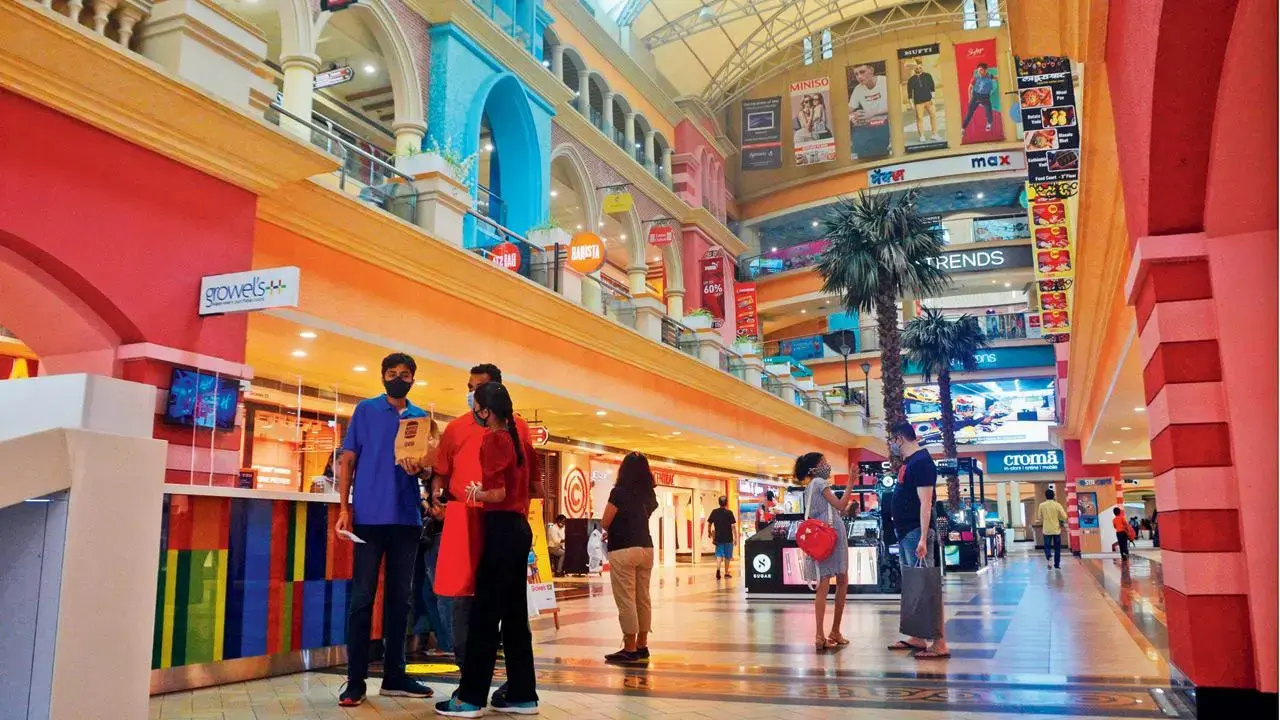
The report highlights strong developer confidence, projecting over 45 million sq ft of new retail supply across India’s top seven cities between 2026 and 2031. Representational pic
India's premium retail real estate market is witnessing an unprecedented supply crunch, with Grade A and A+ malls in Delhi-National Capital Region (NCR) achieving near-full occupancy and Mumbai recording the sharpest rental growth in the country, according to a new report by ANAROCK Group and Images Group.
The report titled âLeasing Trends in Malls Across Top Metropolitan Cities in India', released on Wednesday at the Phygital Retail Convention in Mumbai, reveals that vacancy rates in key Grade A/A+ malls in Delhi-NCR have plummeted to an ultra-low 0-2 per cent, effectively translating into full occupancy in prime assets.
The Mumbai Metropolitan Region (MMR) has emerged as the frontrunner in rental growth, with recent leasing transactions reflecting a strong 15-20 per cent year-on-year increase. Premium malls such as Phoenix Palladium and Jio World Drive have set new benchmarks, with monthly rents reaching as high as Rs 777 per square feet (sq ft).
Anuj Kejriwal, the chief executive officer for retail and Europe, Middle East, and Africa (EMEA), ANAROCK Group, said, "On a year-on-year basis, Delhi-NCR's Grade A+ malls have witnessed a stronger rental appreciation of 8-12 per cent, outperforming Grade A assets at 6-8 per cent. This widening gap is driven by superior footfalls, tenant productivity, and asset positioning, reinforcing the flight-to-quality trend among retailers."
The report highlights strong developer confidence, projecting over 45 million sq ft of new retail supply across India's top seven cities between 2026 and 2031. Delhi-NCR alone is expected to see 19 million sq ft of fresh supply, while MMR is likely to add around 4 million sq ft in the same period.
Based on current Grade A stock and prevailing capital values, the report estimates an investment opportunity of approximately USD 25-30 billion in the sector by 2030. Additionally, it identifies a significant redevelopment potential of 40-50 million sq ft in underperforming Grade B and C malls across major cities.
Bengaluru continues to be a stable mid-range market with 5-8 per cent vacancy and an expected supply of 5.03 million sq ft by 2031. Average rentals stand at Rs 200-250 per sq ft.
Hyderabad is emerging as a supply powerhouse with 7.1 million sq ft in the pipeline. Top-performing malls command rents of Rs 300-400 per sq ft.
Pune is witnessing strong activity with deals involving IKEA and Uniqlo. Vanilla store (standard, smaller-sized retail shop inside a shopping mall) rentals average Rs 175-225 per sq ft.
Chennai and Kolkata show more moderate growth, with limited new supply helping sustain rental values.
The report notes a clear shift towards suburban expansion, with new supply in Mumbai concentrating in Thane, Borivali, and Panvel, and in Bengaluru along Sarjapur Road.
Kejriwal added that the sector is seeing greater maturity in lease structures, with nearly 74 per cent of transactions now following hybrid revenue-linked models and 75 per cent of leases locked in for three to seven years.
With historically low vacancies, sustained rental growth, and strong institutional interest, Indian retail real estate is positioned as one of the most resilient and attractive asset classes in the commercial real estate space through 2030.