08 January,2026 06:54 PM IST | Pune | Archana Dahiwal
Dr Madhav Gadgil had chaired the Western Ghats Ecology Expert Panel in 2009.
Renowned environmental scientist, thinker and conservationist Dr Madhav Gadgil, one of India's foremost voices for people-led ecological protection, passed away late on Wednesday night after a brief illness in Pune. He was 83.
Dr Gadgil, whose work shaped grassroots environmentalism in India, is widely remembered for his prescient warnings against unregulated infrastructure and industrial expansion in ecologically fragile regions, particularly the Western Ghats. His ideas fundamentally altered how conservation, development and community rights were understood in the country.
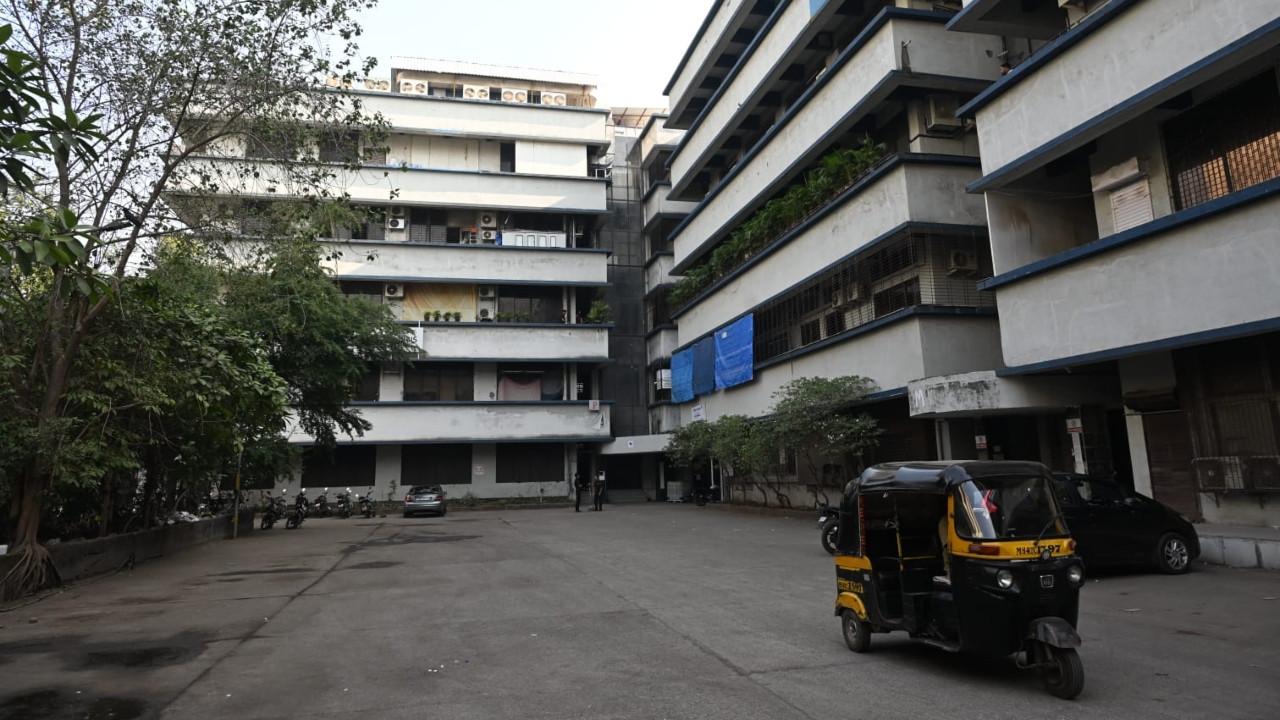
Dr Gadgil's mortal remains were kept for public homage at his residence in Panchavati, Pashan, on Thursday. The last rites were performed at Vaikunth Crematorium later in the day.
He is survived by his son, daughter, son-in-law, daughter-in-law and grandchildren. His wife passed away last year.
Born on May 24, 1942, in Pune district, Dr Gadgil completed his schooling at Modern High School, Pune. He pursued his undergraduate studies at Savitribai Phule Pune University and completed his post-graduation at the University of Mumbai.
In the early 1970s, he earned a PhD in Mathematical Ecology from Harvard University, becoming one of the earliest biologists globally to work at the intersection of mathematics and ecology - a field that would later gain global prominence.
After returning to India, Dr Gadgil joined the Indian Institute of Science (IISc), Bengaluru, where he taught and conducted research from 1973 onwards. In 1983, he founded the Centre for Ecological Sciences (CES) at IISc, which went on to become one of India's premier institutions for ecological and conservation research.
Over a career spanning more than four decades, Dr Gadgil authored over 225 scientific papers, covering evolutionary biology, ecology, conservation biology and environmental history. His work consistently bridged rigorous science with social realities.
Unlike conventional conservation models, Dr Gadgil strongly believed that local communities are the best custodians of nature. For nearly 40 years, he worked closely with forest-dwelling and rural communities in the Western Ghats (Sahyadri), advocating conservation strategies rooted in public participation and democratic decision-making.
He also carried out extensive biodiversity documentation in northeast India, once again emphasising indigenous knowledge systems and community stewardship.
Dr Gadgil's most influential public contribution came as the chairman of the Western Ghats Ecology Expert Panel (WGEEP), constituted by the Union Ministry of Environment and Forests in 2009.
The panel's report, submitted in 2011 and popularly known as the Gadgil Report, recommended declaring the entire Western Ghats - one of the world's most significant biodiversity hotspots - as an Ecologically Sensitive Area. It proposed strict regulation of mining, large dams, polluting industries and unsustainable construction in highly fragile zones.
What set the report apart was its "bottom-up" governance model, which placed decision-making powers in the hands of gram sabhas rather than distant bureaucratic institutions. Though the report faced strong political and industrial opposition and was never implemented in full, its scientific warnings have since been repeatedly validated by landslides, floods and ecological degradation across the region.
Dr Gadgil also played a key role in shaping India's environmental policy framework. He was among the principal contributors to the Biological Diversity Act, 2002, which laid the foundation for biodiversity conservation and equitable benefit-sharing in India.
Dr Gadgil's extraordinary contributions to science and society earned him numerous national and international honours. The Government of India awarded him the Padma Shri in 1981 and the Padma Bhushan in 2006. He was also a recipient of the Shanti Swarup Bhatnagar Award, one of India's highest scientific recognitions.
Internationally, he received several prestigious honours, including the Tyler Prize for Environmental Achievement and the Volvo Environment Prize, recognising his lifelong commitment to ecological science and sustainable development.
Remembering Dr Gadgil, Dr Pandit Vidyasagar, former Vice-Chancellor of Swami Ramanand Teerth Marathwada University, Nanded, said: "For over 45 years, Dr Gadgil worked relentlessly for biodiversity conservation. He was a deeply studious scientist who always went to the root of the problem. He never hesitated to challenge governments and power structures, placing his arguments boldly and firmly on scientific evidence."
"He was fearless, straightforward and immensely dedicated to educating people. Our interactions with him were always intellectually enriching. He travelled extensively across Maharashtra, especially the Western Ghats, spreading awareness about conservation. Dr Gadgil was not only a great scientist and visionary, but also a selfless human being and a true social reformer. With his passing, India has lost one of its most principled and courageous environmental voices - a scientist who consistently chose people, ecology and truth over convenience and compromise."
Dr Sachin Anil Punekar, conservation biologist and founder of biospheres, said, Prof Madhav Gadgil, a true giant in ecology and conservation. His work on community-led conservation, sacred groves, and traditional knowledge will leave a lasting impact. A pioneering thinker in ecology and conservation biology, Prof Gadgil devoted his life to understanding the intricate relationships between nature and society, and to advocating policies involving both biodiversity and people at large. He consistently emphasised community participation and decentralised governance. He never hesitated to speak truth to power, firmly believing that long-term ecological sustainability was inseparable from social justice and democratic governance. He was a great support to our green initiatives such as the Movement Against Biological Invasions (MABI), a movement that addresses the ill impact, eradication drives, awareness programmes and policy advocacy about invasive foreign species in the country. We have lost a giant in ecology and conservation; he will always be remembered for his scientific contributions and outspoken views."
Director of The Corbett Foundation, Kedar Gore, said, "India has lost one of its finest ecologists and environmentalists. Prof Gadgil will always be remembered for his eye-opening report that recommended protection to almost 75% of the Western Ghats. Unfortunately, India is yet to demarcate the Eco Sensitive Areas of the Western Ghats, which has led to several ecologically destructive projects mushrooming in this global biodiversity hotspot. As a tribute to Prof Gadgil, India must prioritise this much-needed step and prevent any further degradation of this important landscape."
Environmentalist Stalin D from NGO Vanashakti said, "Dr Madhav Gadgil will remain a colossal figure in the field of Indian conservation. He stands apart for his intellectual honesty, commitment, sensitivity and bravery in putting action alongside words. His balanced approach towards conserving forests, wildlife habitats and rivers is an example to emulate. He did not sell his intellect to benefit those who wish to destroy the environment and forests. Despite his advanced age, he never hesitated to visit ecologically important areas and prepare honest reports. The government discarded his WGEEP report, offering no acknowledgement for his efforts. Every government and political party in power is guilty of undermining his work. He was approachable and humble. It is a sad day for conservationists; we will miss his presence. He will continue to inspire us always. I salute and respect him for his exemplary work and attitude."
(With inputs from Ranjeet Jadhav)

