17 April,2026 10:43 AM IST | Beirut | mid-day online correspondent
Israeli PM Benjamin Netanyahu, US President Donald Trump, and Lebanese President Joseph Aoun. PIC/AFP
A 10-day ceasefire agreement between Lebanon and Israel came into effect on Friday, as US President Donald Trump announced efforts to arrange the first-ever face-to-face meeting between the leaders of the two countries.
As the ceasefire took hold, gunfire echoed in Beirut's southern suburbs - Hezbollah's stronghold - in what appeared to be spontaneous celebrations by residents.
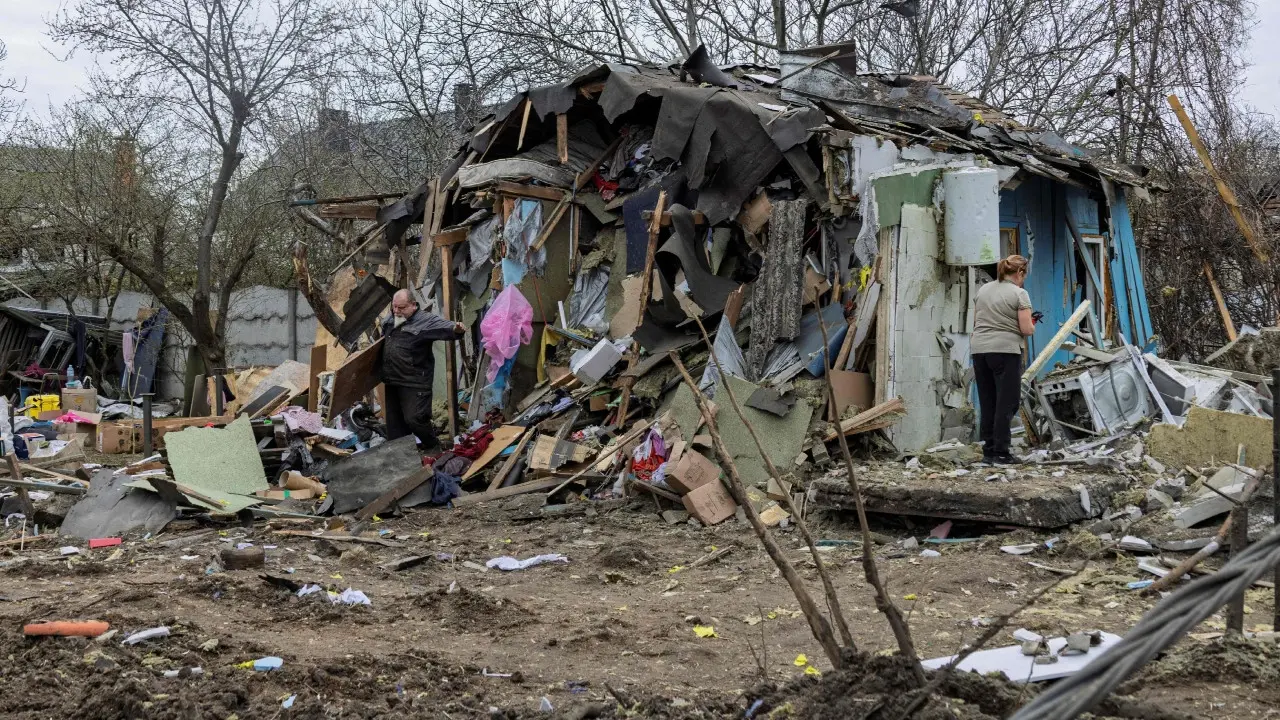
The wider regional conflict escalated when the US and Israel struck Iran on February 28. Lebanon was drawn in shortly afterwards when Hezbollah fired rockets into Israel on March 2. Since then, Israeli strikes have killed more than 2,000 people in Lebanon and displaced over one million, while Israeli ground forces entered southern Lebanon.
Just as the ceasefire began, the Israeli military stated that it had struck over 380 "Hezbollah terror organisation targets" in southern Lebanon in recent operations and remained on "high alert" to resume strikes if necessary.
President Trump described the deal as the outcome of "excellent" telephone conversations with Israeli Prime Minister Benjamin Netanyahu and Lebanese President Joseph Aoun. Posting on Truth Social, he said the two leaders had agreed to a 10-day ceasefire starting at 5 p.m. EST. He later indicated that Netanyahu and Aoun could visit the White House within the next four or five days. Such a direct meeting would mark a historic development in Israel-Lebanon relations.
An Israeli hospital spokesman reported that three people were injured on Thursday shortly before the truce. Earlier that day, an Israeli strike on the southern Lebanese town of Ghazieh killed at least seven people and wounded 33, according to Lebanon's health ministry.
Netanyahu welcomed the ceasefire as an opportunity for a "historic peace agreement" with Beirut, but stressed that the disarmament of Hezbollah remained a key precondition. Trump stated that Hezbollah was covered by the truce, while the US State Department clarified that Lebanon itself had committed to dismantling the Iran-backed group.
United Nations Secretary-General Antonio Guterres welcomed the ceasefire and urged "all actors to fully respect" it - a call that implicitly includes Hezbollah. He expressed hope that the truce would advance negotiations for a lasting solution and contribute to broader regional peace, while stressing full compliance with international law and the implementation of Security Council Resolution 1701.
In Beirut, housewife Jamal Shehab, 61, said: "We are very happy that a ceasefire has been reached in Lebanon because we are tired of war and we want safety and peace."
Lawyer Tarek Bou Khalil, speaking at a cafe, remarked: "It's well known Trump cannot be taken at his word, and Netanyahu cannot be trusted. But we know that the result of the pressures of the war with Iran and the blunders of Netanyahu and the enemy army in south Lebanon, forced them into a ceasefire."
A Hezbollah lawmaker, Ibrahim al-Moussawi, told AFP the group would "cautiously adhere" to the ceasefire provided Israel stopped its attacks. He thanked Iran for its pressure, adding that "the ceasefire would not have happened without Iran considering the ceasefire as equal to closing the Strait of Hormuz."
Lebanese Prime Minister Nawaf Salam described the truce as "a key Lebanese demand that we have pursued since the very first day of the war." President Aoun's office thanked Trump for his efforts, though Aoun reportedly declined a direct call with Netanyahu.
The ceasefire follows a rare meeting this week in Washington between the Israeli and Lebanese ambassadors - the first such contact since 1993.
Netanyahu said Israel had agreed to the truce but would maintain a 10-kilometre (six-mile) "security zone" along the border in southern Lebanon. He reiterated two conditions: the disarmament of Hezbollah and a lasting peace agreement "based on strength."
According to a six-point US State Department statement, the ceasefire is framed as "a gesture of goodwill by the Government of Israel" to enable negotiations toward a permanent security and peace agreement. Israel retains the right to take all necessary measures in self-defence against planned, imminent or ongoing attacks, while agreeing not to conduct offensive operations against Lebanese targets by land, air or sea.
Lebanon's army later reported "acts of aggression" by Israel that it described as violations of the ceasefire, and called on southern residents to remain cautious.
Iran's Parliament Speaker Mohammad Bagher Ghalibaf credited the ceasefire to "Hezbollah's steadfastness and the unity of the Axis of Resistance." He described the truce as equally important for Lebanon as for Iran and thanked Pakistan and General Asim Munir for their mediation efforts.
Separately, the United States continued enforcing a large-scale maritime blockade on Iranian ports and coastline, deploying over 10,000 personnel, 12 ships including the USS Abraham Lincoln, and more than 100 aircraft. The US Central Command (CENTCOM) clarified that the blockade does not cover the Strait of Hormuz itself.
Speaking in Las Vegas, President Trump said the US was heading toward "victory very shortly" against Iran. He claimed Iran "has no Navy left," stating that 158 Iranian ships were "at the bottom of the sea," and described the country as "a tough, smart country" whose military capabilities had been significantly degraded.
Trump added that Washington was "very close" to a peace deal with Iran after six weeks of conflict and might travel to Pakistan to sign any agreement.
The durability of the Israel-Lebanon ceasefire will likely depend on both sides - and Hezbollah - refraining from further attacks in the coming days.
(With AFP and ANI inputs)

