Union Commerce Minister Piyush Goyal on Saturday hailed the framework announced on the India US trade agreement and said that this would bring huge benefits to farmers and Indian MSMEs. He said, "Agricultural products from Indian farmers will be exported to the United States at zero duty. At the same time, no tariff concessions have been granted for agricultural products from US farmers entering the Indian market." On the trade deal, the Minister said it brings new hopes and opportunities in India's growth story. "The 50 percent reciprocal tariff has been reduced to 18 percent which is less compared to our neighboring countries, and will provide a lot of help to out exporters. The deal brings new hopes and opportunities in India's growth story," he said. While addressing a press conference on the India US Joint Statement, Minister Goyal said, "Agricultural products from Indian farmers will be exported to the United States at zero duty. At the same time, no tariff concessions have been granted for agricultural products from US farmers entering the Indian market. The agreement also makes it clear that genetically modified (GM) food will not be allowed into India." "I can state categorically and without any hesitation that India's farmers, MSMEs, artisans, and craftsmen will not suffer any loss. On the contrary, India will benefit from greater access to the US market," the minister said. "It is a big thrust to MSMEs employing a large number of women and youth. With exports from labour intensive sectors like textiles & apparel, leather & footwear, toys, and gems & jewellery to the US set to scale, lakhs of jobs will be created while boosting domestic manufacturing," he added. The Minister also detailed out tenets of the framework saying that tariffs on a wide range of goods would now go down to zero. "Additionally, tariffs will go down to zero on a wide range of goods, including generic pharmaceuticals, gems & diamonds, and aircraft parts, thereby further enhancing India's export competitiveness and Make in India. India will also get exemptions under section 232 on aircraft parts, tariff rate quota on auto parts and negotiated outcomes on generic pharmaceuticals, leading to tangible export gains in these sectors," Goyal said. "These also include spices, tea, coffee, coconut oil, cashew nuts, and several fruits and vegetables such as avocado, banana, mango, pineapple, and mushrooms, along with select bakery products," the Commerce Minister added. The Minister described the announcement of the framework as historic and said the day would go down in history as a Golden letter day. "Discussions between Prime Minister Narendra Modi and the US President Donald Trump, which began in February 2025, have culminated in a breakthrough that will be remembered as a historic moment. This day will be written in golden letters, as a USD 30 trillion economy has now opened its doors wider for Indian exporters. The joint statement issued by both countries offers new hope, renewed enthusiasm, and fresh resolve to every Indian," the minister said. The US and India announced in a joint statement that they have reached a framework for an Interim Agreement on reciprocal, mutually beneficial trade (the Interim Agreement) and have agreed on its terms. On February 2, a phone call between Prime Minister Narendra Modi and US President Donald Trump led to the announcement of the conclusion of negotiations on the much-awaited trade deal. The Trump administration had imposed tariffs on major exporters to the US, including India and China. The BTA, formally proposed in February 2025, seeks to more than double bilateral trade, from the current USD 191 billion to USD 500 billion by 2030. This story has been sourced from a third party syndicated feed, agencies. Mid-day accepts no responsibility or liability for its dependability, trustworthiness, reliability and data of the text. Mid-day management/mid-day.com reserves the sole right to alter, delete or remove (without notice) the content in its absolute discretion for any reason whatsoever.
07 February,2026 03:11 PM IST | New Delhi | ANIUS President Donald Trump on Friday signed an executive order reaffirming the national emergency with respect to Iran and establishing a mechanism to impose additional tariffs on countries that continue to do business with Tehran, the White House said. Under the order, beginning on its effective date, the United States may impose an additional ad valorem duty-for example, up to 25 per cent- on goods imported into the US from any country that directly or indirectly purchases, imports, or otherwise acquires goods or services from Iran. The move is aimed at protecting US national security, foreign policy and economic interests. The White House said the order establishes a system that allows Washington to levy tariffs on imports from countries maintaining economic ties with Iran, while giving the president authority to modify the measures if circumstances change in response to retaliation. or if Iran or an affected country takes "significant steps" to align with the United States on national security, foreign policy, and economic matters. The executive order authorises the Secretary of State, the Secretary of Commerce and the United States Trade Representative to take all necessary actions, including issuing rules and guidance, to implement the tariff system and related measures. According to the White House, the action is part of a broader effort to counter what it described as Iran's "malign influence," including Tehran's pursuit of nuclear capabilities, support for terrorism, ballistic missile development and regional destabilisation. The administration accused Iran of backing proxy militant groups across the Middle East, repressing its own population, and diverting resources toward nuclear and missile programmes instead of domestic needs. The White House said these actions constitute an "unusual and extraordinary threat" to the United States, its allies and interests, requiring a sustained and intensified response. The order builds on President Trump's long-standing hardline approach toward Iran. During his first term, Trump withdrew the United States from the Iran nuclear deal, reinstated "maximum pressure" sanctions and designated Iran's Islamic Revolutionary Guard Corps as a Foreign Terrorist Organisation. After returning to the office, Trump restored maximum pressure policies to deny Iran any path to a nuclear weapon. The White House also pointed to recent US military and diplomatic actions, including operations targeting Iran's nuclear infrastructure and the deployment of additional US forces to the region, aimed at pressuring Tehran to negotiate a deal that would permanently block its nuclear ambitions. Separately, the US government issued a security alert for Iran, warning of heightened security measures, internet disruptions, flight cancellations, and nationwide restrictions on communications. The advisory urged US citizens to leave Iran immediately if it is safe to do so, avoid demonstrations, maintain a low profile and prepare for prolonged disruptions. The United States currently has no diplomatic or consular relations with Iran. Switzerland, through its embassy in Tehran, serves as the protecting power for US interests in the country, the advisory said. This story has been sourced from a third party syndicated feed, agencies. Mid-day accepts no responsibility or liability for its dependability, trustworthiness, reliability and data of the text. Mid-day management/mid-day.com reserves the sole right to alter, delete or remove (without notice) the content in its absolute discretion for any reason whatsoever
07 February,2026 01:14 PM IST | Washington | ANIThe US and India on Saturday announced that they have reached a framework for an interim trade agreement, under which America will reduce tariffs on India to 18 per cent, according to a joint statement issued by the White House. It said the framework reaffirms the countries' commitment to the broader US-India Bilateral Trade Agreement negotiations launched by President Donald J Trump and Prime Minister Narendra Modi on February 13, 2025. The framework will include additional market access commitments and support more resilient supply chains. "The Interim Agreement between the United States and India will represent a historic milestone in our countries' partnership, demonstrating a common commitment to reciprocal and balanced trade based on mutual interests and concrete outcomes," the statement said. Key terms of the agreement includes that India will eliminate or reduce tariffs on all US industrial goods and a wide range of US food and agricultural products, including dried distillers' grains, red sorghum for animal feed, tree nuts, fresh and processed fruit, soybean oil, wine and spirits, and additional products. The US will apply a reciprocal tariff rate of 18 per cent on originating goods of India, including textile and apparel, leather and footwear, plastic and rubber, organic chemicals, home decor, artisanal products and certain machinery. Subject to the successful conclusion of the Interim Agreement, the US will remove the reciprocal tariff on a wide range of goods including generic pharmaceuticals, gems and diamonds, and aircraft parts, the statement said. This story has been sourced from a third party syndicated feed, agencies. Mid-day accepts no responsibility or liability for its dependability, trustworthiness, reliability and data of the text. Mid-day management/mid-day.com reserves the sole right to alter, delete or remove (without notice) the content in its absolute discretion for any reason whatsoever
07 February,2026 01:12 PM IST | Washington | PTIThe US has said India has committed to stop directly or indirectly importing Russian oil, following which the additional 25 per cent tariffs imposed by America on Indian goods will be removed from February 7. According to an executive order issued by the White House, India has also committed to a framework with the US to expand defence cooperation over the next 10 years. "Effective with respect to goods entered for consumption, or withdrawn from the warehouse for consumption, on or after 12.01 am eastern standard time on February 7, 2026, products of India imported into the United States shall no longer be subject to the additional ad valorem rate of duty of 25 per cent imposed pursuant to Executive Order 14329," it said. In August last year, the US imposed 25 per cent reciprocal tariffs and an additional 25 per cent levy on goods from India over its purchase of Russian crude oil. In the Executive Order issued on Friday local time, Trump said he has "received additional information and recommendations from senior officials regarding India's efforts to address the national emergency described in Executive Order 14066". "Specifically, India has committed to stop directly or indirectly importing Russian Federation oil, has represented that it will purchase United States energy products from the United States, and has recently committed to a framework with the United States to expand defence cooperation over the next 10 years," he said. If the US Secretary of Commerce finds that India has resumed directly or indirectly importing Russian oil, Trump's team shall recommend "whether and to what extent I should take additional action as to India, including whether I should reimpose the additional ad valorem rate of duty of 25 per cent on imports of articles of India," the executive order stated. Trump noted that the actions and policies of Russia continued to pose an "unusual and extraordinary" threat to the national security and foreign policy of the US and to deal with that threat, he had determined in August last year that it was "necessary and appropriate" to impose an additional ad valorem rate of duty of 25 percent on imports of articles of India, which, at that time, was directly or indirectly importing Russian oil. After reviewing the latest information and recommendations, Trump said he had determined that India has taken "significant steps" to address the national emergency and to align sufficiently with the US on national security, foreign policy and economic matters. "Accordingly, I have determined to eliminate the additional ad valorem rate of duty imposed on imports of articles of India pursuant to Executive Order 14329. In my judgment, this modification is necessary and appropriate to deal with the national emergency declared in Executive Order 14066," he said. The Executive Order warned that the tariffs could be reimposed if India resumes importing Russian oil. If the US Secretary of Commerce finds that India has resumed directly or indirectly importing Russian oil, Trump's team shall recommend "whether and to what extent I should take additional action as to India, including whether I should reimpose the additional ad valorem rate of duty of 25 per cent on imports of articles of India," the order stated. The order further authorised Secretary of State Marco Rubio to take such actions, including adopting rules and regulations, and to employ all powers granted to the President under the International Emergency Economic Powers Act (IEEPA) as may be necessary to implement the order. Each executive department and agency has been directed to take all appropriate measures within its authority to carry out the order. The Secretary of Commerce, in coordination with the Secretary of State, the Secretary of the Treasury and other senior officials, will monitor whether India resumes directly or indirectly importing Russian Federation oil, it said. This story has been sourced from a third party syndicated feed, agencies. Mid-day accepts no responsibility or liability for its dependability, trustworthiness, reliability and data of the text. Mid-day management/mid-day.com reserves the sole right to alter, delete or remove (without notice) the content in its absolute discretion for any reason whatsoever.
07 February,2026 10:14 AM IST | New York (Washington) | PTIDeveloped by US researchers, a disposable sensor designed to be worn on the skin or clothes could protect cancer patients and warfighters from harmful radiation. Combining advanced light-sensing polymers and microelectronic grids, the team used laser etching at Sandia National Laboratories’ California site to create thousands of disposable patches. The new dosimeter not only measures radiation dose but can also alert clinicians if the radiation is off target. The patch includes a polymer that interacts with radiation in real time, allowing it to track both the location and dosage of radiation as it passes through the patient. If the patient moves, the system can react instantly, shutting off the beam to help prevent harm to healthy tissue. This story has been sourced from a third party syndicated feed, agencies. Mid-day accepts no responsibility or liability for its dependability, trustworthiness, reliability and data of the text. Mid-day management/mid-day.com reserves the sole right to alter, delete or remove (without notice) the content in its absolute discretion for any reason whatsoever
07 February,2026 09:51 AM IST | Texas | AgenciesThe Senckenberg Ocean Species Alliance, working with scientific publisher Pensoft Publishers and popular science YouTuber Ze Frank, invited the public to help name a newly identified deep-sea chiton (a type of marine mollusc). The official scientific description of the species was published on Friday in the open-access Biodiversity Data Journal. After reviewing more than 8000 name ideas submitted through social media, the research team chose the name Ferreiraella populi. The species name populi comes from Latin and means “of the people.” Notably, 11 different participants independently suggested the same name during the online naming effort. This story has been sourced from a third party syndicated feed, agencies. Mid-day accepts no responsibility or liability for its dependability, trustworthiness, reliability and data of the text. Mid-day management/mid-day.com reserves the sole right to alter, delete or remove (without notice) the content in its absolute discretion for any reason whatsoever
07 February,2026 09:50 AM IST | Frankfurt | AgenciesUS researchers have developed a synthetic “smart skin” that can change its appearance, texture, and shape when exposed to heat, liquids, or mechanical stress. The team used a novel 4D-printing method to create this adaptive material. The smart skin is made from a hydrogel — a soft, water-rich polymer — and incorporates digitally encoded instructions that define how it should respond to external cues. The researchers “halftone-encoded printing”, which embeds patterns into the material that determine how different regions swell, soften, or change texture when stimulated. This lets the material dynamically alter its optical appearance and surface structure. This story has been sourced from a third party syndicated feed, agencies. Mid-day accepts no responsibility or liability for its dependability, trustworthiness, reliability and data of the text. Mid-day management/mid-day.com reserves the sole right to alter, delete or remove (without notice) the content in its absolute discretion for any reason whatsoever
07 February,2026 09:49 AM IST | Texas | AgenciesA deputy chief of Russian military intelligence was shot and wounded in Moscow on Friday in an attack that follows a series of assassinations of senior military officers that Russia has blamed on Ukraine. Lieutenant General Vladimir Alekseyev, 64 was shot several times by an unidentified assailant at an apartment building in Moscow's northwest and hospitalised, Investigative Committee spokesperson Svetlana Petrenko said in a statement. Petrenko didn't say who could be behind the attack on Alekseyev, who has served as the first deputy head of Russia's military intelligence since 2011. He was decorated with the Hero of Russia medal for his role in Moscow's military campaign in Syria and in June 2023 was filmed speaking to mercenary chief Yevgeny Prigozhin when his Wagner Group seized the military headquarters in the southern city of Rostov-on-Don during his botched mutiny. The shooting came a day after Russian, Ukrainian and US negotiators wrapped up two days of talks in Abu Dhabi aimed at ending the nearly four-year conflict in Ukraine. The Russian delegation was led by the military intelligence chief, Adm. Igor Kostyukov. President Vladimir Putin was informed about the attack, said Kremlin spokesman Dmitry Peskov, who added that law enforcement agencies need to step up protection of senior military officers during the conflict in Ukraine. Since Moscow sent troops into Ukraine nearly four years ago, Russian authorities have blamed Kyiv for several assassinations of military officers and public figures in Russia. Ukraine has claimed responsibility for some of them. It has not yet commented on the shooting of Alekseyev. In December, a car bomb killed Lt. Gen. Fanil Sarvarov, head of the Operational Training Directorate of the Russian Armed Forces' General Staff. In April, another senior Russian military officer, Lt. Gen. Yaroslav Moskalik, a deputy head of the main operational department in the General Staff, was killed by an explosive device placed in his car parked near his apartment building just outside Moscow. A suspected perpetrator was quickly arrested. Days after Moskalik's killing, Ukraine's President Volodymyr Zelenskyy said he received a report from the head of Ukraine's foreign intelligence agency on the "liquidation" of top Russian military figures, adding that "justice inevitably comes" although he didn't mention Moskalik's name. In December 2024, Lt. Gen. Igor Kirillov, the chief of the military's nuclear, biological and chemical protection forces, was killed by a bomb hidden on an electric scooter outside his apartment building. Kirillov's assistant also died. Ukraine's security service claimed responsibility for the attack. This story has been sourced from a third party syndicated feed, agencies. Mid-day accepts no responsibility or liability for its dependability, trustworthiness, reliability and data of the text. Mid-day management/mid-day.com reserves the sole right to alter, delete or remove (without notice) the content in its absolute discretion for any reason whatsoever.
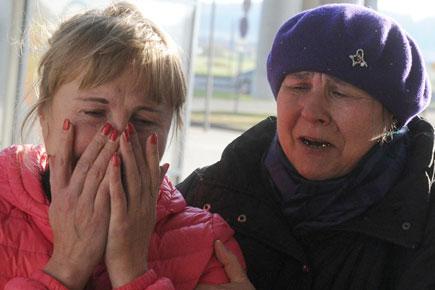
06 February,2026 05:32 PM IST | Moscow | APAt least 15 worshippers were killed and more than 80 others injured when a suicide bomber blew himself up at a Shia mosque during Friday prayers in Pakistan's capital, police and the district administration said. The powerful explosion occurred at Khadijatul Kubra mosque-cum-imambargah in the Tarlai area of the federal capital, the police said in a statement. The suicide bomber was stopped at the gate of the Imambargah, but he detonated himself, police and eyewitnesses said. In a post on X, Islamabad Deputy Commissioner Irfan Nawaz Memon said that more than 80 people were injured in the blast, while 15 bodies were shifted to different hospitals. Police and Rescue 1122 personnel reached the site of the incident and initiated rescue operations. No group immediately claimed responsibility for the blast. However, police sources said that the attacker was a foreign national and had links with Fitna al Khwaraji, a term used for Tehreek-e-Taliban Pakistan (TTP). The army troops and Rangers have cordoned off the area, and security operations are underway in and around the site of the blast. An emergency was declared in the hospitals of the capital to deal with the situation, as the injured were being shifted to hospitals. The attack came less than three months after a suicide bomber killed 12 people in a blast outside a district and sessions court building in Islamabad. Today's attack came when Uzbek President Shavkat Mirziyoyev was visiting Pakistan. He arrived on a two-day state visit on Thursday. President Asif Ali Zardari, Prime Minister Shehbaz Sharif and Senate Opposition Leader Allama Raja Nasir Abbas condemned the attack. "Targeting innocent civilians is a crime against humanity," Zardari said. Strongly condemning the attack, Abbas said that targeting places of worship is a direct attack on humanity, religion and social values, which cannot be tolerated under any circumstances. According to police officials, the nature of the explosion was being probed, but the explosion seems to be a suicide attack. Minister of State for Interior Talal Chaudhry visited the Pakistan Institute of Medical Science (PIMS) hospital in Islamabad and met the injured. Minister for Parliamentary Affairs Tariq Fazal Chaudhry strongly condemned the attack in a post on social media platform X, expressing grief over the loss of lives in the "cowardly act". "Such acts of terrorism cannot dampen the morale of the nation. The need of the hour is that we all stand united for peace, tolerance, and stability, and express solidarity with law enforcement agencies," the minister stressed. Chaudhry is a native of Islamabad and belongs to the area where the blast occurred. This story has been sourced from a third party syndicated feed, agencies. Mid-day accepts no responsibility or liability for its dependability, trustworthiness, reliability and data of the text. Mid-day management/mid-day.com reserves the sole right to alter, delete or remove (without notice) the content in its absolute discretion for any reason whatsoever.
06 February,2026 04:56 PM IST | Islamabad | PTIUS President Donald Trump has rejected a proposal from Russian President Vladimir Putin to voluntarily continue observing limits on strategic nuclear weapons following the expiration of the landmark new Strategic Arms Reduction Treaty (START). The development came as Thursday marked the end of the pact, which had imposed the final remaining restrictions on the nuclear arsenals of the United States and Russia, the two nations possessing the world's largest stockpiles, leaving, for the first time in over five decades, no legally binding constraints in place. Responding on his social media platform, Trump criticised the agreement, calling it "a badly negotiated deal by the United States" that was "being grossly violated." He said, "Rather than extend 'NEW START' -- a badly negotiated deal by the United States that, aside from everything else, is being grossly violated- we should have our Nuclear Experts work on a new, improved, and modernised Treaty that can last long into the future." Framing his decision within a broader push to strengthen American military power, Trump highlighted what he described as sweeping defence upgrades during his presidency. "The United States is the most powerful country in the world," he asserted, adding, "I completely rebuilt its military in my first term, including new and many refurbished nuclear weapons." He also credited the establishment of the Space Force and pointed to what he called unprecedented expansion across military branches. Continuing that theme, Trump referenced enhancements in naval forces, claiming the addition of battleships "100 times more powerful than the ones that roamed the seas during World War II," specifically citing vessels such as the Iowa and the Missouri. He went on to claim personal credit for preventing global nuclear confrontations, stating without elaboration, "I have stopped nuclear wars from breaking out across the world between Pakistan and India, Iran and Israel, and Russia and Ukraine." The New START agreement, concluded in 2010 between then US President Barack Obama and Russia's then leader Dmitry Medvedev, had placed ceilings on deployed strategic nuclear warheads and their delivery systems maintained by Washington and Moscow. With the treaty now expired, those limits are no longer enforceable, prompting arms control advocates to warn of the risk of a fresh nuclear arms buildup. The erosion of the pact had begun earlier, when in February 2023 Putin announced Russia's suspension of participation, saying Moscow "couldn't allow US inspections of its nuclear sites at a time when Washington and its NATO allies have openly declared Moscow's defeat in Ukraine as their goal." New START had stood as the final surviving agreement in a decades-long chain of arms control deals between Russia and the United States, a process that began with SALT I in 1972, aimed at restraining the nuclear stockpiles of the two powers. This story has been sourced from a third party syndicated feed, agencies. Mid-day accepts no responsibility or liability for its dependability, trustworthiness, reliability and data of the text. Mid-day management/mid-day.com reserves the sole right to alter, delete or remove (without notice) the content in its absolute discretion for any reason whatsoever
06 February,2026 11:41 AM IST | Washington | ANIChinese robotics firm MirrorMe Technology has unveiled what it claims is the fastest-running humanoid robot to date, marking a new benchmark in bipedal robotics. Bolt — the full-size humanoid —achieved a peak speed of 10 metres per second during real-world testing. The feat makes Bolt the first humanoid robot of its size to reach such velocities outside the lab. The robot — standing 5.7 feet tall and weighing 75 kg — is built around newly designed joints and a fully optimised power system intended to replicate natural human movement while sustaining extreme speeds. Last year, MirrorMe’s Black Panther II stunned audiences by running 100 metres in 13.17 seconds on Chinese TV, reportedly outperforming US-based Boston Dynamics in speed tests. This story has been sourced from a third party syndicated feed, agencies. Mid-day accepts no responsibility or liability for its dependability, trustworthiness, reliability and data of the text. Mid-day management/mid-day.com reserves the sole right to alter, delete or remove (without notice) the content in its absolute discretion for any reason whatsoever
06 February,2026 09:44 AM IST | Beijing | AgenciesADVERTISEMENT