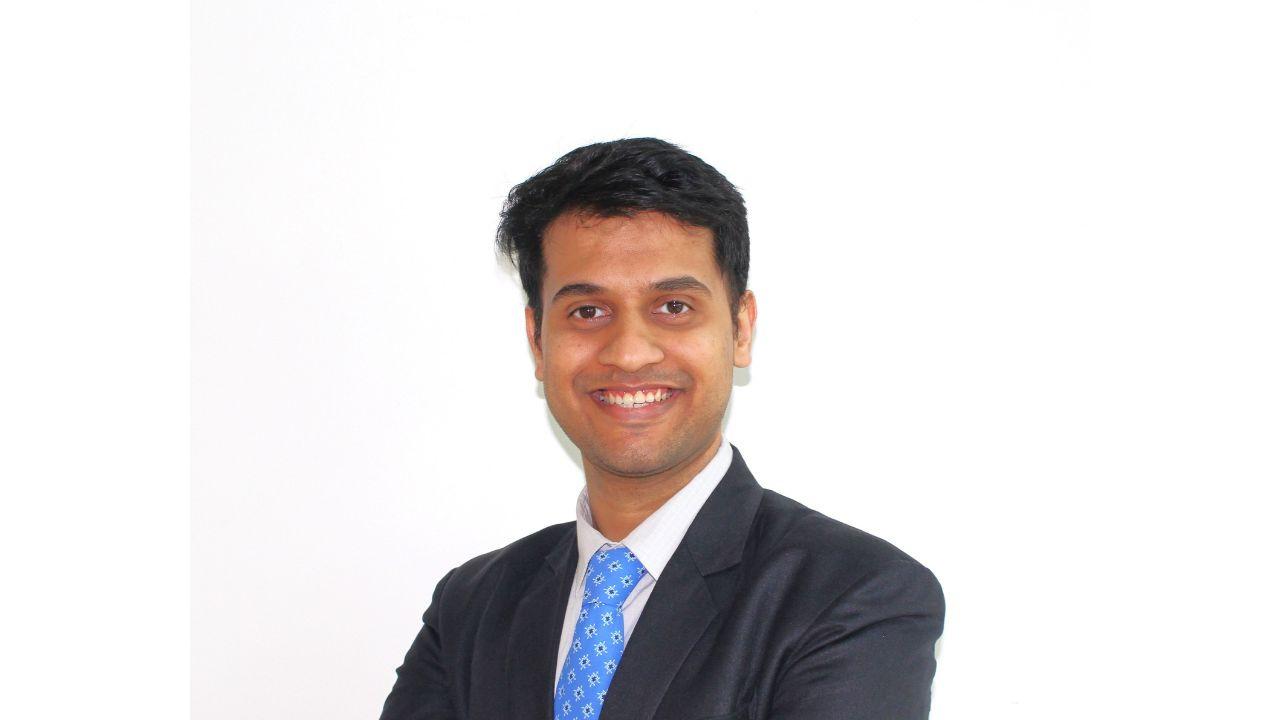
Fintech researcher Dr. Srinidhi Vasan explains UPI failures, user awareness gaps, and how better design can scale digital payments.

UPI research
In conversation with Dr. Srinidhi Vasan, fintech researcher whose doctoral work on UPI adoption and failure patterns is influencing how digital payments can scale sustainably in India and beyond
Interviewer:
UPI has become almost inseparable from daily life in India. What led you to focus your doctoral research specifically on UPI?
Dr. Srinidhi Vasan:
UPI is one of the most ambitious digital public infrastructures ever built. Its scale is extraordinary-not just in transaction volume, but in the diversity of users, from urban professionals to rural merchants. While much of the public conversation celebrates UPI’s success, I noticed a quieter but critical issue during my professional and academic exposure: transaction failures and user-side errors were growing alongside adoption.
My doctoral research was motivated by a simple question-why does a system that is technologically robust still experience business decline and failed transactions at scale? The answer, I found, was not purely technical. It lay at the intersection of user awareness, behavioural understanding, and system design, which became the foundation of my study.
Interviewer:
Your research highlights “business decline” in UPI transactions. Could you explain what that means in simple terms?
Dr. Srinidhi Vasan:
Certainly. When a UPI transaction fails, it is often categorized as either a technical decline or a business decline. Technical decline relates to infrastructure-server downtime, banking system latency, or network failures. Business decline, however, is largely user-driven.
This includes incorrect inputs, misunderstanding payment flows, panic cancellations, misinterpretation of collect requests, or poor digital literacy around error resolution. My research showed that a significant percentage of UPI failures were attributable to business decline, meaning the user did not fully understand how to complete or recover a transaction successfully.
This distinction is important because fixing infrastructure alone does not solve the problem. You also need to fix how users interact with the system.
Interviewer:
Your DBA research resulted in a framework called UMA. What exactly is this framework?
Dr. Srinidhi Vasan:
UMA stands for User Management Awareness. It is a conceptual framework developed using the Technology Acceptance Model (TAM) and its extended version, TAM2, adapted specifically for digital payment systems like UPI.
The framework identifies key awareness dimensions that determine whether a user can complete a transaction successfully. These include:
Understanding transaction intent (send vs request)
Awareness of authentication steps
Error-handling knowledge
Trust calibration (knowing when not to act)
Familiarity with app-specific flows
Rather than assuming users will “learn by doing”, UMA proposes that awareness must be structurally built into digital payment experiences-through design, prompts, education, and policy support.
Interviewer:
How was this framework validated during your research?
Dr. Srinidhi Vasan:
The framework was tested through qualitative research involving industry experts, banking professionals, and actual UPI users across demographics. I used thematic analysis supported by NVivo software to evaluate expert interviews and user responses.
What stood out was consensus across stakeholders: transaction failures were less about fear of technology and more about uncertainty during execution. When users hesitated, guessed, or reacted emotionally, failures increased. The UMA framework addresses this gap by emphasising predictability, clarity, and confidence in digital transactions.
Interviewer:
Why does this research matter now, when UPI volumes are already so high?
Dr. Srinidhi Vasan:
Scale amplifies weaknesses. When UPI handled millions of transactions, failures were manageable. At billions of transactions per month, even a small percentage of user-side failure translates into massive reconciliation costs, consumer frustration, and institutional strain.
Banks face delayed reversals. Merchants face cash-flow uncertainty. Users lose trust. My research argues that long-term sustainability of UPI depends as much on behavioural design as on technology upgrades.
This is particularly relevant as UPI expands into credit lines, cross-border payments, offline modes, and international corridors.
Interviewer:
Can this framework help India’s current digital payment trends?
Dr. Srinidhi Vasan:
Absolutely. India is entering a phase where digital payments are no longer optional-they are infrastructural. UMA can support:
Government-led digital literacy programs
Bank and app-level UX improvements
Merchant onboarding and training
Fraud prevention through informed user behavior
Instead of reacting to failures, stakeholders can design for prevention. This reduces operational costs and improves user trust-both critical for India’s digital economy.
Interviewer:
UPI is now being adopted outside India. Does your research have global relevance?
Dr. Srinidhi Vasan:
Yes, and this is one of the most important outcomes of my work. Countries adopting UPI-like systems often focus on replication of technology. My research suggests that replication without contextual user-awareness frameworks leads to fragile adoption.
Markets in Asia, the Middle East, and parts of Europe exploring UPI interoperability can benefit from UMA as a pre-adoption diagnostic tool. It helps answer questions like:
Are users ready for real-time payments?
Where will failures likely occur?
What education or design interventions are needed?
In this sense, the framework travels well beyond India.
Interviewer:
Your research also touches on fraud and misuse. How does awareness help here?
Dr. Srinidhi Vasan:
Most UPI fraud exploits confusion, urgency, or misplaced trust. Users often believe scanning a QR code will receive money, or that sharing a PIN is procedural. UMA directly addresses this by identifying critical awareness checkpoints where users must pause and verify intent.
Fraud prevention is not only about blocking bad actors-it’s about empowering users to recognise unsafe situations. Awareness becomes a security layer.
Interviewer:
What role can institutions like NPCI and banks play using insights from your research?
Dr. Srinidhi Vasan:
Institutions can embed awareness structurally rather than episodically. This includes:
Contextual in-app nudges
Clearer transaction-state messaging
Standardized failure-resolution flows
Data-driven identification of high-risk user actions
Bodies like the National Payments Corporation of India are uniquely positioned to convert such frameworks into ecosystem-wide best practices, ensuring uniformity across apps and banks.
Interviewer:
From a business perspective, how does reducing business decline help the economy?
Dr. Srinidhi Vasan:
Every failed transaction has a cost-operational, psychological, and economic. Reducing business decline improves:
Merchant liquidity
Bank reconciliation efficiency
Consumer confidence
Overall transaction velocity
At scale, this strengthens formalisation of the economy, improves data integrity, and supports inclusive growth-key goals of India’s digital agenda.
Interviewer:
What are the next steps for this research?
Dr. Srinidhi Vasan:
The framework can be extended to:
Cross-border UPI corridors
Credit-linked UPI products
Blockchain-based settlement layers
AI-driven user-risk scoring
The core idea remains the same: technology adoption succeeds when users are not just enabled but understood.
Interviewer:
Finally, what would you like policymakers and technologists to take away from your work?
Dr. Srinidhi Vasan:
Digital payment systems are socio-technical systems. If we design only for speed and scale, we inherit fragility. If we design for awareness, trust, and clarity, we build resilience.
UPI has already transformed how money moves. The next transformation is ensuring it moves reliably, safely, and inclusively-and that requires placing the user at the centre of design.
About the Interviewee
Dr. Srinidhi Vasan is a fintech researcher whose doctoral work focuses on UPI adoption, transaction failure analysis, and user-awareness frameworks. His research bridges academic models and real-world digital payment systems, with relevance across India and international UPI implementations.
Subscribe today by clicking the link and stay updated with the latest news!" Click here!