


Tunnel by Sunil Chaturvedi highlights human stories behind Himalayan infrastructure and development challenges.
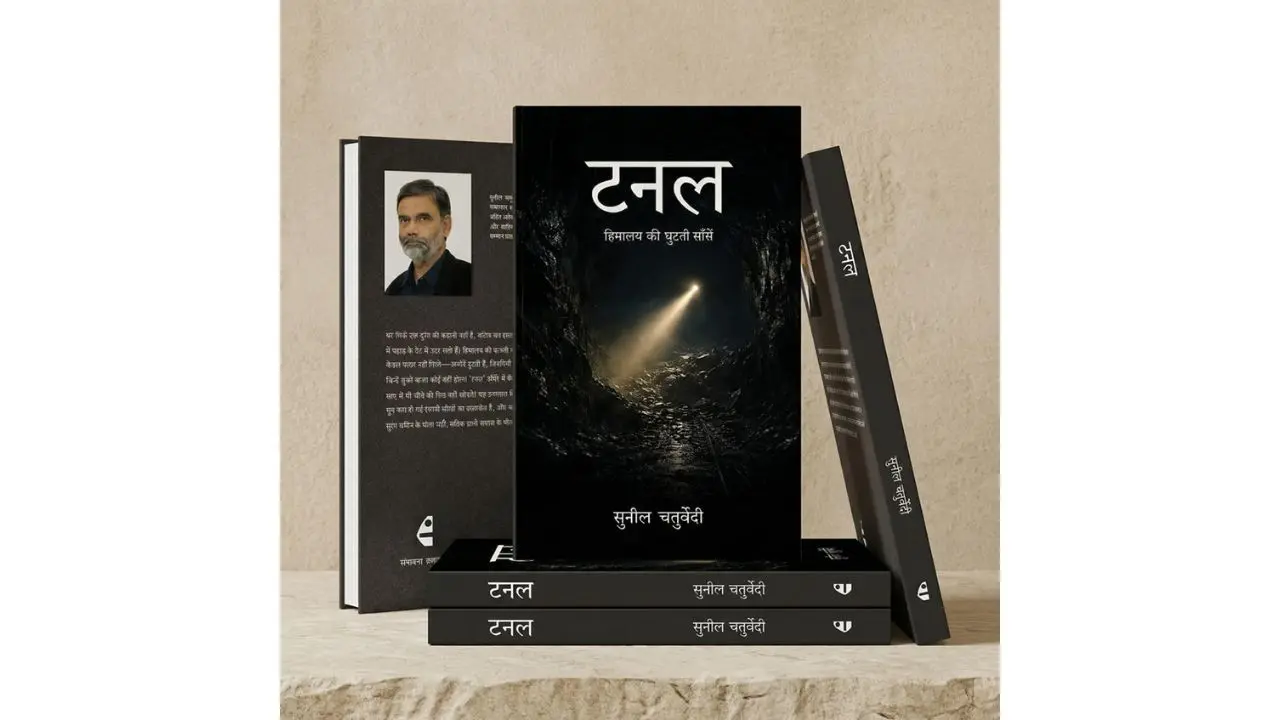
Tunnel novel review
We often hear that the country is developing at a rapid pace. New roads are being built, tunnels are being carved, and connectivity is improving across regions that were once difficult to access.
But how often do we pause and ask what gets left behind in this process?
Tunnel, the latest novel by Sunil Chaturvedi, brings this question to the forefront in a way that feels direct and grounded. It is not loud or dramatic, but it stays with you. Set in the Himalayan region, the book looks at the world inside mountain tunnels and the lives of the people who work there. It shifts the focus from the scale of the project to the reality on the ground.
Where the Work Begins, the Story Begins
Every morning in the mountains, workers step into narrow tunnels carved deep into rock. For them, this is routine.
They come from different parts of the country, often from small towns and villages, carrying with them the responsibility of supporting families back home. The work is tough, but it is necessary.
When an accident happens, it briefly captures public attention. There are updates, discussions, and concerns. But as days pass, the coverage fades, and the work resumes.
This is where the story begins to take a different direction. Instead of focusing on the moment of crisis, Tunnel looks at what happens after the attention disappears, when life quietly goes on.
Beyond the Project, There Are Lives
We are used to seeing infrastructure projects as milestones. Numbers, deadlines, and achievements often define how we measure success.
But this story takes a step back and looks at what lies beneath those numbers.
It shows that behind every project, there are lives shaped by it. The mountains here are not just a setting. They have their own character, their own limits. And when those limits are overlooked, the consequences are not always immediate, but they are real.
The novel does not push this idea aggressively. It lets it unfold naturally through the environment and the people living within it.
The Faces We Rarely Notice
Every large-scale project is supported by people who rarely come into focus. This book brings those people to the centre. The workers in the tunnel are not reduced to statistics or background figures. They are individuals with their own stories, responsibilities, and hopes.
One is saving for his child’s education. Another is counting the days until he can return home. Their lives are simple, but they carry weight.
What makes the narrative effective is that it does not try to dramatise them. It presents them as they are. That honesty is what makes the story feel real.
Development Is Important, So Are the Questions
There is no denying that infrastructure development in mountainous regions is important. It improves connectivity, creates opportunities, and supports growth.
- But alongside this progress, certain questions remain.
- Are environmental concerns being given equal importance?
- Is worker safety being treated as a priority, or as an assumption?
Tunnel does not attempt to answer these questions in a definitive way. Instead, it makes sure they are not ignored. And sometimes, that is more powerful than offering easy answers.
A Story Shaped by Real Experience
What gives the novel its depth is the experience behind it. Sunil Chaturvedi is not just a writer observing from a distance. He has spent years working in water conservation and rural development, closely engaging with communities and understanding environmental challenges. This background reflects in the writing. The situations in the book do not feel imagined for effect. They feel observed, understood, and carefully presented. As a reader, you get a sense that the story is not constructed from the outside. It comes from lived understanding.
A Consistent Voice Across His Work
If you look at Chaturvedi’s earlier works, a pattern becomes clear. His stories consistently focus on how larger systems impact ordinary lives.
- In Mahamaya, he explored the relationship between faith and institutions.
- In Kalichaat, he looked at the realities of farmers and economic change.
- In Lapka, he examined the effects of tourism on local communities.
With Tunnel, that same perspective extends to the intersection of development, environment, and human lives.The context changes, but the focus remains the same.
Why This Book Stays With You
We often engage with development through headlines and data. But those rarely capture the full picture.
This book brings attention to what usually goes unnoticed.
Tunnel is written in a simple, accessible style. It does not try to overwhelm the reader. Instead, it builds its impact gradually. It is not a loud book, but it leaves a lasting impression. And perhaps that is what makes it meaningful.
If you’d like to explore the story further, you can find it here: [Link]
https://www.amazon.in/Tunnel-%E0%A4ŻF%E0%A4%A8%E0%A4%B2-Gasping-Breaths-Himalayas/dp/8190892754/ref=sr_1_1?crid=1YR3ZJDDKUHCW&dib=eyJ2IjoiMSJ9.4PCGDCSS5RJ0h9JK1ANzg05PzhralXYX6BwNlH4tHiE.JNpFHBczBUavVoN0TY48piuXdMCAQK-huiBqpwYdFXc&dib_tag=se&keywords=tunnel+by+sunil+chaturvedi&qid=1776160540&s=books&sprefix=tunnel+by+sunil+chaturvediŴCstripbooksŴC391&sr=1-1
 Subscribe today by clicking the link and stay updated with the latest news!" Click here!