shot-button
Home > Buzz > When BKCs core ran out of space the market didnt slow down

When BKC’s core ran out of space, the market didn’t slow down

Updated on: 19 January,2026 12:36 PM IST  |  Mumbai
Buzz | faizan.farooqui@mid-day.com

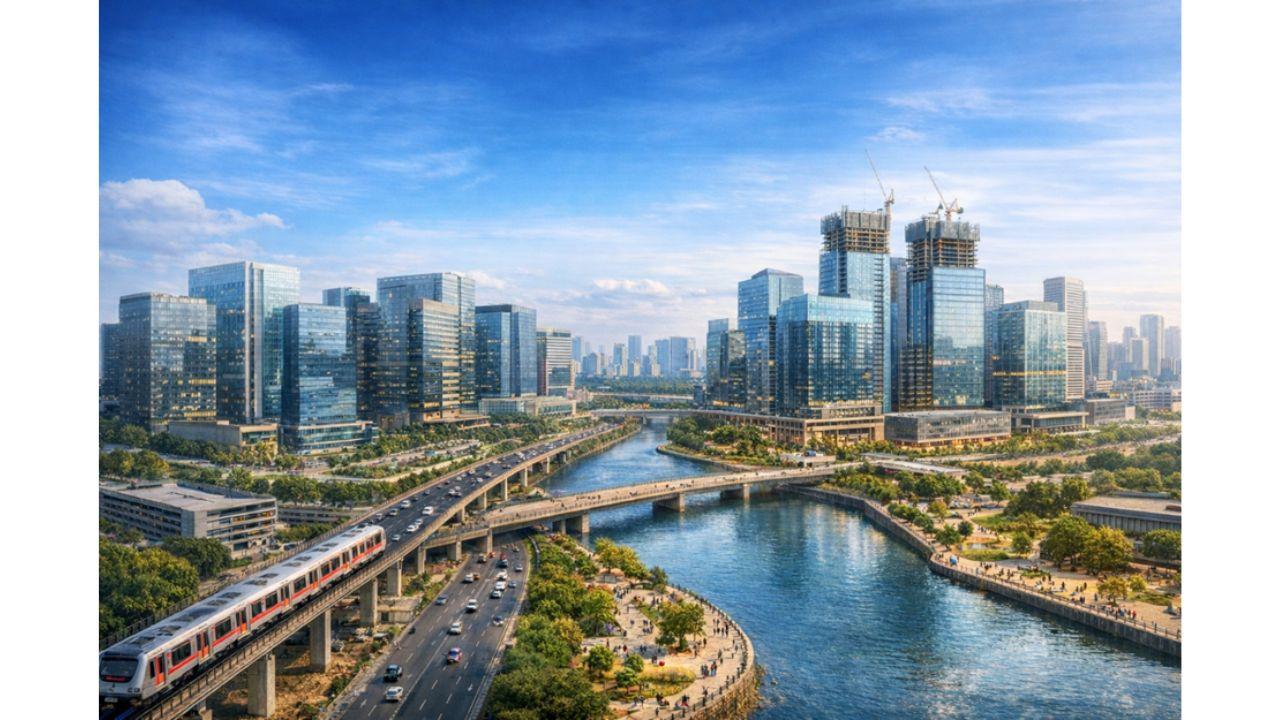
With G-Block saturated, BKC’s next commercial growth phase is unfolding in H-Block, driven by demand, adjacency, and infrastructure.

When BKC’s core ran out of space, the market didn’t slow down

By Vikas Jain, CEO, Labdhi Lifestyle Limited

Bandra Kurla Complex has crossed a threshold that most business districts reach only after decades of consolidation. The commercial core is no longer growing. G-Block, which anchors BKC’s Grade-A office market, is effectively fully absorbed. Over the past few years, absorption has consistently outpaced new completions, and there is no meaningful commercial inventory scheduled for delivery within the core precinct. Vacancy levels in prime BKC assets are widely estimated to be in the low single digits well below what would be considered a balanced market.

This saturation is precisely why attention is now shifting decisively towards H-Block. With demand holding firm across banking, private equity, consulting, fintech and global corporates, the market is being forced to look for the next viable address that preserves BKC’s functional advantages. H-Block is not emerging by chance. It is the only direction in which BKC can expand without losing continuity with its core. Demand dynamics underline this shift. Banks continue to consolidate larger floor plates to reduce fragmentation. Investment firms prioritise proximity to counterparties and advisors. Consulting firms and global corporations remain anchored to BKC because of its institutional density and operational predictability. This imbalance between supply and demand is already visible in behaviour lease tenures stretching beyond the traditional five to seven years, renewals being signed well ahead of expiry, and occupiers choosing continuity over marginal optimisation simply because alternatives within the same ecosystem are limited.

Historically, this is the point at which central business districts begin to redraw themselves. In Singapore, saturation of the traditional CBD pushed expansion towards Marina Bay. In London, pressure within the City accelerated the rise of Canary Wharf. In India, Ahmedabad’s Sabarmati Riverfront reshaped commercial activity along its edge. In each case, growth followed adjacency, infrastructure and urban quality not affordability. H-Block reflects this same pattern. While immediately adjacent to G-Block, it offers improved connectivity, benefiting from more direct access to arterial roads while remaining firmly within BKC’s commercial catchment. For occupiers, this adjacency is critical. Businesses optimise for reduced friction shorter internal travel, easier client access and proximity to allied firms. Once the core becomes supply-constrained, the market naturally gravitates to the nearest extension that preserves these advantages. What further strengthens H-Block’s position is the convergence of infrastructure and urban redevelopment around it. Publicly reported India’s biggest urban redevelopment in and around the H-Block precinct, alongside long-term Mithi Riverfront development plans, has the potential to significantly elevate urban quality along BKC’s southern edge. Globally and in India, waterfront redevelopment has consistently acted as an economic catalyst, improving walkability, public spaces and long-term commercial appeal. The Mithi River, long viewed as a constraint, is increasingly being seen as an urban asset. Riverfront transformations from Canary Wharf in London to the Sabarmati in Ahmedabad demonstrate how reclaiming waterways reshapes how business districts function and how they are perceived by global occupiers.


Infrastructure is already reinforcing this shift. Metro connectivity has compressed east–west travel times across BKC, while road upgrades have reduced peak-hour volatility. These changes rarely feature in brochures, but they materially influence leasing decisions. What was once considered peripheral is increasingly viewed as part of a single, continuous business district centred around H-Block.

BKC’s evolution through H-Block is not speculative. It is demand-led, adjacency-driven and infrastructure-supported. Saturation is often mistaken for stagnation. In reality, it is the signal that a district has succeeded and that its next phase of growth is already taking shape.

"Exciting news! Mid-day is now on WhatsApp Channels Subscribe today by clicking the link and stay updated with the latest news!" Click here!

Buzz real estate BKC (Bandra Kurla Complex) mumbai

This website uses cookie or similar technologies, to enhance your browsing experience and provide personalised recommendations. By continuing to use our website, you agree to our Privacy Policy and Cookie Policy. OK