
Wispr Flow vs OpenAI, ElevenLabs and Siri: a writing-first approach to speech-to-text tools.
Wispr Flow speech to text
Speech-to-text tools today are powerful across the board. Accuracy levels are high, models are smarter, and latency has improved across platforms. But once you move beyond basic transcription and start using voice as a primary writing tool, differences become more visible. Platforms like OpenAI, ElevenLabs, and Siri each bring strong capabilities - yet Wispr Flow approaches the problem from a distinctly writing-first perspective.
Here’s how that distinction plays out:
1. Single-Mission Design vs Multi-Purpose AI
OpenAI builds foundational AI systems that handle text, images, code, and speech. Transcription is one part of that larger ecosystem. Wispr Flow, however, is engineered specifically for voice-driven writing. That narrower mission allows it to optimize deeply around dictation flow rather than balancing multiple modalities.
2. Built for Continuous Thought Capture
Voice assistants like Siri are excellent for quick instructions and short notes. But extended dictation sessions can feel segmented. Wispr Flow is tuned for sustained speaking - capturing full paragraphs, long explanations, and structured drafts without disrupting momentum.
3. Writing Output Over Raw Transcript
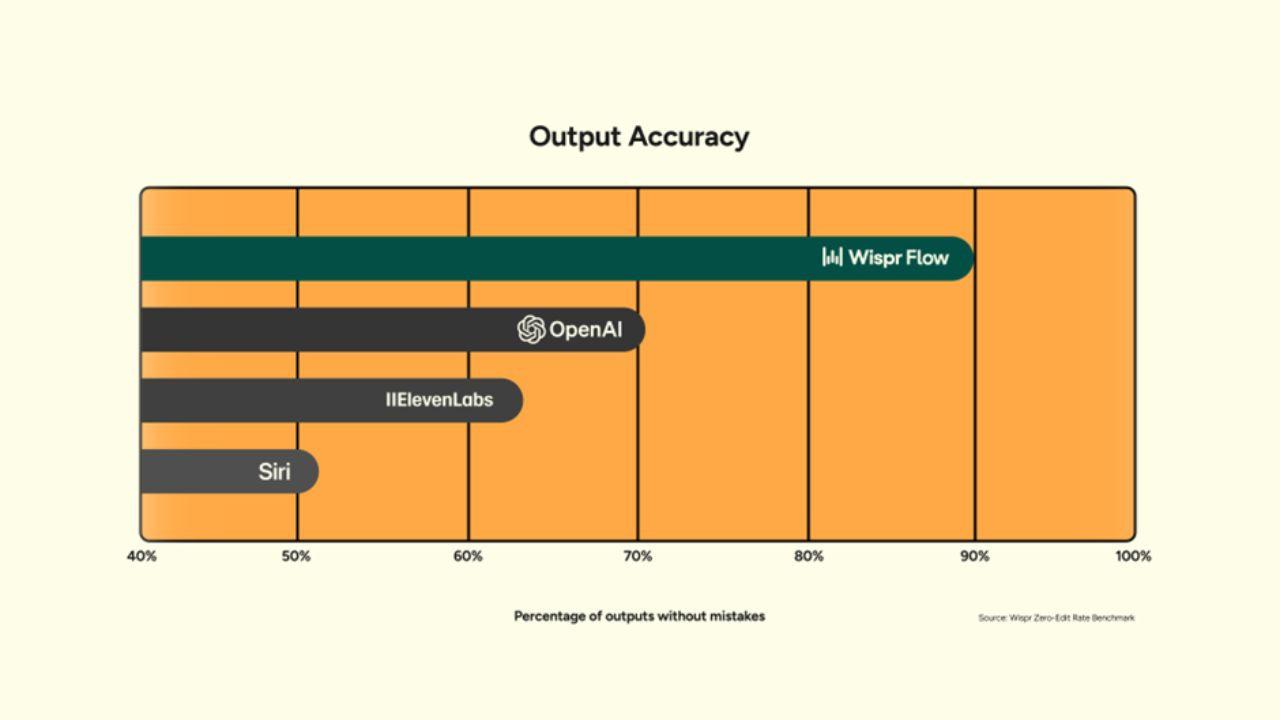
Many transcription systems focus on faithfully converting audio into text. Wispr Flow goes a step further by shaping spoken language into cleaner written structure. Punctuation, spacing, and natural formatting are handled with a writing context in mind, which reduces the need for manual corrections afterward.
4. Performance in Live Workflows
API-based solutions, including those powered by OpenAI, often depend on how they’re integrated into applications. That can influence latency and user experience. Wispr Flow is optimized for real-time interaction inside productivity environments, which makes the transition from speech to publish-ready text feel smoother.
5. Different Core Strengths Across Platforms
ElevenLabs is widely respected for high-quality voice generation and audio realism. Its innovation centers on producing lifelike synthetic speech. Wispr Flow, in contrast, concentrates on the opposite direction - turning natural, sometimes messy human speech into structured written content suited for professional use.
6. Reduced Friction for Daily Use
When dictation becomes a daily habit rather than an occasional feature, small UX differences matter. Tools designed specifically to replace typing tend to minimize interruptions, formatting steps, and editing cycles. That’s where Wispr Flow’s specialization becomes noticeable.
 Subscribe today by clicking the link and stay updated with the latest news!" Click here!