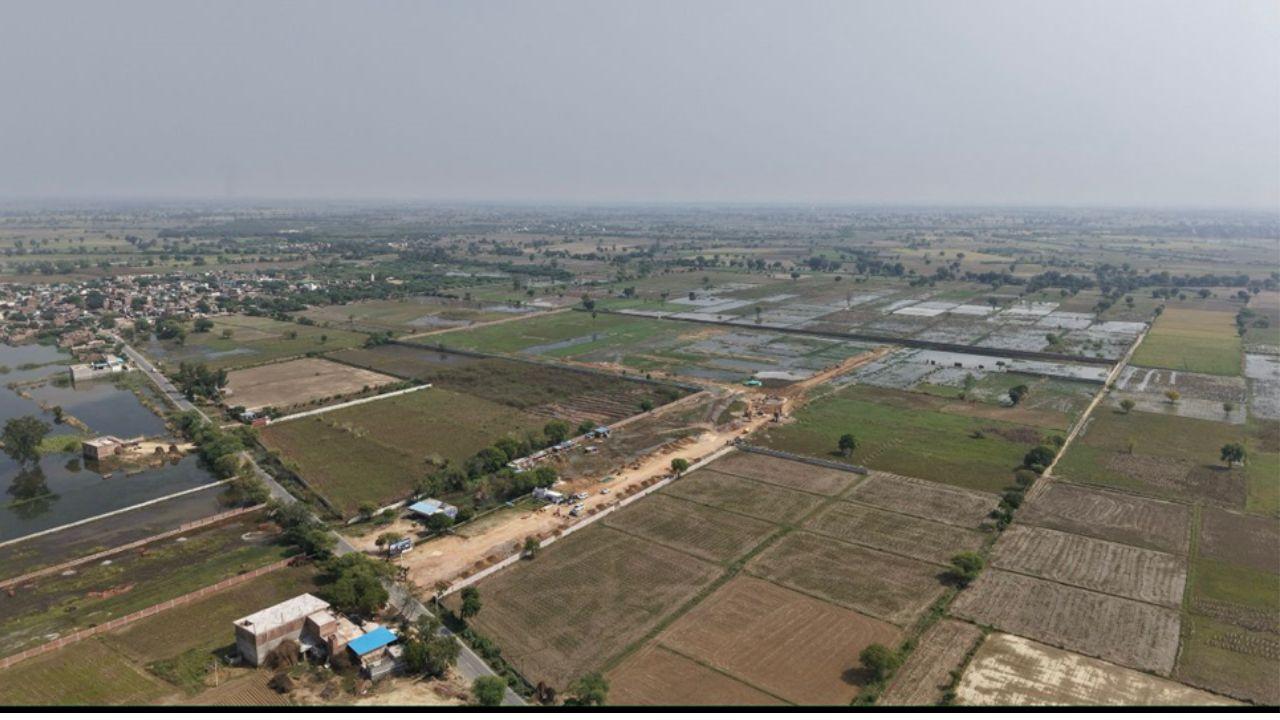
Barsana emerges as a prime real estate hotspot as Braj’s spiritual tourism and infrastructure push drive long-term investment growth.

Barsana real estate
In 2025, the real-estate narrative in India is witnessing a significant turn - not just around urban expansion, but around heritage belts, pilgrimage zonesand spiritual-tourism corridors. Amid this transformation, the Braj region - including Barsana - is emerging as a central node. For projects like Aanandam Valleey, the timing could offer one of the strongest growth entry windows in decades.
This article explores why infrastructure commitments, regional master-plans, rising spiritual-tourism emphasis and changing buyer psychology combine to make Barsana (and similar heritage zones) highly attractive for long-term real estate investment.
Spiritual-Tourism + Government Push = Real Estate Acceleration
Recent developments show that the state government has placed renewed focus on developing the Braj region - Mathura, Vrindavan, Barsana, Govardhan and related pilgrimage destinations - on the lines of major spiritual hubs.
A reported ₹30,000 crore master plan is being charted for integrated township development, improved connectivity, heritage-corridor enhancement, tourism infrastructureand civic upgrades across Braj.
Such large-scale public investment injects long-term structural value into real estate - not just temporary price surges. For buyers, this means plots bought today can benefit from increased accessibility, rising footfall, better civic amenities and overall demand stability.
What Infrastructure Upgrades Mean for Plotted Township Projects
When infrastructure (roads, heritage corridors, connectivity, civic systems) improves, the real estate value near those zones elevates - especially when supply is limited. This manifests in multiple ways:
- Improved connectivity leads to better demand from outside cities (NRIs, second-home buyers, spiritual seekers).
- Upgraded civic and tourism infrastructure makes the area viable not just for seasonal but permanent living.
- Regulatory focus and township-level approvals reduce legal/construction risk - making plotted township investments more secure.
- Heritage + tourist-driven demand supports rental / guest-house / short-stay markets - adding liquidity.
In India, recent studies and market analyses show that religious-tourism led real estate zones have delivered sustained demand increases, not just during festival/peak periods but year-round.
For a planned township like Aanandam Valleey, this means early buyers can secure plots at base prices before the full effect of infrastructure upgrades hits the market.
Precedent: How Cities Like Ayodhya Prove the Model Works
One of the most cited successes of the “temple + infrastructure → property boom” model is Ayodhya. Since the revival and development of the Ram Mandir, the city has witnessed explosive growth:
- Land and plot prices in temple-adjacent zones reportedly increased 5× to 10× within a few years.
- Circle rates (official land-valuation metrics) were revised upward by up to 200% in 2025 alone, reflecting the rapid demand and infrastructural upgrades.
- Developers and investors have launched multiple plotted-township and villa-plot projects - indicating sustained demand beyond speculative buying.
These developments illustrate a clear pattern: once a pilgrimage city receives heritage-infrastructure investment and religious tourism picks up, property cycles shift from volatility to long-term value growth. For Barsana, the emerging master-plan for Braj offers a comparable opportunity - potentially even at an earlier stage, meaning higher growth potential for early investors.
Limited Supply + Growing Demand = Value Compression (Upward Pressure)
One key driver for land value appreciation in spiritual belts is supply constraint. Unlike conventional urban peripheries where new zones keep getting released, temple-region real-estate zones are often tightly regulated:
- Heritage norms may restrict dense high-rise development.
- Buffer zones around temples and sacred sites limit usable land.
- Demand from pilgrims, devotees, NRIs and spiritual-living seekers keeps increasing - but supply remains limited.
This mismatch - growing demand + capped supply - creates a classic “value compression” scenario: price per sq. ft (or per yard) inflates quickly, especially once infrastructure upgrades reduce the friction of access.
For plotted townships like Aanandam Valleey, this condition is ideal: buyers get early access; scarcity ensures value retention; and long-term appreciation is likely.
Why Early-Phase Entry Still Matters in 2025
Because public funding and master-plans move slower than market cycles, early-phase entry provides maximum upside.
As infrastructure completes - roads, connectivity, tourism circuits - demand spikes. Early investors see maximum ROI.
Mid-2020s is when Braj’s master plan is being announced. Projects started now complete before full impact - ideal for medium-term (5-10 year) appreciation.
As more townships launch, early ones become reference zones for pricing. Later buyers pay a premium.
This is precisely where the leadership vision of Parmod Kumar Gupta becomes relevant. Known for shaping Faridabad’s modern residential identity-from pioneering floor-format townships in the ’90s to landmark developments like World Street and Aagman - he has historically entered markets at inflection points and created value curves that followed for years. His entry into Barsana is not tactical; it is based on the same principle he has scaled before - enter early, build with quality, institutionalize planningand let demand naturally uplift pricing.
Just like early entrants into Gurugram’s Sohna Road and Dwarka Expressway outperformed later entrants, Aanandam Valleey stands at that moment for Barsana.
In similar markets like Ayodhya and Ujjain, early adopters reaped 3x–5x gains in 4–6 years, as per RealtyNXT and Business Today analyses.
Thus, Aanandam Valleey-guided by the development vision of Parmod Ji-may witness similar compounding growth, especially because Barsana enjoys:
✔ a strong spiritual identity
✔ open land availability
✔ infrastructure-backed relevance
✔ increased demand from NCR markets
Being early in that cycle historically yields maximum upside.
Risks & What To Ensure - But Why They Are Manageable Now
No investment is risk-free. For spiritual-township real estate, potential challenges include:
- Overhyped demand followed by speculative surge and correction - but this risk is mitigated if benefit from actual infrastructure and long-term tourism.
- Regulatory uncertainties around heritage zones - which demand due diligence on approvals and compliance before purchase.
- Oversupply if too many townships launch together - could dilute demand.
That said, for a well-planned, legally compliant project with clear infrastructure tie-in and early-buyer clarity - like Aanandam Valleey - these risks are significantly lower compared to speculative urban plots.
Moreover, the growing trend of heritage-tourism backed development, master-plan investmentand long-term buyer interest in wellness/spiritual living - all help reduce supply-side risk by sustaining demand.
Subscribe today by clicking the link and stay updated with the latest news!" Click here!