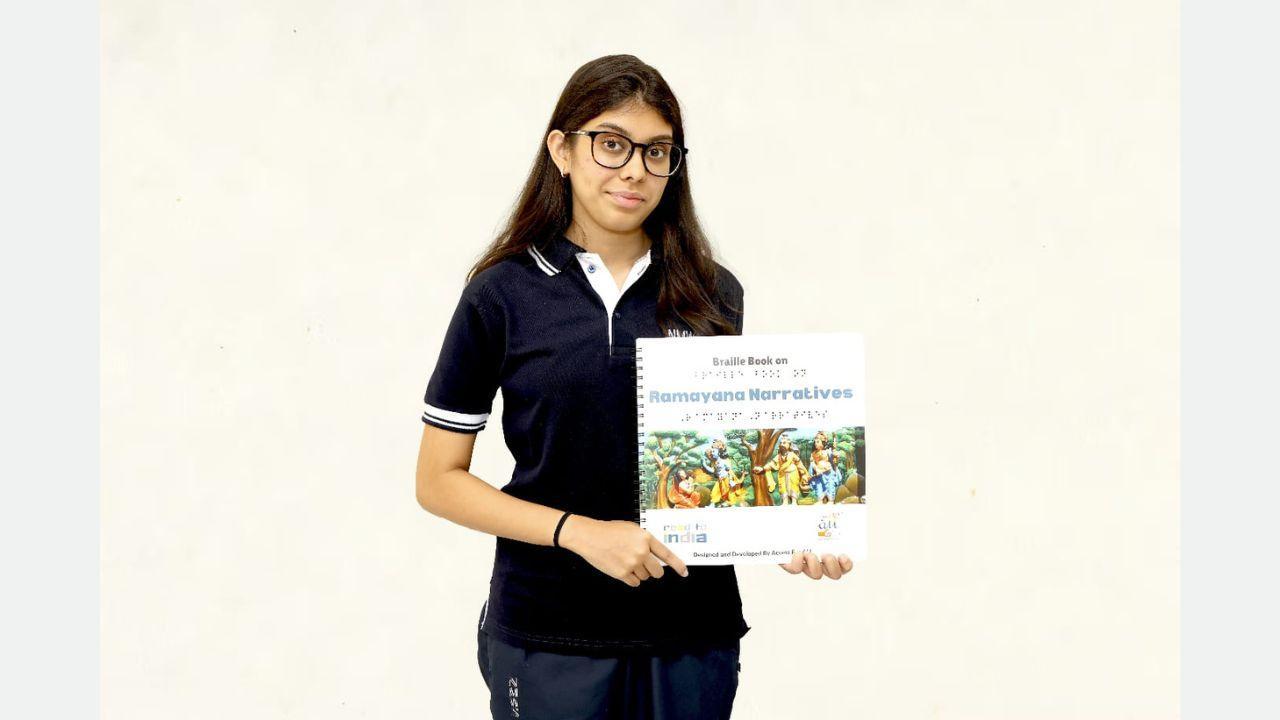
Gauri Gupta’s tactile Braille Ramayana brings India’s epic to blind readers, promoting inclusive storytelling, cultural access, and equal literary rights.

Braille Ramayana
In a country where stories from ancient epics like the Ramayana shape cultural, moral, and social consciousness, access to such literature should be universal. Yet, for millions of blind and visually impaired individuals in India, engaging meaningfully with these texts has long been a challenge due to a lack of inclusive formats. In response, Gauri Gupta, a passionate accessibility advocate, led the development of a pioneering Braille book enriched with tactile illustrations based on the Ramayana. This groundbreaking initiative not only bridges a significant gap in accessible literature but also reaffirms the importance of cultural inclusion and equitable education.
The Cultural Weight of the Ramayana
The Ramayana is more than just an ancient epic-it is a living text that influences language, values, art, theatre, festivals, and even governance in India and across Southeast Asia. It tells the story of Lord Rama, his wife Sita, and his battle against the demon king Ravana, all while emphasizing dharma (righteousness), loyalty, and devotion.
For sighted readers, these stories are often introduced early through richly illustrated books, television adaptations, school curricula, and religious discourse. Visual storytelling-laden with expressive characters, divine symbols, and fantastical landscapes-plays a key role in communicating the essence and emotion of the epic. For blind and visually impaired readers, however, traditional visual elements remain largely inaccessible. This restricts not only their cultural literacy but also their emotional and sensory engagement with stories that are integral to India’s collective identity.
Gauri Gupta’s Vision for Inclusive Design
Recognizing this gap, Gauri Gupta embarked on an ambitious project: to create a Braille version of the Ramayana that incorporates tactile illustrations, allowing readers to experience the narrative both textually and through touch. Developed in collaboration with Access For ALL, this initiative represents a significant advancement in accessible publishing in India.
This book is not merely a translation of printed words into Braille; it’s a reimagining of the reading experience. By combining carefully crafted tactile graphics with Braille text, Gauri has made it possible for visually impaired readers to engage with both the storyline and the visual motifs traditionally associated with the Ramayana.

The Design Process: Telling Stories Through Touch
Designing a tactile book is an intricate process that requires a deep understanding of how blind individuals perceive shape, texture, and spatial relationships through their fingertips. Each image in the book-from Rama’s bow and Sita’s swayamvar to the towering Lanka or the monkey-god Hanuman in flight-was meticulously designed in raised lines and textures to convey details without overwhelming the reader.
Special consideration was given to the clarity and simplicity of each tactile image. Unlike visual illustrations, which can be dense with colour and detail, tactile graphics must balance recognizability with readability. Techniques like layering, varying line thickness, and distinct textural patterns were used to help readers distinguish elements like clothing, weapons, or architecture.
To ensure that the images were truly interpretable, prototypes were tested with blind users of different ages. Their feedback informed iterative changes, improving the way narratives were paired with images. The result is a book that doesn’t just describe the Ramayana-it invites readers to explore it with their hands.
Why Accessibility in Literature Matters
According to the World Health Organization, India is home to over 9 million blind people-the highest in the world. Yet, accessible books, especially those in Indian languages and dealing with Indian cultural themes, remain scarce. Most educational and literary materials for the visually impaired are utilitarian, focused on textbooks or vocational training. Rarely do they include works of mythology, folklore, or art.
This imbalance limits the emotional, imaginative, and spiritual development of blind children and adults alike. It also creates a cultural disconnect, depriving them of shared references and communal narratives that shape social interaction and national identity. By developing a tactile version of the Ramayana, Gauri Gupta not only makes literature more inclusive but also reinforces the right of every individual-regardless of ability-to participate fully in their cultural heritage.
Fostering Explorative Learning and Empathy
The tactile Ramayana is more than a book; it's a tool for experiential and explorative learning. For blind readers, being able to touch and interpret scenes from the epic nurtures curiosity, imagination, and personal interpretation-hallmarks of literary appreciation that are often sidelined in accessibility-focused education.
Moreover, such tactile books can be used in inclusive classrooms, where sighted and blind children read and learn together. In such environments, tactile graphics encourage interaction and collaboration, fostering empathy and understanding from an early age. It shows all children that different ways of reading and knowing can coexist-and enrich each other.
A Path Forward
The success of this tactile Ramayana opens the door to further innovation in accessible storytelling. Other epics like the Mahabharata, folklore from tribal regions, or historical narratives could be adapted in similar formats. With advancing technology and increased awareness, the future of accessible publishing in India is poised to grow-but only if it is driven by intent, inclusivity, and cultural relevance.
Conclusion
With the Braille and tactile Ramayana, Gauri Gupta has not just created a book, she has built a bridge. A bridge that connects blind readers to one of the most foundational stories of Indian civilization, and in doing so, affirms their right to explore, learn, and belong. In every raised line and textured shape, this project echoes a larger truth: literature, like light, must be for everyone.
Subscribe today by clicking the link and stay updated with the latest news!" Click here!