








Readers will appreciate how the book maintains a solution-oriented tone and avoids ideological polarisation.
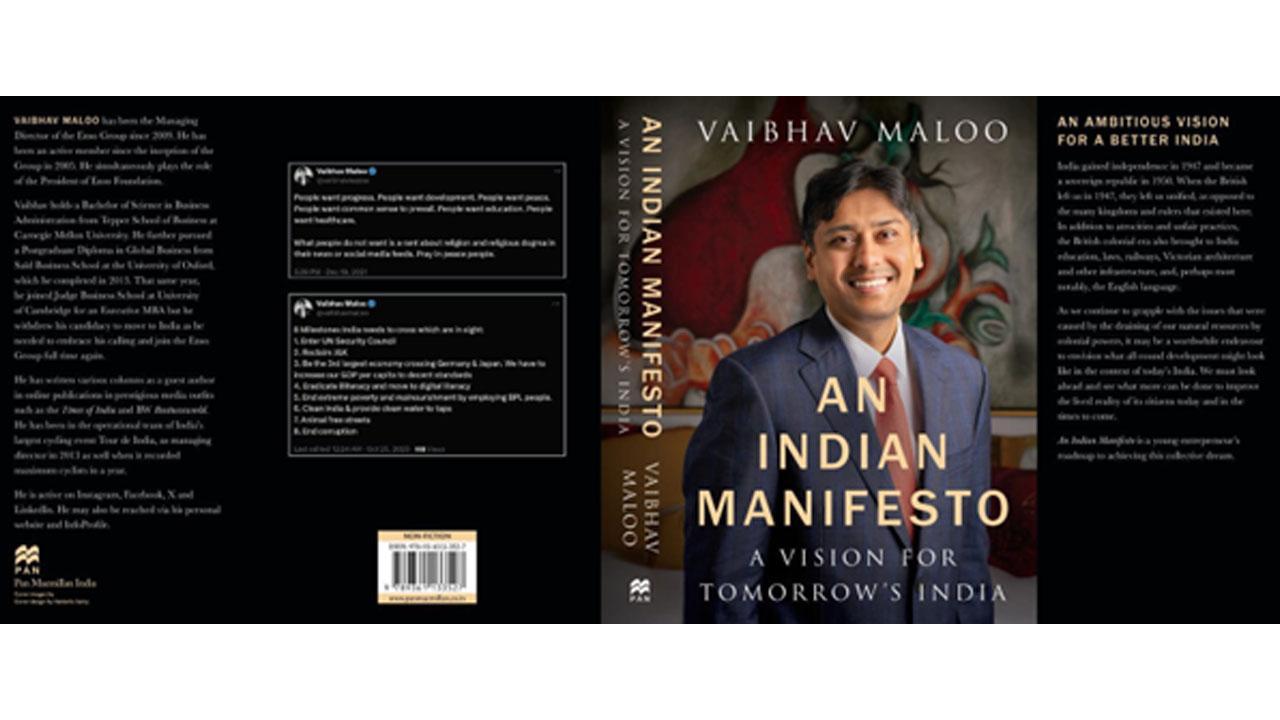
“An Indian Manifesto: A Vision for Tomorrow’s India” sparks policy debate on India’s future, urging practical reforms across ministries.
A new book about India’s policy discourse has recently entered bookstores by entrepreneur and author Vaibhav Maloo. The book titled “An Indian Manifesto: A Vision for Tomorrow’s India” initially went live digitally and is now readily available in bookstores as it was planned in the first week of June for early readers. Unlike the conventional political literature, his work offers a non-partisan, solutions-driven approach.
Vaibhav Maloo has also drawn from his background as the Managing Director of Enso Group, bringing a private sector lens to public sector challenges. This has made his book both analytical and actionable. The unique structure of the book dedicates one chapter to each of the 54 ministries of India, which helps break down systemic problems and presents targeted reforms. The book, now available in bookstores after its digital release, introduces tech-driven transparency in rural development and reimagined pedagogy in education. It provides ideas grounded in real-world feasibility.
Co-author Dhaval Pingulkar, a Business Analyst at Enso Group based in Dubai, has also provided a financial and policy breakdown in each chapter, particularly regarding ministry budgets and execution challenges. Maloo’s new book offers readers a glimpse into Indian cultural values, including the family system, community responsibility, and spiritual ethics, within the framework of modern governance. Throughout the book, he advocates for India’s growth trajectory to be culturally conscious rather than imported wholesale from the West. The book also references models from Scandinavia, Singapore, and Germany, which serve as comparative lenses.
The goal of the book is to adapt, not adopt best practices, keeping Indian realities in focus. The book also provokes thought rather than polarisation. Readers will appreciate how the book maintains a solution-oriented tone and avoids ideological polarisation. An Indian Manifesto: A Vision for Tomorrow’s India aims to engage policymakers, students, civil society and business leaders alike. It has also made a case for integrated governance, arguing that ministries must work collaboratively rather than in isolation if India is to overcome complex challenges, ranging from urbanisation to healthcare access.
The book, now live in bookstores, looks forward to stimulating dialogue about India’s next chapter.
 Subscribe today by clicking the link and stay updated with the latest news!" Click here!