shot-button
Home > Buzzfeed > The Age of AI Native Leadership Why Yesterdays Playbooks Will Not Work Tomorrow

The Age of AI-Native Leadership: Why Yesterday’s Playbooks Will Not Work Tomorrow

Updated on: 08 April,2025 02:28 PM IST  |  Mumbai
Buzzfeed | faizan.farooqui@mid-day.com

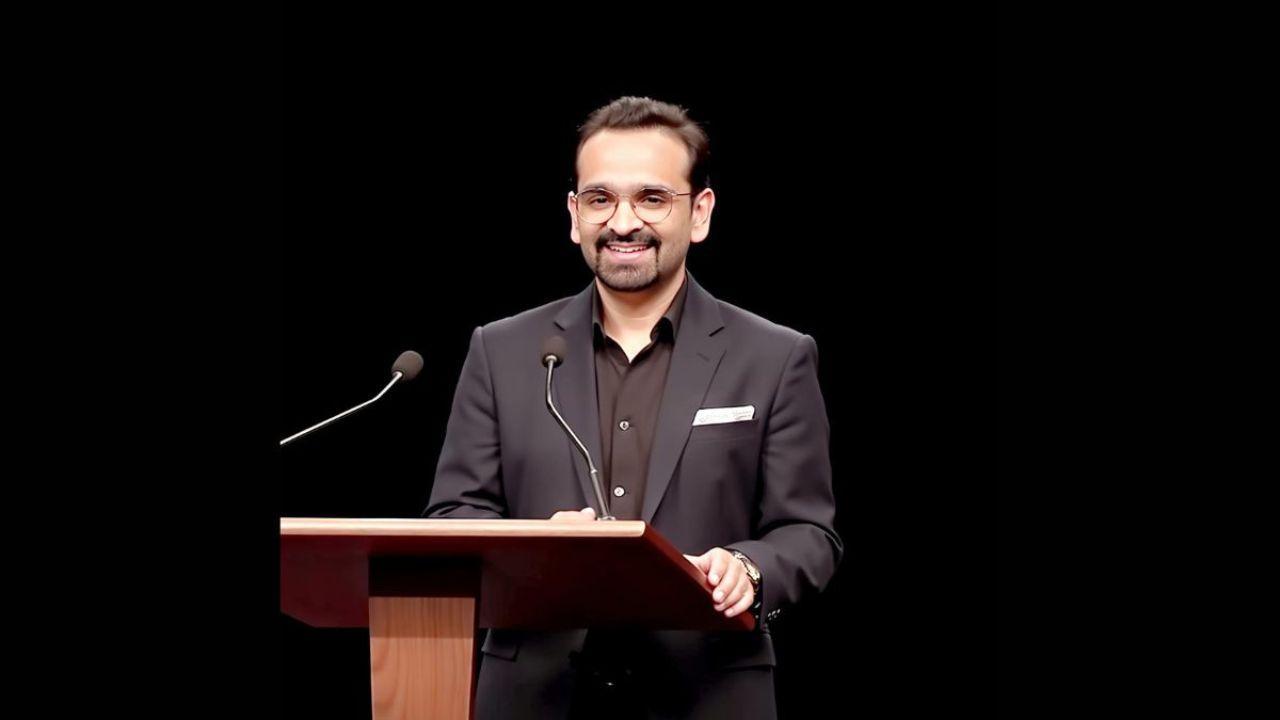
This Insight piece by Rahul Dogra, presents his perspectives on The age of AI-native leadership.

The Age of AI-Native Leadership: Why Yesterday’s Playbooks Will Not Work Tomorrow

The Age of AI-Native Leadership

The Age of AI-Native Leadership: Why Yesterday’s Playbooks Will Not Work Tomorrow

We stand today at a historic threshold, not only of technology but of leadership itself. The past decade was defined by digital transformation, agile prototyping, and platform-led disruption. That chapter is closing. A new era has begun: the age of AI-native leadership, where decisions made today will shape the governance DNA of 2030.

This is not about adopting another tool. It is about re-architecting management, governance, and growth for a civilisation of intelligence. Artificial Intelligence is no longer a future promise; it is the operating fabric of the present. Only leaders who recalibrate their cognitive, ethical, and strategic playbooks will remain relevant.


From Digital Migrants to AI Natives

Executives of the last era were digital migrants. They migrated to the cloud, embraced automation, and mastered scale. But AI-native leadership demands reinvention. Intelligent systems must be treated as co-pilots of decision-making, innovation forecasting, and market sensing. The critical question has shifted from how AI can improve operations to how leadership itself must evolve in an intelligence-saturated world.

The Three Pillars of AI-Native Leadership

1. Strategic Cognition at Machine Velocity

Traditional leadership thrived on deliberation. Today, markets pivot in milliseconds. AI-native leaders build “thinking enterprises” where human and machine cognition operate symbiotically. The challenge is not knowledge accumulation but sensing, simulating, and course-correcting at signal speed.

2. Ethical Intelligence and Policy-First Strategy

The ethical stakes of AI are rising faster than its technical capacity. Bias, surveillance capitalism, intellectual property disputes, and geopolitical misuse demand new boardroom strategies. For AI-native leaders, governance is not compliance; it is a competitive advantage. The UK’s Bletchley Declaration and the AI Safety Institute underline why ethics is no longer optional but a strategic axis.

3. Inclusive Ecosystem Orchestration

Firms no longer compete in isolation but as ecosystems. AI-native leaders orchestrate data, talent, and infrastructure across borders and disciplines. They design networks that deliver societal value alongside shareholder returns. The real risk is not disruption but irrelevance.

Global Imperatives and the Leadership Race

The AI race is not solely about algorithms or computing but about leadership capital. Nations such as the UK, Singapore, and Canada are investing in leaders who balance innovation with governance. McKinsey’s 2024 study shows only 26 percent of enterprises have scaled AI value, proving leadership, not technology, is the binding constraint. Countries that fail to evolve risk both economic and philosophical decline.

Rethinking Leadership Education

Business schools remain anchored in industrial logic. Education must now embed systems thinking, bias detection, data literacy, and cross-domain collaboration. This is not about coding; it is about interrogating intelligent systems, challenging black-box recommendations, and designing adaptive institutions. Harvard Business Review (2025) stresses that transformation via AI is systemic, not episodic.

The Final Imperative

2030 is not a finish line but a threshold into a new civilisation of intelligence. Enterprises that endure will be those that transform into AI-native, ethically attuned organisms capable of reconciling profit with purpose, innovation with inclusivity, and velocity with values. Economies will be judged by equitable distribution of AI prosperity, and nations by their ability to harmonise growth with dignity. CEOs must act not only as sponsors of transformation but as custodians of conscience, ensuring AI elevates humanity while redefining prosperity, governance, and trust for generations.

"Exciting news! Mid-day is now on WhatsApp Channels Subscribe today by clicking the link and stay updated with the latest news!" Click here!

Buzzfeed Technology Artificial Intelligence Marketing Strategy

This website uses cookie or similar technologies, to enhance your browsing experience and provide personalised recommendations. By continuing to use our website, you agree to our Privacy Policy and Cookie Policy. OK