shot-button
Home > Buzzfeed > Types of Term Insurance Updated Guide for 2025

Types of Term Insurance: Updated Guide for 2025

Updated on: 18 September,2025 06:44 PM IST  |  Mumbai
Buzzfeed | faizan.farooqui@mid-day.com

Understand term insurance in India 2025. Explore types, benefits, riders & tips to choose the right plan for family security and financial protection.

Types of Term Insurance: Updated Guide for 2025

Term Insurance 2025

Financial planning is not only about creating wealth but also about protecting your family from unexpected challenges. Every household has responsibilities, such as monthly expenses, children’s education, healthcare costs and loan repayments. If the person providing for these responsibilities is suddenly not around, the financial gap can be devastating. Term insurance is designed to address this concern directly.

A term insurance plan ensures that your family continues to have financial security even in your absence. It offers a large cover at a relatively low premium, which makes it one of the most efficient forms of life insurance. Over the years, term plans in India have evolved to suit different types of buyers. In 2025, there are multiple options available, ranging from simple low-cost policies to flexible ones that grow with your needs or return your premiums at maturity.

This guide will give you a complete understanding of term insurance. We will begin by exploring its meaning and benefits and then move on to the different types available in India today. Each section is explained in detail with examples, so you can decide which plan suits your financial goals.


What is Term Insurance?

Term insurance is a life cover that works on a simple principle. You pay a premium for a chosen period and the insurer provides a pre-decided sum assured to your family if you pass away during that time. Unlike other insurance products, such as endowment or ULIPs, term insurance does not include a savings or investment component. Its purpose is purely to offer protection.

The absence of an investment element is actually an advantage. Since the insurer does not need to generate returns from your premiums, the cost of term insurance remains low. For example, a 30-year-old non-smoker can purchase a cover of ₹1 crore by paying less than ₹1,000 a month. If death occurs during the policy period, the full payout is made to the family. If the policyholder survives, there is no maturity benefit, unless the chosen plan is of a special type that includes premium return.

This structure makes term insurance one of the most affordable ways to secure your family’s financial future.

Why Term Insurance is Crucial in 2025

The relevance of term insurance has increased in 2025 for several reasons. Families today are dealing with higher expenses and greater uncertainty compared to earlier generations. Let us look at some of the key reasons.

  • Rising Education and Healthcare Costs

The cost of higher education in India and abroad has been rising steadily. A postgraduate degree that once required ₹20 lakh may now cost double. Similarly, healthcare inflation continues to outpace regular inflation. Hospitalisation, advanced treatments and long-term care can exhaust savings quickly. Term insurance provides assurance that such costs can be managed even if the primary earner is not present.

  • Growing Household Liabilities

Owning a house or starting a business often involves large loans with long repayment periods. A 20-year or 25-year home loan is common today. If something happens to the borrower, repayment responsibility falls on the family. Term insurance ensures that outstanding loans are covered, and the family is not left with the burden.

  • More Awareness of Financial Protection

In recent years, financial awareness has grown among young earners in India. People in their twenties and thirties now understand that insurance is not just about tax saving but also about long-term security. This awareness has encouraged families to include term insurance as an essential part of their financial portfolio.

  • Digital Convenience

The process of purchasing term insurance has become simpler. From comparing plans and reading detailed policy terms to undergoing medical checks, most steps can now be done online. This transparency and ease of access make it easier to buy the right plan quickly.

  • Customisation through Riders

Term plans today can be enhanced through riders, such as critical illness cover, accidental death benefit and waiver of premium. These options make term insurance far more comprehensive than before.

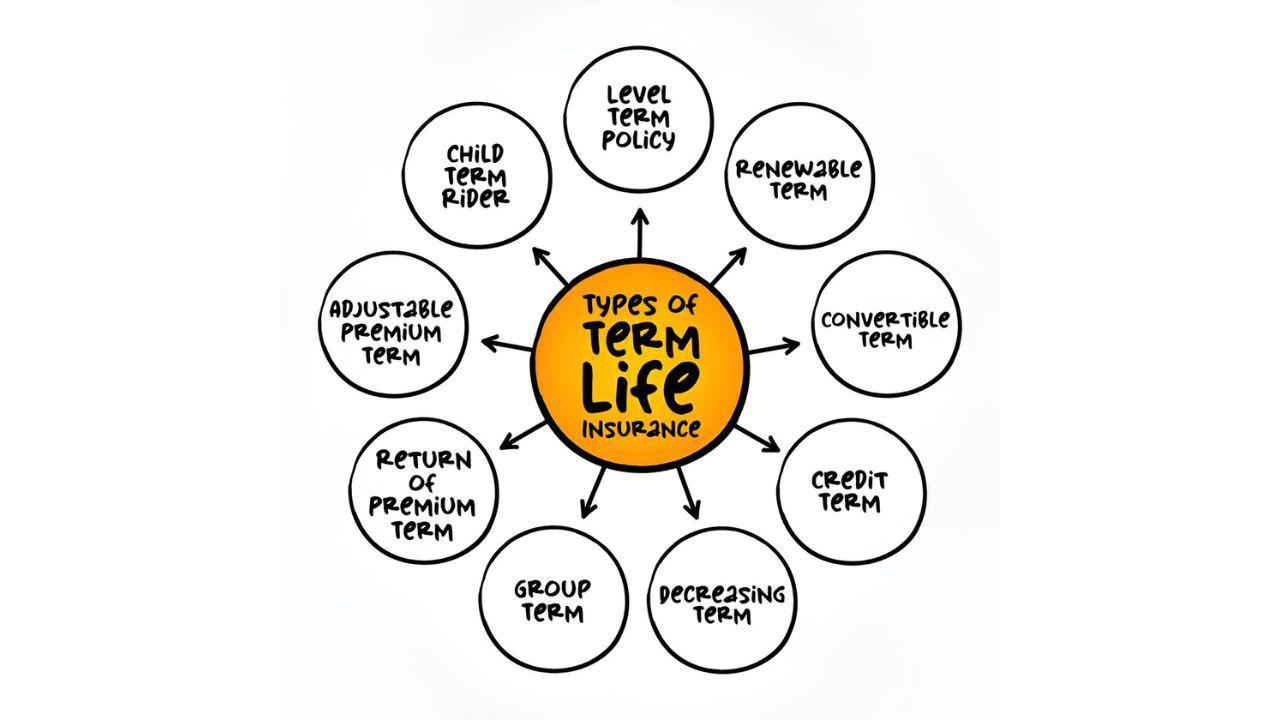
Types of Term Insurance in India (2025)

There is no single type of term insurance that works for everyone. In 2025, insurers offer different variations that suit different goals and preferences. Let us look at the main types, how they work and examples of who should consider them.

1. Level Term Insurance

This is the simplest and most widely used form of term plan. The sum assured remains constant throughout the tenure. Premiums are also fixed from start to end, which makes it easy to plan for.

  • Why it works: Predictability is its strength. Both the coverage and premiums stay the same, giving complete clarity from the first day. This makes it ideal for those who want a no-frills protection plan.
  • Best for: Young professionals or families starting out, who want affordable coverage and simplicity.
  • Example: A 28-year-old chooses a 30-year level term plan with ₹1 crore cover. She pays the same premium every year until the policy ends and her family remains protected at the same coverage level throughout.

2. Increasing Term Insurance

This type of plan ensures that the coverage grows over time, usually by a fixed percentage each year. Premiums are higher than level term plans, but the increasing coverage helps deal with rising living costs.

  • Why it works: Inflation reduces the value of money and expenses usually rise with time. An increasing plan ensures that your family receives a payout that is relevant even two decades later.
  • Best for: Parents with young children or individuals expecting larger responsibilities in the future.
  • Example: A plan that begins with ₹50 lakh coverage at age 30 can rise to ₹1 crore by the time the policyholder reaches 50, ensuring that future expenses, such as children’s college fees, are covered.

3. Decreasing Term Insurance

In this plan, coverage reduces gradually over time. It is often linked with liabilities, such as a home loan or business loan, that also reduce with repayment. Premiums are lower because the risk for the insurer reduces as coverage declines.

  • Why it works: It matches insurance with financial liabilities. You do not end up paying for coverage you no longer need. This makes it both practical and economical.
  • Best for: Individuals with large loans, such as housing loans or car loans.
  • Example: A 20-year home loan of ₹40 lakh is protected by a decreasing plan. Coverage starts high and reduces each year, keeping pace with the outstanding loan balance.

4. Term Insurance with Return of Premium (TROP)

Unlike traditional term plans, where there is no payout if you survive the tenure, TROP refunds the total premium paid. While premiums are higher, the plan combines protection with a savings element.

  • Why it works: Many people hesitate to buy term plans because they feel premiums are wasted if nothing happens. TROP solves this concern by guaranteeing a return of all premiums at the end of the tenure.
  • Best for: Conservative buyers who want protection but also prefer not to lose the money paid.
  • Example: If you pay ₹20,000 annually for 25 years, the insurer provides full coverage during that time. If you survive, you receive ₹5 lakh back at maturity.

5. Convertible Term Insurance

This plan allows you to convert your term insurance into another form of life insurance later, such as an endowment or whole life policy. Usually, no new medical test is required at the time of conversion.

  • Why it works: Needs change with time. A young professional may want low-cost coverage initially but later prefer a plan with savings or investment benefits. Convertible plans allow this flexibility.
  • Best for: Buyers in their twenties or early thirties who want protection now but expect their goals to evolve.
  • Example: A 26-year-old buys a convertible plan today. At 35, he converts it into a whole life plan that not only provides protection but also helps in estate planning.

6. Whole Life Term Insurance

This policy provides coverage for your entire life, often up to the age of 99 years. No matter when death occurs, the payout is guaranteed.

  • Why it works: It provides lifetime protection, which is valuable for those who want to ensure that heirs always receive a financial benefit. It is also useful for estate planning.
  • Best for: People who want lifelong coverage and those planning to leave behind a financial legacy.
  • Example: A 40-year-old chooses whole life coverage. Even if he lives up to 95, his family is assured of the payout whenever death occurs.

7. Single Premium Term Insurance

Instead of paying premiums every year or month, this plan requires a one-time payment at the beginning. The policy then remains active for the full tenure.

  • Why it works: It eliminates the risk of missing payments and simplifies financial planning. It is also convenient for people who have irregular incomes or prefer one-time commitments.
  • Best for: Business owners, self-employed professionals or retirees who have access to lump sums.
  • Example: Paying ₹6 lakh once can secure ₹1 crore coverage for 20 years, without any further premium obligations.

Benefits of Term Insurance

Before we move to the types, let us look at the benefits that make term insurance so valuable.

  • Financial Security for Dependents

The primary benefit is that it provides financial stability to your dependents. The payout can cover monthly expenses, children’s education and medical costs. It ensures that your family does not face financial distress at a time when emotional stress is already high.

  • High Coverage at Affordable Cost

Term insurance provides large coverage at a very low cost compared to other life insurance products. The affordability of premiums makes it possible for families of all income levels to secure protection.

  • Flexibility of Coverage

Policies can be customised to match your requirements. You can choose the sum assured and policy duration that align with your financial goals. Add-ons provide additional flexibility, making the plan more relevant to your situation.

  • Peace of Mind

Knowing that your loved ones are financially protected brings peace of mind. It allows you to focus on building your career, running your business or creating wealth through investments, because the safety net is already in place.

  • Tax Benefits

Premiums qualify for deduction under Section 80C of the Income Tax Act, while payouts may be tax-free under Section 10(10D). These advantages make term insurance an efficient choice for financial planning.

How to Choose the Right Term Insurance in 2025

With so many options available, choosing the right plan requires careful consideration. Here are the main factors to keep in mind.

1. Life Stage and Dependents

A single person with minimal obligations may be fine with a level term plan. A parent of young children may require an increasing plan to account for future costs. Your life stage determines the coverage type that makes sense.

1. Financial Goals

If your priority is to cover debts, a decreasing plan may be sufficient. If your aim is long-term family protection, increasing or whole life plans are more suitable.

1. Sum Assured

Experts suggest coverage of at least 10 to 15 times your annual income. A term insurance calculator can help you refine the exact figure by accounting for inflation, loans and lifestyle costs.

1. Riders and Add-ons

Riders provide additional coverage at a low cost. Adding critical illness cover, accidental death benefits or premium waiver riders makes your plan more comprehensive.

1. Claim Settlement Ratio

Always check the insurer’s claim settlement record. A high settlement ratio indicates that the company honours claims promptly, which is essential for your family’s peace of mind.

1. Affordability of Premiums

The best plan is one that you can continue paying comfortably for the full duration. It is important to balance adequate coverage with long-term affordability.

Conclusion

Term insurance in 2025 is not limited to a single type of policy. It has evolved into a wide range of options that suit different financial needs. Whether it is level, increasing, decreasing, return of premium, convertible, whole life or single premium, each plan serves a specific purpose.

The key is to match the right plan with your goals, responsibilities and financial situation. Use calculators, compare policies and check insurer records before finalising your choice. Above all, do not delay. The earlier you buy, the more affordable and effective the protection will be.

By choosing the right term insurance, you create a shield of security for your family that goes beyond money. It offers peace of mind and ensures that your loved ones are taken care of, no matter what the future brings.

Disclaimer: The information provided on the Website does not constitute investment advice, financial advice, trading advice, or any other form of advice, and you should not interpret any of the financial content as such. Please conduct your own due diligence and consult with a financial advisor before making any investment decisions. Midday does not endorse or promote any such activities, and you access them at your own risk, fully understanding the monetary and legal consequences involved. Midday shall not be held responsible for any losses you may incur as a result of using any such apps or websites.

"Exciting news! Mid-day is now on WhatsApp Channels Subscribe today by clicking the link and stay updated with the latest news!" Click here!

Buzzfeed BFSI Term insurance

This website uses cookie or similar technologies, to enhance your browsing experience and provide personalised recommendations. By continuing to use our website, you agree to our Privacy Policy and Cookie Policy. OK