shot-button
Home > Buzzfeed > Why The Indian Guitar Schools Anubhav Kulshreshtha Rejects AI for Human Touch

Why The Indian Guitar School's Anubhav Kulshreshtha Rejects AI for Human Touch

Updated on: 01 October,2025 05:42 PM IST  |  Mumbai
Buzzfeed | faizan.farooqui@mid-day.com

The Indian Guitar School's founder, Anubhav Kulshreshtha, prioritizes "manual catering" and human connection over AI and automation for music education.

Why The Indian Guitar School's Anubhav Kulshreshtha Rejects AI for Human Touch

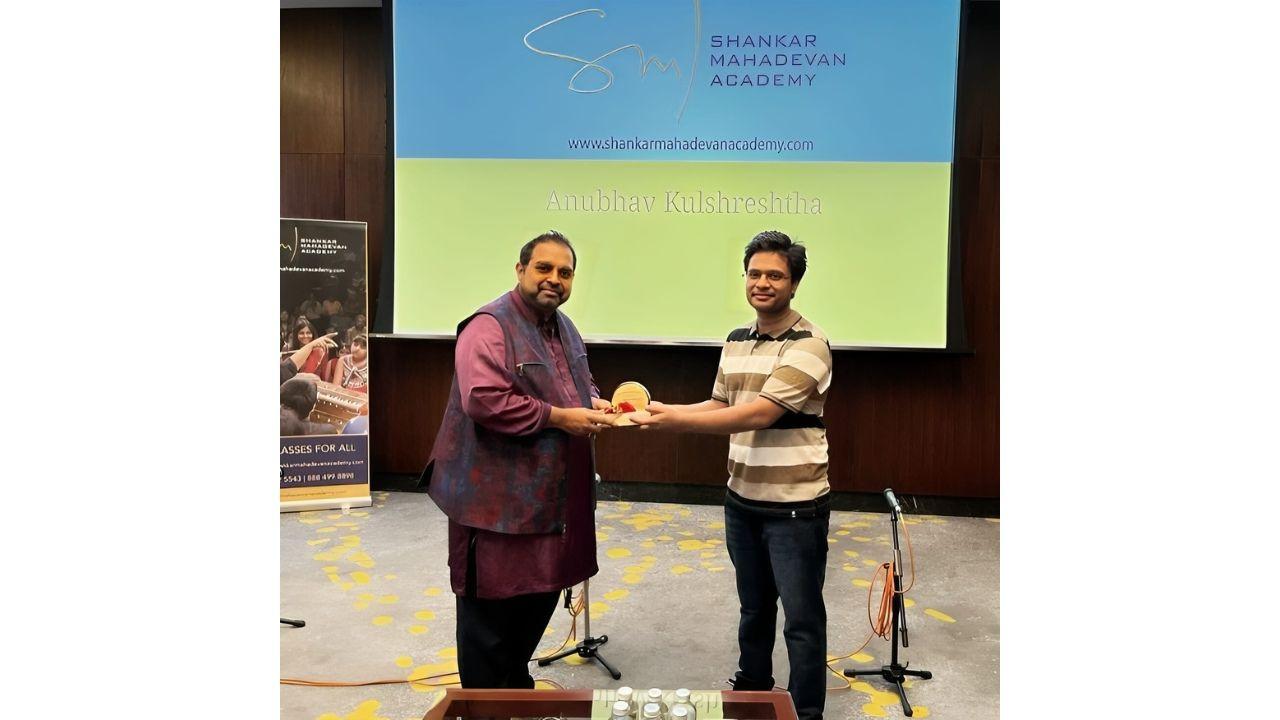
Mr. Anubhav Kulshreshtha

When Anubhav started The Indian Guitar School, he had one guiding thought in mind. Music is human, so teaching music should be human too. That sounds obvious at first, but it is surprisingly rare today. Schools and academies are rushing to plug into every possible software, every chatbot, every automation tool they can get their hands on. Students are shuffled around by forms and filters, and their learning journeys are decided by algorithms instead of conversations.

Anubhav wanted none of that. For him, the heart of music education is not in clever systems, but in relationships. That is why the core principle of his school is what he calls manual catering. Nothing at The Indian Guitar School is left to blind automation. Every student, every teacher, every pairing, every resolution of an issue is handled carefully, by hand, by Kulshreshtha himself.

This choice makes his school unusual. It also makes it slow, because one cannot expand human attention as quickly as one can expand a software tool. But this is deliberate for Anubhav. Growth is not a sprint. It is a patient journey, just like learning the guitar itself.


Building A School That Tunes Itself Like An Instrument

A guitar that is out of tune will sound wrong no matter how good the player is. You can waste hours trying to make it sound right, but without tuning it first, all that effort goes in vain. The same principle applies to education, according to Anubhav Kulshreshtha.

Most institutions put students into place quickly, without checking whether the instructor and the student are even compatible. The result is an endless cycle of confusion, frustration, and wasted energy. That is like trying to play for hours on an untuned guitar.

At The Indian Guitar School, Anubhav spends time upfront tuning the system. He handpicks instructors, not just for their skill level but also for their personality. An instructor who can play fast but cannot connect with a beginner is not the right fit. Similarly, students are carefully assigned. Sometimes, the school even turns away students when there are no compatible instructors available. That may sound strange in a world obsessed with numbers, but he sees it as respect for the student's journey. A bad match kills enthusiasm faster than a broken string.

By making these careful choices early, the rest of the school runs efficiently. Fewer mismatches mean fewer complaints. Fewer complaints mean less time wasted fixing problems. Real efficiency comes from thoughtful choices, not quick fixes.

Why Manual Still Beats Machine

We live in a world where you can set up a funnel, send automated messages, and let AI draft entire lesson plans. It sounds impressive, but does any of this make the music better?

Music thrives on nuance, and nuance is a human gift. You cannot ask a chatbot to sense whether a child is demotivated because of a bad day at school, or whether an adult learner is too shy to admit they did not practice. You cannot ask a system to hear the subtle hesitation in a student's playing and respond with just the right encouragement.

That is why Kulshreshtha insists on staying reachable. If a parent or student has an issue, they do not need to write long emails or go through ticketing systems. They can simply pick up the phone and call him. No message queues, no waiting, no marination of text. A ten-minute conversation solves more than a hundred automated prompts ever could.

This is not just an old-fashioned preference. It is what sets The Indian Guitar School apart. Students stay longer. Parents trust them more. And instructors feel like part of something meaningful rather than just names on a roster.

Slow Growth As A Philosophy

Why not open up the school to thousands of students at once? Why not hire dozens of instructors overnight? The answer is the same as the answer to why you cannot learn guitar in a week. Good things take time.

You can rush through scales and play fast, but speed without feel is empty. You can slow down, bend a note, and make someone cry. Progress in music is slow but deeply rewarding. The same is true for building a school.

Kulshreshtha is comfortable with slow growth. Each time they add an instructor, the school takes weeks to understand their strengths and their fit. Each time they add a student, th school makes sure they are matched properly. Growth comes gradually, in tune with the school's rhythm. That keeps them from burning out, and it keeps quality intact.

Anubhav also reminds himself of another important truth. He is not just a founder. He is a guitarist. He needs time with his instrument. If he lets the school consume all his hours in the

name of expansion, he loses touch with the very thing that made him start it. By keeping operations efficient and human-driven, he protects time for himself to play, to practice, and to grow as a musician. That balance is part of their philosophy too.

Stories From The Inside

One of their early students was a twelve-year-old girl whose parents had already tried two different schools. She was frustrated, convinced she was not "musical enough," and ready to quit. When they met her, the school paired her with one of their most patient instructors, someone who knew how to make lessons feel like play. Within a few weeks, her spark returned. She is still with them today, and she now writes her own songs.

Another story comes from an adult student who had a demanding job. Most schools would have simply slotted him into a rigid timetable, but the assigned instructor worked around his schedule. A teacher who understood the stress of balancing career and passion. Because of that compatibility, he did not drop out. Instead, he completed an entire year of lessons and now performs occasionally at open mics.

Both of these stories highlight what manual catering really means to The Indian Guitar School. It is not about rejecting technology. It is about paying attention, listening, and making decisions that respect the individual.

Looking To The Future

The Indian Guitar School continues to grow, deliberately and steadily. Anubhav welcomes new teachers who truly align with the school’s philosophy, and admits more students only when they can be served with the same attentive care.

Technology is embraced where it helps, but never at the expense of personal interaction. The school’s true strength is its human touch, something Anubhav Kulshreshtha will always protect.

Ultimately, music is about connection: from player to listener, from teacher to student. That bond can be fragile, and Anubhav keeps people, not processes, at the center of everything.

"Exciting news! Mid-day is now on WhatsApp Channels Subscribe today by clicking the link and stay updated with the latest news!" Click here!

Buzzfeed business Music Education

This website uses cookie or similar technologies, to enhance your browsing experience and provide personalised recommendations. By continuing to use our website, you agree to our Privacy Policy and Cookie Policy. OK