Home / Entertainment / Hollywood News / Article /
We Live in Time movie review: Andrew Garfield, Florence Pugh star in a tragic love story
Updated On: 31 May, 2025 06:50 PM IST | Mumbai | Johnson Thomas
The chronological jumps may feel trying at times but make perfect sense when viewed as a series of memories filtered through the lens of a dying individual



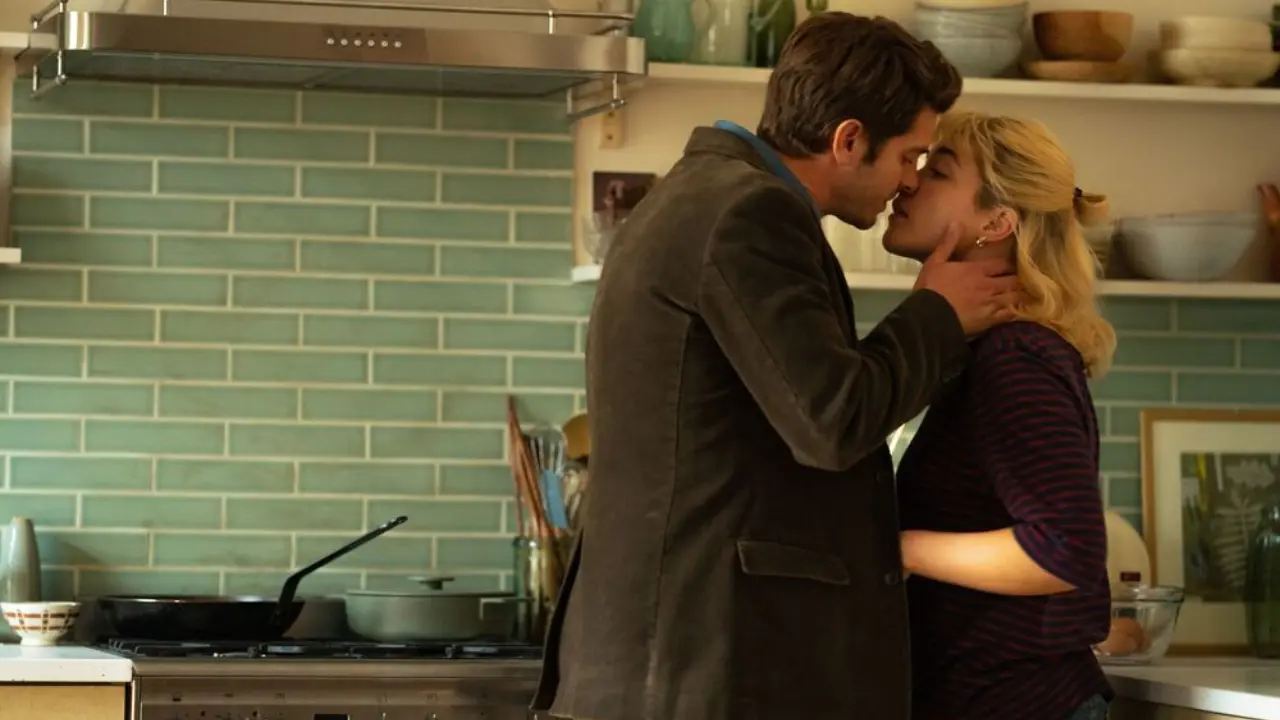
Still from We Live in Time
Film: We Live in Time
Cast: Andrew Garfield, Florence Pugh, Grace Delaney, Lee Braithwaite, Aoife Hinds, Adam James, Douglas Hodge, Amy Morgan
Director: John Crowley
Rating: 3/5
Runtime: 108 min.
A tragic romance, a sentimental dive into a second chance at love between a divorcee and an ambitious chef, “We Live in Time” has the power to tug on your heartstrings.
This is not straightforward telling. The narrative jumps between several timelines as it tells this teary tale with purpose and heft. The film opens with Almut(Pugh) and Tobias (Garfield) shocked by a severe cancer diagnosis for Almut. They have an impossible decision to make. Live each day for the remaining six months of life fully or get through the misery of chemo that might not work anyway.
The couple approach their marriage as a partnership and their decisions are joint efforts. Nick Payne’s script jumps around four timelines. We see that Almut’s cancer has returned, and she makes a deeply personal decision to take part in a cooking competition to cement one last accomplishment in her life.This is a decision she hides from Tobias. The narrative jumps back to the couple’s courtship days, Almut’s pregnancy and the child’s birth away from a hospital, their time spent with their child amidst the recurring cancer diagnoses and her efforts to go on with the competition despite suffering acute trauma.
How do you like the new new mid-day.com experience? Share your feedback and help us improve.
Trending Stories
Latest Photos
Latest Videos
Latest Web Stories
ADVERTISEMENT
Mid-Day Fast
ADVERTISEMENT

ADVERTISEMENT