


Experts note that Blue Buttons do not have a preferred habitat and are carried wherever the waves and winds take them. They are not endemic to Indian waters, but their presence offers a vivid reminder of the changing rhythms of the sea
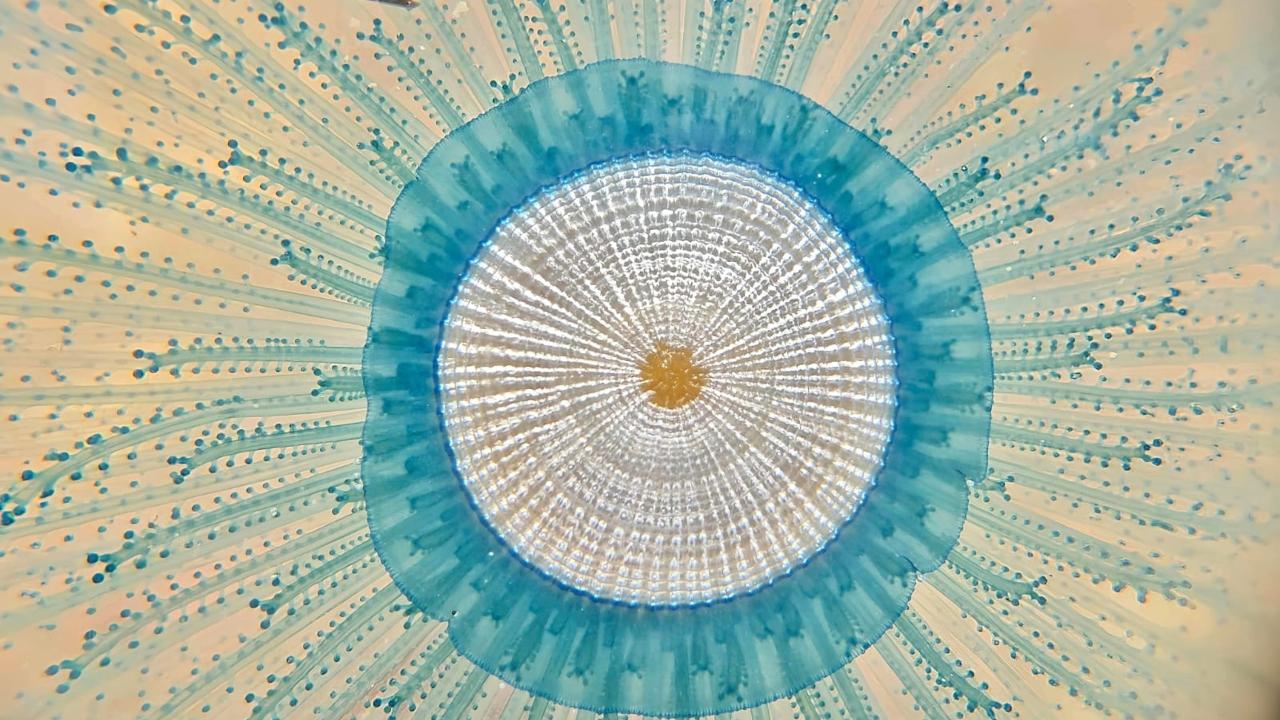
Commonly known as Blue Buttons, Porpita porpita are tiny marine animals found in tropical and subtropical waters of the Pacific, Atlantic, and Indian Oceans. Pic/Rajas Shrikoli
Is climate change altering the seasonal patterns of marine species? With the monsoon extending unusually long this year, Mumbai’s coastline has become a site of unexpected marine activity. Nature enthusiasts have reported rare November sightings of Blue Buttons (Porpita porpita) — small, striking blue marine organisms that typically appear before the monsoon season. Experts believe their late arrival could be linked to changing climatic conditions.
Commonly known as Blue Buttons, Porpita porpita are tiny marine animals found in tropical and subtropical waters of the Pacific, Atlantic, and Indian Oceans. Along Mumbai’s shores, they are usually seen just before the onset of the monsoon, and traditional fishing communities have long regarded them as natural indicators of approaching rains.
View this post on Instagram
According to Pradip Patade from Marine Life of Mumbai (MLOM), “As far as I know, Blue Buttons usually wash up on our shores in April or May — before the monsoon — and again around August, during the season. This year, due to the prolonged monsoon and cyclonic conditions, they seem to have arrived now. A prolonged monsoon is definitely an impact of climate change. These are pelagic animals that wash ashore due to strong winds.”
Wildlife enthusiast Rajas Shrikoli spotted Blue Buttons on the rocky shores of Haji Ali during a shore walk on Thursday. They have also been seen at Juhu Beach, Carter Road, Priyadarshini Park, and Girgaon Chowpatty.
Experts note that Blue Buttons do not have a preferred habitat and are carried wherever the waves and winds take them. They are not endemic to Indian waters, but their presence offers a vivid reminder of the changing rhythms of the sea.
 Subscribe today by clicking the link and stay updated with the latest news!" Click here!