











Duari said skywatchers in India will only be able to witness a partial phase as the Moon will be below the horizon during the full eclipse
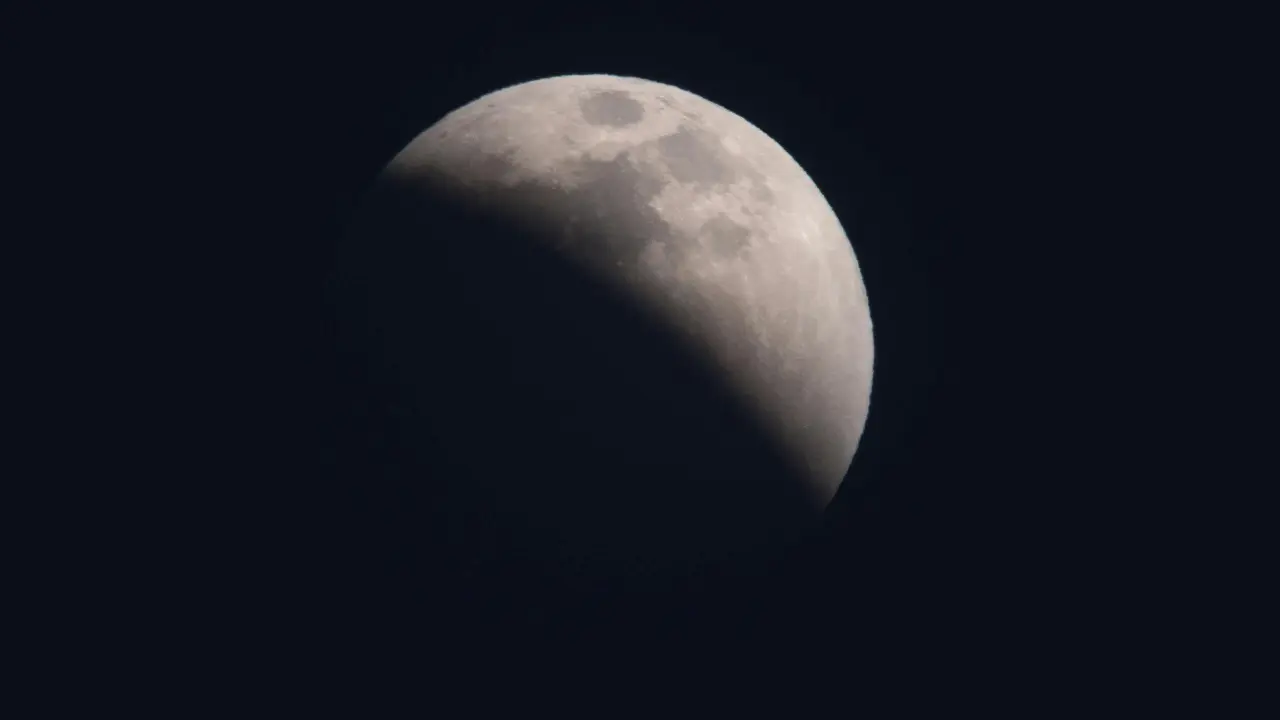
Image for representational purpose only. Photo Courtesy: Pexels
Former Director (Research and Academic) at MP Birla Planetarium, Dr Debinrosad Duari, said that although a total lunar eclipse will occur on Tuesday, March 3, skywatchers in India will only be able to witness a partial phase as the Moon will be below the horizon during the full eclipse.
Speaking to ANI, former director Dr Duari said, "On 3rd March, there will be a total lunar eclipse. However, from India, we will not be able to see the full eclipse as the moon will be below our horizon. From India, only a partial lunar eclipse will be visible... The full eclipse will mainly be visible from North America, Australia, and the Pacific."
He further elaborated on the timings of the celestial event, stating, "The partial eclipse will begin at around 3:20 pm Indian Standard Time, and the moon will slowly be covered by the Earth's shadow. By 4:34 pm, the total eclipse will begin and will last until 5:32 pm, meaning the moon will be fully in the Earth's shadow for 58 minutes. It will be a total lunar eclipse... This eclipse will not have any effect on Holi."
According to the India Meteorological Department (IMD), a total lunar eclipse will take place on Tuesday, March 3, 2026, across several time zones.
The phenomenon occurs when the entire Moon passes through the Earth's umbral shadow. A partial lunar eclipse, in contrast, takes place when only a part of the Moon moves into the Earth's shadow.
In a post on X, the IMD stated that the total lunar eclipse on March 3 will have a magnitude of 1.155. The eclipse will be visible across India, as well as in parts of Eastern Asia, Australia and the Americas.
Total Lunar Eclipse: March 3, 2026
— India Meteorological Department (@Indiametdept) March 2, 2026
A total lunar eclipse will occur when the whole Moon comes under the umbral shadow of the Earth and the partial lunar eclipse occurs only when a part of the Moon comes under shadow of the Earth.
•When: Tuesday, March 3, 2026
•Magnitude:… pic.twitter.com/BKXyEKhoAj
In the Indian context, the visibility of the eclipse will vary by region. Most places in the country will observe the ending phase of the lunar eclipse at the time of moonrise. However, in parts of North-East India and the Andaman and Nicobar Islands, the end of the totality phase will also be visible.
This story has been sourced from a third party syndicated feed, agencies. Mid-day accepts no responsibility or liability for its dependability, trustworthiness, reliability and data of the text. Mid-day management/mid-day.com reserves the sole right to alter, delete or remove (without notice) the content in its absolute discretion for any reason whatsoever.
 Subscribe today by clicking the link and stay updated with the latest news!" Click here!


