








A performance of myth, classical motifs and forms brings to Mumbai reminders of India’s longstanding connect with the Asian country
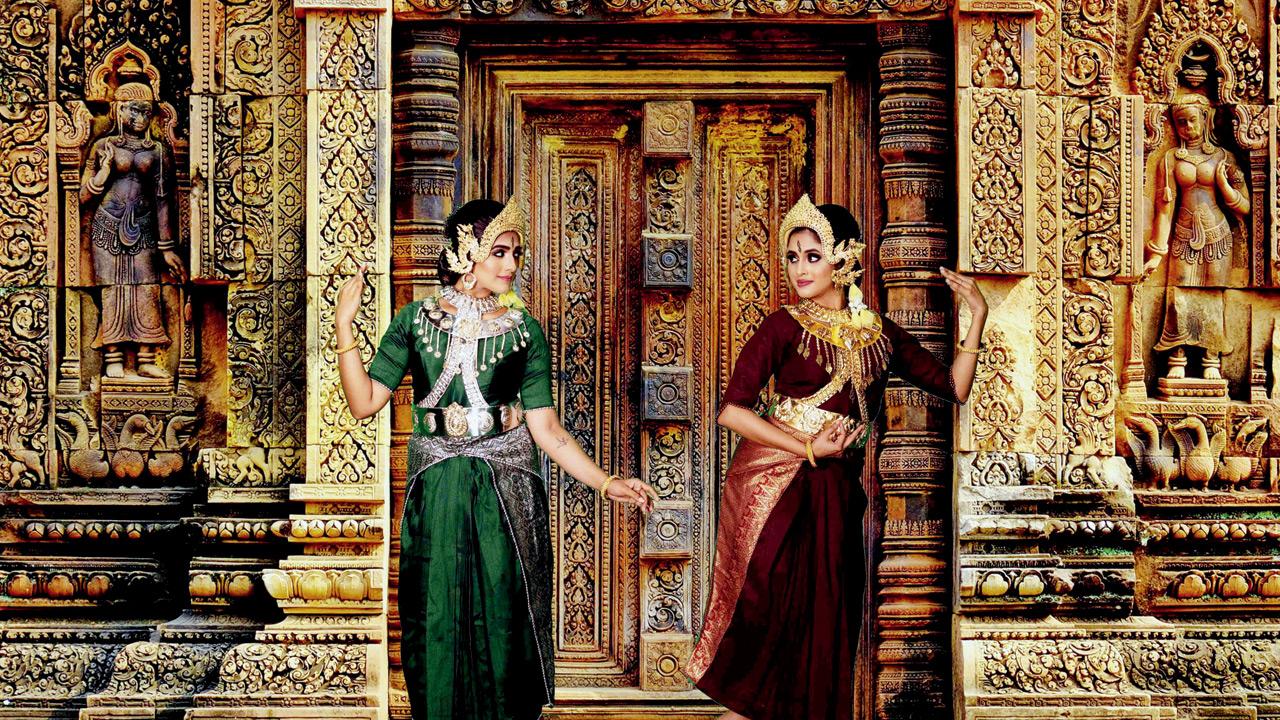
Moments from the production of Amara: The Enchanted Citadel. Pics Courtesy/Apsaras Dance Company
Growing up in Mumbai, this Tamil writer remembers watching Rajinikanth and Kamal Haasan performing special shows in Singapore, and wondering why. “The connection goes farther than that. You realise that the national airline of Indonesia is called Garuda, right?” Aravinth Kumarasamy, artistic director of Apsaras Dance Company, points out, adding, “Singaporeans with Indian roots are a minority, but a key component of the society.” The performance of Amara: The Enchanted Citadel by the repertory on Sunday will offer more evidence to that.
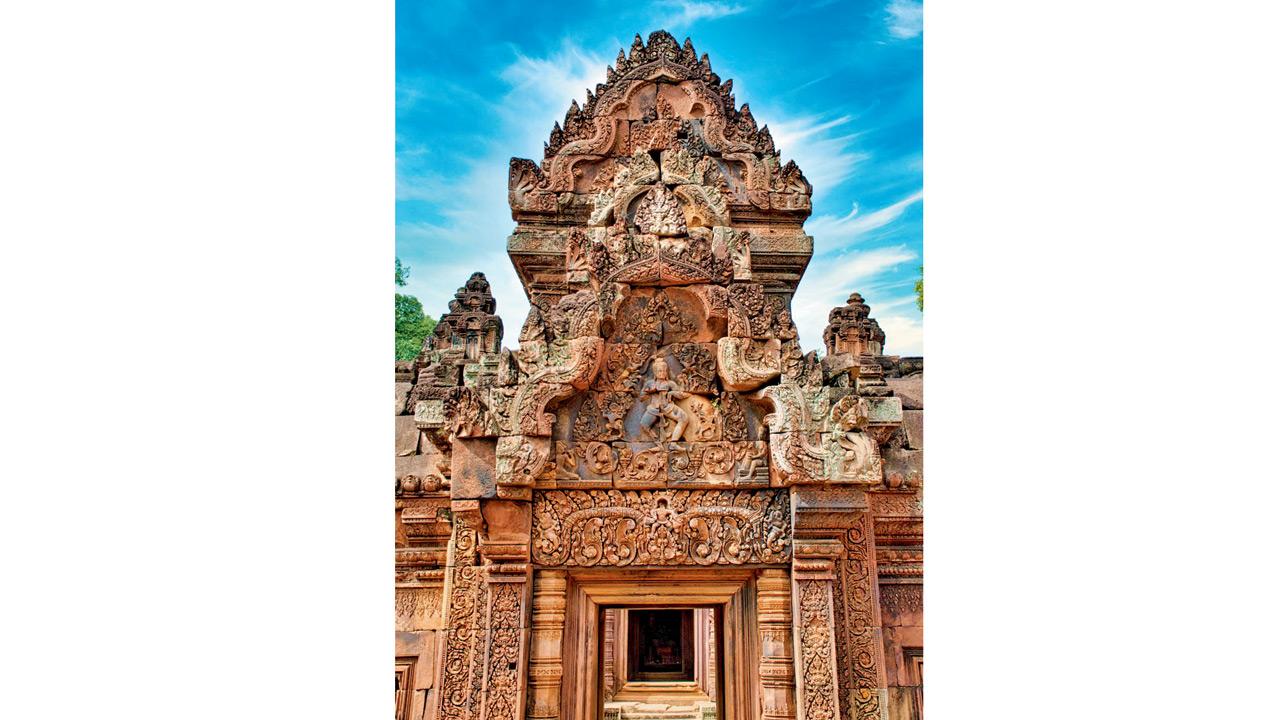
The visuals of the Banteay Srei complex will be part of the multimedia showcase
Established in 1977, the repertory has been creating productions that connect their Indian traditional roots with the forms of the Far East. Kumarasamy trained in India — Carnatic music, as well as Bharatanatyam under Padma Shri-awardee Vazhuvoor Ramaiah Pillai — before leaving for Singapore, where he was later awarded the Cultural Medallion for his contribution to the arts.
Historical thread
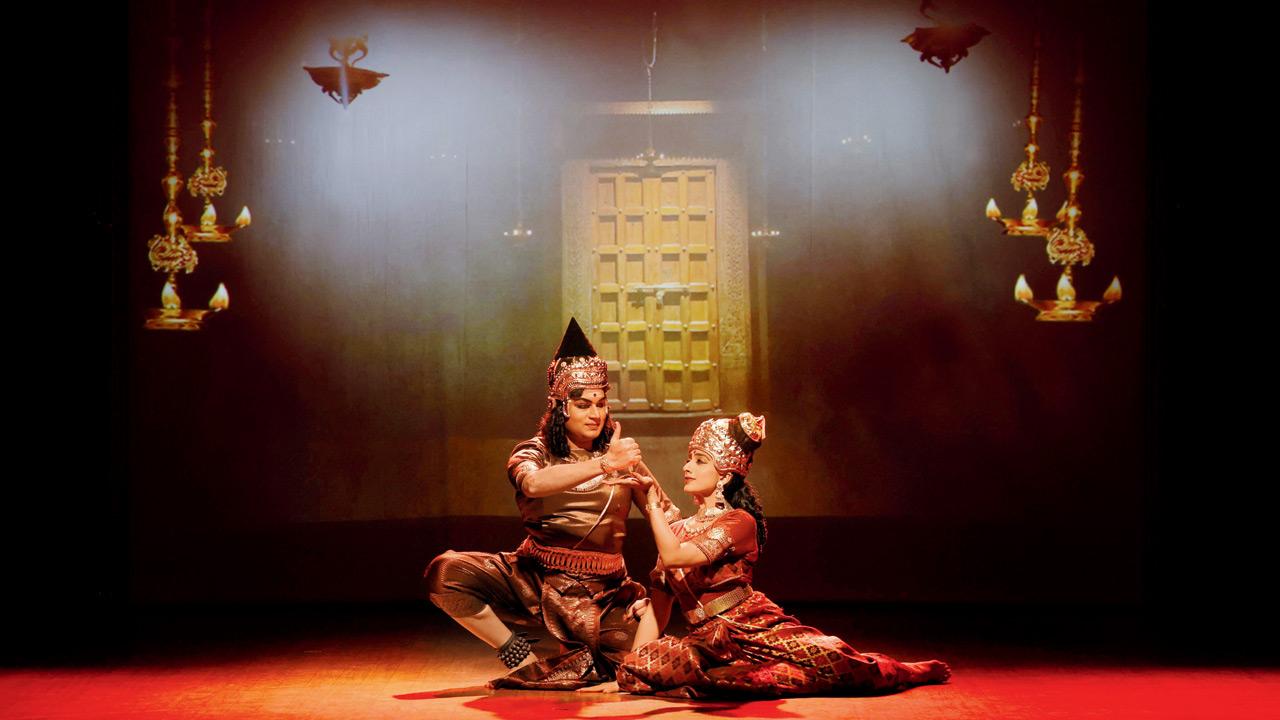
Many of the traditional dance forms in South East Asia follow the codes of the Natya Shastra, he explains. The traditional costumes also reflect this commonality. In the repertory’s production, one part of the costume depicts Indian tradition, and the other Cambodian fabrics. “If you observe closely, you will notice double-knotted textiles and ikkat,” he says.
Music and dance are not the only forms either. “Temple architecture in these regions follow the Hindu agama shastras [texts of temple architecture],” he says. An obvious example being Angkor Wat — the largest temple complex in Cambodia that was designed to replicate the mythical mountain of Meru.
Stories from stone
One such temple is the complex of Banteay Srei in Cambodia. Dating back to the 8th Century AD, it is located in the same region as Angkor Wat. “It is dedicated to Shiva and Vishnu, with the epics of Mahabharata and Ramayana carved on its walls. It is also known as the ‘Citadel of Women’. This is the inspiration for the production, Amara,” the 59-year-old reveals.
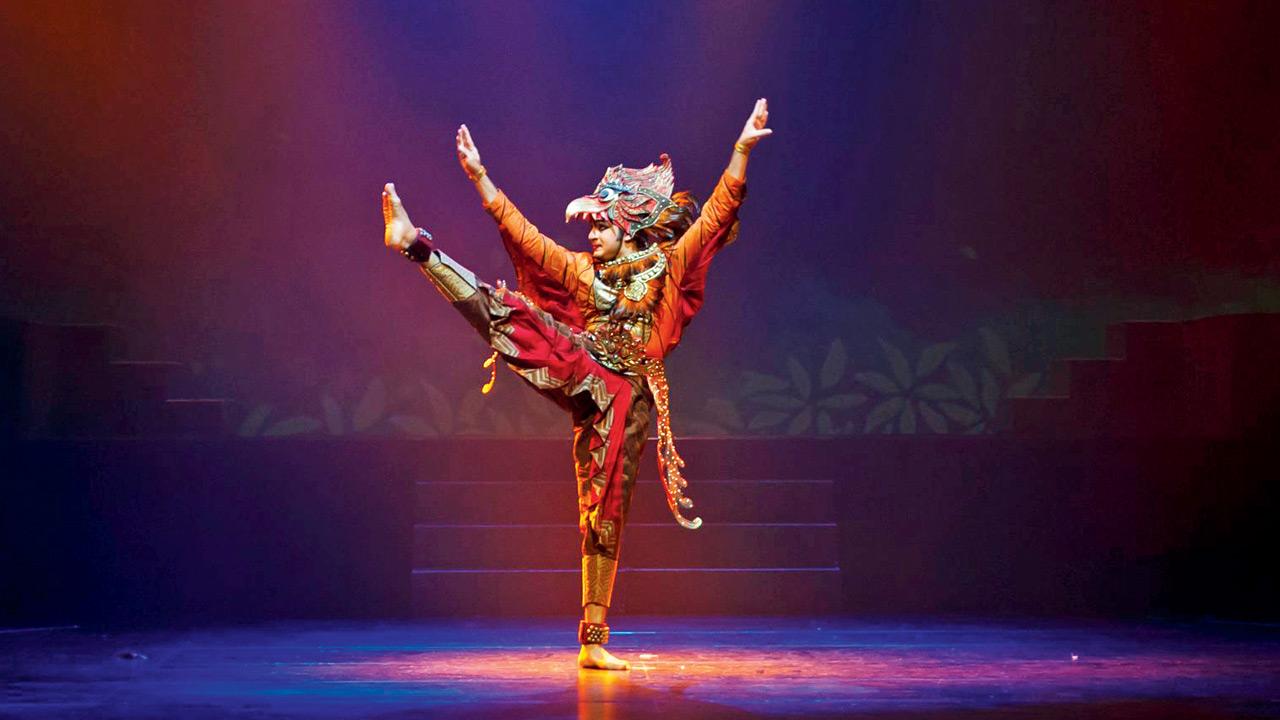
A moment from the repertory’s production, Anjaneyam
The temple’s moniker stems from the key contributors, and inspiration, to the art that dominates the temple — yoginis. Kumarasamy’s curiosity with the complex began in 2013 while working on Ang Kor: The Untold Story. “We were researching on how the idea of Angkor Wat began, and how Indians participated in it. That led me to Banteay Srei,” he reveals.
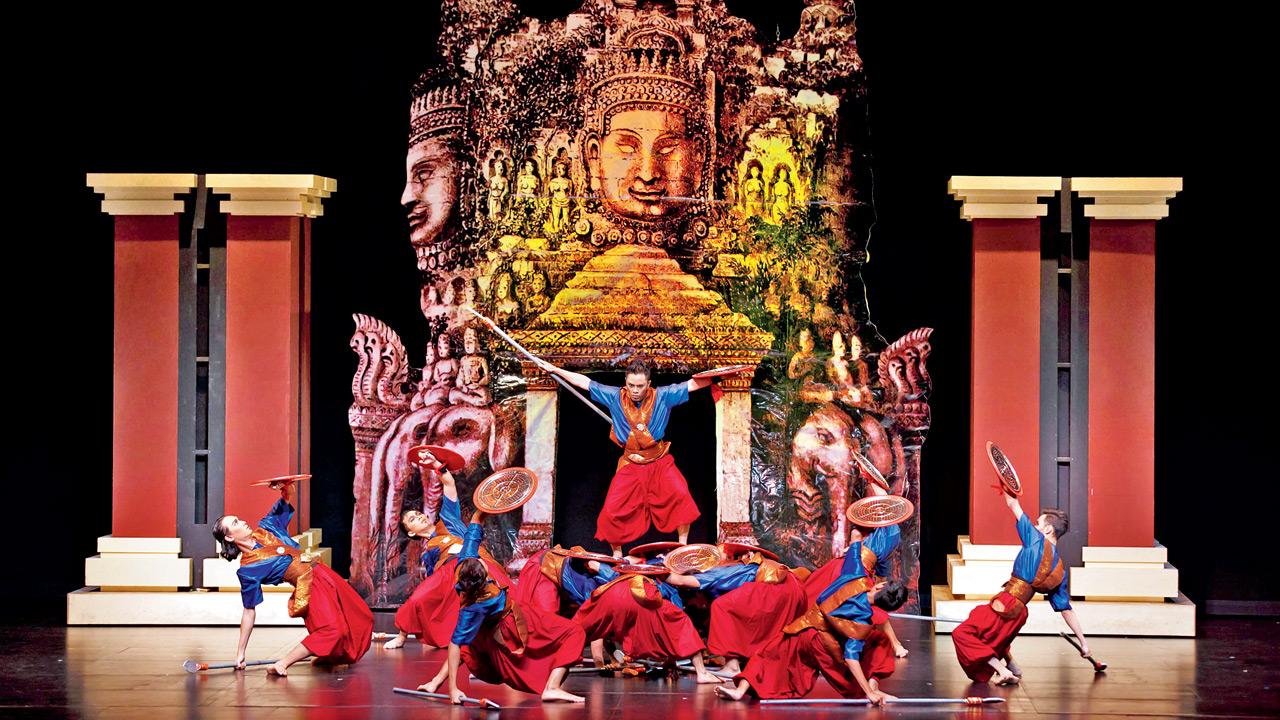
A moment from Ang Kor; An Untold Story
It took eight more years of research before the production began, Kumarasamy adds. Among the finds during his research was a Sanskrit shloka commemorating its consecration. “I have composed the shloka into rhythm as part of the production. I have also used Cambodian music to tell the story of the yoginis,” he reveals. The visuals of the stones and sculptures of the complex will also make their presence felt as the background to the performance.
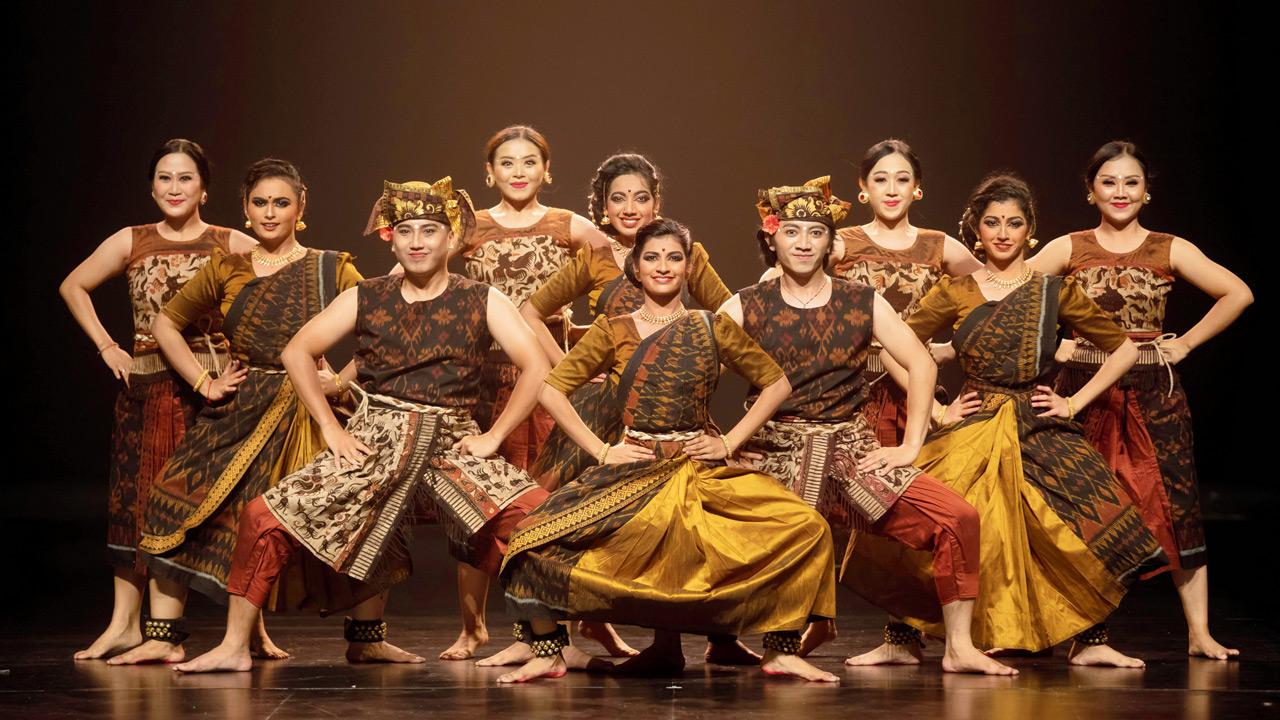
The costumes weave together Indian and Far East traditions through their use of fabrics
While the dancers are from India and Cambodia, the performance will also feature the Javanese court dance, Tari Kraton and Tari Rakyat. “Our objective, and journey through the arts, is to synthesise the many forms across the Far East, while staying true to the cultural roots of the classical tradition — whether that be through stories, music or dance,” Kumarasamy concludes.
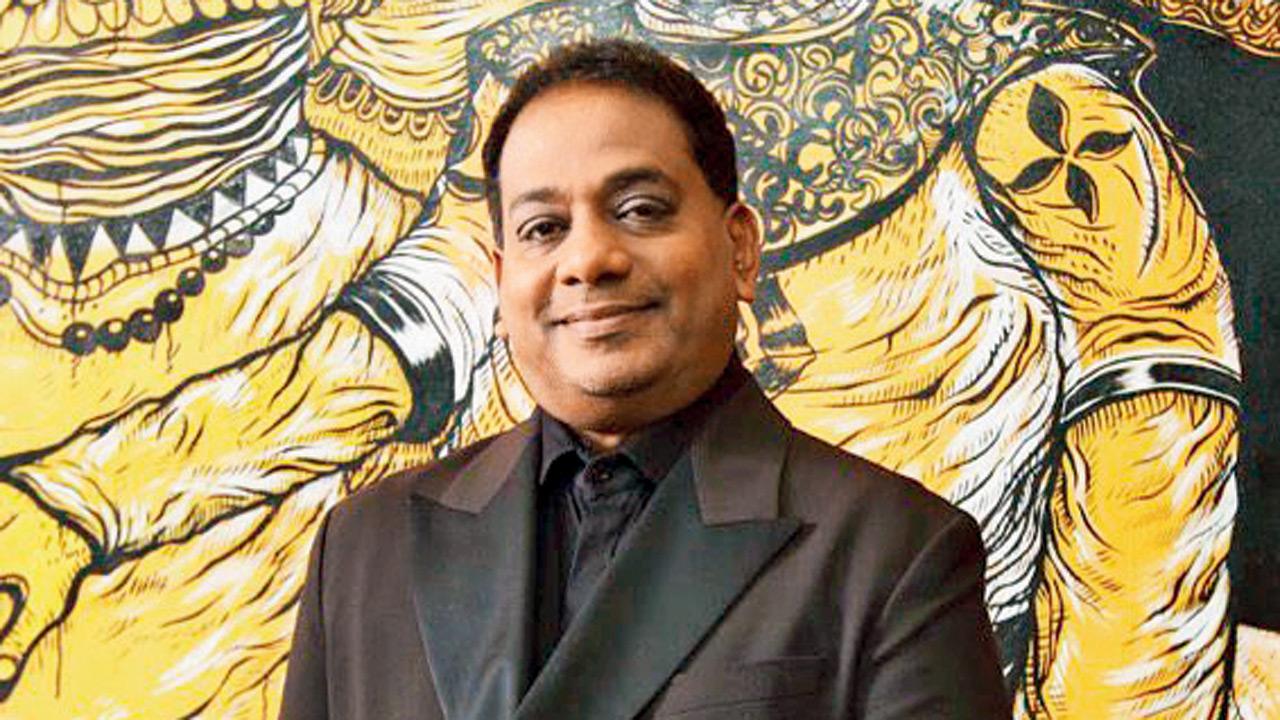
Aravinth Kumarasamy
ON August 3; 8 pm
LOG ON TO in.bookmyshow.com
COST Rs 750 onwards
 Subscribe today by clicking the link and stay updated with the latest news!" Click here!