Lohri, the Punjabi winter festival, marks the end of the coldest days and the return of warmth. Traditionally celebrated around a bonfire, families offer sesame seeds, jaggery, peanuts, and popcorn as symbols of gratitude and abundance. “Sundar Mundriye Hoye!” — The call that opens every Lohri sing-along — echoes across Punjab as people welcome the transition from Poh to Magh, a season of new beginnings. (From left) Sadanand Mulik, Radhika Sood Nayak, and Amin Hasan Khan Radhika Sood Nayak, a Punjab-born Mumbai resident, along with the Myna Academy of Performing Arts, is hosting Ral Gavaan (singing together), a community sing-along, to celebrate Lohri. The programme revives classic songs such as Sundar Mundariye, Lohri ke Tappe, Hulle Ni Maaye Hulle for new brides, and Til Chauliye Ni to welcome newborns. People gather around a bonfire for Lohri Nayak explains, “All lyrics will be displayed in Devanagari script on a projector, inviting everyone — children, elders, first-time singers, and seasoned voices — to join in.” Accompanied by Amin Hasan Khan on mandolin and tumbi and Sadanand Mulik on dholak, the evening recreates the warmth of a shared Punjabi courtyard. Amin Hasan Khan on the mandolin. Pics courtesy/Radhika Sood Nayak ON 11 January, 11 amAT Myna Academy of Performing Arts, 9th floor, Embassy Chambers, Ram Krishna Nagar, Khar West. CALL 7977011717ENTRY Rs 750 Lohri da Swaad For a culinary celebration, The Quorum presents Lohri da Swaad, offering Punjabi-fusion delights. Highlights include soups such as Sarson Shorba on NH44 and Kolhapuri Chicken Saar on NH48, fresh salads, and mains like Sardo da Saag with Jowar Bhakri, Chole Pithla, and Punjabi Murgh Saagwala. Desserts like Gur Til Panna Cotta, Puran Poli Crème Brûlée, and Malai Rabdi with Strawberry Relish are also on the menu. ON 11 January, 12.30 pm AT The Quorum Mumbai, 8th Floor, One World Center, Senapati Bapat Marg, Lower Parel. CALL 7208898778ENTRY Rs 1500
10 January,2026 09:38 AM IST | Mumbai | Rumani GabhareIf you’re a fan of the American television series Stranger Things (2016), you might want to test your affinity for it beyond just the iconic line of ‘Friends don’t lie.’ City-based community events platform, Loft 64 will host a trivia night tomorrow, themed after the series. A participant sketches a character during the activity rounds; (right) a fan at a mimicry round. Pics courtesy/Loft 64 “We’ve decided to host such trivia nights every Sunday; our previous one was on January 4, themed after the sitcom The Big Bang Theory (2007). Attendees will be divided into groups; friends won’t be in the same group,” explains co-founder Palak Shukla. What follows is a series of game rounds: Fans are asked questions, each carrying points, with points reduced with the increasing amount of time taken per question. Expect questions to range from the character Eleven to specific scenes and twists across all seasons. “After this, during the activity round, participants must either mimic or draw a character other than the protagonist to test their memory and how well they’ve immersed themselves in the story,” Shukla reveals. Palak Shukla Groups are eliminated based on performance, leading to a winning group, from which an individual winner will be declared depending on who answers trivia questions with the highest accuracy. Takeaways from the session include rewards, such as themed cups and T-shirts. “The goal is to gather like-minded strangers so they can bond over shared interests,” Shukla signs off. On January 11; 7 pm onwardsAt Loft 64 - The Chilling Lounge, Sunder Nagar, Malad West. Log on to district.in Entry Rs 249 onwards
10 January,2026 09:37 AM IST | Mumbai | Trisha GhoshJanuary often brings with it new beginnings. People make plans, resolutions, new starts that promise progress. And progress is precisely what the Architecture & Design Film Festival (ADFF:STIR) brings to the city with its second edition starting January 9. The festival made its debut with a splash in 2025, after being founded by New York-based architect and film enthusiast Kyle Bergman in 2009. “The city’s audience is deeply engaged, passionate and eager to explore how films can influence the world of architecture and design,” shares Kyle Bergman, festival director and founder, ADFF. Festival director and founder and editor-in-chief, STIR, Amit Gupta, adds that films are one of the central focus elements of the festival, and influence conversations on architecture through the medium. Another key element will the conversations under the umbrella of LOG(UE) programme. “The programme encourages active engagement, multiple points of view, and responsive discourse,” the director reveals. Amit Gupta and Kyle Bergman These conversations will be supported by the tactile presence of the Jaquar Pavilion Park, which will be installed on the grounds of the NCPA lawns. Curated by Aric Chen, director, Zaha Hadid Foundation, the visionary proposals of 10 winning practices will find expression at the Nariman Point venue. Gupta adds, “Down the line, they [the pavilions] are imagined to travel and evolve, becoming catalysts for wider public discourse in prominent civic and cultural spaces such as the Dr BDL Museum, Marine Drive, the Pune International Centre, and similar public forums,” he says. Renderings of The Streets of Aspiration by SJK Architects With the concerns over ecological impact of projects, and a need to refocus on sustainable living models growing, the festival becomes a ground for a sharing of new ideas. “We want to engage a significantly broader and more diverse audience, bringing together government bodies, civic authorities, institutions, corporates, patrons, collectors, and the creative community at large,” concludes Gupta. FROM January 9 to 11; 11 am onwardsAT NCPA, Nariman Point.LOG ON TO in.bookmyshow.comENTRY Rs 500 onwards PAVILION PARK The Pavilion of Conversations Bose KrishnamachariTectonics of MumbaiAnagram ArchitectsThe Streets of Aspiration SJK Architects THE GUIDE’S TOP PICKS FILMS A moment from the film, Sketches of Frank Gehry. Pics Courtesy/stirworld.com Sketches of Frank Gehry by Sydney PollackON January 9, 8.15 pm; January 10,6.30 pmAT Tata Theatre, Godrej Dance Theatre A shot of architect Geoffrey Bawa’s creation in Sri Lanka from the film, Bawa’s Garden. Pics Courtesy/YouTube Bawa’s Garden by Clara Kraft Isono ON January 9, 3.15 pmAT Tata Theatre TALKS People who architect the legend of Mumbai Rahul Kadri, Shivendra Singh Dungarpur, Nyrika Holkar, Kiran Rao, moderated by Rohan ShivkumarON January 9; 11.30 amAT Tata Theatre Building the contemporary: Power, public and the new Indian institution Tasneem Zakaria Mehta, Martha Thorne, Bose Krishnamachari, Raj Rewal, moderated by Ranjana DaveON January 11; 4 pmAT Tata Theatre WORKSHOPS Team Tree! A children’s timber workshopJoseph GoodwinON January 10; 11 amAT Jaquar Pavilion Park Thinking cities in narrativesAnuj Kale and Shreya KhandekarON January 11; 2 pmAT Jaquar Pavilion Park In the making: Mentoring sessions with Samuel RossSamuel RossON January 9, 3 pm; January 11, 3pmAT Tata Gardens
09 January,2026 09:46 AM IST | Mumbai | Shriram IyengarMumbai, a melting pot of different cultures, has something for everyone. This time, there is something for the migrant Tamil community that has called the precincts of this city their home for decades. Tamil Nadu’s multi-day harvest festival, Pongal, which marks new beginnings, will be welcomed on January 14 with a jamming session, organised by Pooja Ashokkumar, a third generation Tamil-born. She grew up in Mumbai, and is a public historian and researcher who documents the lives and subculture of the city’s Tamil community. Members of the community cook Sakkarai Pongal (Sweet Pongal) during an earlier celebration at 90 Feet Road in Dharavi The upcoming session is titled, Vaanga Kekalaam (Come, let’s listen), and is the third of a series of jamming and listening sessions organised by Ashokkumar and her co-organiser, Pallavi Pillai. “We want to offer a space to revisit the songs many of us grew up with. Playlists span generations and appreciate artistes from legendary musician Ilaiyaraaja to AR Rahman,” she tells us. Beyond music, these sessions tap into the collective memory of the Tamil community, as participants co-curate the playlist and share personal stories connected to their favourite tunes. Dr Chandrasekhar Ramamoorthy from Hyderabad shares some trivia during an earlier jam Ashokkumar shares some of them, “A participant once spoke of an Ilaiyaraaja composition that served as a lullaby in his life; another man recalled being deeply moved by Kalyana Maalai while listening to it alone in his car as a youth. At the most recent session, Dr Chandrasekhar Ramamoorthy travelled all the way from Hyderabad to participate.” Additionally, there will be an open mic and trivia session. Ashokkumar recounts the context behind Pongal and music, “Growing up in Jari Mari, a Tamil-dominant neighbourhood in Andheri, I remember Tamil songs blaring from every other house and at an audio cassette shop down the lane. Even today, listening to Athanda Ithanda from the film, Arunachalam (1997), starring Rajinikanth takes me back to my childhood Pongal celebrations.” We learn that, back in the 1980s and 1990s, Tamil Sangams in Mumbai neighbourhoods would organise cultural programmes, bringing performers together on stage. “For example, Dharavi would commence festivities with Tamil Thaayi Vaazhthu (Tamil Nadu’s state anthem). My event is a different form of cultural programmes from the past,” she explains. Pooja Ashokkumar Simple as the session is, it is deeply intertwined with the identity of a Mumbai-based Tamilian. “It is how we unite as a collective and honour our homeland and ancestors, even while living away from home. However, this jamming session is open to all. As they say: ‘Music has no language’,” she signs off. ON January 14; 3 pm onwardsAT Gracias Granny Cafe, Swami Vivekananda Road, Santacruz West. LOG ON TO @bombaytamilhistory (to register)ENTRY Rs 350
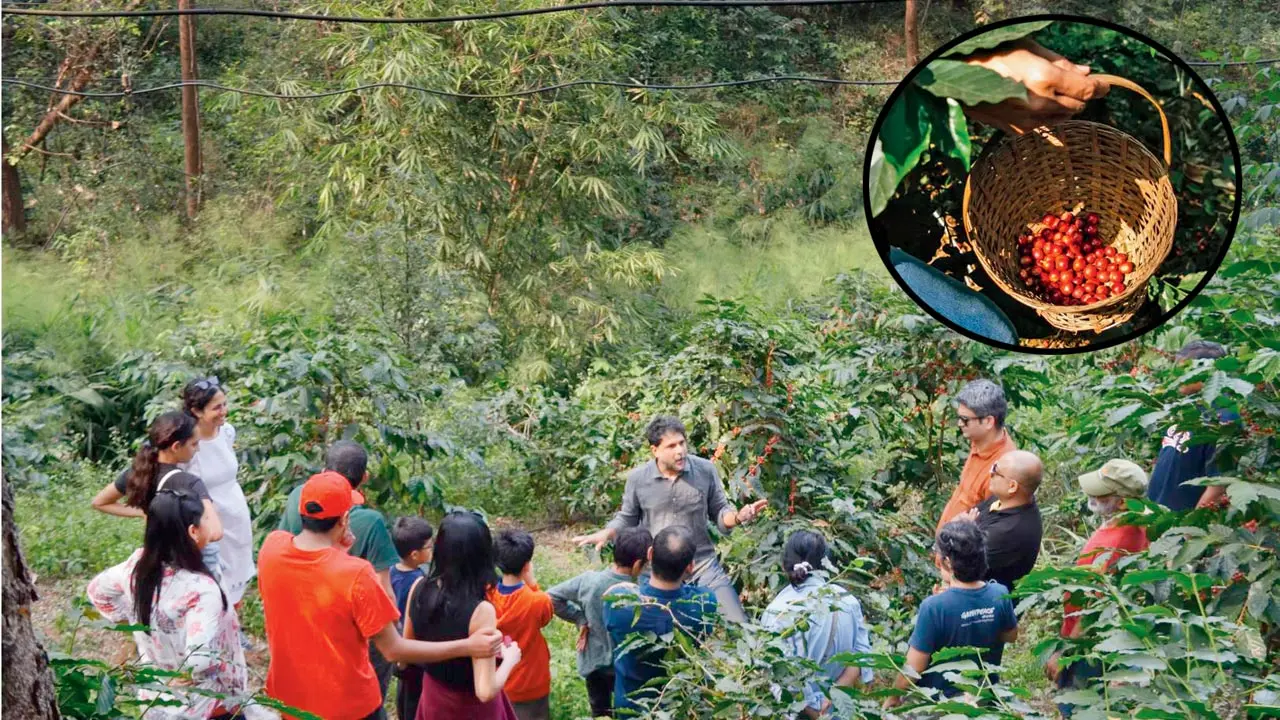
09 January,2026 09:45 AM IST | Mumbai | Trisha GhoshCoffee's on us if you can name a thing or two about Lake Kivu in Rwanda. We’ll start you off: A species of wild Arabica that traces its roots to the lake has come to harvest in a forest farm in Mulshi. Organic farmer Ashwin Paranjpe, who helms Gorus Forest Farm in the Western Ghats is keen to show you around the estate at two workshops this month. Organised by Kalyan-based Snickerdoodle Coffeeworks and Homemade Barista on consecutive weekends, the tours will give coffee enthusiasts a full hands-on experience of the crop-to-cup journey of the drink. The unlikely connection dates back to 1923, when Paranjpe’s great-grandfather Haribhau brought home Kenyan-origin seeds sourced from his travels. As a horticulture officer with the Bombay Presidency, he was stationed in Mesopotamia from 1919 to 1923. Upon his return to India, he also wrote the book Falzadancha Baug, documenting his experiences. Participants brew coffee outdoors. “In 2007, I returned to Mulshi after my Master’s degree in Horticulture from Florida. I was introduced to a vast hilly land that my parents had purchased in 2002. It was a wild, native forest. We had no idea what to do with it,” Paranjpe reveals. Never a bad time for coffee; the organic farmer planted seedlings in the hilly farms in 2010. While Arabica can grow in temperatures ranging from 15 to 24°C, it was the elevation that proved to be a concern, Paranjpe reveals. “Our farm stands at an elevation of 580m to 700m, whereas the ideal elevation for Arabica is around 1600m,” he admits, adding that experts were equally surprised when the beans thrived in the farm. A few measures like micro-sprinklers help emulate suitable humidity in summers. After consulting World Coffee Research and French genetic scientist Christophe Montagnon, the Paranjpes named this hardy variant Haribhau EL 1923. There might be some natural forces working in the farm’s favour, we believe. For one, the owners never levelled the forests or cut down any native trees. “The canopy of native trees like Sirish, interspersed with spices and fruits, provide essential shade. On the other hand, native birds are our finest quality checkers. They propagate only the choicest seeds through their droppings,” Paranjpe laughs. This earned the coffee variant its brand name, Wof Zerash, which translates to ‘sown by birds’ in the Kafi Noonoo language spoken by the Kaffa people of southwestern Ethiopia. At the weekend stay, participants will learn about the origin of the plant, growth stages, flavour profiles, and will participate in a tasting session. The adventurous ones will be encouraged to step in the forests and help harvest a new batch of coffee cherries in bloom this season. Helped by eight local families, the farm also oversees the full process of readying the coffee to be served. From 150 plants in 2010, we learn that the number in the farm has grown to 4000 today. PS: If not for the coffee, we recommend you make the trek for the AQI. “The air is pristine. I feel healthier and happier every day. Don’t ask me about my bank balance — growing coffee isn’t a rich pursuit, but I do feel like a king here,” he signs off. ON January 11 and January 17AT Gorus Forest Farm, House 178, Nanegaon village, Taluka Mulshi.LOG ON TO @gorusforestfarmENTRY Revealed on request Crop to cup Here’s how the Haribhau EL 1923 coffee bean travels from the Mulshi plantation to your cup 1 A coffee flower comes to bloom 2 The fruit forms with the bean (seed) inside it 3 Beans are harvested carefully and left to dry 4 Beans are hulled by the local staff 5 After roasting in a terracotta pot, the beans are sent ahead for grinding 6 With calculated measurements, a cup is finally brewed
09 January,2026 09:38 AM IST | Mumbai | Devashish KambleThursday Enjoy a story on stageTheatre: Quirky, nostalgic, and moving, Yuki Ellias’ tale, A Fish Ate My Cat about an elderly woman’s conversation with her son is a perfect start to a thoughtful new year.TIME 8 pm AT Prithvi Theatre, 20, Juhu Church Road, Juhu. LOG ON TO in.bookmyshow.com ENTRY Rs 500 Friday Pic Courtesy/Instagram Laugh with sassComedy: Nothing teaches you to laugh at life like sassy cats. Join Masoom Rajwani, Aditya Gundeti, and Sumit Sourav as they host this weekend special in Andheri. TIME 8 pm AT Cat Cafe Studio, Aram Nagar Part 1, Versova, Andheri West. LOG ON TO in.bookmyshow.com COST Rs 399 onwards Saturday Blue GlassyTiger. Pic Courtesy/BNHS Learn of wild wondersNature: Join experts from the Bombay Natural History Society (BNHS) as they teach you the secrets that hide within the urban jungle of the city. TIME 7.30 am AT BNHS CEC, Film City, Goregaon East. LOG ON TO urbanaut.app COST Rs 650 onwards A performance at the festival. Pic Courtesy/@thesteps Step into fest modeCommunity: From book swaps to music performances, the Festival at the Steps returns. TIME 5.30 pm AT St Stephen’s Steps, near Mount Mary Basilica, Bandra West. ENTRY FREE Sunday Pic Courtesy/@themanganiyarseduction Groove with styleMusic: The Manganiyar Seduction combines the theatrics of light, sound, and music. TIME 6 pm AT Phoenix MarketCity, LBS Marg, Kurla West. LOG ON TO district.inCOST Rs 1999 A close-up of a design. Pic Courtesy/@Sarmayaartsfoundation Pen your price Workshop: The art of Persian calligraphy, and its historical connection with Indian coinage find expression in Mehmood Ahmad Shaikh’s unique workshop. TIME 11 am AT Sarmaya Arts Foundation, Lawrence & Mayo Opticians Building, Fort.LOG ON TO @sarmaya_indiaCOST Rs 600 (per person) Climb to successFitness: Turn your fitness resolution into something fun by signing up for this rock climbing workshop. You can find your place on the peak and start 2026 off on the right foot. TIME 4 pm to 6 pm AT Bombay YMCA, Lamington Road, Grant Road East, Girgaon. WHATSAPP 8452017717
08 January,2026 11:27 AM IST | Mumbai | Shriram IyengarAfter a successful podcast on the Maharanis of India, New Delhi-based historian Anoushka Jain has culled cool facts about the Mughal queens, and their role in shaping Mughal India in her book, Badass Begums (HarperCollins India). Jain runs an initiative called Enroute Indian History, through which she leads heritage walks around the National Capital. Zeenat Mahal’s house in Lal Kuan where Bahadur Shah was imprisoned by the British . Zeenat Mahal was married to the last Mughal emperor Bahadur Shah Zafar and fought for her son’s ascension to the throne. It isn’t clear whether her haveli was commissioned by her, or was a gift from Zafar, but the interiors reflected Zeenat Mahal’s personality and taste. Beneath the fineries were also secret tehekhanas (cool dungeons). One led to the Red Fort, and the other to Ajmeri Gate. During the colonial era, with heavy surveillance, these passages would often be used for confidential underground meetings. Princess Jahanara, aged 18, painting attributed to Lalchand . Jahanara Begum, Shah Jahan’s eldest daughter, was the first Mughal daughter to be named Padshah Begum. She commissioned the Town Hall (Begum ki Serai), built in white limestone, which became home to several women. The design was inspired by a comparable serai in Iran, and the Italian traveller Niccolao Manucci praised it for being the most beautiful one in Hindustan. Women, otherwise restricted in movement, would walk, talk, and relax freely here. Begum Samru. Pics Courtesy/Wikimedia Commons . After the death of Asad Khan, a high-ranking nobleman during the reign of Aurangzeb and Bahadur Shah, a young concubine and her daughter, Farzana were ousted from their home by Khan’s stepson. Farzana was given refuge by a matriarch, Khanum Jan, who introduced her to the world of music, dance, and poetry in Chawri Bazaar. After marriage, Farzana became Begum Samru, and managed her husband General Walter Reinhardt’s diplomatic affairs from the zenana. Her sound judgment was invaluable in governance. After his death, she took over the reins, and was often called for strategic and military aid. . A nautch girl from Pune, Mubarak Begum fell in love with a British resident David Ochterlony and married him. She insisted that she be called Lady Ochterlony, a title reserved for ‘pedigreed’ British. She was vilified by the natives and the British for being a tawaif and a radical woman. Her masjid was given derogatory names like ‘Whore’s Mosque’, but it was the centre of Delhi’s classical arts. More than 40 poets would gather to attend mushairas here. . Mughal women were sharp with commerce and had annual incomes. They were funded through four mediums: A royal land grant, an annual income given in monthly instalments, gifts on anniversaries and coronations, and small business that they ran. For instance, one of the earliest Mughal women to command ships that helped pilgrims reach Mecca was Mariam-uz-zamani, one of Emperor Akbar’s wives. AVAILABLE At leading bookstores and e-stores
08 January,2026 11:26 AM IST | Mumbai | Nandini VarmaAn upcoming exhibition, Tarasha Craft Exhibit 2026, will showcase hand-made creations of 21 Indian artisans at a Bandra venue. “The artisans displaying their skills have been mentored by Project Tarasha and empowered to showcase their products and art forms in the city,” curator Aradhana Nagpal shares. If your children are inclined towards the arts, you might want to check out a specially-designed craft walk, which is part of the exhibit. Nagpal elaborates, “We will also organise two craft walks for children, offering them the opportunity to interact directly with the artists, whom we refer to as ‘craft-preneurs’. Many hail from Maharashtra, Rajasthan, Madhya Pradesh, Telangana, Odisha, and West Bengal.” Through skill development and the provision of a platform, the project helps artisans build sustainable livelihoods. This exhibition is organised by Project Tarasha, in collaboration with craft community platform, Creative Dignity. A participant studies a display of hand-crafted items at a previous edition of the exhibition Art forms that will be showcased include Banjara embroidery, Lambada jewellery-making, Gond art, and copper bell crafting. “This year’s theme is nature. Each artisan brings a unique interpretation of the natural world, including through motifs like birds, animals, trees, and sea creatures, and even by utilising natural materials sourced from their surroundings,” Nagpal reveals. Of particular interest to children will be an interactive courtyard zone at the venue, she points out, which will host live and immersive demonstrations and performances — Lac doll-making of Odisha, the Ganjifa Dashavatar taash (a game of cards), Sohrai mud painting, and the Warli Tarpa dance, amongst others. The process of making lac dolls and a finished lac doll Children and adults will also be able to experience these craft processes via the craft walks. Visitors will be able to purchase pieces directly from the artists. “I want children to be sensitised to these types of arts. [In the present day] they barely have access to hands-on experiences that portray on-ground realities, talents, and the labour that goes into such art forms, but when you give them the chance, they jump at it,” Nagpal explains. An artisan paints the Ganjifa cards used in Dashavatar Taash She is particularly excited about the outreach for children. “They are the future. By exploring these thoughtfully created spaces, listening to artists from different places narrate stories behind their craft, and taking a piece of their work home, youngsters learn something truly invaluable about India’s cultural heritage,” Nagpal signs off. Aradhana Nagpal On January 10 and 11; 11.30 am to 12.30 pm (Children’s craft walks); January 9 to 11; 10 am to 7 pm (Exhibition)AT The Vintage Garden, Patkar Bungalow, Bandra West. Log on to @projecttarasha (to register)
07 January,2026 11:04 AM IST | Mumbai | Trisha GhoshIn a move that might have irked some journalists, Korean boyband BTS ditched the usual press release route, and sent out handwritten notes to BTS ARMY Gold Members around the world last week. “2026.03.20” the subtitle of the note mentioned. On January 5, a formal press release finally confirmed it was the day the much-awaited 14-track untitled comeback album (after members enlisted in the South Korean armed forces in 2022) would be released. A scan of the handwritten note received by BTS ARMY Gold members last week. PIC COURTESY/BTS MOMENTS ON X What’s more, the statement also mentions that a world tour announcement is scheduled for January 14. Fans will know that this only adds fuel to the speculations of an India debut, after member Kim Tae-hyung said in a livestream last month, “Namaste, Indian ARMYs [BTS fans]. See you next year.” Runs in the family While the band has been away, fans found ways to keep in touch. I re-watched Run BTS episodes, organised a BTS-themed event, danced to their songs, celebrated their birthdays, and watched their live streams. BTS has always shared meaningful messages through their songs. BTS members Jung Kook (left) and Jimin after their military discharge on 11 June 2025. PIC COURTESY/WIKIMEDIA COMMONS I’m excited to see what message their upcoming album will bring to us. I’m ready to buy tickets as soon as the ticketing goes live. I’m going with my mom; that was decided a long time ago. My mom’s favourite is Kim Tae-hyung aka V, by the way, and she loves Jimin and Jungkook a lot too. We will dress up as quirky as we can, and we already know most of their lyrics and chorus dance steps. Nothing’s going to hold us back. Ayesha Shaikh, K-culture events organiser Don’t go easy I have been bingeing on previous concerts like Permission to Dance, and Love Yourself, in anticipation of the comeback. I hope the album is an energetic one, and not a soft ballad-style comeback. Esha Gupta, BTS fan club member Worth the wait The wait felt long, but it never felt empty. The solo projects, archival content, and even their individual journeys during the hiatus kept the connection alive. The pause allowed both the band and the fans to grow. I’m expecting a sense of reflection and evolution from the new album. Music that carries the weight of their individual experiences but comes together cohesively as BTS. I’d love to see that balance they do so well: emotional depth alongside scale and confidence. Something that feels grounded, but still unmistakably larger than life. If the Mumbai debut rumours are true, we are in for a blast. Attending their concert in Bangkok in 2019 and experiencing their performance live with the energy, precision, and connection with the audience is a memory that still stands out as deeply special. Supriya Joshi, comedian BTS’s day out In case of a January 14 miracle, Supriya Joshi plans a Mumbai Darshan for the members based on their personalities>> For RM, I’d start with a quiet heritage walk in South Mumbai with a trip to an art gallery and a bookstore, followed by coffee, giving him space to observe and reflect.>> Jin would experience Mumbai through a street food crawl with vada pav and pav bhaji, and a stop at an Irani café.>> For J-Hope, I’d take him somewhere high-energy like Bandra’s streets, or maybe a dance studio session. Kala Ghoda. FILE PIC >> SUGA feels like someone who’d appreciate stillness, so a late-night drive along Marine Drive.>> Jimin would enjoy the softer, more intimate side of the city, so a sunset walk at Bandstand or Carter Road, petting every cat we meet along the way.>> V would love Mumbai’s aesthetic, story-filled spaces around Kala Ghoda, or old neighbourhoods with character.>> Jungkook would possibly enjoy the city in its most unfiltered form, with night walks, local food joints, and soaking in the everyday rhythm of Mumbai. Need a recap? Get a quick refresher in the band’s journey by tuning into:>> 2 Cool 4 Skool, the band’s 2013 debut album>> BTS’s album BE (2020)>> Break The Silence (2020), a docu-film that captures the journey behind a tour>> Bring The Soul (2019), a peek into life behind the spotlight>> D-Day, Suga’s debut 2023 album
07 January,2026 11:01 AM IST | Mumbai | Devashish KambleTITLE: Peace Pulao, The Forbidden Snacks SocietyAUTHORS: Menaka Raman and Vibha Batra GENRE: ChildrenPublisher: HarperCollins Children’s Books Cost: Rs 499 The Forbidden Snacks Society by Menaka Raman and Peace Pulao by Vibha Batra are part of Doubles (HarperCollins Children’s Books), a new collection of two food stories for children. In Raman’s adventure narrative, several children are enrolled by their parents at a mysterious wellness camp, where they survive on green drinks, boiled mushrooms and llama milk curd. One day, they embark on a mission to uncover the secrets of the camp. In a flipped mystery narrative, Batra explores what it can take for two families, who own restaurants serving the Pasinabad Pulao, to set aside their differences and save the legacy of their grandparents. Vibha Batra (right) Menaka Raman Both stories are action-packed. Children play detectives who search for the root of strange happenings. In Raman’s story, one of the most endearing characters is young Anika. She is tender towards her friends, and fierce when standing up to the authorities at the Temple of Mind and Body Excellence (TOMBE). She calls the camp ‘fat camp’, annoyed by her athletic parents’ coercion in sending her. Other children — Abhanindranath (Bubbles), Vasu, and Navjyot — have distinct personalities; they encourage us to root for them. Their uniqueness helps readers get a sense of what would have resulted in their enrolment in the camp and the multiple ways in which children may feel stifled or humiliated by their loved ones. Sometimes that involves being shamed for eating too much; other times, it may be a belittlement of their passion. Raman’s writing is gentle; she injects humour to draw on the future, creating an adventurous world where experiments can turn sinister. On the other end is Batra’s world that aims to preserve the charm of the past. The restaurant décor, the local delicacies, Mataji’s rules inside the restaurant, the grandparents’ secret recipe, and the bazaar with cyclists and cycle rickshaws — all take us back to an older world. Batra’s characters are vibrant, especially the protagonists Suraiya and Divumber, who carry their own idiosyncrasies. With Inspector Chulbul and Badke Bhaiya’s appearances, Batra leaves us with plenty of suspects, commotion, and laugh riots. Together, the stories are doubly joyous and make for great additions to a young reader’s library. AVAILABLE: Leading bookstores & e-stores
06 January,2026 09:31 AM IST | Mumbai | Nandini VarmaWelsh actor Sir Anthony Hopkins recently achieved a milestone of 50 years of sobriety, opening up about his alcohol addiction in an Instagram post. For those wanting to reduce alcohol intake as a New Year resolution, we speak to Dr Sanjeev Khanna, consultant gastroenterologist, Criticare Asia Multi Speciality Hospital, and Holy Spirit Hospital, Andheri for tips on how to reasonably reduce drinking. Simultaneously, we consult Kakul Faruqi, consultant psychologist and psychotherapist at Dr LH Hiranandani Hospital, Powai, for suggestions to manage the pressures of social drinking. Manage your meals Sir Anthony Hopkins. Pic courtesy/Wikimedia Commons “According to World Health Organisation (WHO) guidelines [January 4, 2023], there is no safe limit for alcohol consumption, given its damaging effects on the liver and mental health, amongst other issues,” Dr Khanna articulates. Complete abstinence is ideal, but inevitably difficult. To mitigate alcohol’s adverse effects in the short term, he suggests, “Eat a high-fibre fatty meal an hour before drinking to slow down quick absorption. Examples of simple, take-home eats for a Mumbaikar are Pav Bhaji, Vada Pav, Sabudana Vada, Poha with peanuts, and Aloo Paratha. Non-vegetarian options can include Egg Bhurji, Fish Fry, Kheema Pav, and rolls.” Fight hangovers Social drinking causes the urge to drink, to signal an ability to ‘have fun’ Hangovers can hold back not just one, but nearly all resolutions. “Home remedies for it are taking cold showers, using electrolyte replacements, like Oral Rehydration Solutions (ORS), and of course, spacing out alcohol intake with water,” Dr Khanna says. “These also help reduce ‘hangxiety’ — anxiety and depression the morning after drinking.” He cautions to avoid painkillers as much as possible for subsequent headaches, due to their risk of ulcers and liver damage. “Use Antacid and anti-vomiting medications under medical supervision. Ultimately, hydration and rest are key to relief.” Social drinking Dr Sanjeev Khanna Meanwhile, Faruqi explains, “Alcohol is often woven into celebrations and get-togethers, making refusal feel awkward or rude, and creating pressure to fit in and avoid judgement. Hence, one hack is to hold a drink even if it’s not alcohol; people notice what’s in your hand more than what’s in your glass. Sparkling water with lime, tonic, soda, or mocktails help you blend in.” Plan over promise Kakul Faruqi, consultant psychologist and psychotherapist “Instead of avoiding drinking altogether, make an advanced decision about what you’ll drink at a party, how long you’ll stay, and what you will say if offered alcohol. This reduces decision fatigue and makes your choice intentional, not reactive,” Faruqi suggests. “Try using neutral, confident one-liners, like, ‘I’m good for now’ or ‘I’m pacing myself tonight’,” she adds, reminding us that explanations are not owed. Drink wisely Faruqi recommends making mutual connection the goal, emphasising, “Being engaged, and asking questions, dancing, helping the host, and focusing on food naturally diverts attention from the social drinking pressure.” To be a mindful drinker, she advises setting a visible limit for self-control, slowing the pace, and strictly avoiding alcohol to regulate emotions. “Notice if you’re drinking to manage anxiety, boredom, or discomfort. Addressing the feeling directly often reduces the urge to drink more,” she tells us. A New thought “Instead of thinking of how to avoid alcohol, ask yourself how you want to feel the next day. This guides wiser choices without pressure or guilt.”- Kakul Faruqi
06 January,2026 09:25 AM IST | Mumbai | Trisha GhoshADVERTISEMENT