
A city-wide pre-festive dry waste collection initiative will aim to make decluttering a breeze for time-strapped Mumbaikars
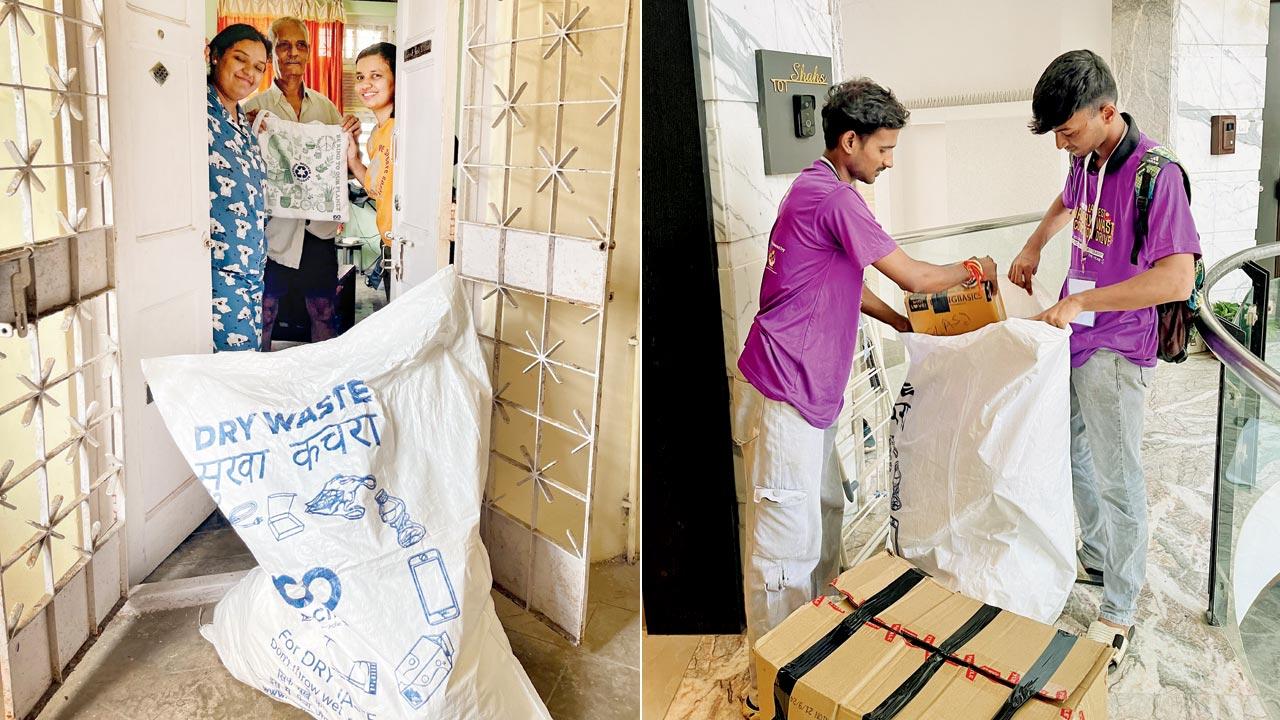
A family is all smiles after handing over their dry waste collection; (right) Volunteers pack the dry waste to be transported
It's that time of the year when you, dear reader, will stumble upon old issues of this newspaper on your dusty shelves, stashed in drawers, or lurking under that old cupboard. We know where you hide them. By that, we mean the dreaded Diwali safai days are right around the corner, and if you’re like this writer, we have some good news. ReCircle, a city-based waste-management company, is extending a helping hand with a 10-day-long dry waste cleanup drive in Mumbai and Navi Mumbai.
Since 2021, the group has collected nearly 75,000 kg of dry waste in the form of paper, plastics, old textiles, e-waste and metals. Through their free door-to-door pick up service this festive season, the group is encouraging households, schools, offices and housing societies to join the movement.
 Safaai saathis sort the dry waste at the Malad plant. PICS COURTESY/RECIRCLE; INSTAGRAM
The Herculean task falls on the team, and nearly 30 volunteers who will traverse the city, covering the Western, Central, and Harbour Railway lines, as well as Navi Mumbai, in mini trucks. “Each truck is staffed with a volunteer trained in English to navigate and log collections. Citizen groups and NGOs have been a huge help in ensuring last-mile connectivity in many areas,” ReCircle team’s brand advisor Nikki Gupta explains. Mumbaikars can book a slot between October 4 and 14, to hand over their dry waste. “We request citizens to donate materials like cans, glass jars, e-waste, paper, clothing and footwear, and avoid materials like torn clothes, sharp items, food and chemicals, for the safety of our team,” she urges.
 REPRESENTATION PICS/ISTOCK
At the heart of the initiative is a material recovery facility in Malad, where nearly 20 ‘safaai saathis’ sort through piles of waste on a semi-automatic factory line before sending it off to third-party recyclers. “The group has received some interesting submissions over the years — full gym kits, clothes with the tags still on, even some precious metal jewellery. For stuffed toys that are in good condition, we let safaai saathis take them home for their children,” Gupta reveals.
 Nikki Gupta
Challenges are plenty for the group, but the biggest, as Gupta puts it, is the reluctance of Indians to let go. “Most homes have toys in good condition, perfectly recyclable paper, and loads of plastic waste. Hoarding isn’t the solution,” Gupta reminds us. As a Diwali bonus, the group plans to donate all monetary collections from selling the dry waste, to St Catherine of Siena School and Orphanage in Bandra West. That’s one way to light up someone’s Diwali.
ON October 4 to 14
LOG ON TO @recircle.in to register and book a slot
Festival of giving
Explore more options to declutter your home in an environment-conscious way
. Dhyas Foundation
This Vasai-based community collects household waste. The community also runs a utensil bank, to promote renting of cutlery for parties and gatherings.
LOG ON TO dhyasfoundation.org
 A view of the Gamdevi store. PIC COURTESY/TURN AROUND SHOP
. Turn Around Shop
Donate your pre-loved clothes and shoes to this Gamdevi-based store. If you’re dropping by, check out some sustainable gifting options.
LOG ON TO @turnaroundshop.in
. 5RCycle
Book sensitisation sessions for your Diwali party this year, where a team will visit your venue for an interactive session on recycling.
LOG ON TO @5RCycle
Hoarders, beware!
As households begin the cleaning phase, signs of Compulsive Hoarding Disorder are bound to surface. According to psychologist Meghna Singhal, hoarding can:
 Meghna Singhal
. Fuel your stress. A chaotic environment leads to a chaotic mindset
. Drain you financially
. Compound your loneliness due to social isolation
. Create unsafe conditions, including fire hazards
. Lead to serious family conflicts

Compulsive Hoarding Disorder is a recognised mental condition that requires professional attention. “Hoarders don’t hoard simply because they like it. It can sometimes come from a deeper place of irrational fears and irregular brain activity. Families of the individuals must be supportive and consult professionals,” Singhal says.
 Subscribe today by clicking the link and stay updated with the latest news!" Click here!