







Bollywood’s much-loved tailor-designer’s recent autobiography offers a glimpse into the hard work and inspiration behind how some of the most iconic costumes for Hindi and Marathi cinema were created

An illustration depicting Mogambo
Mumbai’s respected menswear designer Madhav Agasti’s book Stitching Stardom (Penguin Random House India) is a tribute to an era gone-by — the prime days of the 1980s and 90s Hindi cinema. As a child, Agasti was good at sketching, and watched his father and neighbour work at the sewing machine. By Grade 10, he was able to sew a black coat, and in college, in Nagpur, was sought by professors to stitch their suits.

Such illustrations for characters played by actors like Anupam Kher were presented to filmmakers
After failing to convince his family of the merits of pursuing the profession, Agasti left home at the age of 19, and travelled to several cities like Gwalior, Delhi, Moradabad, Rampur and Lucknow, in search of work. During this time, he studied the specialties of the cities, astutely observing fashion styles of its residents.

Agasti with Gulshan Grover
This book traces his life, from his early days of struggle to his first shop’s opening in Dadar in 1975, followed by a new unit in Bandra in 1985. From here, he designed some of the most iconic costumes in cinema for those decades, as well as wardrobes for political leaders, including former Prime Minister of India, late PV Narasimha Rao. The book is packed with anecdotes.

Madhav Agasti and Amrish Puri at a dressing trial. PICS AND ILLUSTRATIONS COURTESY/MADHAV AGASTI and Penguin Random House India
The chapters on his meticulous designs for memorable villains like Amrish Puri’s Mogambo (Mr. India) and Gulshan Grover’s ‘Bad Man’ Kesariya Vilayati (Ram Lakhan), are particularly fascinating. He contrasts their flashy clothes with simpler ones he stitched for the heroes and the comedians. It is also enthralling to read about his collection of pamphlets and magazines from across the world, which he often referred to, to add taste and distinction.
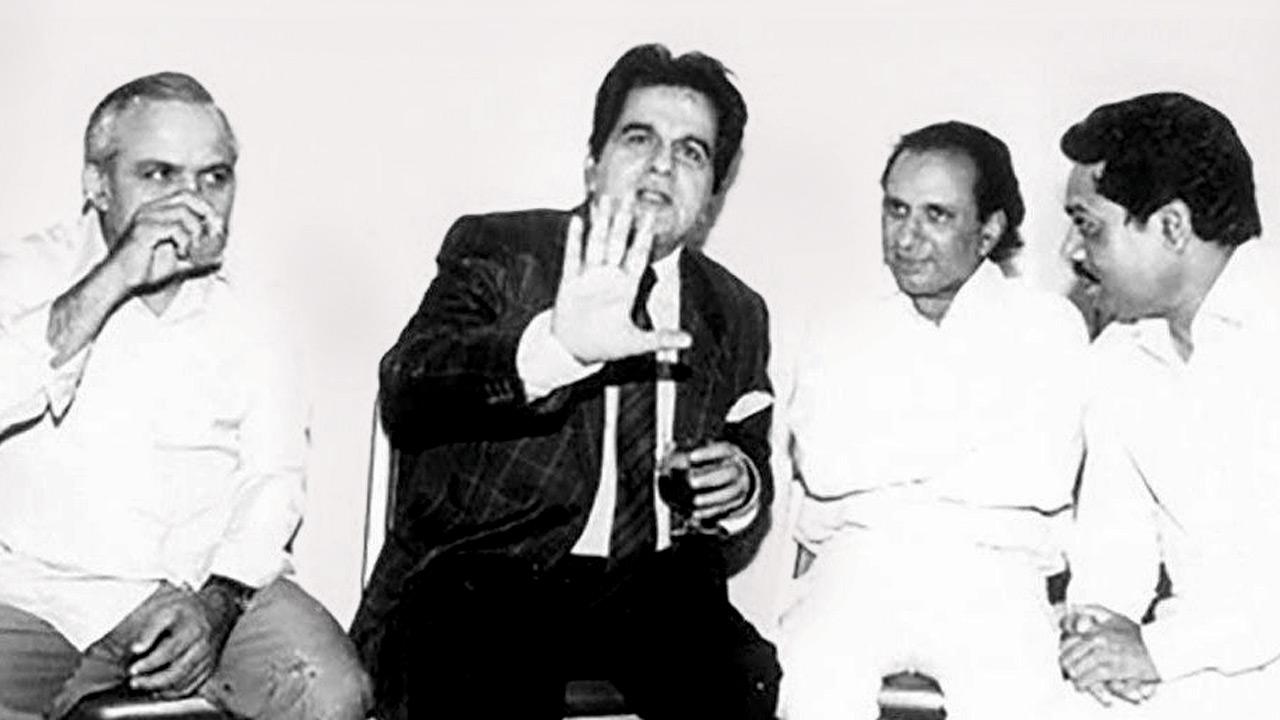
Agasti (extreme right) with Dilip Kumar (centre)
Units in the book are punctuated by endearing notes written by his friends from the film fraternity. Johny Lever recollects how his Bandra store was his best hangout spot; Paresh Rawal remembers Agasti’s kindness towards him, when he was a newcomer. A chapter is fondly dedicated to his wife Mrunal, where he reveals how central a role she played in his life and career. Agasti’s tenacity and kind-heartedness gleam throughout the book.
Available Leading bookstores and e-stores
Cost Rs 499
 Subscribe today by clicking the link and stay updated with the latest news!" Click here!