Let’s start with water There are many issues in Aarey, starting with accepting the objections of the tribal residents with regards to development in the region. However, if I had to pick, it would be improving the water supply. It is the most basic need for a Mumbaikar. Though some padas receive water, others still struggle to get enough water to get by. That is not too much to ask for.Manoj Dhinde, 24, musician, Maroshi Pada, Aarey Unpleasant morning views If I had the choice, I would guide them from the Aarey signal to the Gokul Anand Hotel. The service road I use for my morning walks is taken over by tour buses. There are gutkha stains, and refuse from the buses. Sometimes, the bus drivers take a bath right there. That sight is something I would like them to enjoy as well.Bageshree Satam, 63, homemaker, Borivli Join the rush hour commute I would take my representatives down the lanes of Rambaug in Kalyan to show them the condition of the roads. It won’t be a surprise because everyone has known about them. A traffic jam outside the western exit of Kalyan railway station. Pic/Atul Kamble In fact, it would be good to just visit Kalyan railway station during the rush hour to witness how the blocked roads and construction makes it difficult to access and move from one spot to another. Citizens do not ask for much, just basic civic amenities.Tanishi Masand, 20, student, Kalyan Breathless in Sion Sion has the same problem as the rest of the city — dust pollution caused by construction debris. I would like to join my representative and spend a day along the roads of Sion West, and show them how construction rules are flouted by RMC (Ready mix Concrete) trucks that pass through all day — they are supposed to move through the roads only during the night. Exposed construction debris near KJ Somaiya Hospital (right) and Air force Quarters in Sion. Pics Courtesy/Ashok Kurmi Then, there is the matter of uncovered debris across sites that add to the pollution and leads to breathing issues. I’d like them to share our experiences.Ashok Kurmi, 41, social worker, Sion Get the basics right, please Do we really need more infrastructure projects? The ordinary Thanekar is mainly bothered by traffic and dust pollution. I would take them on a walk down Ghodbunder Road, and show how the service road itself has been removed. The heavy traffic on Ghodbunder Road, and the absence of a pedestrian service road is posing risks to residents. Pic/Nimesh Dave I wonder whose idea that was? In addition to cutting down the trees, it puts pedestrians at risk from oncoming traffic. There are no footpaths. Get the basics right — roads, water supply and safety, please. Parag Phadnis, 58, entrepreneur, Thane Pedestrian-friendly walkways Thankfully, Worli is a smaller and better maintained constituency. But if I had to take my representative to a place, it would be to the connecting steps between Annie Besant Road and Pochkhanwala Road. They are not well maintained, lack proper lighting, and some are of unequal size. Everyone who has to get to Pochkhanwala Road has to use this alley: whether they are the residents of the Worli Police Quarters, people passing through the Mahalaxmi Station, or the new Aqua Line Metro Station. Apart from this, I would show them the misalignment of the zebra crossings in Worli. Maintaining walkways, and pedestrian access to roads is our main concern.Chaitanya Prabhu, 27, NGO founder, Worli Take a walk on the rough side The broken and encroached footpaths (left) force children to dodge traffic on the main road every day. Pic Courtesy/BRCF There are many places, but we wish to invite the corporator to walk even 100 metres with residents after winning elections. They will be walking on the Bhulabhai Desai Road. Pavements and side strips are encroached, and made dirty by vendors. We have been asking for a long time for encroachers to be removed, to make Breach Candy walkable again. Senior citizens and children have to walk down the main roads, and cannot use the pavements. We have broken pavements in most places, and the ones that exist are encroached.Nandini Chabria, 57, office bearer, Breach Candy ALM, core member, Breach Candy Residents Forum
13 January,2026 10:17 AM IST | Mumbai | Shriram IyengarIt would be criminal to have the next James Bond walk on to the screen wearing an iWatch. Regardless of the advancement of technology, there is an aesthetic beauty and merit to mechanical watches. It is this common love that will draw collectors and curious amateurs this Saturday to a venue in Mahim. “You don’t need a Rolex to become a watch enthusiast,” shares Jude de Souza, founder, The Revolver Club, adding, “The watch club started as a space for people who are curious about mechanical watches.” Since 2022, the club has enabled enthusiasts to pick and choose from affordable finds to rare discoveries. “It led to the kind of conversations that are hard to manufacture online: collectors sharing stories, newcomers learning the basics, and people connecting over what they wear on their wrist rather than what it costs,” de Souza explains. The sessions will be helmed by de Souza, while the collectors will host conversations over their respective collections. The session on Saturday will bring to the fore collections that include watches like Omegas, Accutrons, Citizen Bullheads and Seikos. “It is about what catches your eye,” de Souza concludes. ON January 17; 12 pm onwardsAT The Revolver Club, LJ Road, Mahim West. LOG ON TO @therevolverclub (RSVP mandatory)
13 January,2026 10:06 AM IST | Mumbai | Shriram IyengarPicture this: It’s 1739, and the Marathas are firing cannonballs after cannonballs at the Vasai Fort in their spirited attempt to claim the fortress. They’re a tad perplexed, to be honest; the thick walls and angled bastions fail to budge. We can’t possibly tell if the Marathas knew, but this ordeal was (partly, at least) courtesy of Michelangelo, the same Italian artist who famously painted the astonishing frescoes of the Sistine Chapel. One of the existing bastions Known to a few, Michelangelo took a hiatus to serve as the Governor and Procurator General of the Fortifications of Rome around 1527. “Trace Italienne, as we now know the style, first emerged in the fortifications of Florence under Michelangelo. It is the same style that the Portuguese implemented in the Vasai Fort,” says independent scholar Raamesh Raghavan of India Study Centre (INSTUCEN). This weekend, Raghavan will lead a walk through the gates that once opened only after the two-year bloody Battle of Vasai (erstwhile Bassein) aka Vasaichi Mohim. See for yourself The inner citadel, one of the surviving structures inside the fort “The walls of the fort were short, reinforced with mud, and as thick as six metres. Unlike forts in the Deccan, the bastions were triangular and pointed. This design helped it sustain fire from the nearly 10,000-strong Marathas,” says Raghavan. We’re told that at times, Portuguese soldiers would use short periods between Maratha firing to repair the mud walls on the go. There’s a timely lesson to be learnt there, we think. A dated map of the fort shows the prominent triangular bastions (in pink). PICS COURTESY/WIKIMEDIA COMMONS, RAAMESH RAGHAVAN While most of the fort’s interiors are currently in ruins, taken over by vegetation, participants can still view and touch these walls and a few of the bastions. Some remnants of the Portuguese artillery survive, albeit far from their original condition. “In their prime, the cannons were at least thrice the size of Maratha cannons. Some of them were made indigenously in Vasai, while others were imported from Goa, or shipped all the way from Portugal,” Raghavan reveals. Maintained by Archaeological Survey of India, the fort is “not in shambles. But could use some extra care to bring it back to glory,” he admits. What’s in Vasai? Michelangelo and Chimaji Appa Raghavan believes the average Mumbaikar today is oblivious to the significance of Vasai. And he’s not talking about the time British band Coldplay brought a whole production crew to the fort to record their 2015 hit Hymn For The Weekend. “Vasai was home to Portuguese noblemen. As the base for their northern territories, it regulated much of the trade through the Vasai Creek,” he says. After all, the Portuguese vacated the erstwhile Bandora (now Bandra) and Versova to focus on protecting Bacaim/Bassein (Vasai) during the two-year siege. Raamesh Raghavan The tale of how the fort finally fell to the Marathas is a story to tell in itself, Raghavan adds. Fully aware of the strategic and cultural importance of annexing Vasai, Maratha leader Chimaji Appa (younger brother of Peshwa Baji Rao I) stood brave in the face of the Portuguese cannons, steadily denting the defence through landmines. More than anything, it was a declaration of power, the symbolic end of foreign rule and the establishment of Maratha pride. Marathi Asmita, for those keeping up with election-time lingo. ON January 18; 11 am to 4 pmMEETING POINT Vasai Fort (details revealed on registration)REGISTER 9322273136 (Drop a WhatsApp message) ENTRY Rs 1416
13 January,2026 10:06 AM IST | Mumbai | Devashish KambleAfter Dark You never forget your first Murakami. Reading Norwegian Wood at 19 without a fully developed frontal lobe is an experience into itself. For the readers who continue to pursue the magic of Murakami, I would recommend trying the 2004 novel. Between a city that never fully sleeps and a woman who never fully wakes up, we explore a different side of Tokyo that comes to life after dark. I enjoyed the prose more than the story at times. It is easy to get lost in the world-building that leaves you with more questions than answers.Garima Bhatt, marketing professional What I Talk about When I Talk about Running Haruki Murakami’s non-fiction gives us a sneak peek into his lifestyle. If you are familiar with his magical realism, then you’d be surprised to know how an optional act of suffering influences his writing. One of the key lessons from his book about how ‘creativity is a discipline and talent is limited’ has busted my myth of a creative block. A professional cannot afford having one. I began running for my physical fitness, but later it grew into me escaping reality momentarily. His books reflect the same immersive experience.Shraddha Pednekar, interior designer Kafka on the Shore I like Murakami’s unconventional storytelling and masterful blend of reality and magical realism. This novel is a great example. I was especially taken by the themes of identity, solitude, and fate told through parallel stories that gradually intertwine in an unexpected way. Its dreamlike atmosphere, philosophical undertones, and surreal imagery make it a compelling read. I love all his works, but this one especially stayed with me.Malabi Das, communications specialist Killing Commendatore Experiencing transcendence into the literary realm of magical realism is what reading works of Haruki Murakami feels like — from his flappy short story collections to his chunky novels. For me, this 2017 novel stands out as a masterpiece. Buckling up in a Subaru Forester, accompanied by a nameless narrator, a mysterious wealthy neighbour and an enigmatic idea and embarking on an uphill drive into a hauntingly isolated Japanese forest is an odyssey waiting to be explored. This novel is indeed a piece of art, a testament to Murakami’s unparalleled storytelling prowess.Adwait Bhosale, medical student The Wind-Up Bird Chronicle I was away from home for the first time, and it was serendipitous to have my first Murakami novel fill my days while working on Wes Anderson’s Darjeeling Limited. My loneliness and my weirdness found a friend in Murakami. He makes the ordinary and the mundane, magical and dark, and sees people as deep wells, you never know what will float up. Microwaving rice pudding became a mystery under a lid. I wanted to be May Kasahara and Toru and the well. I am pieces of them all. The chapter ‘The Story of the Monkeys on Shitty Island’ is a cautionary tale till date.Tess Joseph, casting director Colorless Tsukuru Tazaki and His Years of Pilgrimage I’d recommend this and A Wild Sheep Chase as they both spoke to me at different emotional periods in my life. At different times, they felt like they understood me. What stood out to me about this novel was how normal Tsukuru’s loneliness felt. He isn’t broken or dramatic; he’s just going through life carrying unanswered questions, and that felt very real to me. I remember finishing the book and feeling strangely calm, like it had put words to something I hadn’t fully processed yet.Manjyot Singh, IT professional A Wild Sheep Chase Norwegian Wood was my first Murakami. I had found it in a bookstore once at the airport and I’d liked the gist at the back of the book. I’m so glad I picked it up, since it’s a great Murakami starter. My personal favourite, though, was the third book in the Trilogy of the Rat; it was Murakami at his peak. The story, the characters, the setting, the end — everything works well. The character of the Rat really spoke to me. He enters towards the end and has some wonderful lines and ideas, especially, about how fleeting life really is.Udit Gor, chartered accountant Available Leading bookstores & e-stores
12 January,2026 09:57 AM IST | Mumbai | Nandini VarmaSometimes a throwaway conversation between friends about quitting their jobs and opening a café can actually come true. For Nitin Nai and Dhrumin Chheda, that half-joking dream is Pustakafé, tucked in a lane that’s barely five minutes away from Matunga Road railway station. As you step out of the western exit of the railway station, and walk past a stretch that is bearing the brunt of road repairs, the small café nearly misses the eye. Opened in June, the two-floored space has, in just six months, become an unofficial hangout for students of DG Ruparel College, close enough for some to practically hop across in between lectures. Wooden shelves stacked with books on the cafe’s mezzanine floor Nai shares, “A quiet place with no background music to read books and college-friendly meals; who would not like that? The idea is simple, and it was meant to be close for college students, and as luck would have it, everything worked.” Inside, the walls are painted green and yellow; we spot wooden shelves stacked with books across most corners. The collection is vast, across fiction and non-fiction titles, and ranges from self-help and spiritual titles, to an entire section dedicated to Manga comics. Mushrooma and tomato pizza They stock even a few banned books like The Satanic Verses by Salman Rushdie, The Adivasi Will Not Dance by Hansda Sowvendra Shekhar, as well as The Polyester Prince by Hamish McDonald for the curious reader. Food is student-friendly, with vegetarian and non-vegetarian options starting at Rs 129 that include pizza, pasta, wraps, momos, French fries, nachos, sandwiches, and waffles, and the drinks include a varieties of cold coffees and chocolate and vanilla thick shakes. Students enjoy a quick brunch. Pics from the collection/Rumani Gabhare Darshita Chavan, a student at DG Ruparel and a regular at the café, told us, “Most of us drop by for the food, but also to blow off the steam, we pick up a book, which is usually fiction.” Nai adds, “Students love this place as it gives them an accurate amount of privacy and enough space to chill. Many pick up fiction or trending titles on their Instagram feed, to read.” Nai mentions, “On a regular weekday, the café seems packed to an extent that I see people waiting outside by 10-ish, but the weekends are more on the quieter side as the college is closed. But we do have a handful of regulars who come here almost every Sunday.” Most of the books have been contributed by Chheda, who is an author, but patrons are encouraged to donate titles as well. A strange thing about this place that we happily accepted is that our phone signal drops as soon as we step inside. A suitable sign for everyone to switch off, relax, and read. TIME 10 am to 1 am (Open all days)AT The Pustakafé, Bal Govind Das Road, Mahalaxmi Sindhi Colony, Matunga West. LOG ON TO @pustak.cafe More book-themed cafes to check out >> Leaping WindowsAT Corner View 3, Dr Ashok Chopra Marg, Amit Nagar, Versova, Andheri West. CALL 9769998972LOG ON TO @leapingwindows >> Title Waves AT St Paul Media Complex, opposite Duruelo Convent School, Bandra West.CALL 8657921003LOG ON TO @titlewavesbookstore >> The Library CafeAT Next to Carter’s Blue, Hanuman Nagar, Bandra West.CALL 9819115777LOG ON TO @thelibrarycafemumbai >> The White Crow Books and CoffeeAT Ground Floor, Jio World Drive, Bandra Kurla Complex.CALL 9820833086LOG ON TO @thewhitecrowbooksandcoffee Pic/The White Crow Books and Coffee >> Kitab Khana with Food For Thought CafeAT Flora Fountain, Somaiya Bhavan, 45 / 47, Fort.CALL 22844242LOG ON TO @f4tcafe Nai’s picks Nitin Nai >> Think and Grow Rich by Napoleon Hill>> The Psychology of Money: Timeless Lessons on Wealth, Greed Happiness by Morgan Housel>> The Power of your subconscious mind by Joseph Murphy>> The 4-Hour Workweek by Tim Ferriss
12 January,2026 09:56 AM IST | Mumbai | Rumani GabhareLohri, the Punjabi winter festival, marks the end of the coldest days and the return of warmth. Traditionally celebrated around a bonfire, families offer sesame seeds, jaggery, peanuts, and popcorn as symbols of gratitude and abundance. “Sundar Mundriye Hoye!” — The call that opens every Lohri sing-along — echoes across Punjab as people welcome the transition from Poh to Magh, a season of new beginnings. (From left) Sadanand Mulik, Radhika Sood Nayak, and Amin Hasan Khan Radhika Sood Nayak, a Punjab-born Mumbai resident, along with the Myna Academy of Performing Arts, is hosting Ral Gavaan (singing together), a community sing-along, to celebrate Lohri. The programme revives classic songs such as Sundar Mundariye, Lohri ke Tappe, Hulle Ni Maaye Hulle for new brides, and Til Chauliye Ni to welcome newborns. People gather around a bonfire for Lohri Nayak explains, “All lyrics will be displayed in Devanagari script on a projector, inviting everyone — children, elders, first-time singers, and seasoned voices — to join in.” Accompanied by Amin Hasan Khan on mandolin and tumbi and Sadanand Mulik on dholak, the evening recreates the warmth of a shared Punjabi courtyard. Amin Hasan Khan on the mandolin. Pics courtesy/Radhika Sood Nayak ON 11 January, 11 amAT Myna Academy of Performing Arts, 9th floor, Embassy Chambers, Ram Krishna Nagar, Khar West. CALL 7977011717ENTRY Rs 750 Lohri da Swaad For a culinary celebration, The Quorum presents Lohri da Swaad, offering Punjabi-fusion delights. Highlights include soups such as Sarson Shorba on NH44 and Kolhapuri Chicken Saar on NH48, fresh salads, and mains like Sardo da Saag with Jowar Bhakri, Chole Pithla, and Punjabi Murgh Saagwala. Desserts like Gur Til Panna Cotta, Puran Poli Crème Brûlée, and Malai Rabdi with Strawberry Relish are also on the menu. ON 11 January, 12.30 pm AT The Quorum Mumbai, 8th Floor, One World Center, Senapati Bapat Marg, Lower Parel. CALL 7208898778ENTRY Rs 1500
10 January,2026 09:38 AM IST | Mumbai | Rumani GabhareIf you’re a fan of the American television series Stranger Things (2016), you might want to test your affinity for it beyond just the iconic line of ‘Friends don’t lie.’ City-based community events platform, Loft 64 will host a trivia night tomorrow, themed after the series. A participant sketches a character during the activity rounds; (right) a fan at a mimicry round. Pics courtesy/Loft 64 “We’ve decided to host such trivia nights every Sunday; our previous one was on January 4, themed after the sitcom The Big Bang Theory (2007). Attendees will be divided into groups; friends won’t be in the same group,” explains co-founder Palak Shukla. What follows is a series of game rounds: Fans are asked questions, each carrying points, with points reduced with the increasing amount of time taken per question. Expect questions to range from the character Eleven to specific scenes and twists across all seasons. “After this, during the activity round, participants must either mimic or draw a character other than the protagonist to test their memory and how well they’ve immersed themselves in the story,” Shukla reveals. Palak Shukla Groups are eliminated based on performance, leading to a winning group, from which an individual winner will be declared depending on who answers trivia questions with the highest accuracy. Takeaways from the session include rewards, such as themed cups and T-shirts. “The goal is to gather like-minded strangers so they can bond over shared interests,” Shukla signs off. On January 11; 7 pm onwardsAt Loft 64 - The Chilling Lounge, Sunder Nagar, Malad West. Log on to district.in Entry Rs 249 onwards
10 January,2026 09:37 AM IST | Mumbai | Trisha GhoshJanuary often brings with it new beginnings. People make plans, resolutions, new starts that promise progress. And progress is precisely what the Architecture & Design Film Festival (ADFF:STIR) brings to the city with its second edition starting January 9. The festival made its debut with a splash in 2025, after being founded by New York-based architect and film enthusiast Kyle Bergman in 2009. “The city’s audience is deeply engaged, passionate and eager to explore how films can influence the world of architecture and design,” shares Kyle Bergman, festival director and founder, ADFF. Festival director and founder and editor-in-chief, STIR, Amit Gupta, adds that films are one of the central focus elements of the festival, and influence conversations on architecture through the medium. Another key element will the conversations under the umbrella of LOG(UE) programme. “The programme encourages active engagement, multiple points of view, and responsive discourse,” the director reveals. Amit Gupta and Kyle Bergman These conversations will be supported by the tactile presence of the Jaquar Pavilion Park, which will be installed on the grounds of the NCPA lawns. Curated by Aric Chen, director, Zaha Hadid Foundation, the visionary proposals of 10 winning practices will find expression at the Nariman Point venue. Gupta adds, “Down the line, they [the pavilions] are imagined to travel and evolve, becoming catalysts for wider public discourse in prominent civic and cultural spaces such as the Dr BDL Museum, Marine Drive, the Pune International Centre, and similar public forums,” he says. Renderings of The Streets of Aspiration by SJK Architects With the concerns over ecological impact of projects, and a need to refocus on sustainable living models growing, the festival becomes a ground for a sharing of new ideas. “We want to engage a significantly broader and more diverse audience, bringing together government bodies, civic authorities, institutions, corporates, patrons, collectors, and the creative community at large,” concludes Gupta. FROM January 9 to 11; 11 am onwardsAT NCPA, Nariman Point.LOG ON TO in.bookmyshow.comENTRY Rs 500 onwards PAVILION PARK The Pavilion of Conversations Bose KrishnamachariTectonics of MumbaiAnagram ArchitectsThe Streets of Aspiration SJK Architects THE GUIDE’S TOP PICKS FILMS A moment from the film, Sketches of Frank Gehry. Pics Courtesy/stirworld.com Sketches of Frank Gehry by Sydney PollackON January 9, 8.15 pm; January 10,6.30 pmAT Tata Theatre, Godrej Dance Theatre A shot of architect Geoffrey Bawa’s creation in Sri Lanka from the film, Bawa’s Garden. Pics Courtesy/YouTube Bawa’s Garden by Clara Kraft Isono ON January 9, 3.15 pmAT Tata Theatre TALKS People who architect the legend of Mumbai Rahul Kadri, Shivendra Singh Dungarpur, Nyrika Holkar, Kiran Rao, moderated by Rohan ShivkumarON January 9; 11.30 amAT Tata Theatre Building the contemporary: Power, public and the new Indian institution Tasneem Zakaria Mehta, Martha Thorne, Bose Krishnamachari, Raj Rewal, moderated by Ranjana DaveON January 11; 4 pmAT Tata Theatre WORKSHOPS Team Tree! A children’s timber workshopJoseph GoodwinON January 10; 11 amAT Jaquar Pavilion Park Thinking cities in narrativesAnuj Kale and Shreya KhandekarON January 11; 2 pmAT Jaquar Pavilion Park In the making: Mentoring sessions with Samuel RossSamuel RossON January 9, 3 pm; January 11, 3pmAT Tata Gardens
09 January,2026 09:46 AM IST | Mumbai | Shriram IyengarMumbai, a melting pot of different cultures, has something for everyone. This time, there is something for the migrant Tamil community that has called the precincts of this city their home for decades. Tamil Nadu’s multi-day harvest festival, Pongal, which marks new beginnings, will be welcomed on January 14 with a jamming session, organised by Pooja Ashokkumar, a third generation Tamil-born. She grew up in Mumbai, and is a public historian and researcher who documents the lives and subculture of the city’s Tamil community. Members of the community cook Sakkarai Pongal (Sweet Pongal) during an earlier celebration at 90 Feet Road in Dharavi The upcoming session is titled, Vaanga Kekalaam (Come, let’s listen), and is the third of a series of jamming and listening sessions organised by Ashokkumar and her co-organiser, Pallavi Pillai. “We want to offer a space to revisit the songs many of us grew up with. Playlists span generations and appreciate artistes from legendary musician Ilaiyaraaja to AR Rahman,” she tells us. Beyond music, these sessions tap into the collective memory of the Tamil community, as participants co-curate the playlist and share personal stories connected to their favourite tunes. Dr Chandrasekhar Ramamoorthy from Hyderabad shares some trivia during an earlier jam Ashokkumar shares some of them, “A participant once spoke of an Ilaiyaraaja composition that served as a lullaby in his life; another man recalled being deeply moved by Kalyana Maalai while listening to it alone in his car as a youth. At the most recent session, Dr Chandrasekhar Ramamoorthy travelled all the way from Hyderabad to participate.” Additionally, there will be an open mic and trivia session. Ashokkumar recounts the context behind Pongal and music, “Growing up in Jari Mari, a Tamil-dominant neighbourhood in Andheri, I remember Tamil songs blaring from every other house and at an audio cassette shop down the lane. Even today, listening to Athanda Ithanda from the film, Arunachalam (1997), starring Rajinikanth takes me back to my childhood Pongal celebrations.” We learn that, back in the 1980s and 1990s, Tamil Sangams in Mumbai neighbourhoods would organise cultural programmes, bringing performers together on stage. “For example, Dharavi would commence festivities with Tamil Thaayi Vaazhthu (Tamil Nadu’s state anthem). My event is a different form of cultural programmes from the past,” she explains. Pooja Ashokkumar Simple as the session is, it is deeply intertwined with the identity of a Mumbai-based Tamilian. “It is how we unite as a collective and honour our homeland and ancestors, even while living away from home. However, this jamming session is open to all. As they say: ‘Music has no language’,” she signs off. ON January 14; 3 pm onwardsAT Gracias Granny Cafe, Swami Vivekananda Road, Santacruz West. LOG ON TO @bombaytamilhistory (to register)ENTRY Rs 350
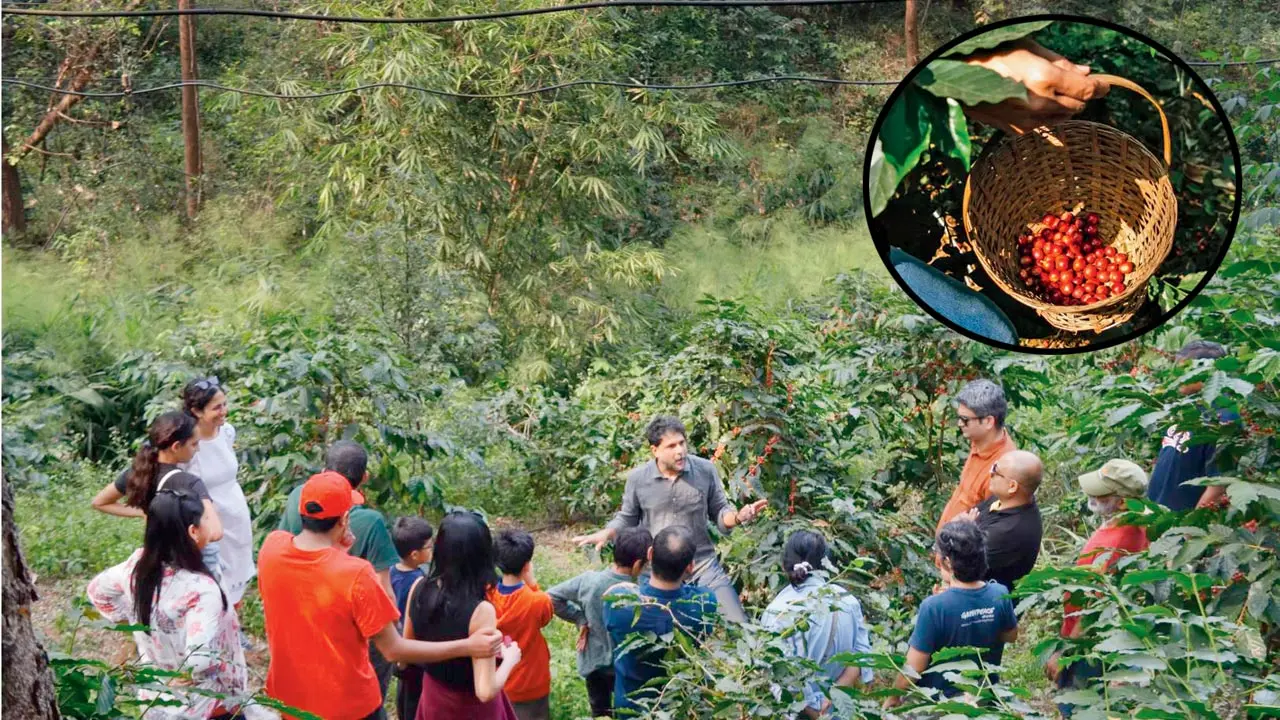
09 January,2026 09:45 AM IST | Mumbai | Trisha GhoshCoffee's on us if you can name a thing or two about Lake Kivu in Rwanda. We’ll start you off: A species of wild Arabica that traces its roots to the lake has come to harvest in a forest farm in Mulshi. Organic farmer Ashwin Paranjpe, who helms Gorus Forest Farm in the Western Ghats is keen to show you around the estate at two workshops this month. Organised by Kalyan-based Snickerdoodle Coffeeworks and Homemade Barista on consecutive weekends, the tours will give coffee enthusiasts a full hands-on experience of the crop-to-cup journey of the drink. The unlikely connection dates back to 1923, when Paranjpe’s great-grandfather Haribhau brought home Kenyan-origin seeds sourced from his travels. As a horticulture officer with the Bombay Presidency, he was stationed in Mesopotamia from 1919 to 1923. Upon his return to India, he also wrote the book Falzadancha Baug, documenting his experiences. Participants brew coffee outdoors. “In 2007, I returned to Mulshi after my Master’s degree in Horticulture from Florida. I was introduced to a vast hilly land that my parents had purchased in 2002. It was a wild, native forest. We had no idea what to do with it,” Paranjpe reveals. Never a bad time for coffee; the organic farmer planted seedlings in the hilly farms in 2010. While Arabica can grow in temperatures ranging from 15 to 24°C, it was the elevation that proved to be a concern, Paranjpe reveals. “Our farm stands at an elevation of 580m to 700m, whereas the ideal elevation for Arabica is around 1600m,” he admits, adding that experts were equally surprised when the beans thrived in the farm. A few measures like micro-sprinklers help emulate suitable humidity in summers. After consulting World Coffee Research and French genetic scientist Christophe Montagnon, the Paranjpes named this hardy variant Haribhau EL 1923. There might be some natural forces working in the farm’s favour, we believe. For one, the owners never levelled the forests or cut down any native trees. “The canopy of native trees like Sirish, interspersed with spices and fruits, provide essential shade. On the other hand, native birds are our finest quality checkers. They propagate only the choicest seeds through their droppings,” Paranjpe laughs. This earned the coffee variant its brand name, Wof Zerash, which translates to ‘sown by birds’ in the Kafi Noonoo language spoken by the Kaffa people of southwestern Ethiopia. At the weekend stay, participants will learn about the origin of the plant, growth stages, flavour profiles, and will participate in a tasting session. The adventurous ones will be encouraged to step in the forests and help harvest a new batch of coffee cherries in bloom this season. Helped by eight local families, the farm also oversees the full process of readying the coffee to be served. From 150 plants in 2010, we learn that the number in the farm has grown to 4000 today. PS: If not for the coffee, we recommend you make the trek for the AQI. “The air is pristine. I feel healthier and happier every day. Don’t ask me about my bank balance — growing coffee isn’t a rich pursuit, but I do feel like a king here,” he signs off. ON January 11 and January 17AT Gorus Forest Farm, House 178, Nanegaon village, Taluka Mulshi.LOG ON TO @gorusforestfarmENTRY Revealed on request Crop to cup Here’s how the Haribhau EL 1923 coffee bean travels from the Mulshi plantation to your cup 1 A coffee flower comes to bloom 2 The fruit forms with the bean (seed) inside it 3 Beans are harvested carefully and left to dry 4 Beans are hulled by the local staff 5 After roasting in a terracotta pot, the beans are sent ahead for grinding 6 With calculated measurements, a cup is finally brewed
09 January,2026 09:38 AM IST | Mumbai | Devashish KambleThursday Enjoy a story on stageTheatre: Quirky, nostalgic, and moving, Yuki Ellias’ tale, A Fish Ate My Cat about an elderly woman’s conversation with her son is a perfect start to a thoughtful new year.TIME 8 pm AT Prithvi Theatre, 20, Juhu Church Road, Juhu. LOG ON TO in.bookmyshow.com ENTRY Rs 500 Friday Pic Courtesy/Instagram Laugh with sassComedy: Nothing teaches you to laugh at life like sassy cats. Join Masoom Rajwani, Aditya Gundeti, and Sumit Sourav as they host this weekend special in Andheri. TIME 8 pm AT Cat Cafe Studio, Aram Nagar Part 1, Versova, Andheri West. LOG ON TO in.bookmyshow.com COST Rs 399 onwards Saturday Blue GlassyTiger. Pic Courtesy/BNHS Learn of wild wondersNature: Join experts from the Bombay Natural History Society (BNHS) as they teach you the secrets that hide within the urban jungle of the city. TIME 7.30 am AT BNHS CEC, Film City, Goregaon East. LOG ON TO urbanaut.app COST Rs 650 onwards A performance at the festival. Pic Courtesy/@thesteps Step into fest modeCommunity: From book swaps to music performances, the Festival at the Steps returns. TIME 5.30 pm AT St Stephen’s Steps, near Mount Mary Basilica, Bandra West. ENTRY FREE Sunday Pic Courtesy/@themanganiyarseduction Groove with styleMusic: The Manganiyar Seduction combines the theatrics of light, sound, and music. TIME 6 pm AT Phoenix MarketCity, LBS Marg, Kurla West. LOG ON TO district.inCOST Rs 1999 A close-up of a design. Pic Courtesy/@Sarmayaartsfoundation Pen your price Workshop: The art of Persian calligraphy, and its historical connection with Indian coinage find expression in Mehmood Ahmad Shaikh’s unique workshop. TIME 11 am AT Sarmaya Arts Foundation, Lawrence & Mayo Opticians Building, Fort.LOG ON TO @sarmaya_indiaCOST Rs 600 (per person) Climb to successFitness: Turn your fitness resolution into something fun by signing up for this rock climbing workshop. You can find your place on the peak and start 2026 off on the right foot. TIME 4 pm to 6 pm AT Bombay YMCA, Lamington Road, Grant Road East, Girgaon. WHATSAPP 8452017717
08 January,2026 11:27 AM IST | Mumbai | Shriram IyengarADVERTISEMENT