Travel back in time to colonial Mumbai to learn about Gujarati Muslim communities who influenced the city’s commerce and politics

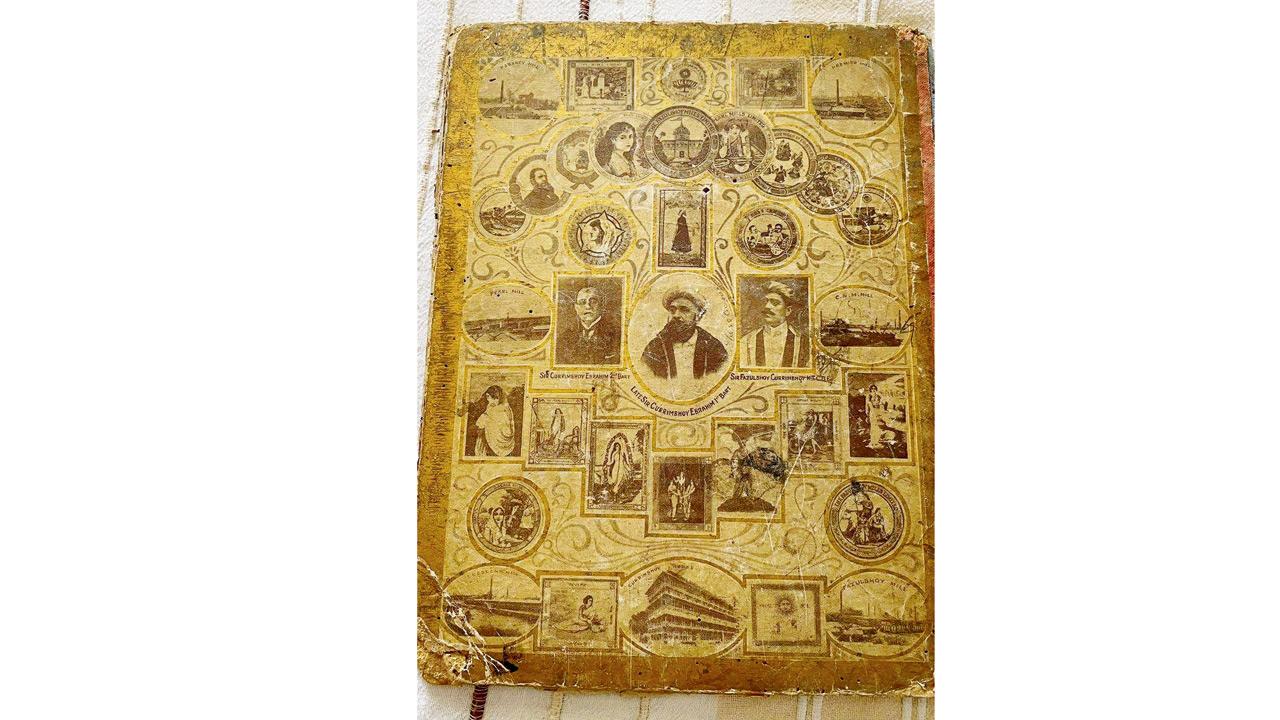
A family tree chart displaying the names of members of the Currimbhoy family hailing from Khoja community. Pic/By Special Arrangement
As Confucius rightly said, “Study the past if you would define the future.” While some might perceive history to be facts presenting date and time, it often serves as a guidebook for those willing to learn from the past to better the future. An upcoming talk, organised by Mumbai Research Centre (MRC) of The Asiatic Society of Mumbai will host Danish Khan, a London-based journalist, author and historian in conversation with Murali Ranganathan, translator and historian on the Gujarati Muslim Communities in Colonial Bombay.

The Ebrahim Currim and Sons Umbrella stores (above) in Kalbadevi, is part of the legacy of the Bohra community that shaped the city’s trade. File Pic/Nimesh Dave
The session will delve into the lives of the prominent communities such as Khojas, Bohras and Memons, well known for making a mark with their successful business ventures shaping the city’s commerce, and their influence in politics provides a glimpse of their lives and their efforts to preserve their identities amidst British colonialism.
Danish Khan
With the Memons being Hanafi Sunnis, and Khojas and Bohras adopting doctrines stemming from the Shia school, these Gujarati-speaking communities formed an integral part of trade and commerce, “They saw merit in the advancement of technical education and clamoured less for government jobs. They did not have the same affinity for Urdu as the Muslims of North India, and hence were less affected by the Hindi-Urdu controversy that took shape from the late 19th century onwards,” shares Khan.

A portrait of Memon merchant Mohammad Saboo Siddik, son of Haji Saboo Siddik, who traded in sugar between India and Mauritius. Pic courtesy/Danish Khan
The author’s upcoming book on Muslim Capitalism (Cambridge University Press) also aims to highlight the role played by these communities, “Business and economic historians have usually paid attention to Parsis and Marwaris leaving out these three communities for various reasons. From Dr Rajabally Patel, a Khoja physician giving funds to Congress or Memon ‘cotton king’ Umar Sobhani being a close associate of Gandhi, my book aims to plug this gap by mapping their involvement in the political economy of Colonial India to highlight how Muslim capitalist aspirations were shaped,” he remarks.

Hussonally Dholkawala, Bohra entrepreneur, founder of the British India Press. Pic courtesy/Murali Ranganathan (right) Dr Rajabally Patel, a Khoja physician. Pic courtesy/Altaf Patel
The author’s upcoming talk with Ranganathan is expected to draw parallels to their respective fields while painting a broader picture of the communities, “Murali’s research interests are eclectic, and I have enjoyed my conversations with him over the last few years. His previous works on Bohra entrepreneur Hussonally Dholkawala, founder of the British India Press and present research on print history and culture helps enrich our understanding on the role played by these merchants,” Khan signs off.
On August 12; 5 pm onwards
At Durbar Hall, The Asiatic Society of Mumbai, Town Hall, Shahid Bhagat Singh Road, Fort
Log on to asiaticsociety.org.in
Subscribe today by clicking the link and stay updated with the latest news!" Click here!