With the anniversary falling on Wednesday, November 26, police have intensified bandobast, increased surveillance and activated citizen alert systems across the region. Navi Mumbai’s longest and most vulnerable stretch remains the coastline under Mora Sagari Police Station

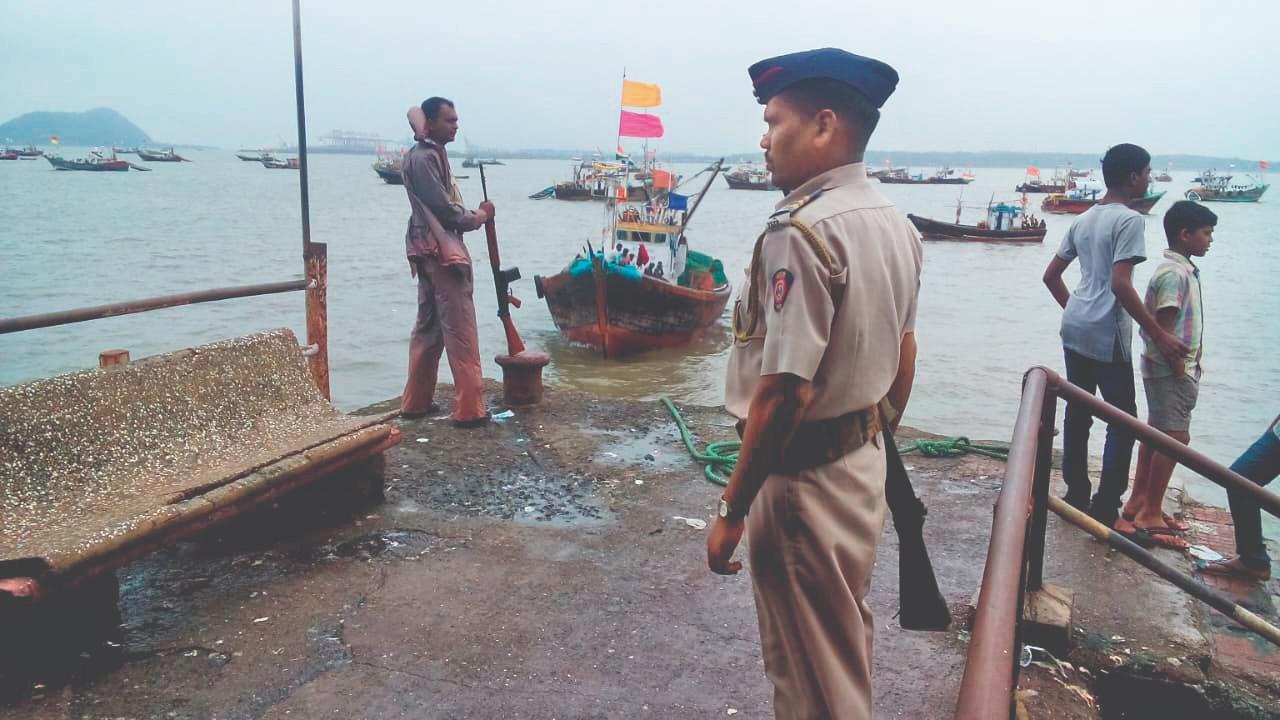
Police personnel stand guard at Mora Jetty in Uran as coastal security is stepped up ahead of the 26/11 anniversary. Pic/Amarjeet Singh
SEVENTEEN years after the 26/11 terror attack, Navi Mumbai Police and key strategic installations have significantly upgraded their readiness, especially along the coastline and at high-footfall public spaces. With the anniversary falling on Wednesday, November 26, police have intensified bandobast, increased surveillance and activated citizen alert systems across the region.
Navi Mumbai’s longest and most vulnerable stretch remains the coastline under Mora Sagari police station, which oversees sensitive installations such as JNPT, BARC, ONGC units, refineries, jetty points and multiple cargo routes.
DCP Amit Kale, Zone 2, who supervises three major police stations, including Mora Sagari, told mid-day.com, “JNPT has its own CISF unit securing the port area. We provide additional support whenever needed. Along the coastline, we have instructed fishermen and boat operators to immediately alert us if they notice any suspicious activity or unknown persons.”
Kale confirmed that around 50 to 60 personnel are currently deployed for coastal bandobast.
To strengthen public vigilance, police have also activated a dedicated alert number.
“A separate helpline, 1093, has been set up so citizens can quickly report suspicious movement or abandoned objects. Our response teams have been briefed to react immediately,” he said.
Railway stations get tighter checks
With heavy commuter traffic, deployment will be increased at Targhar, Nerul, Uran, CBD Belapur, Vashi and other key transit points. These stations, which act as interchange hubs between Navi Mumbai and Mumbai, have been flagged as potential soft targets during peak hours. Extra nakabandis and random bag checks have been ordered.
After 26/11, malls and hotels were identified as high-risk due to high footfall and open layouts. Police say most establishments are now better equipped.
Kale said, “Security systems at major malls and important offices like NMMC Headquarters, CIDCO Bhavan and Konkan Bhavan are fully operational. We are coordinating closely with their in-house teams to ensure round-the-clock preparedness.”
Mall authorities have been instructed to ensure strong CCTV uptime, man access gates and conduct regular back-end audits.
JNPT reinforces perimeter
Jawaharlal Nehru Port Trust, India’s largest container port and a crucial national asset, has overhauled its security apparatus since 26/11.
“All security systems are in place. We have modernised surveillance technology and strengthened perimeter protection. JNPT is significantly more secure compared to the pre-26/11 era,” Manoj Kumar, Chief Vigilance Officer, JNPT, said.
The port now operates layered security checks, advanced scanning systems, integrated CCTV surveillance and enhanced water patrols in coordination with CISF and marine police.
The watch continues
Officials say the region is “far better prepared” than before, but admit that maintaining strong night patrolling, ensuring technology upkeep and keeping coordination tight between local police, CISF, Navy and Coast Guard remain critical.
As Navi Mumbai marks the 17th anniversary of India’s worst terror attack, police stress shared responsibility.
“Security is strongest when citizens stay alert. We are prepared, but we need the public to be aware and report anything suspicious immediately,” DCP Kale said.
Subscribe today by clicking the link and stay updated with the latest news!" Click here!