










Maharashtra recorded minimal rainfall in most districts. The state’s overall average rainfall stood at just 0.3 mm, with most districts receiving little to no precipitation. Sindhudurg recorded the highest cumulative rainfall at 4.5 mm in the past 24 hours, followed by Raigad with 4.2 mm, and Ratnagiri at 2.4 mm
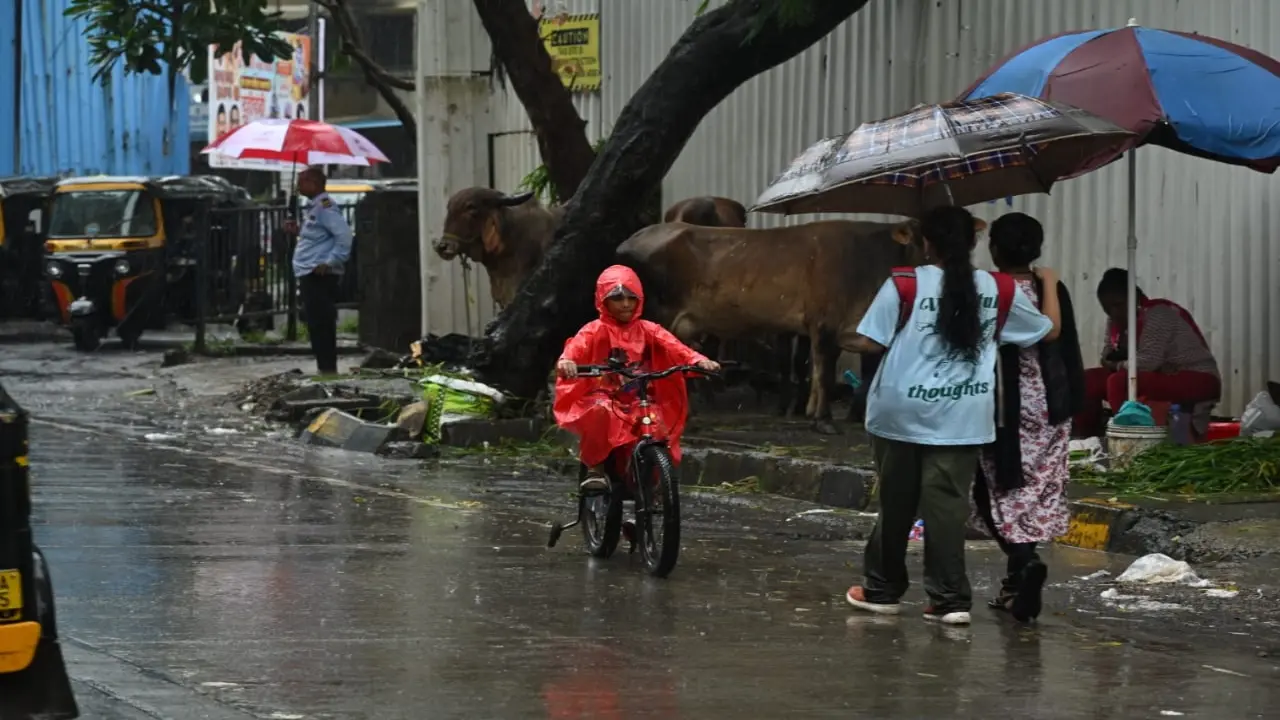
The Mumbai suburban region witnessed only light showers in the past 24 hours. File Pic
Six rain-related deaths were reported in Maharashtra’s Pune and Jalna districts in the past 24 hours, the state’s Disaster Management Department said in a press release on Sunday.
Maharashtra recorded minimal rainfall in most districts. The state’s overall average rainfall stood at just 0.3 mm, with most districts receiving little to no precipitation.
Sindhudurg recorded the highest cumulative rainfall at 4.5 mm in the past 24 hours, followed by Raigad with 4.2 mm, and Ratnagiri at 2.4 mm. In the Mumbai Metropolitan Region (MMR), Raigad led with the highest figure, while Thane reported 1 mm, Palghar saw 0.4 mm, and the Mumbai suburban region witnessed only light showers.
Although these figures fall within the normal range for this early phase of the monsoon, authorities are on high alert. The India Meteorological Department (IMD) has forecast light to moderate rainfall over the next few days in Mumbai, Thane, and Palghar. A yellow alert has also been issued for Raigad, where isolated heavy rainfall is expected.
Monsoon stalls till June 10, farmers advised to delay sowing
Following intense pre-monsoon showers last week, the IMD has now issued an advisory indicating little to no rain in the coming days. The monsoon’s progress has halted, with weather conditions suggesting minimal rainfall until at least June 10, 2025.
Cloud formations over Mumbai are expected to become effective only after June 10. While parts of the west coast and some regions in Maharashtra may receive light to moderate showers during this time, the extended dry spell will significantly impact irrigation and crop planning.
In view of this, the IMD has advised farmers to delay sowing activities until monsoon conditions stabilise. Departments have urged caution and patience, warning against rushing into planting.
Weather experts have further predicted a rise in daytime temperatures, especially in Vidarbha, where it could touch 40 degrees Celsius. The Khandesh and Marathwada regions may experience temperatures between 35 degrees Celsius and 40 degrees Celsius during the monsoon break.
Impact on daily life and rising prices
After heavy showers disrupted daily life in Mumbai last Monday, the upcoming dry spell and rising heat will make commuting and farming especially challenging. Adding to the distress, the early surge in rainfall, followed by its abrupt halt, has triggered a spike in vegetable and essential commodity prices.
Consumers already burdened by high fuel prices, transport costs, and education expenses now face additional pressure. According to BMC data, Mumbai received 135 mm and 164 mm of rain on May 26 and 27, respectively.
As weather patterns continue to fluctuate, residents are advised to check forecasts and plan accordingly to avoid unnecessary inconvenience.
 Subscribe today by clicking the link and stay updated with the latest news!" Click here!