


Over 375 exotic animals seized at Mumbai airport in seven months — most were reptiles, many poached from the wild; macaque found with bullet in skull
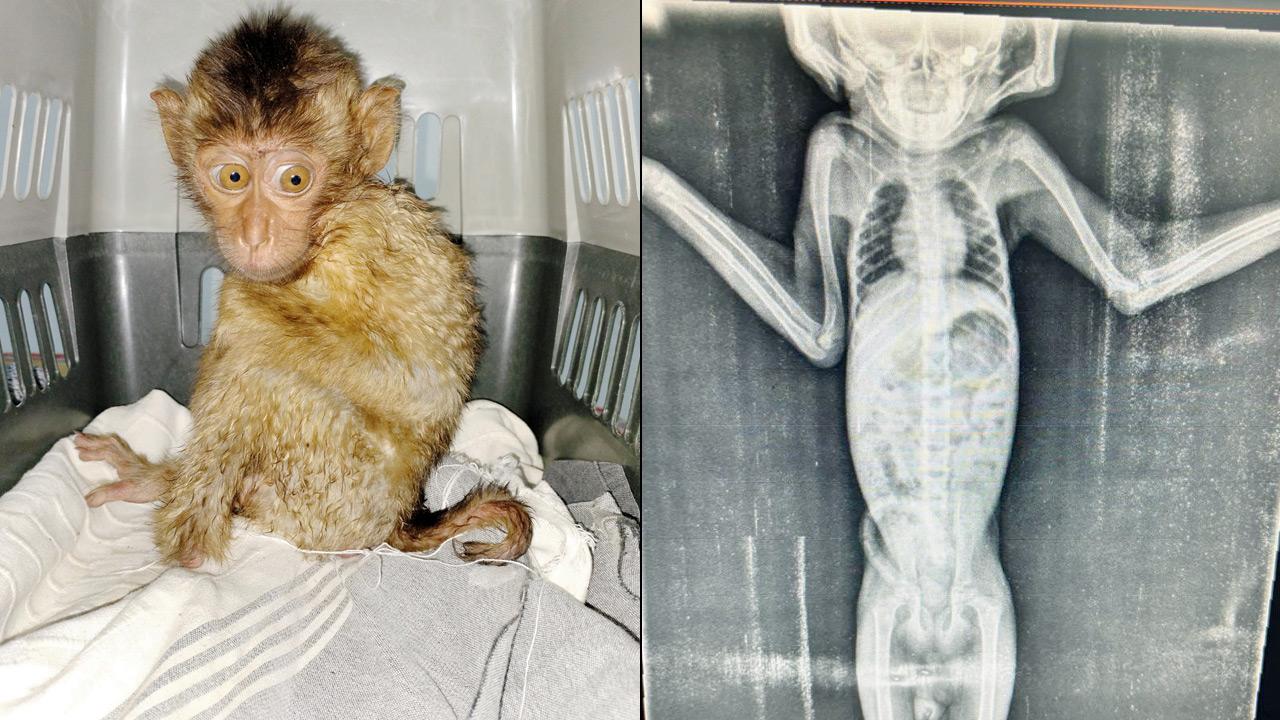
A pig-tailed macaque, which had a pellet lodged in its head. Pic/RAWW
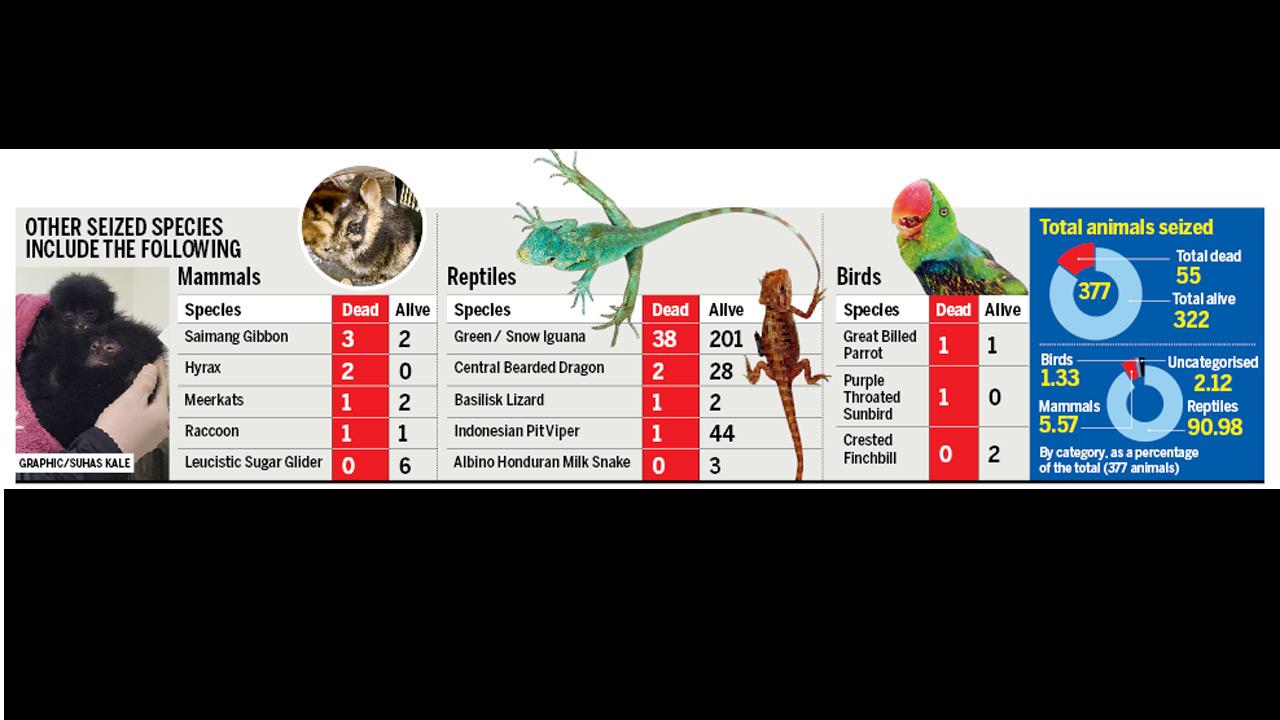
This year, Mumbai Customs intercepted 377 exotic wild animals at Chhatrapati Shivaji Maharaj International Airport. According to data compiled by NGO RAWW and shared with the Maharashtra Forest Department, the most trafficked exotic species were reptiles, led by Green Iguanas, followed by Indonesian Pit Vipers and Central Bearded Dragons.
The seizures shine a harsh spotlight on the booming illegal exotic pet trade. What’s more alarming is a new and disturbing trend: unlike earlier years, when trafficked animals were mostly captive-bred, many are now being poached directly from the wild. One such case involved a pig-tailed macaque, discovered with a pellet lodged in its skull. A veterinarian in Mumbai successfully removed the bullet, exposing the brutal reality of wildlife trafficking.
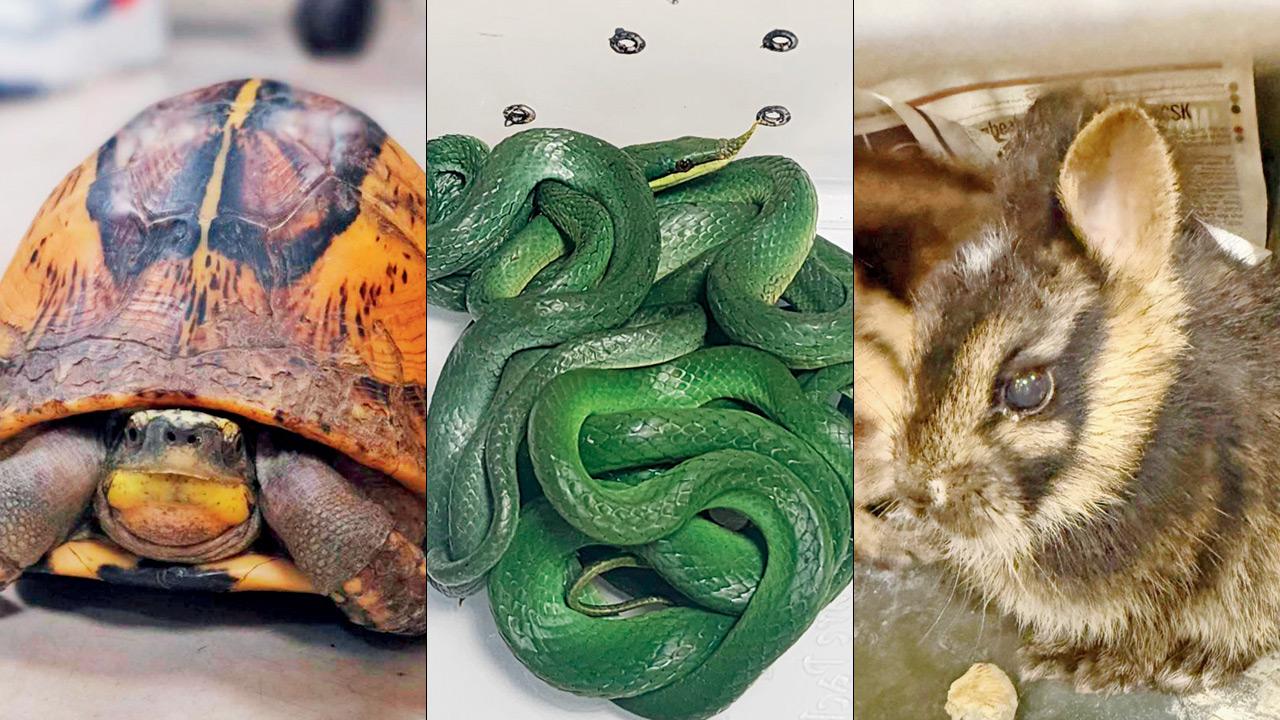
Indochinese Box Turtle, Rhinoceros Rat Snake and Sumantran Stripped Rabbit
Between January and July 29, this year, Mumbai Customs seized 377 exotic wild animals from the luggage of passengers flying into the city. Several individuals have been arrested in connection with these cases. Pawan Sharma, founder & president of RAWW, told mid-day that the current trends in illegal wildlife trafficking are extremely alarming.
“Earlier, most trafficked animals were captive-bred species. However, current trends show a disturbing rise in the number of wild-caught species being trafficked,” he said. “There is growing demand for wild-caught animals in both local and international markets. Breeders often seek wild individuals to maintain genetic diversity and avoid inbreeding, which helps ensure the offspring are healthier and free from genetic defects. This is a serious issue that requires thorough investigation and urgent action,” Sharma added.
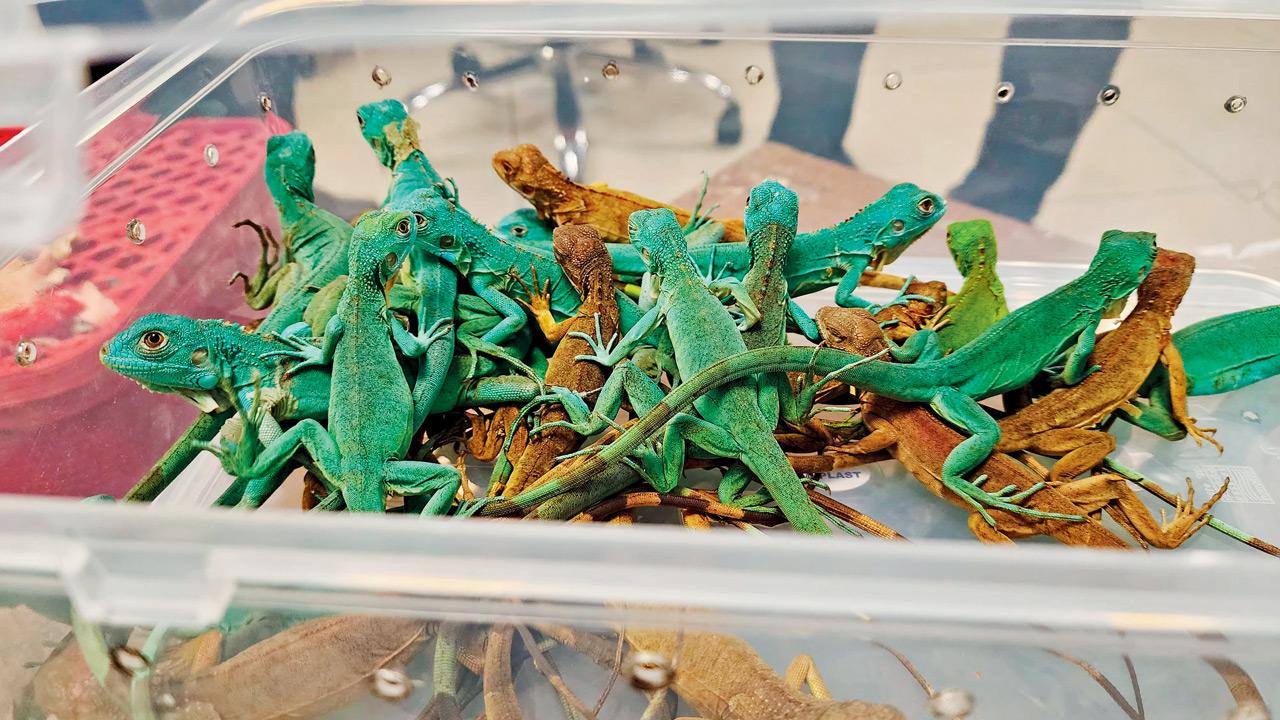
Green Iguanas were the most trafficked exotic species seized at Mumbai Airport this year, highlighting the booming illegal reptile trade
Inbreeding — mating between closely related individuals such as siblings or parents — can lead to reduced immunity, genetic defects, shorter lifespans, and diminished physical traits, ultimately lowering the commercial value of the animals. To prevent this, breeders introduce wild-caught animals into captive populations. However, this practice increases the risk of zoonotic diseases and accelerates the decline of wild populations. It has also been observed that some breeders release these animals back into the wild, further compounding the problem.
“This year alone, we encountered several wild-caught animals based on their physical condition, behavioural traits, and appearance, which clearly differed from those bred in captivity,” Sharma said. He added, “We also recorded significant mortality among wild-caught individuals due to capture myopathy and captivity stress, which are rare in captive-bred animals accustomed to human handling and confined spaces like baskets, cages, and breeding boxes.”
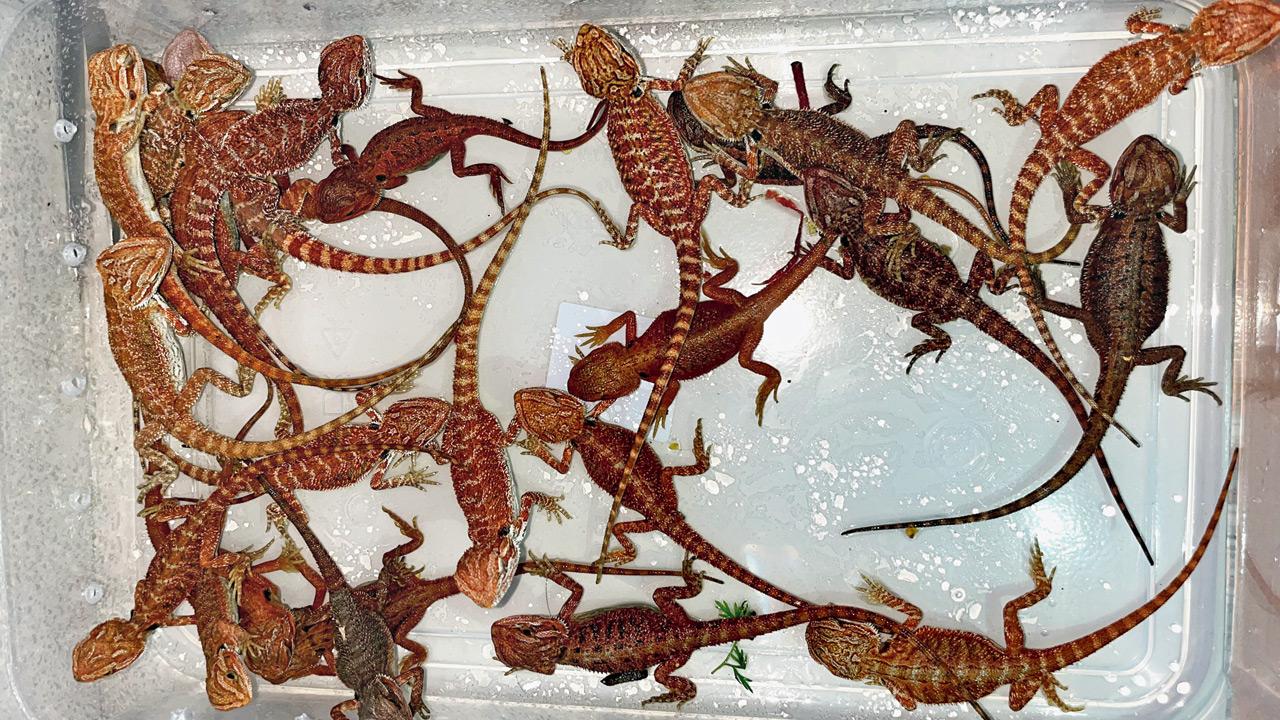
Central Bearded Dragons ranked third among the most trafficked reptiles, with 30 seized by Customs this year. Pics/Mumbai Coustoms
Dr Rina Dev, private practitioner and associate senior veterinarian with RAWW, shared a recent case to underline the cruelty of the exotic pet trade. “The primate was brought in severely dehydrated and unable to hold his head and neck upright. Initially, we thought this was due to extreme stress and exhaustion. But an X-ray revealed something more disturbing, a gun pellet partially lodged in his skull,” she said. “A delicate surgery was urgently performed to remove the pellet, and the animal was placed under intensive care. Over the following weeks, he gradually recovered with dedicated treatment,” Dr Dev said.
What experts have to say
Neha Panchamiya, founder & president, RESQ Charitable Trust; member, State Wildlife Board, Maharashtra, said, “The recent seizures at Mumbai Airport underline a deeply worrying trend. While earlier interceptions often involved captive-bred or tamed exotic species, we are now increasingly seeing wild-caught animals, traumatised, injured, and entirely unfit for captivity. This shift signals a growing brazenness among traffickers and a disturbing demand from buyers who remain unaware or indifferent to the brutal backstory of these animals.
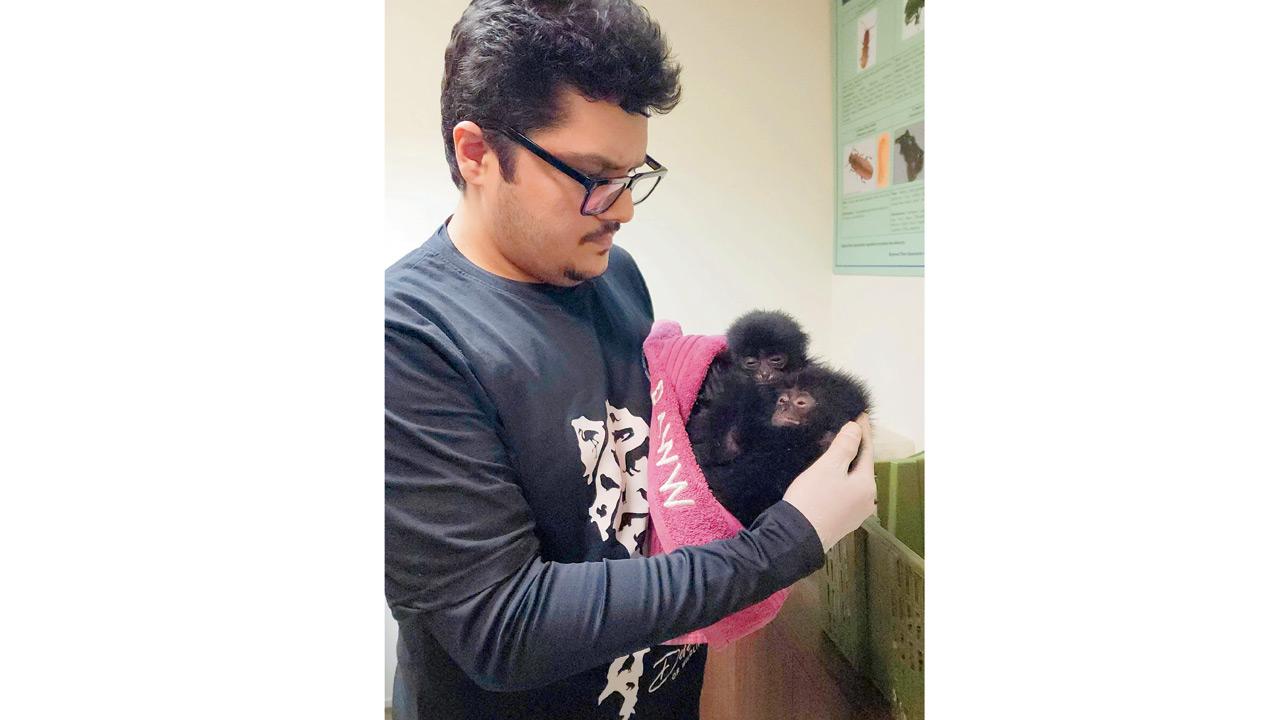
Siamang Gibbon — one of five seized this year — is native to Southeast Asia and highly vulnerable to trafficking due to its rarity and value
The case of the pig-tailed macaque with a pellet lodged in its skull is a grim reminder of the violence inherent in this trade. And it doesn’t stop at cruelty. In a recent incident, over 2500 red-eared sliders smuggled from India were repatriated to Singapore, only to be euthanised due to Salmonella. Every individual who buys even a single exotic turtle, regardless of legality, fuels this demand and is partly responsible for the deaths of thousands of others. That alone should be reason enough not to buy.”
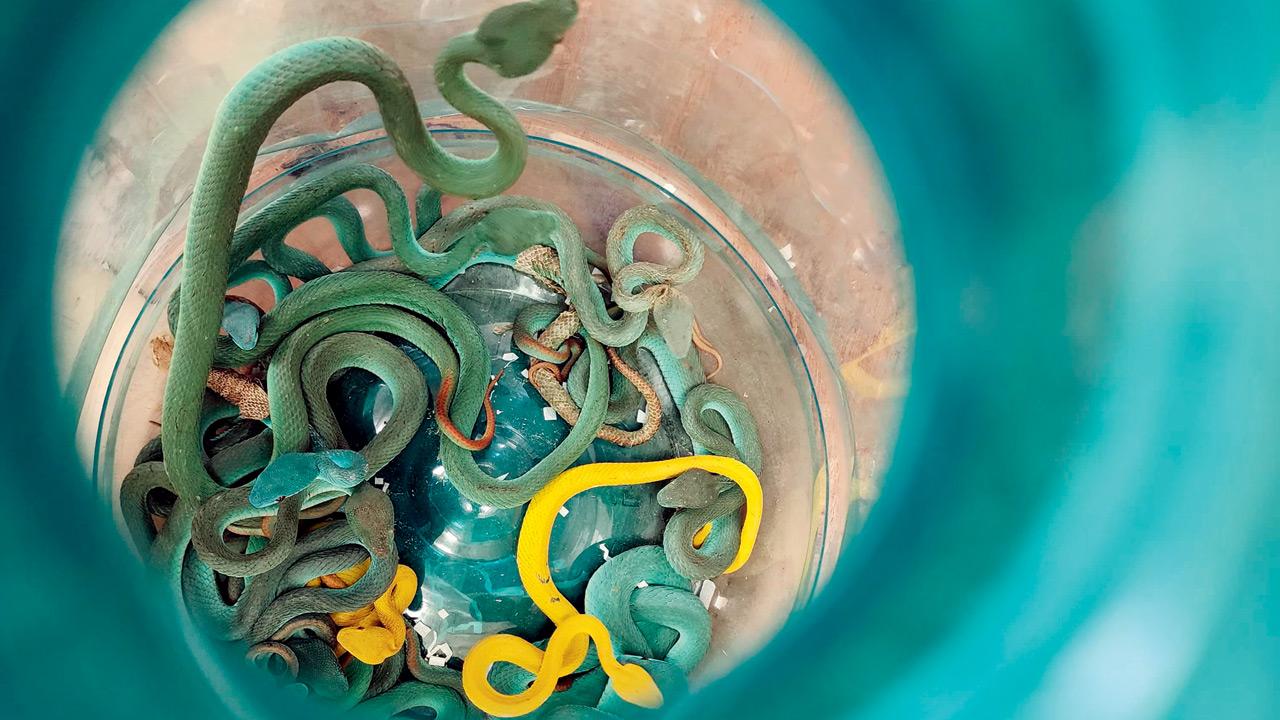
Indonesian Pit Vipers were the second-most trafficked reptile species, with 45 seized. These venomous snakes are in high demand among exotic pet collectors
Trishala Ashok, conservation filmmaker working on Wildlife Trafficking Awareness, said, “A bullet in a pig-tailed macaque makes me think not just of the pain, suffering, and mental trauma the animal has endured, but of a broken system. On one end, we have vulnerable local communities being exploited; on the other, ignorant exotic pet owners fueling this demand. In between are overwhelmed enforcement agencies and gaps in policy. The only way forward is cross-sectoral collaboration, across borders, disciplines, and jurisdictions, to address every facet of this crisis. That’s the only way we stand a chance at countering this heinous crime.”
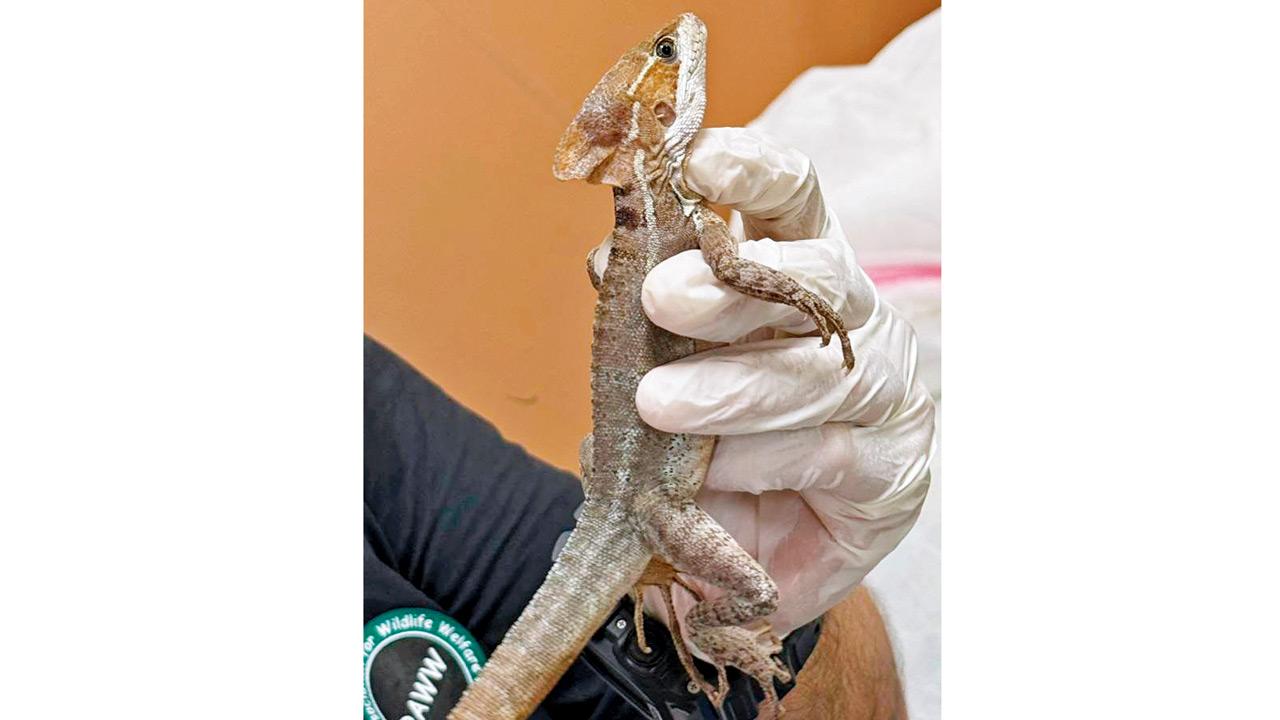
Brown Basilisk Lizard — although not among the top seized species, reptiles like these continue to be smuggled due to demand
Kedar Gore, Wildlife Conservationist, The Corbett Foundation, said, “It is shocking that so many different exotic species, from large monkeys to spiders, are being smuggled into India. Why the sudden rise in routing these animals through Mumbai? Isn’t it obvious such consignments would be caught by Customs? Are the smugglers so naive as to overlook this? A detailed investigation is needed to determine the intended destination of these animals—was it for personal collections or for privately-owned zoos in India? Hopefully, the truth will come out soon. Good work by the Customs Department in intercepting these consignments and rescuing the animals. I hope efforts are also being made to send the healthy ones back to their countries of origin.”
What WCCB officials say
Yogesh Warkad, deputy director, WCCB, said, “The high demand for exotic wild animals in India is undeniable. However, the spike in seizures is also due to improved intelligence gathering, which has increased detection of wildlife trafficking crimes. In most cases, animals seized at Mumbai International Airport by Customs are repatriated to their countries of origin. If they cannot be returned, they are sent to Central Zoo Authority (CZA)-approved zoos.”
 Subscribe today by clicking the link and stay updated with the latest news!" Click here!