
As citizens demand better signage, cleanliness and security at public parking lots, a bigger question looms: Why is Mumbai building more when it barely uses what it has?
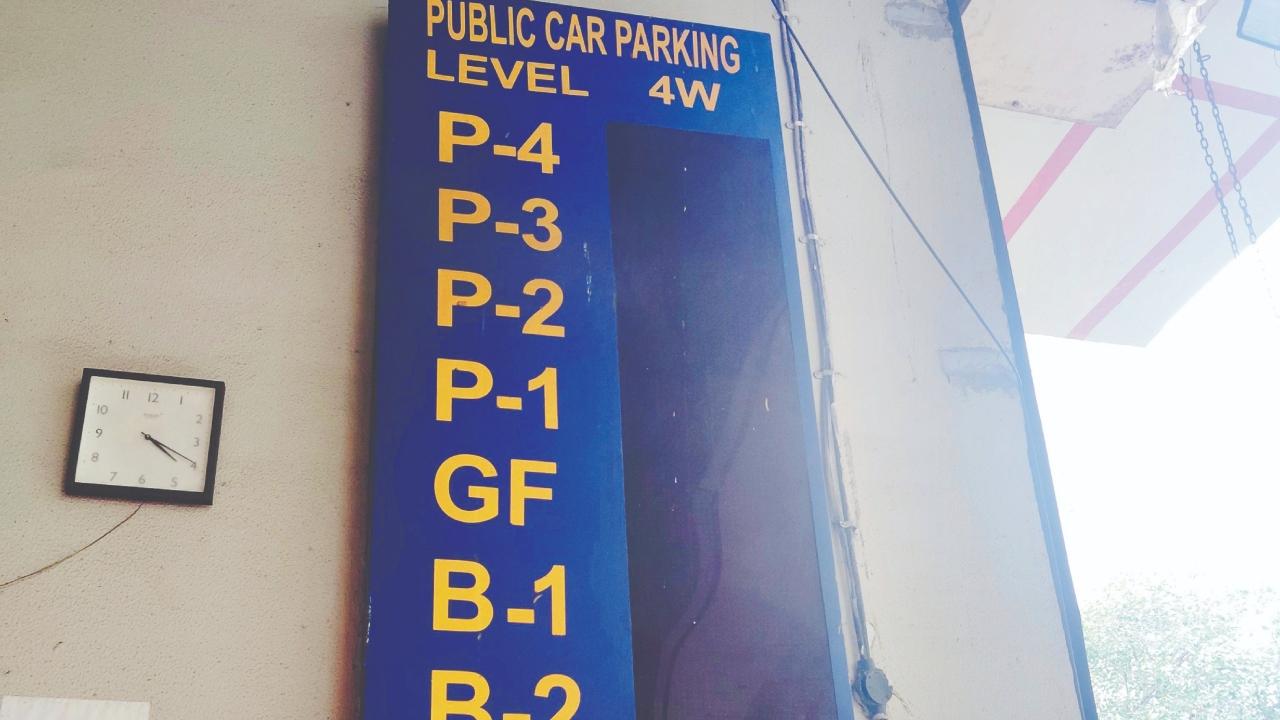
Electronic boards meant to inform citizens of real-time availability are non-functional at multiple PPLs. Pic/Eeshanpriya MS
Kickstarting a debate on the underutilisation, misuse, and overall 'ineffectiveness' of Public Parking Lots (PPLs) across Mumbai, citizens have demanded urgent reforms following mid-day’s report on July 24.
Mumbaikars are calling for better signage at entrances, improved accessibility, adequate lighting for safety, and cleanliness at BMC-operated parking facilities. Many also want designated zones and separate entries for heavy vehicles like trucks and buses to avoid chaos and accidents.
“At several PPLs, trucks and buses are parked alongside cars. That’s a huge deterrent for commuters. More importantly, it’s a safety issue, imagine navigating your car around a truck in a cramped parking lot,” said Sandeep Patil, a Ghatkopar resident who drives daily to Lower Parel.
According to BMC data, there are 38 public parking lots in Mumbai, of which 16 have designated spaces for heavy vehicles. But citizens say PPLs are plagued by misuse and poor oversight.
“There are used car dealers who’ve cornered large areas of some parking facilities. I’ve seen this in two or three locations. I don’t know if that’s officially permitted or an arrangement by the contractor. But the result is that genuine users looking for short-term parking are pushed out,” said Advait Sambhare from Bandra.

Electronic boards to inform citizens of the space availability are non-functional at multiple PPLs. Pic/Eeshanpriya MS
Adding to the problem, many parking lots are practically invisible. Ismail Khan, a shopkeeper from Belasis Road, was unaware that a BMC parking lot existed right next to his shop. “Even if the board says MCGM, I don’t think anyone knows it’s a public parking lot. The board is ancient. There’s no clear indication that the space belongs to BMC,” he said.
Architects and urban experts argue that the BMC should adopt a standardised approach for boards, facilities, and cleanliness across all PPLs. Vilas Nagalkar, a city-based activist with PEATA, said PPLs must be integrated into BMC’s GIS database and made publicly accessible in real time, both online and at the parking lot.
“This can be a fully automated system using boom barriers and FASTags to deduct parking charges and monitor space availability live,” Nagalkar suggested.
He added, “PPLs are built by developers and handed over to BMC. It is mandatory for each PPL to have a civic-appointed operator present. These operators are supposed to display real-time data on vacant and occupied spots, but that rarely happens.”
A few years ago, the Mumbai Parking Authority had integrated a parking locator module into the ‘My BMC’ app that could suggest nearby parking spots based on a user’s real-time location. But the module is no longer accessible, and the Parking Authority is no longer active. At the time, all existing PPLs and on-street parking areas were mapped into the app. However, a recent mid-day visit to several PPLs revealed that most of them do not operate the digital systems meant to display parking availability.
Activist Zoru Bathena pointed out a more systemic issue: “These PPLs were never planned with logic or demand assessment. BMC approves them purely to offer FSI benefits to builders. For example, at Patwardhan Park, where BMC has proposed a new PPL, there’s already a 1000-slot parking lot nearby, completely underutilised. So why build another one?”
 Subscribe today by clicking the link and stay updated with the latest news!" Click here!