









In a communication to Chief Secretaries of all States and Union Territories, Petroleum Secretary Neeraj Mittal outlined the revised allocation framework. Earlier, states were allotted 40 per cent of their pre-crisis quota on March 16, followed by an additional 10 per cent linked to reforms promoting Piped Natural Gas (PNG)
Pic/PTI
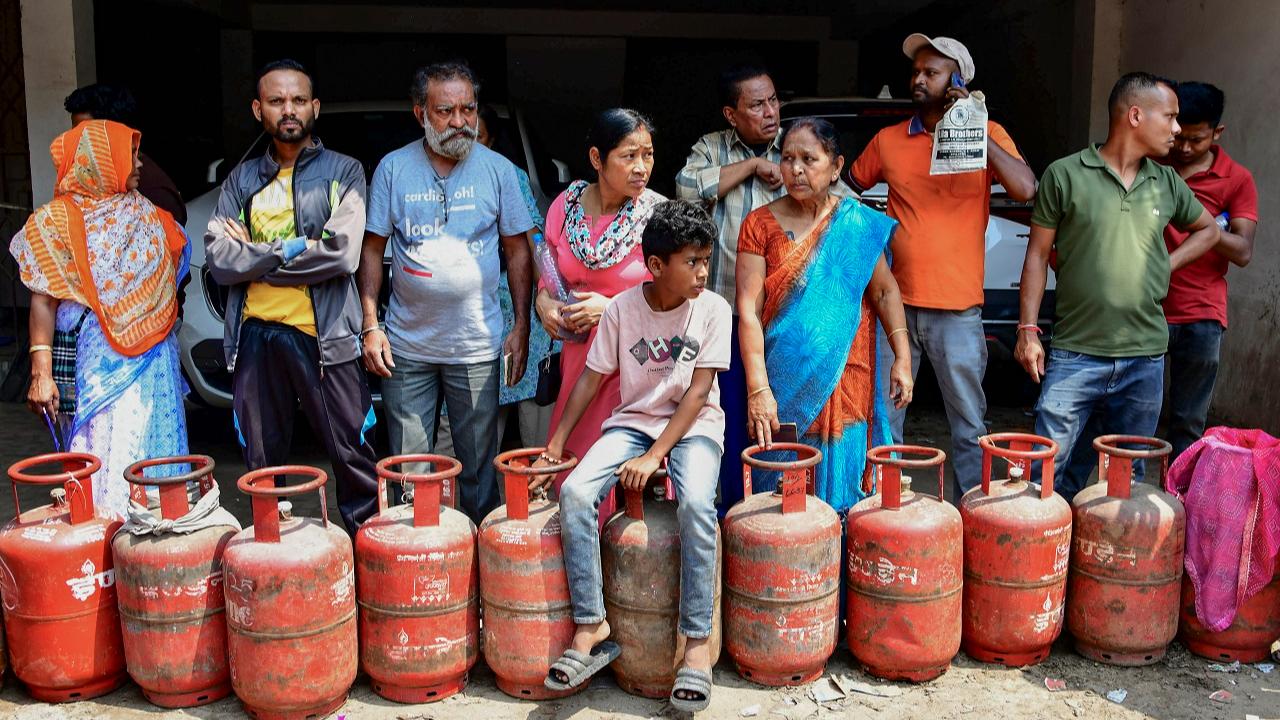
The Ministry of Petroleum has increased the allocation of non-domestic LPG to 70 per cent of pre-crisis levels, offering relief to industries impacted by supply constraints amid the ongoing global energy disruption, reported news agency ANI.
In a communication to Chief Secretaries of all States and Union Territories, Petroleum Secretary Neeraj Mittal outlined the revised allocation framework. Earlier, states were allotted 40 per cent of their pre-crisis quota on March 16, followed by an additional 10 per cent linked to reforms promoting Piped Natural Gas (PNG).
With the latest decision, an additional 20 per cent allocation has been approved, raising the total availability of commercial LPG to 70 per cent of pre-crisis levels, reported ANI.
Priority for Labour-Intensive and Core Industries
The Ministry clarified that the additional allocation will prioritise key labour-intensive industries, including steel, automobile, textile, dye, chemicals, and plastics sectors. These industries play a critical role in supporting broader economic activity and employment, reported ANI.
Special emphasis will be placed on process-based industries that rely on LPG for specialised heating requirements that cannot be replaced by natural gas. In such cases, exemptions from certain eligibility conditions will be granted to ensure uninterrupted operations, reported ANI.
Conditions Linked to Reforms and PNG Adoption
The additional 20 per cent allocation will be subject to specific conditions. Industries must be registered with oil marketing companies and should have applied for PNG connections through city gas distribution entities, reported ANI.
However, the Ministry has clarified that industries where LPG is indispensable for technical processes will be exempted from these requirements. States have also been urged to promptly utilise the earlier 10 per cent reform-based allocation if they have not already done so, reported ANI.
Officials stated that the enhanced allocation is expected to stabilise industrial operations and ease supply-side pressures in several sectors.
Move Aimed at Mitigating Impact of Global Energy Crisis
The decision comes amid a broader global energy crisis triggered by geopolitical tensions, particularly the conflict involving the United States, Israel, and Iran. Disruptions in supply routes, especially through the Strait of Hormuz, have significantly impacted global energy markets.
A substantial portion of the world’s crude oil and gas supply passes through this strategic corridor, making it a critical factor in global price volatility. India, which relies heavily on imports, has also felt the impact of these disruptions.
Excise Duty Cuts Complement Supply Measures
In a parallel move to protect consumers from rising fuel costs, the government has also reduced excise duties on petrol and diesel. Petrol duty has been brought down to Rs 3 per litre, while diesel has been fully exempted, reported ANI.
Additionally, a windfall tax has been imposed on diesel exports at Rs 21.5 per litre. These measures are aimed at balancing domestic supply, controlling prices, and ensuring energy security.
The combined steps - enhancing LPG allocation and reducing fuel taxes—reflect the government’s broader strategy to cushion both industries and consumers from the ongoing global energy volatility while maintaining supply stability across sectors.
(With inputs from ANI)
 Subscribe today by clicking the link and stay updated with the latest news!" Click here!


