










Nimisha Priya was sentenced to death in 2020, and her final appeal was rejected in 2023. She is currently being held in a prison in Sana’a, the capital of Yemen
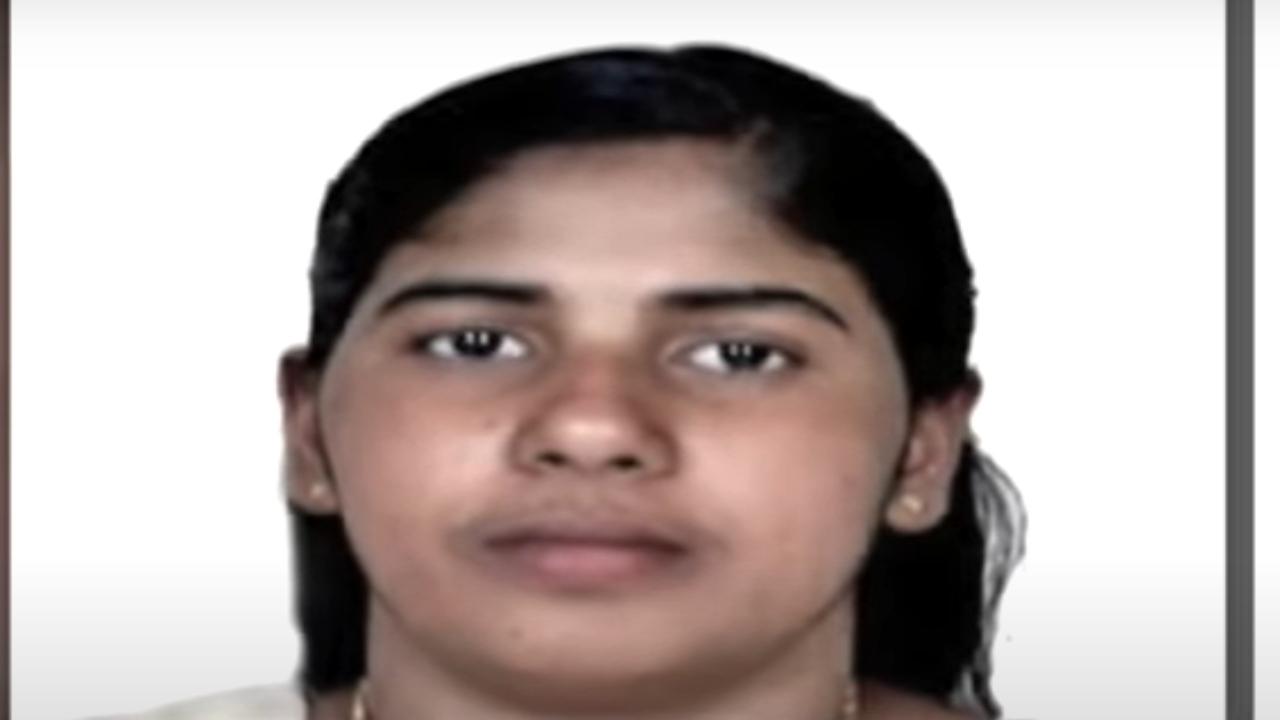
Nimisha Priya, a nurse from Palakkad district in Kerala, was convicted of murdering her Yemeni business partner in 2017. File pic
The Centre on Monday informed the Supreme Court that it was doing whatever was “utmost possible” to save an Indian nurse facing execution in Yemen on Wednesday for murder, but admitted that “nothing much” could be done given the geopolitical situation in the country.
“There is a point up to which the Government of India can go, and we have reached that point,” Attorney General R Venkataramani told a bench comprising Justices Vikram Nath and Sandeep Mehta.
The government’s top legal officer said it was making every possible effort to save the Indian national.
“Having regard to the sensitivity and status of Yemen as a place, there is nothing much the Government of India can do,” he stated.
Referring to the Houthis who control large parts of Yemen, Venkataramani said the group was “not even diplomatically recognised”.
He informed the court that the government had recently written to the public prosecutor in the concerned area to inquire whether the execution could be temporarily suspended.
“The Government of India is trying its best,” he said, adding, “and has also engaged with some sheikhs who are very influential people there.”
The apex court was hearing a petition seeking directions to the Centre to utilise diplomatic channels to save Nimisha Priya, a 38-year-old Indian nurse sentenced to death in Yemen.
Priya, a nurse from Palakkad district in Kerala, was convicted of murdering her Yemeni business partner in 2017. She was sentenced to death in 2020, and her final appeal was rejected in 2023. She is currently being held in a prison in Sana’a, the capital of Yemen.
During Monday’s hearing, the counsel representing the petitioner organisation, ‘Save Nimisha Priya – International Action Council’, which provides legal assistance to Priya, said it was a “very unfortunate situation”.
“Up to the Supreme Judicial Council of Yemen, the death penalty has been confirmed,” he said, referring to the country’s Sharia law.
The counsel also stated that Priya’s mother was currently in Yemen, accompanied by a social worker, attempting to negotiate with the deceased’s family for the payment of blood money.
“The only thing that is possible today to avoid the death sentence is the family of the deceased agreeing to accept blood money,” he said, clarifying that they were not seeking government funding and would raise the amount themselves.
“Blood money is a private negotiation,” Venkataramani responded.
The bench observed, “They (the petitioners) are saying they may be able to arrange for the blood money. The only question is the negotiating link.”
Venkataramani emphasised that Yemen was not like other parts of the world where diplomatic or inter-governmental negotiations could be initiated.
“It is very complex,” he said. “And we don’t want to complicate the situation by going too much public.”
He added, “And probably we got some kind of an informal communication saying probably the execution is kept under abeyance. We don’t know how far to believe that.”
He pointed out the difficulty in accessing reliable information: “There is no way the government can get to know what is really happening in Yemen.”
Expressing concern, the bench said, “The real cause of concern is the manner in which the incident took place and in spite thereof, if she loses her life, that is really sad.”
The Attorney General reiterated, “It is not a matter where the government can be asked to do something beyond the defined limit. It is not possible.”
The matter has been posted for further hearing on 18 July. The court asked all parties to provide an update on the situation.
On July 10, the Supreme Court had agreed to hear the matter after the petitioner’s counsel urged for urgent exploration of diplomatic options. He had also suggested that payment of blood money, permissible under Sharia law, might lead to a pardon from the deceased’s family.
The plea cited a media report indicating that the Yemeni administration had tentatively scheduled the execution for July 16 (Wednesday).
“In 2015, Nimisha Priya joined hands with Talal Abdo Mahdi (a Yemeni national) to set up her own clinic in Yemen’s capital city, Sana’a. She sought Mahdi’s support because, under Yemen’s laws, only nationals are allowed to establish clinics and businesses,” the plea stated.
It added that Mahdi had accompanied Priya to Kerala in 2015 when she returned on a month-long holiday.
The plea said Priya was sentenced to death by a Yemeni trial court and argued that she was a “victim of war”, having lacked proper legal representation during the intense civil conflict in the country.
According to Yemeni court documents, Priya allegedly drugged and murdered Mahdi in July 2017, and with the help of another nurse, dismembered and disposed of his body in an underground water tank.
(With PTI inputs)
 Subscribe today by clicking the link and stay updated with the latest news!" Click here!