Home / News / India News / Photos /
Independence Day Special: Mumbai's connect to India's freedom struggle
On India's 73rd Independence Day, we take a look at 11 historic Mumbai landmarks that played an integral part in India's freedom struggle as the city became a strong base for the independence movement




1/12

2/12
Bombay High Court at Fort: In the rooms of the High Court, barrister Mohammad Ali Jinnah fought the case for Lokmanya Tilak in 1908, on charges of sedition. Tilak's comment on the verdict can be seen on the walls of the Court. Another young barrister, Mohandas Karamchand Gandhi, also practised here before devoting himself to India's freedom struggle
ADVERTISEMENT

3/12
Azad Maidan at Fort: During the days of India's freedom struggle, massive protest rallies were organised by freedom fighters and leaders such as Mahatma Gandhi and Lal Bahadur Shastri at this maidan, hence, the name 'Azad Maidan' (Azad means 'free')

4/12
Gowalia Tank Maidan (known as August Kranti Maidan) at Tardeo: This is where Mahatma Gandhi issued the Quit India speech on August 8, 1942, announcing that the British must leave India immediately or else mass agitations would take place. Gandhi's call for the nation was that of 'Do or Die'. The call mobilised the citizens to a huge Civil Disobedience movement as the British refused to grant independence till the War was over
ADVERTISEMENT
5/12
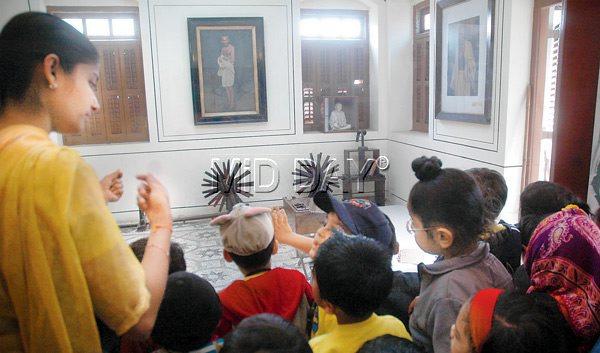
Mani Bhavan at Gamdevi: It was from Mani Bhavan that Mahatma Gandhi initiated Satyagraha against the Rowlatt Act and propagated the causes of Swadeshi, Khadi and Hindu-Muslim unity. From 1917 to 1934, it was the hub of Gandhi's political activities in Mumbai. In 1955, the building was dedicated as a memorial to Gandhi and to the important activities of great significance that he initiated from this place

6/12
Asiatic Society Town Hall at Fort: This is where Queen Victoria's proclamation in 1858 took place, which followed on the heels of the Indian Mutiny. Under the Proclamation, the East India Company was abolished, the task of administering the country was formally transferred to the Crown and India became a colony of the British Raj
ADVERTISEMENT
7/12
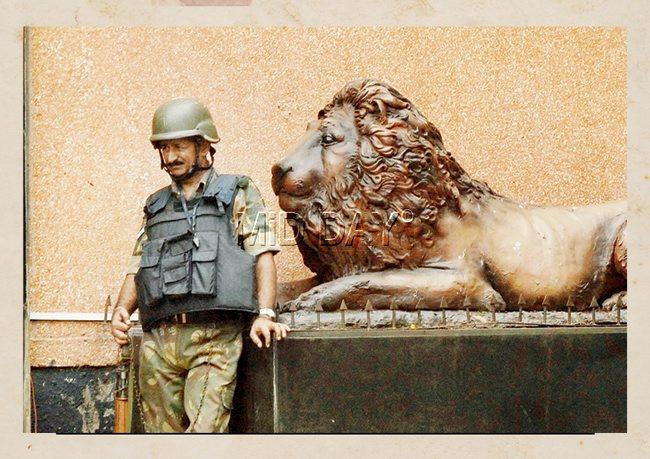
Lion Gate at Shahid Bhagat Singh Road: The Royal Indian Navy mutiny (also called the Bombay Mutiny) was a revolt by Indian sailors on board ship and shore establishment at Bombay (Mumbai) harbour on February 18, 1946. The Lion Gate was one of the spots to witness this. Inspired with nationalist fervour, poor conditions and tired of being bossed around by British officers, the sailors revolted. From the initial start point in Mumbai, the revolt spread from Karachi to Kolkata and ultimately involved 78 ships, 20 shore establishments and 20,000 sailors

8/12
Jinnah House at Malabar Hill: It was at this colonial bungalow of Mohammad Ali Jinnah, that the Gandhi-Jinnah talks of September 1944 were held
ADVERTISEMENT
9/12
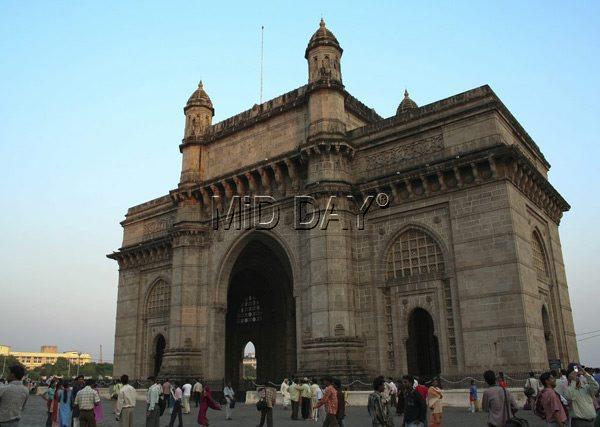
The Gateway of India at Apollo Bunder: The departure of the British took place in 1948 under the arches of the Gateway and the First Battalion of the Somerset Light Infantry was the last British contingent that formally departed India
10/12
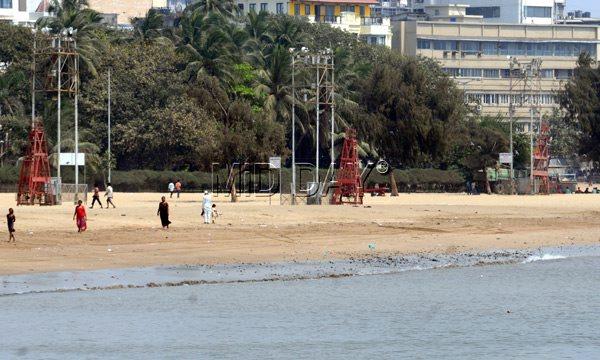
Chowpatty Beach at Marine Drive: It is related to the famous Dandi March, launched to protest the salt tax imposed by the British. Since Gandhi had forbidden women from accompanying him on the Dandi March to Sabarmati in 1930, thousands of women in Mumbai led by freedom fighters Kamaladevi Chattopadhyay and the Captain Sisters, decided to make salt at the Chowpatty
ADVERTISEMENT

11/12
Horniman Circle at Fort: It is named after Ben Horniman, the pro-independence editor, who spoke against the British atrocities on Indians, especially in connection with the Jallianwalla Baug massacre

12/12
Sardar Gruha at Crawford Market: This historical structure is where Lokmanya Tilak, one of the stalwarts of the freedom movement, lived and died. It still houses the office of his Kesari newspaper and a majestic white bust
ADVERTISEMENT
Tags
ADVERTISEMENT
Photo of Day
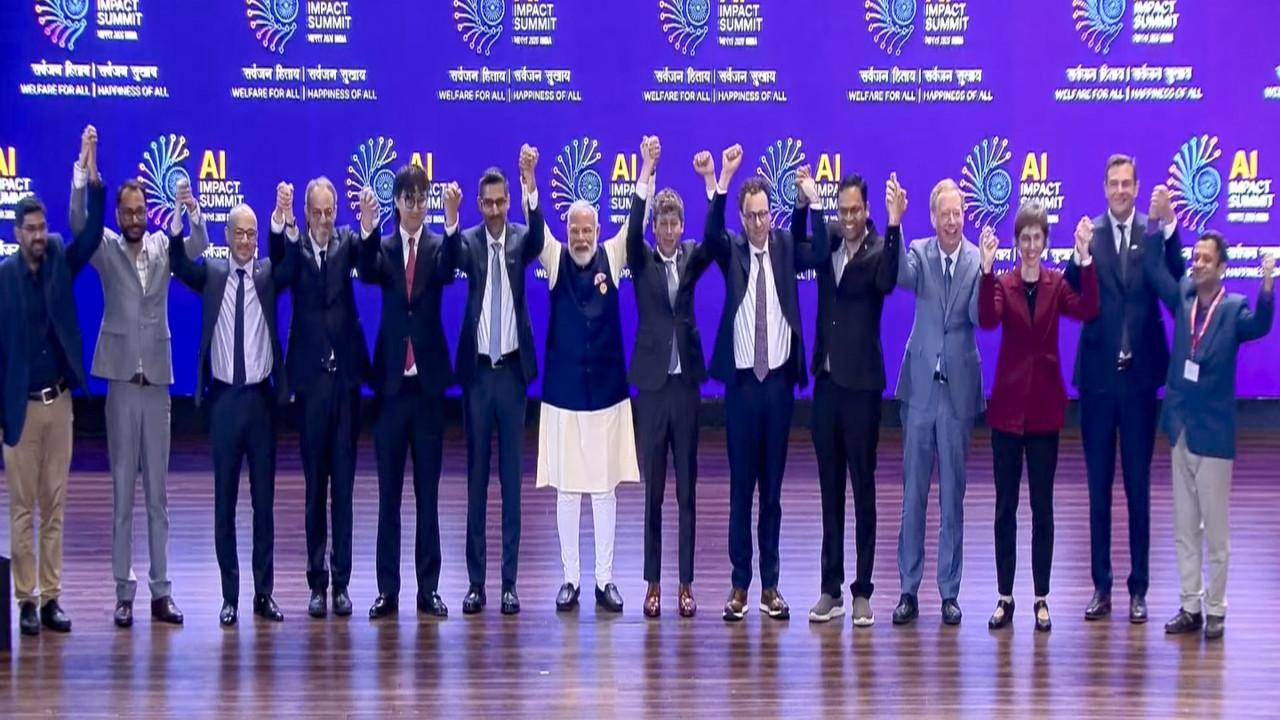
Global AI leaders join PM Modi in a bid to push for a smarter, inclusive future
PM Narendra Modi joins hands with Google CEO Sundar Pichai, OpenAI CEO Sam Altman, and others during the India AI Impact Summit 2026, in New Delhi. PIC/PTI
ADVERTISEMENT