A cluster of goddesses
Updated On: 29 September, 2019 05:40 AM IST | | Devdutt Pattanaik
In these groups, individual goddesses may not have unique characteristics. What matters is the whole. For example, during Navratri, people worship Nav Durgas. This worship of goddess clusters has a long history





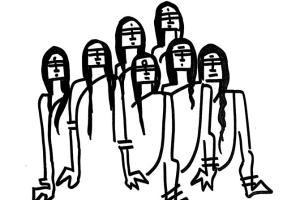
Illustration/Devdutt Pattanaik
%20(1).jpg "Devdutt Pattanaik") In the Vedas, one does find references to individual goddesses, like Usha, Vak, and Aranyani who represent dawn, speech, and forests, respectively. In the Puranas, there is Lakshmi, Durga and Saraswati, embodiments of wealth, power and knowledge. However, in practice, Hindus often worship goddesses in groups. In these groups, individual goddesses may not have unique characteristics. What matters is the whole. For example, during Navratri, people worship Nav Durgas. This worship of goddess clusters has a long history.
In the Vedas, one does find references to individual goddesses, like Usha, Vak, and Aranyani who represent dawn, speech, and forests, respectively. In the Puranas, there is Lakshmi, Durga and Saraswati, embodiments of wealth, power and knowledge. However, in practice, Hindus often worship goddesses in groups. In these groups, individual goddesses may not have unique characteristics. What matters is the whole. For example, during Navratri, people worship Nav Durgas. This worship of goddess clusters has a long history.
Sometimes the collective has only two women as, during Ganesh puja, his mother Gauri comes, like many Vedic gods, as a pair: the elder mother who is Tantrik and the younger mother who is Vedic. At other times, the motif is a kingdom of women, where no man can enter, only a true man like Hanuman or Nath Yogi can enter. This motif is common in folklore but not found in Puranic traditions.
Trending Stories
Latest Photos
Latest Videos
Latest Web Stories
ADVERTISEMENT

Ganeshotsav 2026

ADVERTISEMENT