
Kolkata’s potter neighbourhoods are being reimagined, thanks to inspiring plans by students. We wonder if their Dharavi counterparts can also dare to dream

Inside the workshop of a potter in Kumartuli. PIC/FIONA FERNANDEZ
 Kumbharwada and Kumartuli. Two potter colonies. Two spaces bearing a near-similar socio-cultural and economic fabric. Two neighbourhoods connected with festivals. Two areas in dire need of resuscitation. While on a recent visit to Kolkata, these similarities weren’t lost on me as I studied the detailed panels of the Sovabazar Urban Conservation Exhibition organised by the Calcutta Heritage Collective (CHC), in collaboration with School of Architecture, CEPT University, Ahmedabad, at the Kolkata Centre for Creativity. The one-day event had the who’s-who of the city’s heritage and cultural community, from conservation architects to developers and citizen champions, all invested in the possible reimaginations conceived by students of North Kolkata’s culturally rich neighbourhood, which is home to Kumartuli’s sculptural traditions, colonial mansions and ancient canals. For the uninitiated, it’s where the revered Durga and Kali Puja idols, among other deities, are sculpted. These designs made me spiral into a series of “what-ifs” about the fate of the fragile Kumbharwada.
The Timeless Heritage – Past Forward exhibition was the culmination of a semester-long Conservation and Regeneration studio at CEPT University. These students had travelled to Kolkata to study this historic and culturally rich neighbourhood. Earlier, the event had kicked off with a series of insightful panel discussions, that included pan-Indian experts, including Mumbai’s own conservation heavyweight, Vikas Dilawari; Delhi’s Gurmeet Sangha Rai, celebrated architect, and founding director of CRCI and The Lime Centre; Ayan Sen, Kolkata architect and faculty member, CEPT University, Ahmedabad; Sonal Mithal from Ahmedabad, an academic and practitioner in heritage studies, and Mukul Agarwal, founder trustee, CHC, who with her team, had steered this exhibition. Sen, during a conversation with Dilawari, had asked the latter to discuss parallels between the two grand old cities. From their architectural similarities and colonial past, to their migration patterns and demographic mapping, it made for a fascinating listen. One point shared by Dilawari resonated across the audience — that Kolkata’s heritage sites and locations were yet to face the full brunt of redevelopment. The plans envisioned by students drew praise, given the intent to improve living and working conditions within this densely populated and congested area, where development had stamped its ugly imprint.
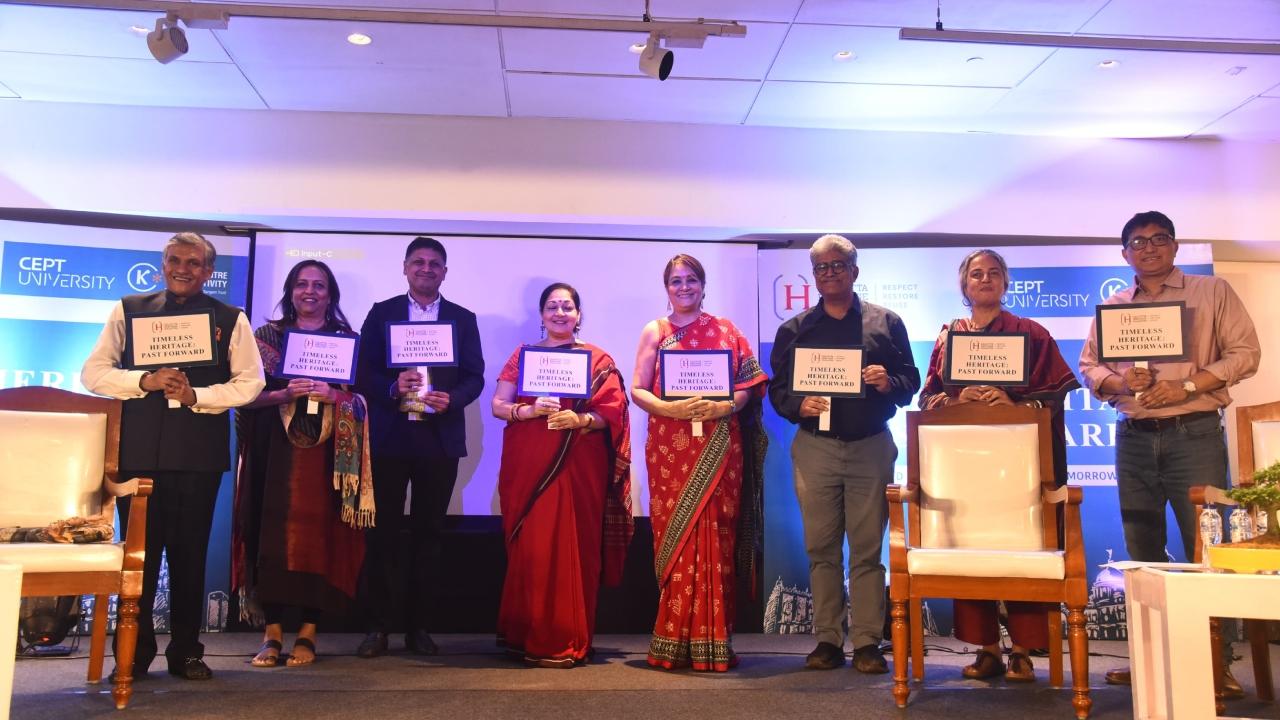
(From left) Gaurav Gupta, Mukul Agarwal, Apurva Salarpuria, Sangeeta Dudhoria, Dr Rupali Basu, Vikas Dilwari, Gurmeet Sangha Rai, Ayan Sen releasing the poster for the event. PIC COURTESY/CALCUTTA HERITAGE COLLECTIVE
As the hours rolled by, it was heartwarming to note that like Mumbai, Kolkata, too, has its heritage evangelists and custodians. It was fantastic to spot celebrated percussionist Bickram Ghosh, a CHC Cause Ambassador, and hear him put his weight behind such initiatives. I learnt that other city faces, from Usha Uthup to Victor Banerjee, are also CHC Cause Ambassadors, lending their voice to protect Kolkata’s heritage. Industrialist Hemant Bangur also shared his challenging and inspiring experience of restoring Judges Ghat along the Hooghly River, extolling many in the room to show initiative, and not wait for civic authorities, should they have the financial and logistic support and network. CHC also launched its Volunteer and Association Programme, where citizens were invited to engage in heritage documentation, awareness, and restoration efforts across the city.

Some of the design plans submitted by students from CEPT University, Ahmedabad. PIC COURTESY/CALCUTTA HERITAGE COLLECTIVE
During the chai break, I pored over the designs laid out by these young visionaries that showcased adaptive reuse and sensitive restoration, policy toolkits, and looked at the larger urban ecosystem beyond structure-centric conservation. As comparisons with the home city subconsciously played on, I realised that the idea of the Cause Ambassador could work beautifully for Mumbai’s and Maharashtra’s heritage causes, especially the newly-minted UNESCO tag for the Maratha Military Landscapes. There was also hopefulness that these plans catch the eye of municipal and/or state authorities, or even private individuals/platforms. And yes, the wish for a similar idea to germinate to protect our very own Kumbharwada. Overall, as the positive energy wafted across in the room, it offered promise. I was teleported to my bookshelf at home, where a kandeel sculpted by a Kumbharwada potter sits pretty. I hoped that his family, just like his Kumartuli counterpart, would have a brighter festive season someday, thanks to such students’ visions that could help reimagine the lives of his and his ilk.

Some of the design plans submitted by students from CEPT University, Ahmedabad. PIC COURTESY/CALCUTTA HERITAGE COLLECTIVE
mid-day’s Features Editor Fiona Fernandez relishes the city’s sights, sounds, smells and stones...wherever the ink and the inclination takes her.
She tweets @bombayana. Send your feedback to mailbag@mid-day.com
 Subscribe today by clicking the link and stay updated with the latest news!" Click here!