Hinglaj Mata in Pakistan
Updated On: 22 November, 2020 04:15 AM IST | Mumbai | Devdutt Pattanaik
When the goddesss head fell, creating a tremendous amount of heat and energy, it formed the valley. The volcano nearby is said to be the local Bhairav, protecting the head. This is called Baba Chandragupt





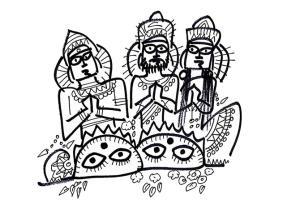
Illustration/Devdutt Pattanaik
 We often forget that there are still many Hindu temples in Pakistan, despite the state being avowedly Islamic, with clear blasphemy and anti-idolatry laws. These temples existed before Islam arrived in the subcontinent a 1,000 years ago. These shrines continue to thrive in Punjab, Sindh and Baluchistan, often with Muslim caretakers who follow secular practices that thrived before doctrine of religious exclusivity took shape in the colonial period. One example of such a temple is the temple of the goddess, Hinglaj Mata in Baluchistan.
This temple is associated with an old volcano and a valley. All associated with a goddess. This is a Shaktipeeth. A shaktipeeth is the place where a part of the goddess, Sati's body, tore apart and fell. It is here that Sati's head fell and became associated with the valley. When the goddess's head fell, creating a tremendous amount of heat and energy, it formed the valley. The volcano nearby is said to be the local Bhairav, protecting the head. This is called Baba Chandragupt.
Trending Stories
Latest Photos
Latest Videos
Latest Web Stories
ADVERTISEMENT

Ganeshotsav 2026

ADVERTISEMENT