Middle Eastern mythologies
Updated On: 12 July, 2020 07:00 AM IST | Mumbai | Devdutt Pattanaik
These regions have given us very important mythologies. The common theme across all these mythologies is the belief that you live only once, distinguishing it from Indian mythologies based on rebirth





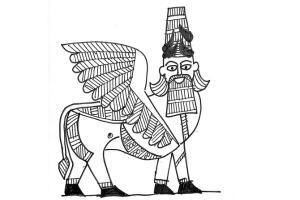
Illustration/Devdutt Pattanaik
%20(1).jpg "Devdutt Pattanaik") The Middle East includes Mesopotamia (Iraq), the area watered by the Euphrates and Tigris. To its East is Persia (Iran); to its South is Arabia; to the West is Levant (Near East); and to the North is Anatolia (Turkey). Egypt is also included in the Middle East due to close cultural ties. These regions have given us very important mythologies. The common theme across all these mythologies is the belief that you live only once, distinguishing it from Indian mythologies based on rebirth.
The Middle East includes Mesopotamia (Iraq), the area watered by the Euphrates and Tigris. To its East is Persia (Iran); to its South is Arabia; to the West is Levant (Near East); and to the North is Anatolia (Turkey). Egypt is also included in the Middle East due to close cultural ties. These regions have given us very important mythologies. The common theme across all these mythologies is the belief that you live only once, distinguishing it from Indian mythologies based on rebirth.
The oldest of these mythologies is Mesopotamian mythology. They believed that the world is controlled by many gods who have a council called Anunnaki. Humans were created to serve the gods. If the human servants displeased the gods, they could send down floods to destroy them. This was related to the repeated floods that the Mesopotamian plains suffered. Agriculture first emerged in these plains. This region gave us the Sumerian city-states and the world's first empires, Akkadian, Assyrian, and Babylonian. Every city here had its own gods. The hierarchy of the gods changed, depending on the city-state which had the most power and strength. In the Babylonian Empire, its hero-god Marduk was seen as all powerful, dominating other gods of the region.
Trending Stories
Latest Photos
Latest Videos
Latest Web Stories
ADVERTISEMENT
Mid-Day Fast
ADVERTISEMENT