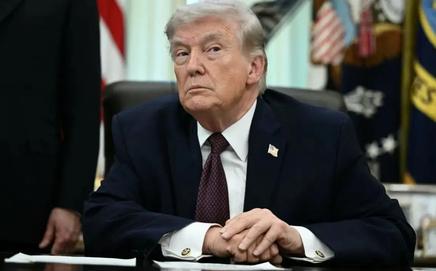
In a significant escalation of regional tensions, the United States military has announced that it will enforce a maritime blockade on Iran beginning April 13, acting on directives issued by US President Donald Trump. According to the United States Central Command (CENTCOM), the measure will apply uniformly to ships of all nationalities operating in and around Iranian ports and coastal regions. In a post on X, CENTCOM wrote, "Will begin implementing a blockade of all maritime traffic entering and exiting Iranian ports on April 13 at 10 a.m. ET, in accordance with the President's proclamation." It further added that the blockade would be enforced impartially against vessels of all nations entering or departing Iranian ports and coastal areas. "The blockade will be enforced impartially against vessels of all nations entering or departing Iranian ports and coastal areas, including all Iranian ports on the Arabian Gulf and Gulf of Oman. Forces will not impede freedom of navigation for vessels transiting the Strait of Hormuz to and from non-Iranian ports," CENTCOM added. The US Central Command said additional operational details would be shared with commercial mariners through a formal notice prior to implementation. "All mariners have been advised to monitor Notice to Mariners broadcasts and maintain communication with US naval forces on bridge-to-bridge channel 16 while operating in the Gulf of Oman and approaches to the Strait of Hormuz," it added. Meanwhile, US President Donald Trump on Sunday shared a report suggesting that maritime pressure could be a viable strategic option following recent diplomatic stalemates in Pakistan. The report cited national security experts who noted that the US Navy could "out-blockade" Iran, pointing to the presence of the USS Gerald Ford and USS Abraham Lincoln in the Persian Gulf as assets capable of exerting complete control over the waterway. https://t.co/YAFhMBm7hA — U.S. Central Command (@CENTCOM) April 12, 2026 In response, Iran's Islamic Revolutionary Guard Corps (IRGC) issued a stark warning to Western forces following the recent US naval blockade of the strategic Strait of Hormuz. The elite military wing cautioned that any aggression would be met with overwhelming force in the maritime corridor. The Revolutionary Guards warned that "any miscalculated move will trap the enemy in the deadly whirlpools in the Strait." This statement comes as a direct response to the heightened American military presence ordered by President Donald Trump along the vital global shipping route. Asserting their dominance over the waterway, the Guards' naval command confirmed through a post on X that Iranian security forces had the Strait of Hormuz "under full control." This defiance follows a major policy shift from Washington, where President Donald Trump announced on Sunday that the American Navy will henceforth block all maritime traffic entering the Strait.
13 April,2026 08:41 AM IST | Washington | ANIAmid escalating rhetoric over the strategic Strait of Hormuz, Iran's Supreme Leader's representative in India Abdul Majid Hakeem Ilahi, on Sunday, asserted that the vital maritime passage "belongs to all countries" and expressed hope for a return to stability, even as tensions persist following recent developments involving the United States. "Actually, the Strait of Hormuz belongs to all countries. It's not only for the United States of America. And before this war, the Strait of Hormuz was open, and all countries were benefiting from the Strait of Hormuz. But unfortunately, due to the war, we got a lot of conflict and an insecure situation. So, we want this Strait to be open, but now the situation is not good, and some ships are allowed to pass through the Strait of Hormuz," Ilhai told reporters. Responding to remarks by US President Donald Trump regarding potential action against ships allegedly paying tolls to Iran, Ilahi dismissed the possibility of escalation. "I'm sure that they cannot do anything. Before this war, the Strait of Hormuz was open. We didn't want to close it, we are not going to bandit, and we hope that no one in the world will suffer from the Strait of Hormuz. But they brought a lot of unfortunate events in the Strait of Hormuz, and we hope that very soon the Strait of Hormuz will also be solved and go back as a before," he said. Meanwhile, US President Donald Trump on Sunday announced that the American Navy would block maritime traffic entering the Strait of Hormuz, marking a sharp escalation in regional tensions. The President further stated that the military would interdict any vessel in international waters found to have paid transit tolls to Tehran. Outlining the decision in a post on Truth Social, Trump criticised the Iranian leadership for reneging on previous diplomatic commitments. "Iran promised to open the Strait of Hormuz, and they knowingly failed to do so. This caused anxiety, dislocation, and pain to many people and countries throughout the world," the President wrote. Addressing the reported military threats in the region, Trump dismissed Tehran's claims regarding its maritime capabilities. "They say they put mines in the water, even though all of their navy, and most of their 'mine droppers,' have been completely blown up," he asserted. This significant escalation in US naval policy follows the breakdown of high-stakes negotiations in Islamabad. Despite intensive discussions in the Pakistani capital aimed at securing a permanent end to the conflict, both sides were unable to reach an agreement by Sunday, leaving the existing two-week ceasefire in a precarious state. This story has been sourced from a third party syndicated feed, agencies. Mid-day accepts no responsibility or liability for its dependability, trustworthiness, reliability and data of the text. Mid-day management/mid-day.com reserves the sole right to alter, delete or remove (without notice) the content in its absolute discretion for any reason whatsoever
13 April,2026 08:38 AM IST | New Delhi | ANITaiwan's Ministry of National Defence on Monday detected the presence of 7 PLAN vessels, 3 official ships operating around its territory. Sharing the details on X, the MND said that, "7 PLAN vessels and 3 official ships operating around Taiwan detected up until 6 a.m. (UTC+8) today. ROC Armed Forces have monitored the situation and responded. No flight path illustration is provided, as we did not detect #PLA aircraft operating around Taiwan during this timeframe." China's claim over Taiwan is a complex issue rooted in historical, political, and legal arguments. Beijing asserts that Taiwan is an inseparable part of China, a viewpoint embedded in national policy and upheld by domestic laws and international statements. Taiwan, however, maintains a distinct identity, functioning independently with its own government, military, and economy. Taiwan's status remains a significant point of international debate, testing the principles of sovereignty, self-determination, and non-interference in international law, as per the United Service Institution of India. China's claim to Taiwan originates from the Qing Dynasty's annexation of the island in 1683 after defeating the Ming loyalist Koxinga. However, Taiwan remained a peripheral region under limited Qing control. The key shift came in 1895, when the Qing ceded Taiwan to Japan after the First Sino-Japanese War, marking Taiwan as a Japanese colony for 50 years. After Japan's defeat in World War II, Taiwan was returned to Chinese control, but the sovereignty transfer was not formalised. 7 PLAN vessels and 3 official ships operating around #Taiwan detected up until 6 a.m. (UTC+8) today. #ROCArmedForces have monitored the situation and responded. No flight path illustration is provided, as we did not detect #PLA aircraft operating around Taiwan during this… pic.twitter.com/2XgrCHxXKT — 國防部 Ministry of National Defense, ROC(Taiwan) 🇹🇼 (@MoNDefense) April 13, 2026 In 1949, the Chinese Civil War resulted in the establishment of the People's Republic of China (PRC) on the mainland, while the Republic of China (ROC) retreated to Taiwan, asserting its claim to govern all of China. This led to dual sovereignty claims: the PRC over the mainland and the ROC over Taiwan. Taiwan has operated as a de facto independent state but has avoided declaring formal independence to prevent military conflict with the PRC, United Service Institution of India. This story has been sourced from a third party syndicated feed, agencies. Mid-day accepts no responsibility or liability for its dependability, trustworthiness, reliability and data of the text. Mid-day management/mid-day.com reserves the sole right to alter, delete or remove (without notice) the content in its absolute discretion for any reason whatsoever
13 April,2026 08:29 AM IST | Taipei | ANIIranian Foreign Minister Seyed Abbas Araghchi on Sunday said "zero lessons earned" after hours of negotiations between the United States and Iran held in Pakistan on the "Islamabad MoU" ended in a stalemate, despite being close to a breakthrough. He said Iran engaged in good faith during the discussions but faced "maximalism, shifting goalposts and blockade" from the US side, which led to the collapse of the talks. In a post on X, Araghchi wrote, "In intensive talks at the highest level in 47 years, Iran engaged with the US in good faith to end the war. But when just inches away from "Islamabad MoU", we encountered maximalism, shifting goalposts, and blockade. Zero lessons earned. Good will begets goodwill. Enmity begets enmity." Meanwhile, Iran's Parliament Speaker Mohammad Bagher Ghalibaf has said that recent threats issued by US President Donald Trump have "no effect on the Iranian nation," even as he signalled cautious progress in ongoing engagements between Iran and the United States. According to remarks carried by Iranian state media and reported by Al Jazeera, Ghalibaf said Tehran had presented "very good initiatives" during talks with Washington, contributing to forward movement in the dialogue process. Ghalibaf said, "Trump's recent threats have no effect on the Iranian nation and issued a warning to the US president, saying, if you fight, we will fight, and if you come forward with logic, we will deal with logic." "We will not bow to any threats; let them test our will once again so that we can teach them a bigger lesson", he further said, reiterating Iran's firm stance against external pressure. In intensive talks at highest level in 47 years, Iran engaged with U.S in good faith to end war.But when just inches away from "Islamabad MoU", we encountered maximalism, shifting goalposts, and blockade. Zero lessons earnedGood will begets good will. Enmity begets enmity. — Seyed Abbas Araghchi (@araghchi) April 12, 2026 The remarks came after hours of negotiations between the United States and Iran in Islamabad ended in a stalemate on Sunday. US Vice President JD Vance said that no agreement had been reached despite extensive discussions. He added that while the US delegation would return without a deal, the outcome was "bad news for Iran" more than for the United States. Addressing reporters in Islamabad, Vance said that negotiations lasted around 21 hours and included several substantive discussions but failed to yield a final conclusion. "We've had a number of substance agreements with the Iranians- that is the good news. The bad news is that we have not reached an agreement. That is bad news for Iran, much more than it is bad news for the United States of America." "We go back to the United States having not come to an agreement", Vance said. This story has been sourced from a third party syndicated feed, agencies. Mid-day accepts no responsibility or liability for its dependability, trustworthiness, reliability and data of the text. Mid-day management/mid-day.com reserves the sole right to alter, delete or remove (without notice) the content in its absolute discretion for any reason whatsoever
13 April,2026 08:27 AM IST | Tehran | ANIWhile the peace talks between the US and Israel failed to come to a proper conclusion in Pakistan recently, the oil prices amid the tensions continue to rise sharply on Monday morning. The sudden rise in prices came after United States President Donald Trump announced a naval blockade of the Strait of Hormuz. As reported by news agency ANI, the Brent Crude prices on Monday morning jumped by 6.81 per cent to reach USD 101.68 per barrel. Similarly, West Texas Intermediate (WTI) crude oil rose by 7.97 per cent, trading at USD 104.26. While issuing an official statement on Truth Social, President Trump confirmed that the United States Navy would begin intercepting vessels in the region immediately to prevent Iran from profiting from the passage. Trump wrote, "Effective immediately, the United States Navy, the Finest in the World, will begin the process of BLOCKADING any and all Ships trying to enter, or leave, the Strait of Hormuz." The US President indicated that while the goal is to return to a status where all ships are allowed passage, the current blockade is necessary due to Iranian actions and claims regarding maritime mines. Trump threatens Iran again Donald Trump, while taking it to the social media platform Truth Social wrote, "At some point, we will reach an 'ALL BEING ALLOWED TO GO IN, ALL BEING ALLOWED TO GO OUT' basis, but Iran has not allowed that to happen by merely saying, 'There may be a mine out there somewhere,' that nobody knows about but them. THIS IS WORLD EXTORTION, and Leaders of Countries, especially the United States of America, will never be extorted." Financial markets also feel the heat Along with the crude oil prices, financial markets reacted to the heightened geopolitical tension as trading opened for the week. Dow Jones Futures fell by 344.57 points, or 0.72 per cent, to 47,572.00. While the Nasdaq and S&P 500 had closed with marginal gains in the previous session on April 11. The President further highlighted that the US Navy has orders to interdict vessels that have complied with Iranian demands for tolls in international waters. Trump also added, "I have also instructed our Navy to seek and interdict every vessel in International Waters that has paid a toll to Iran. No one who pays an illegal toll will have safe passage on the high seas. We will also begin destroying the mines the Iranians laid in the Straits," as per ANI. The US President also suggested that other nations would be involved in the operation to ensure the blockade remains effective. The statement from Trump also highlighted, "Any Iranian who fires at us, or at peaceful vessels, will be BLOWN TO HELL! Iran knows better than anyone how to END this situation, which has already devastated its country. Their Navy is gone, their Air Force is gone, their Anti-Aircraft and Radar are useless, Khomeini, and most of their 'Leaders,' are dead, all because of their Nuclear ambition." The US administration maintained that the military remains prepared for further engagement if the situation escalates beyond the blockade. He further stated, "Additionally and, at an appropriate moment, we are fully 'LOCKED AND LOADED,' and our Military will finish up the little that is left of Iran!" (With inputs from ANI)
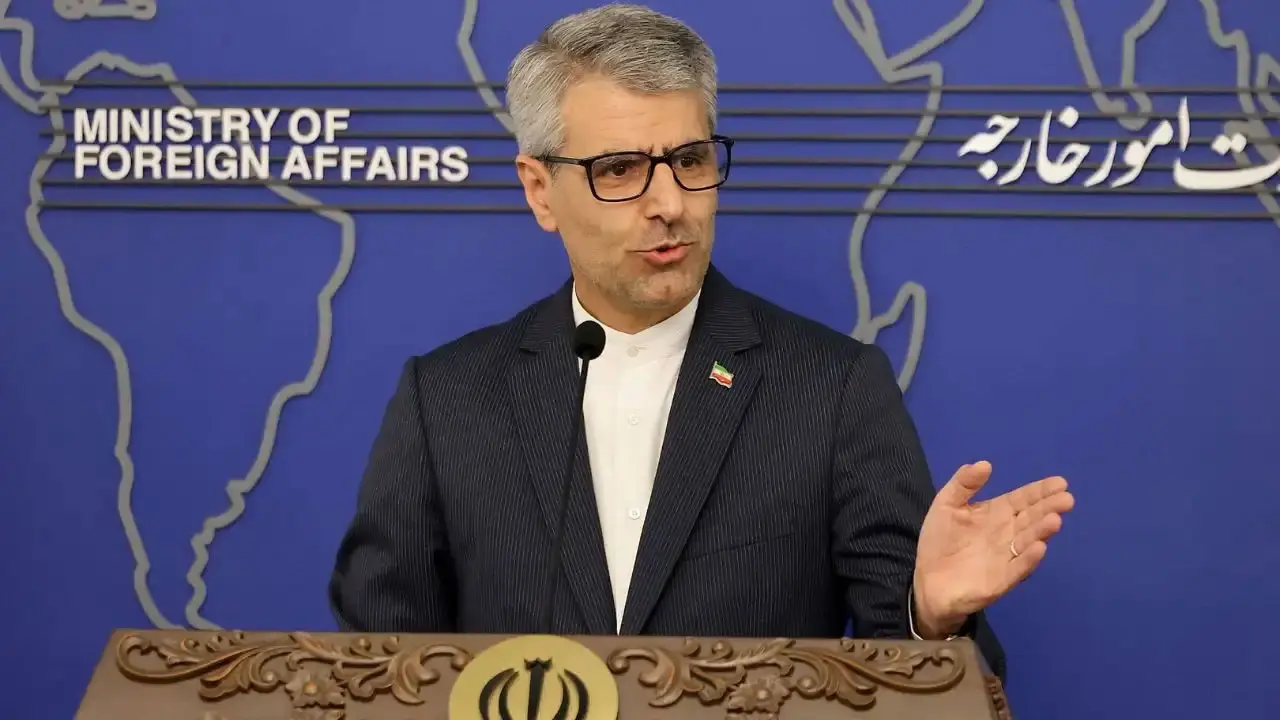
13 April,2026 08:18 AM IST | Mumbai | mid-day online correspondentIran has taken a firm stance amid ongoing negotiations with the US, with Foreign Ministry spokesperson Esmaeil Baqaei declaring that the country “has not forgotten and will not forget” past breaches of promise by the United States, underscoring deep mistrust even as talks continue in Islamabad. In a detailed post on X, Baqaei stated, “Diplomacy for us is the continuation of the sacred jihad of the defenders of the Iranian land. We have not forgotten and will not forget the experiences of America’s breaches of promise and malicious acts. Just as we will not forgive the heinous crimes committed by them and the Zionist regime during the course of the second and third imposed wars.” He described the negotiations as intense and prolonged, noting, “Today was a busy and long day for the delegation of the Islamic Republic of Iran in Islamabad. The intensive negotiations that began from the morning of Saturday with Pakistan’s benevolent efforts and mediation have continued without interruption until now, and numerous messages and texts have been exchanged between the two sides.” Highlighting the determination of the Iranian delegation, Baqaei added, “The Iranian negotiators are employing all their capabilities, experience, and knowledge to safeguard Iran’s rights and interests. The heavy loss of our great elders, dear ones, and fellow countrymen has made our resolve to pursue the Iranian nation’s interests and rights firmer than ever before.” Reaffirming Iran’s broader stance, he said, “Nothing can or should deter us from pursuing our great historical mission toward our beloved homeland and noble Iranian civilization. The Islamic Republic of Iran is determined to utilize all tools, including diplomacy, to secure national interests and protect the country’s well-being.” According to Baqaei, discussions over the past 24 hours covered key issues including the Strait of Hormuz, the nuclear programme, war reparations, sanctions relief, and ending ongoing regional conflicts. He stressed, “The success of this diplomatic process depends on the seriousness and good faith of the opposing side, refraining from excessive demands and unlawful requests, and the acceptance of Iran’s legitimate rights and interests.” At the conclusion of the latest round of talks, negotiations between Iran and the United States have been extended for another day at Pakistan’s proposal, with both sides agreeing to continue discussions. The talks, which began at 1 p.m. local time on Saturday, lasted over 14 hours and involved continuous exchanges of messages and draft texts. According to Iran’s semi-official Tasnim News Agency, the extension comes amid continued disagreements, particularly over the Strait of Hormuz and other critical issues. The report noted that while some initial progress had been made, “serious” differences persist, largely due to what Iran describes as “illogical and excessive demands” from the US side. This story has been sourced from a third party syndicated feed, agencies. Mid-day accepts no responsibility or liability for its dependability, trustworthiness, reliability and data of the text. Mid-day management/mid-day.com reserves the sole right to alter, delete or remove (without notice) the content in its absolute discretion for any reason whatsoever
13 April,2026 02:39 AM IST | Tehran | IANSPolice in London said they had arrested more than 500 pro-Palestinian protesters at a demonstration in support of the banned group Palestine Action on Saturday. Officers carried away activists to cheers and clapping from other demonstrators who gathered for the sit-down demonstration in the capital's Trafalgar Square. The protesters held placards in support of the banned group Palestine Action, making them liable for arrest. 🧵 Updates on the Defend our Juries activity will be shared on this thread.Palestine Action remains a proscribed organisation and any expression of support for it constitutes a criminal offence.https://t.co/KYrG3ZEgBu — Metropolitan Police (@metpoliceuk) April 11, 2026 London's Metropolitan Police said on social media platform X just before midnight that they had arrested 523 people aged between 18 and 87. Palestine Action was proscribed as a terrorist organisation in July, making it a criminal offence to belong to or support the group, punishable by up to 14 years in prison. The High Court in London upheld a challenge to the ban in mid-February, saying it had interfered with the right to freedom of speech. The government has been granted leave to appeal against the decision. London's Metropolitan Police paused arrests in the wake of the High Court ruling before announcing in late March that they would resume. "It's really important to continue to show up," said Freya, 28, manager of a London environmental organisation, one of those sitting towards the front of the crowd of protesters. "It's important that we all continue to oppose genocide... The government might flip-flop in their legal argument but the morals of these people (here) do not change," she said. 'Misguided crackdown' There have been nearly 3,000 arrests since the ban on Palestine Action was imposed, mainly for carrying placards defending it. Hundreds of people are facing charges. Protester Denis MacDermot, 73, from Edinburgh, said he had been arrested before and had no hesitation about turning out again. "I'm a supporter of these great people," he said, waving towards other protesters, adding that if the court process was definitive "there would be no need for all this". Protest organisers Defend Our Juries said hundreds of people had taken part in Saturday's demonstration, protesting against "the UK Government's complicity in Israel's genocide in Gaza and the misguided crackdown on peaceful protest at home". Police were "choosing to make arrests despite the government's ban on the group being ruled unlawful by the High Court, and leading lawyers warning that any arrests would be unlawful", it added in a statement. Amnesty UK condemned the arrests as "yet another blow to civil liberties in this country". "The Met rightly said it would stop making arrests. It has now gone back to its old, failed policy - mass arrests of people holding pieces of card, including today an elderly woman with walking sticks," it said in a statement on X. The ban, which put Palestine Action on a blacklist that also includes Palestinian militants Hamas and the Iran-backed Lebanese group Hezbollah, has sparked severe backlash. A judge has put on hold all trials of people charged with supporting Palestine Action, scheduling a blanket review of cases for July 30. Set up in 2020, Palestine Action's stated goal on its now-blocked website is to end "global participation in Israel's genocidal and apartheid regime". It has mainly targeted weapons factories, especially those belonging to the Israeli defence group Elbit Systems. This story has been sourced from a third party syndicated feed, agencies. Mid-day accepts no responsibility or liability for its dependability, trustworthiness, reliability and data of the text. Mid-day management/mid-day.com reserves the sole right to alter, delete or remove (without notice) the content in its absolute discretion for any reason whatsoever
13 April,2026 02:33 AM IST | London | AgenciesUS President Donald Trump on Sunday announced that the American Navy will block all maritime traffic entering the Strait of Hormuz, marking a significant escalation in tensions with Iran following the collapse of peace talks. In a statement, Trump said US forces would interdict any vessel in international waters found to have paid transit tolls to Tehran, signalling a tougher enforcement posture in one of the world’s most critical energy routes. Trump Accuses Iran of Failing Commitments Outlining the decision, Trump accused Iran of reneging on earlier assurances regarding free passage through the Strait of Hormuz. He said the failure to uphold commitments had caused disruption and uncertainty for global trade and energy markets. The US President also dismissed Iran’s claims about its naval capabilities, asserting that its maritime strength had been significantly weakened. Talks in Islamabad End Without Breakthrough The announcement follows the breakdown of high-level negotiations between the United States and Iran held in Islamabad. Despite extended discussions aimed at securing a long-term resolution, both sides failed to reach an agreement, leaving the existing ceasefire in a fragile state. US Vice President J. D. Vance acknowledged that while some progress was made, the talks ultimately ended in a stalemate, which he described as more detrimental to Iran than to the United States. US Navy Presence Signals Strategic Advantage Earlier indications of a potential blockade emerged after Trump shared an analysis suggesting that the US Navy could effectively control maritime movement in the region. The report highlighted the deployment of major assets, including aircraft carriers such as the USS Gerald Ford and USS Abraham Lincoln, in the Persian Gulf. These deployments are seen as strengthening Washington’s ability to enforce a blockade and assert control over the crucial shipping lane. Iran Responds, Blames ‘Excessive Demands’ Reacting to the stalled negotiations, Iran’s Foreign Ministry spokesperson Esmaeil Baqaei stated that Tehran remains committed to safeguarding its national interests through all available means, including diplomacy. He said the discussions covered key issues such as Iran’s nuclear programme, sanctions relief, and war-related matters, but were hindered by what he described as excessive demands from the opposing side. Global Concerns Rise Over Key Energy Route The Strait of Hormuz remains one of the world’s most vital oil transit chokepoints, and any disruption to shipping in the region could have far-reaching global consequences. With tensions escalating and diplomatic efforts stalled, the situation has raised concerns about stability in the region and the potential impact on international energy supplies and trade routes. (With inputs from Agencies)
12 April,2026 09:54 PM IST | Washington | mid-day online correspondentIran’s nationwide internet blackout entered its 44th day on Sunday, setting a global record for the longest disruption of connectivity in a sovereign state, according to data from NetBlocks. The watchdog group stated that the ongoing shutdown has surpassed all previous benchmarks, warning that the human and economic consequences of the prolonged digital isolation continue to intensify. It described the blackout as unprecedented in a modern, connected society. Blackout Imposed After Military Escalation The restrictions were introduced shortly after military strikes involving the United States and Israel, following escalating tensions with Iran. Since then, authorities have maintained a near-total block on external internet access across the country. This is not the first such measure in recent months. Earlier in the year, Iran witnessed another prolonged internet shutdown during widespread anti-government protests, reflecting a pattern of digital control during periods of unrest. Economic, Social Impact of Prolonged Digital Isolation Experts and rights groups have raised concerns over the far-reaching impact of the blackout. With limited access to global communication platforms, businesses, students, and ordinary citizens have faced significant disruption. NetBlocks highlighted that the continued censorship has led to mounting economic losses and social hardships, as essential services and communication channels remain restricted. Iran Signals Distrust as Talks with US Stall The blackout coincides with stalled diplomatic efforts between Tehran and Washington. Iranian Parliament Speaker Mohammad Bagher Ghalibaf expressed scepticism over the outcome of recent negotiations, stating that Iran entered the talks with goodwill but lacked trust due to past conflicts. He noted that the opposing side failed to gain the confidence of the Iranian delegation, underscoring the persistent mistrust between the two nations. Diplomacy Continues Despite Deadlock Iran’s Foreign Ministry spokesperson Esmaeil Baqaei said the discussions with US officials were among the longest in the past year, lasting over 24 hours. Despite the lack of a final agreement, he emphasised that diplomacy remains ongoing. Baqaei pointed to the complexity of the issues involved, including regional concerns and maritime security, as well as Iran’s nuclear programme. He indicated that while some progress was made on a multi-point proposal, key disagreements prevented a breakthrough. Pakistan’s Role in Mediation Acknowledged Iranian officials also acknowledged the role of Pakistan in facilitating the talks. Both Ghalibaf and Baqaei expressed appreciation for the efforts of Prime Minister Shehbaz Sharif and Army Chief Asim Munir in hosting and supporting the negotiations. Rising Tensions Over Nuclear and Maritime Issues The developments come amid continued tensions over Iran’s nuclear ambitions and strategic control in the region, including concerns related to the Strait of Hormuz. Adding to the pressure, US President Donald Trump recently shared an article suggesting the possibility of a naval blockade against Iran, further signalling the deepening deadlock between the two sides. As diplomatic efforts remain inconclusive and digital restrictions persist, Iran continues to face both internal disruption and external geopolitical pressure. (With inputs from ANI)
12 April,2026 05:09 PM IST | Tehran | mid-day online correspondentWidespread condemnation followed a deadly gun attack at a shrine in Afghanistan’s Injil district, where armed assailants opened fire on civilians, killing and injuring several people. The incident took place in Herat province and has raised fresh concerns over the safety of minority communities in the region, reported news agency IANS. According to local reports, gunmen on motorcycles targeted worshippers at close range after allegedly separating men from women. Several victims are believed to belong to the Shia community. Eyewitness accounts suggest the attackers looted victims before opening fire and fleeing the scene, reported IANS. European Union Condemns ‘Heinous Attack’ The European Union strongly condemned the violence, calling it an unjustifiable act of terror against civilians. In a statement, the EU expressed deep condolences to the families of the victims and extended solidarity to those affected by the attack, reported IANS. The EU reiterated its stance against all forms of violence targeting civilians, regardless of the perpetrators, and stressed the need for accountability. UN Calls for Independent Investigation Richard Bennett, the United Nations Special Rapporteur on human rights in Afghanistan, called for a thorough and independent investigation into the incident. He noted that the attack appears to follow a troubling pattern of violence targeting Shia community members, reported IANS. Bennett emphasised that those responsible must be brought to justice, underlining the importance of accountability in preventing further such incidents, reported IANS. Hamid Karzai Terms Attack ‘Crime Against Humanity’ Former Afghan President Hamid Karzai condemned the attack in strong terms, describing it as a crime against humanity. He expressed condolences to the families of the victims and prayed for the recovery of those injured, reported IANS. Karzai also highlighted that women and children were among the victims, underscoring the brutality of the assault on civilians. Conflicting Casualty Figures, Rising Concerns Over Safety Reports indicate discrepancies in casualty figures, with hospital sources suggesting higher numbers than official accounts. The lack of clarity has added to concerns surrounding transparency and the scale of the attack, reported IANS. In recent years, western Afghanistan has witnessed repeated incidents of violence targeting minority communities, particularly Shia groups. The latest attack has once again brought attention to the persistent security challenges in the region. The incident underscores growing fears of recurring targeted violence, even as international voices call for urgent measures to ensure civilian protection and accountability. (With inputs from IANS)
12 April,2026 04:38 PM IST | Kabul | mid-day online correspondentPakistan’s power regulator, the National Electric Power Regulatory Authority (NEPRA), has increased electricity tariffs by Rs 1.42 per unit under the monthly fuel cost adjustment mechanism, adding to the financial strain on consumers already grappling with rising fuel prices, reported IANS. The hike is linked to variations in fuel costs recorded in February 2026 and will be reflected in electricity bills issued in April. The move is expected to impose an additional burden of approximately Rs 10.57 billion on consumers nationwide, according to media reports, reported IANS. Consumers Hit Amid Rising Cost of Living The tariff increase comes at a time when households are already dealing with escalating living costs. With fuel prices on the rise, the latest revision in electricity rates has created a double impact, affecting both transportation and household expenses. Analysts note that while the government has introduced certain austerity measures in response to the ongoing tensions in the Middle East, these steps have done little to shield ordinary citizens from rising costs. Consumers continue to face higher expenses both at fuel stations and in their monthly utility bills, reported IANS. Industry Warns of Mounting Financial Pressure The hike has also raised concerns within Pakistan’s industrial sector. A representative from the Federation of Pakistan Chambers of Commerce and Industry (FPCCI) warned that continued increases in energy costs could severely impact industrial sustainability, reported IANS. According to estimates, the industrial sector has already borne a cumulative burden of Rs 564.7 billion over the past three years. Stakeholders fear that additional tariff hikes may further erode competitiveness and hinder economic growth, reported IANS. Long-Standing Structural Issues in Power Sector Experts point out that Pakistan’s energy challenges are not new and predate current geopolitical tensions. Structural inefficiencies, including transmission and distribution losses, continue to weigh heavily on the power sector. During the financial year 2024–25, Pakistan’s power distribution companies reportedly suffered combined losses of around Rs 397 billion due to inefficiencies and poor bill recovery. These systemic issues remain largely unresolved and continue to drive up costs for consumers. Uncertain Global Energy Outlook Adds to Concerns The global energy market remains uncertain, with fluctuating fuel prices adding to the volatility. This uncertainty is expected to keep pressure on Pakistan’s power tariffs in the coming months, reported IANS. Experts also highlight concerns over fixed capacity payments to power producers, which must be made regardless of actual electricity generation, as well as the underutilisation of power plants. Addressing these issues, they say, is critical to achieving long-term stability in the energy sector, reported IANS. For now, however, consumers and businesses alike appear set to bear the brunt of rising electricity and fuel costs, with limited relief in sight. (With inputs from IANS)
12 April,2026 04:25 PM IST | New Delhi | mid-day online correspondentADVERTISEMENT