
Pakistan-mediated talks between Iran and the US commenced in Islamabad on Saturday, official sources said. The sources said the talks began with messages being exchanged through Pakistani officials, indicating that the engagement was initially indirect. If there is a positive development, the talks could also be held directly, they said. The Iranian delegation, led by Speaker Mohammad Baqir Galibaf, arrived in Islamabad on Friday night, while the US delegation, headed by Vice President JD Vance, arrived on Saturday morning. A senior Pakistani official told PTI that the Foreign Office is likely to issue a statement after the conclusion of the first round of "direct talks". The US side includes President Donald Trump's son-in-law Jared Kushner and Middle East envoy Steve Witkoff, while Iran is also represented by Foreign Minister Abbas Araghchi and other senior leaders. Prime Minister Shehbaz Sharif, who held separate meetings with both delegations, reiterated Pakistan's desire for a "durable peace" in West Asia and affirmed Islamabad's commitment to facilitating dialogue. Deputy Prime Minister and Foreign Minister Ishaq Dar, Chief of Army Staff Field Marshal Asim Munir and Interior Minister Mohsin Raza Naqvi were present during the interactions. The Prime Minister's Office shared visuals of Sharif hugging and warmly greeting Ghalibaf and Araghchi. According to Iranian media reports, the dialogue is being viewed as a step towards implementing a ceasefire. The talks are taking place during a two-week halt in the US-Israeli conflict with Iran, which began with attacks on February 28 and spread across the Middle East, impacting global economies. The pause in hostilities followed a temporary ceasefire brokered by Pakistan on April 8. This story has been sourced from a third party syndicated feed, agencies. Mid-day accepts no responsibility or liability for its dependability, trustworthiness, reliability and data of the text. Mid-day management/mid-day.com reserves the sole right to alter, delete or remove (without notice) the content in its absolute discretion for any reason whatsoever.
11 April,2026 08:29 PM IST | Islamabad/Lahore | PTIThe Iranian delegation, led by Speaker of the Iranian Parliament Mohammad Baqer Qalibaf, has arrived in Pakistan's Islamabad late on Friday to attend peace talks with the United States, as reported by Iranian State Media Press TV, aimed at achieving a comprehensive end to hostilities in West Asia. As reported by the Islamic Republic of Iran Broadcasting (IRIB), the Iranian delegation comprises representatives from multiple key sectors, including security, political, military, economic, and legal domains, reflecting the broad scope and significance of the proposed discussions. The high-level delegation includes Iran's Foreign Minister Seyed Abbas Araghchi, along with Ali Akbar Ahmadian, Secretary of Iran's Defence Council, and Abdolnaser Hemmati, Governor of the Central Bank of Iran. Several members of the Iranian parliament are also part of the visiting team. However, Tehran still stresses the acceptance of preconditions issued earlier by Galibaf, noting that if the conditions aren't met, then it may lead to the failure of the negotiations, as reported by Press TV Meanwhile, Speaker of Iran's Parliament, MB Ghalibaf, in a post on X, said that two measures agreed upon between the parties remain unfulfilled, stressing that progress on these issues is essential before any dialogue can take place. According to Ghalibaf, the ceasefire in Lebanon and the release of blocked Iranian assets are set as the preconditions before negotiations can take place in Islamabad. "Two of the measures mutually agreed upon between the parties have yet to be implemented: a ceasefire in Lebanon and the release of Iran's blocked assets prior to the commencement of negotiations. These two matters must be fulfilled before negotiations begin," Ghalibaf said in his post. The developments come as the fragile ceasefire agreement between the United States and Iran hangs in the balance, with Tehran stating that the truce also includes the halt to Israeli military operations in Lebanon. However, both Washington and Israel have maintained that the ceasefire does not extend to Hezbollah targets, a disagreement that has further complicated diplomatic efforts and heightened the risk of the truce collapsing. Meanwhile, US Vice President JD Vance, earlier in the day, departed for Pakistan's capital of Islamabad to take part in talks with Iran, expressing optimism about the negotiations while warning against any lack of sincerity from Tehran. Addressing reporters before departure, Vance said the United States is open to constructive engagement if Iran approaches the discussions in good faith. "We're looking forward to the negotiation. I think it's going to be positive. As the president of the United States said, if the Iranians are willing to negotiate in good faith, we're certainly willing to extend the open hand," he said. However, he cautioned that Washington would not respond favourably if Iran attempts to act in bad faith during the talks. "If they're going to try to play us, then they're going to find that the negotiating team is not that receptive," Vance added. Vance will be leading the US delegation to Islamabad for talks this weekend. According to White House Press Secretary Karoline Leavitt, along with Vance, US Special Envoy Steve Witkoff, and the son-in-law of US President Donald Trump, Jared Kushner, will be part of the delegation. The first round of those talks will take place on Saturday morning, local time. The meeting between the two sides is set to take place to end the over-month-long conflict in West Asia and follows an immediate ceasefire agreement between the US and Iran for two weeks. This story has been sourced from a third party syndicated feed, agencies. Mid-day accepts no responsibility or liability for its dependability, trustworthiness, reliability and data of the text. Mid-day management/mid-day.com reserves the sole right to alter, delete or remove (without notice) the content in its absolute discretion for any reason whatsoever
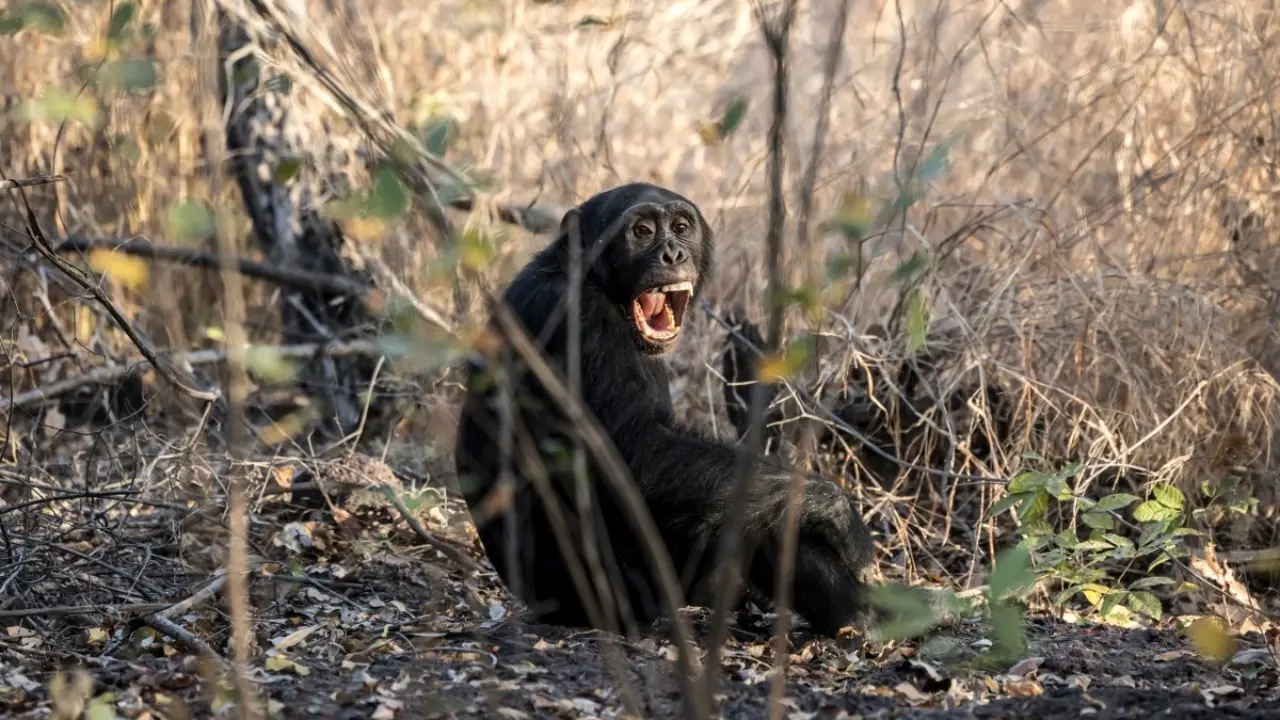
11 April,2026 07:24 PM IST | Islamabad | ANIWild chimpanzees in Uganda have split into rival factions, engaging in a prolonged and violent “civil war” for the past eight years, researchers have reported in a recently released study. The conflict involves the world’s largest known group of wild Ngogo chimpanzees community in Kibale National Park, where a once closely bonded group has fractured into opposing sides. A study published on Thursday in the journal Science, researchers have stated that the reasons behind the split remain unclear. Since 2018, researchers have documented at least 24 killings, including 17 infants, highlighting the severity of the violence within the population. They describe it as a dramatic change in behaviour, noting that the chimpanzees who once showed close social bonds were now attacking one another. The findings, published in the journal Science, suggest that such sustained and intense conflict among chimpanzees may offer valuable insights into how early human conflicts may have developed. What the study say The study has revealed how social groups among chimpanzees can gradually divide and turn hostile, offering important insights into behaviour that may also help scientists understand human societies. According to news reports, researchers, including Laura Sandel and her team, examined a rare group split in wild chimpanzees and found that such divisions develop over time rather than happening suddenly. The study focused on a chimpanzee community in Ngogo in Uganda, one of the largest known groups, with more than 200 individuals. Over time, the group slowly separated into two distinct subgroups. Gradual division, then split The study stated that the researchers found that the split began with subtle changes in social behaviour. Smaller clusters formed within the group, and some chimpanzees moved between them. Eventually, connections between the groups weakened. As key individuals disappeared, including some due to disease, the division became permanent. Relationships between former group members then turned hostile. After the separation, the two groups began patrolling their territories. This led to aggressive encounters, including lethal attacks, particularly targeting adult males and even young chimpanzees. The findings highlight how group divisions can escalate into conflict once social bonds break down. Comparison with Bonobos The researchers compared chimpanzees with bonobos, a closely related species. Unlike chimpanzees, bonobos tend to maintain peaceful relations between groups. The study stated that for instance, bonobo communities studied in Central Africa have split in the past but continue to cooperate and interact without violence. This contrast raises questions about how environment and evolution shape social behaviour. The Goodall research The findings build on earlier observations by Jane Goodall, who documented a similar chimpanzee group split in Gombe in Tanzania, decades ago, where former groupmates also turned violent after separation. The journal Science said, "Approximately 50 years ago, primatologist Jane Goodall reported a similar fission event among the Kasekela chimpanzee community in Gombe, Tanzania. Several adult males, adult females, and young individuals splintered into a new group. Many of them were then killed by former groupmates. Sandel et al. studied the social dynamics of the second group split observed in wild chimpanzees, which took place in the Ngogo community in Uganda. This group, which has been followed systematically for nearly 30 years, grew to become the largest habituated community of chimpanzees (a population that tolerates humans) at more than 200 individuals. Then, it began to split into two spatially and socially segregated parts." Possible Reasons It said that one theory suggests that access to food influences group behaviour. However, the Ngogo study showed that even with abundant resources, conflict still emerged among chimpanzees. It suggests that factors beyond food supply, such as social structure and population size, may play a significant role. The research suggest that it was important to have long-term wildlife studies and conservation efforts.
11 April,2026 07:15 PM IST | Mumbai | mid-day online correspondentA new complication has emerged in an already tense global situation, as Iran is reportedly facing difficulties in reopening the strategically vital Strait of Hormuz. The issue comes after sea mines were deployed during recent hostilities and officials now say not all of them can be located, reported IANS. According to a report by The New York Times, citing US officials, some of the mines laid by Iran remain unaccounted for. This has raised serious concerns about maritime safety and the stability of global oil supplies. Why the Strait of Hormuz matters? The Strait of Hormuz is one of the most important shipping routes in the world. It connects the Persian Gulf to the Gulf of Oman and the Arabian Sea, acting as a crucial passage for oil transport. Nearly one-fifth of global oil shipments pass through this narrow channel. For countries like India, the dependence is even higher, making the situation particularly worrying for energy security. Mines laid during rising tensions The report states that Iran deployed sea mines using small boats last month. This move followed joint airstrikes by the US and Israel amid rising tensions over Tehran’s nuclear programme, reported the news agency. However, the operation appears to have been poorly documented. Officials believe some mines were not properly recorded, while others may have drifted from their original positions, making them harder to detect and remove. US officials described the operation as “haphazard,” pointing to the risks it now poses to commercial ships passing through the region. Safety warnings and alternative routes The situation has become more concerning after the Islamic Revolutionary Guard Corps (IRGC) issued a public advisory warning ships about the danger of sea mines. The IRGC advised vessels to use alternative routes to avoid potential collisions. It also indicated that a separate passage may be available for ships that comply with certain conditions, including payment of a toll. Impact on diplomacy and global trade The issue is also affecting diplomatic efforts, especially ongoing talks between Washington and Tehran taking place in Islamabad. The uncertainty around the strait’s safety adds pressure to already delicate negotiations. Although Iran has agreed to reopen the route following a ceasefire with the US, just ahead of a deadline set by Donald Trump, the inability to quickly clear the mines has delayed a full return to normal operations. For now, authorities are relying on alternative navigation routes to reduce risks, but concerns remain high. Any prolonged disruption in the Strait of Hormuz could have far-reaching effects on global oil prices and supply chains. (With IANS Inputs)
11 April,2026 03:01 PM IST | Mumbai | mid-day online correspondentVice President J D Vance on Friday warned Iran not to "play" the US as he headed overseas for negotiations aimed at ending the war. President Donald Trump has tasked the member of his inner circle who has seemed to be the most reluctant defender of the six-week-old conflict with Iran to now find a resolution and stave off the US president's astonishing threat to wipe out its "whole civilisation". Vance, who has long been skeptical of foreign military interventions and outspoken about the prospect of sending troops into open-ended conflicts, set off Friday to lead mediated talks with Iran in the Pakistani capital of Islamabad. "If the Iranians are willing to negotiate in good faith, we're certainly willing to extend the open hand," Vance told reporters before boarding Air Force Two to make his way to the talks in Pakistan. But he added, "If they're gonna try and play us, then they're gonna find that the negotiating team is not that receptive." Vance's trip comes as a tenuous, temporary ceasefire appears to be on the precipice of collapsing. The chasm between Iran's public demands and those from the US and its partner Israel seems irreconcilable. And in the US, where Vance might ask voters in two years' time to make him the next president, there is growing political and economic pressure to wrap it up. As Vance made his way to the Pakistani capital of Islamabad, Iran's Parliament Speaker Mohammad Bagher Qalibaf said in a social media post that a ceasefire in Lebanon, where Israel is targeting Iran-backed Hezbollah militants, and the release of blocked Iranian assets "must be fulfilled before negotiations begin." He did not elaborate further. Qalibaf and other senior Iranian officials arrived in Islamabad later on Friday ahead of Vance. The Iranian delegation for the talks, which is slated to begin Saturday, also includes Foreign Minister Abbas Araghchi, Ali Akbar Ahmadian, secretary of the Supreme National Defence Council, Central Bank Governor Abdolnasser Hemmati, and several lawmakers. It was received at the airport by Pakistan's Foreign Minister Ishaq Dar and other senior Pakistani government officials. Pakistan Prime Minister Shehbaz Sharif, in a televised address to his nation on Friday, described the talks as a "make-or-break moment" for the two sides. Vance is joined by Trump's special envoy Steve Witkoff and Trump's son-in-law Jared Kushner, who took part in three rounds of indirect talks with Iranian negotiators aimed at settling US concerns about Tehran's nuclear and ballistic weapons programmes and its support for armed proxy groups in the Middle East before Trump and Israel launched the war against Iran on February 28. The White House has provided scant detail about the format of the talks ' whether they will be direct or indirect ' and has not provided specific expectations for the meeting. But the arrival of Vance for negotiations marks a rare moment of high-level US government engagement with the Iranian government. Since the Islamic Revolution in 1979, the most direct contact had been when President Barack Obama, a Democrat, in September 2013 called newly elected Iranian President Hassan Rouhani to discuss Iran's nuclear programme. Two sides face steep climb in making headway Almost immediately after the White House and Iran announced a temporary ceasefire Tuesday evening, the sides found themselves at odds over the terms of the truce. Iran insisted that an end to the Israeli war in Lebanon was part of the ceasefire. But Israeli Prime Minister Benjamin Netanyahu and Trump said the truce did not cover Lebanon, and the Israeli operations there continued. The US, meanwhile, demanded that Iran make good on reopening the Strait of Hormuz. The Islamic Republic had closed the critical shipping waterway in response to Israel's intensifying attacks against the Hezbollah militant group in Lebanon. "The Iranians don't seem to realise they have no cards, other than a short-term extortion of the World by using International Waterways," Trump posted on social media on Friday. "The only reason they are alive today is to negotiate!" Iran's effective shuttering of the waterway has had a major impact on the US and global economies. In the United States, consumer prices rose 3.3 per cent in March from a year earlier, the Labour Department reported Friday. The largest monthly jump in gas prices in six decades spurred the sharp spike in inflation. Still, Trump expressed confidence in an exchange with reporters on Friday evening about the US position going into the talks. He predicted that the strait will soon be reopened "with or without" Tehran's cooperation. It's the highest-stakes moment thus far for Vance, who spent much of last year as more of a background player in the Trump White House, especially as others like Elon Musk and Secretary of State Marco Rubio took turns as ever-present advisers for the president. "I wished him luck. He's got a big thing," Trump said of his parting message to Vance before he began his journey to Islamabad. Vance's portfolio is fattening fast, first with a mission to root out fraud in government programs at home and now to help solve a US war in the Middle East, where complicated doesn't even begin to describe things. Vance, who served in the Iraq War while in the Marines and spent two years as a US senator for Ohio and a little more than one as vice president, has little diplomatic experience. This story has been sourced from a third party syndicated feed, agencies. Mid-day accepts no responsibility or liability for its dependability, trustworthiness, reliability and data of the text. Mid-day management/mid-day.com reserves the sole right to alter, delete or remove (without notice) the content in its absolute discretion for any reason whatsoever
11 April,2026 11:24 AM IST | Washington | APThe UK government has approved the country’s largest power-producing solar farm. The 800MW Springwell Solar Farm, located between Lincoln and Sleaford, is expected to generate enough electricity to power around 180,000 homes. In February, the UK took steps toward space-based solar power after a study found it could supply clean electricity. Recent measures include rolling out plug-in solar systems in retail stores and mandating solar installations as standard for all new homes in England. This story has been sourced from a third party syndicated feed, agencies. Mid-day accepts no responsibility or liability for its dependability, trustworthiness, reliability and data of the text. Mid-day management/mid-day.com reserves the sole right to alter, delete or remove (without notice) the content in its absolute discretion for any reason whatsoever
11 April,2026 10:03 AM IST | London | AgenciesAttacks intensified Friday between Israel and the Lebanese militant group Hezbollah ahead of direct talks between the Lebanese government and Israel that are set to begin next week. At least 13 members of Lebanon's State Security forces were killed in an Israeli strike in southern Lebanon Friday, while Hezbollah claimed an attack targeting a naval base in the Israeli port city of Ashdod some 90 miles away from the border. Israel launched strikes across several towns in southern Lebanon, including one on a government building in the southern city of Nabatieh that killed the government security personnel. Hezbollah claimed 31 other attacks on northern Israel and on Israeli ground troops that have invaded southern Lebanon. Israel launched its latest aerial campaign and a ground invasion of southern Lebanon after Hezbollah fired rockets toward northern Israel in solidarity with Iran, its key ally and patron, on March 2. At least 1,888 people in Lebanon have been killed in Israeli strikes, according to the Health Ministry. At least 303 were killed in a rapid series of 100 strikes that hit the country - including multiple areas in dense residential and commercial areas in central Beirut - in 10 minutes on Wednesday, the bloodiest day in the latest war between the two sides. Civil Defense first responders are still searching for bodies trapped under the rubble in the Lebanese capital. Meanwhile, officials at Beirut's main government-run hospital on the southern edge of the capital fear it could be in the line of fire after the Israeli military issued an evacuation warning for the surrounding suburbs, including the busy neighbourhood of Jnah where the hospital is located. Israel has launched attacks in Jnah, both with and without warning. The World Health Organization has since called for the Rafik Hariri University Hospital to be spared from attacks and not to evacuate, and WHO officials said Friday that they received assurances that it would not be struck. The hospital has not evacuated, though staff are fearful, as getting to work now requires them to drive on roads that can be struck at any time says Dr. Mohammad Cheaito, who heads the emergency department. "The entire zone around the hospital was threatened and deemed dangerous," he told the AP. "But at the end of the day, we have a humanitarian duty." Lebanon hopes for truce while Hezbollah supporters reject talks Lebanon's authorities have not yet commented on Israeli Prime Minister Benjamin Netanyahu's announcement on Thursday of the decision to go ahead with talks. Netanyahu said the talks would revolve around disarming Hezbollah and establishing "peaceful relations" between the two countries. A Lebanese official in government familiar with the developments said that a halt in the fighting is a critical condition for the country to engage in direct talks with Israel, similar to the one between the US and Iran. It has yet to appoint a representative for negotiations. They spoke on condition of anonymity in line with regulations. Lebanese President Joseph Aoun had initially proposed the direct talks early on in the war on similar terms, at the time hoping for Israel to stop an escalation in airstrikes and to not invade the country. At the time, with only the backing of France, that failed. On Wednesday, the US and Iran announced a temporary ceasefire in the war that began on Feb. 28. It included Lebanon and other countries impacted in the wider regional conflict, mediator Pakistan announced. However, Israel - and later the United States - denied this. They want to separate the diplomatic tracks of the two wars. Hezbollah considers Israel's attacks on Lebanon to be a violation of the ceasefire, while Beirut, in a bid to disarm Hezbollah and assert its full sovereignty over the country, says it wants to be included in talks related to Lebanon. Hezbollah Secretary-General Naim Kassem in a statement broadcast Thursday did not directly mention the prospect of Israel-Lebanon talks, but called on the Lebanese government to "stop giving free concessions" to Israel. Dozens of supporters of the Iran-backed group protested outside of the Lebanese prime minister's office in central Beirut. They see the scheduled direct talks as a surrender to Israel, which says its troops will stay in the country indefinitely. "Our blood has been spilled on this land, and our state is conspiring against us," said protester Hassan Shuaib. "Our state wants to kill us; our state wants to strip us of our weapons." This story has been sourced from a third party syndicated feed, agencies. Mid-day accepts no responsibility or liability for its dependability, trustworthiness, reliability and data of the text. Mid-day management/mid-day.com reserves the sole right to alter, delete or remove (without notice) the content in its absolute discretion for any reason whatsoever
11 April,2026 09:59 AM IST | Beirut | APNASA’s Artemis II astronauts splashed down safely in the Pacific Ocean off the coast of San Diego at 8:07 p.m. Eastern time on Friday, completing a historic 10-day mission around the Moon and marking humanity’s return to deep space after more than 50 years. The Orion spacecraft carrying NASA astronauts Reid Wiseman, Victor Glover and Christina Koch, along with Canadian astronaut Jeremy Hansen, made a parachute-assisted landing as recovery teams moved in to retrieve the crew, NASA said in official updates. “SPLASHDOWN!” NASA said, confirming the crew was “back on Earth” after completing the mission, reported IANS. “What a journey,” Wiseman said moments after landing during a livestream. “We are stable one. Four green crewmembers.” The mission marked the first crewed test flight of NASA’s Orion spacecraft and Space Launch System rocket, sending astronauts beyond low Earth orbit, around the Moon and back. Artemis crew completes historic lunar flyby, sets records and milestones According to reporting by Smithsonian Magazine, the crew completed a nearly 10-day journey and splashed down off the California coast, marking the first time humans have travelled near the Moon in more than half a century and setting the stage for future lunar missions. During the mission, the astronauts travelled as far as 252,756 miles from Earth, breaking the previous distance record set during the Apollo 13 mission, and observed the Moon’s far side and multiple lunar surface targets, including ancient basins and crater, reported IANS. The flight also marked several milestones: Glover became the first Black astronaut to reach the Moon’s vicinity, Koch the first woman, and Hansen the first Canadian. The journey was not without technical challenges. Minor issues, including problems with the spacecraft’s toilet system and unusual odours inside the cabin, were reported during the mission, though they did not affect its outcome, Smithsonian Magazine noted. Artemis crew returns safely after fiery re-entry, draws widespread praise According to IANS, re-entry into Earth’s atmosphere was one of the most demanding phases. The spacecraft travelled at about 25,000 miles per hour and endured temperatures approaching 5,000 degrees Fahrenheit as superheated plasma built up around the capsule. NASA said the capsule deployed drogue and main parachutes in sequence before splashing down in the Pacific, where recovery teams approached in boats and later transported the astronauts by helicopter to the USS John P. Murtha for medical checks. NASA Administrator Jared Isaacman praised the mission. “I just couldn’t be more proud of the entire workforce, the years, the effort, the late nights, all the hard work from across the country that contributed to this incredible moment,” he said. The successful return drew praise from across the US government. The State Department said the mission “has shown the world what is possible,” while President Donald Trump called the trip “spectacular” and the landing “perfect,” adding that he looked forward to welcoming the crew to the White House, reported IANS. Artemis II is a key step in NASA’s broader lunar programme, which aims to return humans to the Moon and establish a sustained presence there. The next mission, Artemis III, is expected to test docking capabilities and pave the way for a crewed landing on the lunar surface later this decade, reported IANS. (Inputs from IANS)
11 April,2026 09:37 AM IST | Washington | mid-day online correspondentChinese President Xi Jinping on Friday said peace is the wish of people of both sides as he met Taiwan’s Opposition leader Cheng Li-wun in Beijing ahead of US President Donald Trump’s visit to China next month. “Compatriots on both sides are Chinese, and we need peace, we need development, we need communication, and we need cooperation. This is a common wish,” Xi said. Their meeting marked the first time a sitting KMT chairperson had met with the Communist Party leadership since November 2016. This story has been sourced from a third party syndicated feed, agencies. Mid-day accepts no responsibility or liability for its dependability, trustworthiness, reliability and data of the text. Mid-day management/mid-day.com reserves the sole right to alter, delete or remove (without notice) the content in its absolute discretion for any reason whatsoever
11 April,2026 07:53 AM IST | Beijing | AgenciesAvalanche Energy, a fusion energy startup, has won a $5.2 million contract to build radioactive batteries that can power a laptop-class system for months. The contract is part of the Defense Advanced Research Projects Agency’s Rads to Watts Program, which aims to build next-generation, compact, resilient nuclear batteries with higher densities. Radioactive batteries aren’t an entirely new concept. They have been around for years and have made their way even to Mars on NASA’s Perseverance and Curiosity rovers. Another type of radioactive battery is used in medical implant devices and sensors, but all these devices face the same issue: low energy density. The project aims to resolve that issue. This story has been sourced from a third party syndicated feed, agencies. Mid-day accepts no responsibility or liability for its dependability, trustworthiness, reliability and data of the text. Mid-day management/mid-day.com reserves the sole right to alter, delete or remove (without notice) the content in its absolute discretion for any reason whatsoever
11 April,2026 07:51 AM IST | New York | AgenciesThe late Queen Elizabeth II believed the monarch had to be seen to be believed. And she made sure that was true even when Britain’s famously changeable weather intervened, pioneering the use of a clear plastic raincoat so that a stodgy black umbrella didn’t obscure her from public view. Exhibition at King’s Gallery in Buckingham Palace. PIC/AFP That raincoat is one of some 300 garments and other fashion artifacts that go on display Friday at the King’s Gallery at Buckingham Palace in an exhibit that celebrates the late queen’s life and reign. This story has been sourced from a third party syndicated feed, agencies. Mid-day accepts no responsibility or liability for its dependability, trustworthiness, reliability and data of the text. Mid-day management/mid-day.com reserves the sole right to alter, delete or remove (without notice) the content in its absolute discretion for any reason whatsoever
11 April,2026 07:47 AM IST | London | AgenciesADVERTISEMENT







-1775919514611_d.png?tr=w-436,h-271 "Iranian delegation headed by Iran's Parliament Speaker Mohammad Ghalibaf, meet with Pakistani PM Shehbaz Sharif, in Islamabad ahead of the peace talks. PIC/AP")

-1775899776789_d.png "Semiofficial Iranian agencies released a chart indicating that the Revolutionary Guard may have placed sea mines in the Strait of Hormuz. File Pic")


-1775879338949_d.png "NASA livestream shows Artemis II crewmembers (in orange suits) being extracted from their spacecraft after splashing down in the Pacific Ocean. Pic/AFP")


