French President Emmanuel Macron has called for an immediate halt to military strikes targeting civilian infrastructure, particularly energy and water facilities, amid the ongoing tensions involving Iran, reported the IANS. In a statement shared on social media, Macron stressed the need for a moratorium on such attacks, warning of the risks to civilian populations and global energy security. Macron revealed that he had spoken with Donald Trump and Tamim bin Hamad Al Thani following recent strikes that affected gas production facilities in Iran and Qatar. He noted that it is in the shared interest of all parties to avoid further escalation and protect essential services. "I have just spoken with the Emir of Qatar and President Trump following the strikes that hit gas production facilities in Iran and Qatar today," the French President said in a post on X. "It is in our common interest to implement, without delay, a moratorium on strikes targeting civilian infrastructure, particularly energy and water supply facilities. Civilian populations and their essential needs, as well as the security of energy supplies, must be protected from military escalation," he added. Strikes hit energy facilities Qatar’s authorities reported that missile attacks struck the Ras Laffan Industrial City, causing significant fires and damage. Meanwhile, Israeli airstrikes reportedly targeted a major gas facility in Bushehr in southern Iran. Reports suggest the operation was carried out in coordination with the United States, as per the IANS. Rising regional tensions Following the strikes, the Islamic Revolutionary Guard Corps issued evacuation warnings for oil facilities across Saudi Arabia, the United Arab Emirates and Qatar. Earlier, Iranian President Masoud Pezeshkian condemned the attacks, warning they could lead to “uncontrollable consequences” with global implications, according to the IANS. Similarly, Parliament Speaker Mohammad Bagher Ghalibaf described the attacks as dangerous escalation, stating that a new phase of confrontation had begun. Background to the conflict The tensions follow joint strikes reportedly carried out by the United States and Israel on multiple locations in Tehran and other Iranian cities earlier this year. Iran responded with missile and drone attacks targeting Israeli and US-linked sites across the Middle East, as per the IANS. The situation remains volatile, with growing concerns over regional stability and the safety of critical infrastructure. (with IANS inputs)
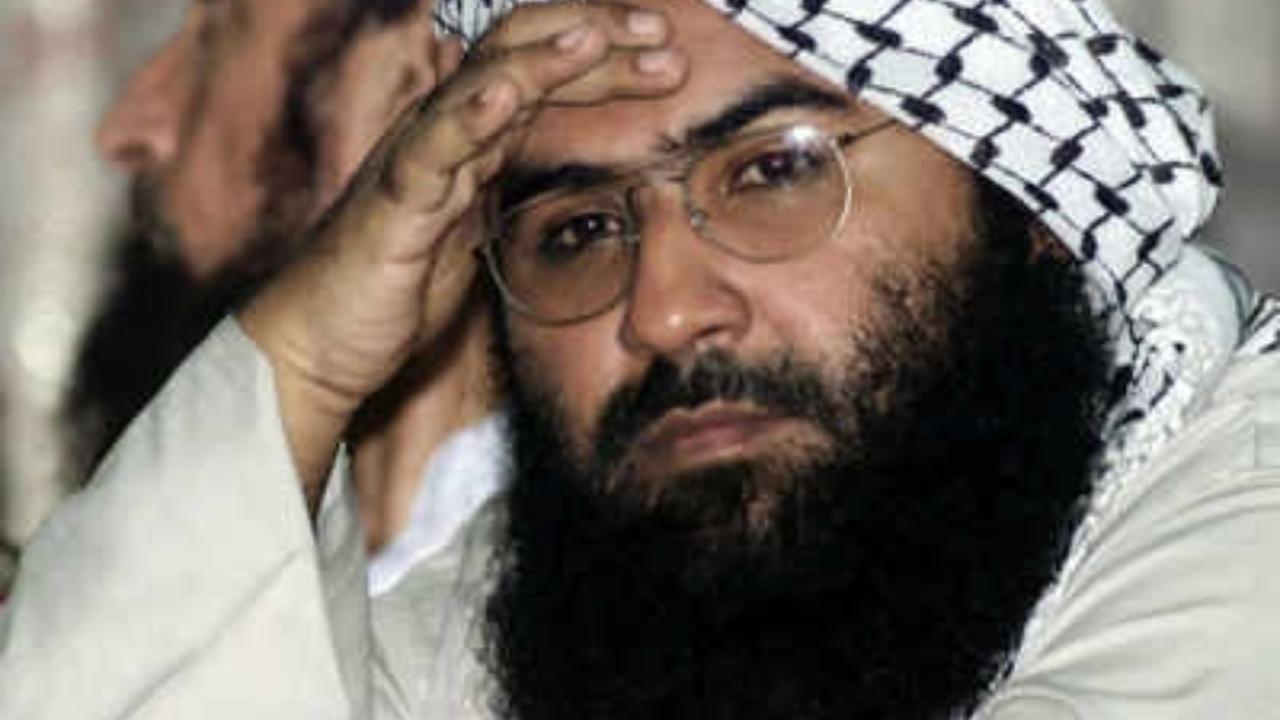
19 March,2026 02:33 PM IST | Paris | mid-day online correspondentThe chief of Jaish-e-Mohammed (JeM), Masood Azhar, has reportedly released a fiery message for his supporters ahead of Eid-ul-Fitr. However, his this year’s traditionally message through an audio clip revealed a markedly weaker and subdued tone, signalling possible internal turmoil, reported the IANS. According to the news agency, the intelligence agencies noted that Azhar appeared physically unwell, raising speculation about a leadership transition within the group. Sources indicate that Jaish-e-Mohammed is experiencing discord at the top level. Some within the organisation argue that replacing Azhar is necessary to restore operational efficiency, while others fear that removing him could demoralise cadres further, as per the IANS. Comparisons with the rival group Lashkar-e-Taiba show that LeT is more active recently, particularly in collaborating with groups such as Hamas, whereas JeM’s presence in major operations has diminished. Potential successors under consideration? At first, it was thought that the Jaish-e-Mohammed was putting up an act to make it look as though Azhar was sick or broken. This was being done to protect the JeM chief from being targeted by the Indian forces, it was believed. However, now the intelligence agencies have been able to confirm that all is not well with Azhar and the top command has been bickering over a leadership change. According to the IANS, the outfit reportedly faces a choice between appointing a family member to maintain unity or selecting an experienced operational commander to ensure continued effectiveness - - Abdul Jabbar – Oversees ground operations, logistics, and planning, considered the most operationally capable candidate. - Talha Al Saif – Azhar’s brother, primarily involved in digital funding, unlikely to take command. - Abdullah Azhar – Azhar’s son, experienced in financial operations via digital platforms. - Yusuf Azhar – Brother-in-law of Masood Azhar, previously in charge of weapons training; killed during Operation Sindoor. The status of another brother, Abdul Rauf Azhar, remains uncertain, with speculation about his survival adding to internal confusion. Strategic considerations Intelligence officials suggest that the JeM leadership, with guidance from the Inter-Services Intelligence, may soon implement a leadership change. Azhar’s health and the lack of a strong central commander have caused operational delays and growing restlessness among cadres, as per the IANS. Officials believe the muted Eid message could reflect both Azhar’s declining health and a carefully managed attempt to protect morale while the leadership transition is planned, the news agency reported. (with IANS inputs)
19 March,2026 02:15 PM IST | New Delhi | mid-day online correspondentJapanese Prime Minister Sanae Takaichi arrived in Washington on Thursday for talks with US President Donald Trump amid the ongoing West Asia war. The visit comes at a time of rising global tensions, especially due to the ongoing conflict in the Middle East and disruptions in energy supply routes. Focus on strengthening bilateral ties Despite recent differences, Takaichi aims to reinforce ties with the United States. She is expected to discuss security, economic cooperation, and trade during her three-day visit and aims to strengthen ties between Japan and the United States across multiple sectors. She highlighted that both countries share a strong partnership and that the visit is an opportunity to reaffirm this bond. Japan is expected to present a new round of investments under a previously agreed USD 550 billion trade deal. The move is aimed at boosting economic cooperation and ensuring smoother trade relations between the two nations. Concerns over Strait of Hormuz A key issue during the visit is the situation in the Strait of Hormuz, a crucial route for global oil transport. Takaichi warned that global peace and stability are under threat, especially due to risks to shipping and energy security in the region. She noted that if the current instability continues, it could negatively impact not only Japan and the US but also the global economy. Trump had earlier called on allies, including Japan, to help reopen the route by deploying military support though he later appeared to step back from this demand, stating that the United States does not necessarily need assistance from allies such as Japan, Australia, or NATO countries. However, Takaichi had already declined the request, citing Japan’s legal and constitutional limits. “In accordance with Japan’s laws, what we can do, we will do; what we cannot do, we will not do,” she said in parliament, making Japan’s position clear as per AFP reports. Energy concerns for Japan Japan is heavily dependent on oil imports, with nearly 95 percent of its crude oil coming from the Middle East. Around 70 percent of this oil passes through the Strait of Hormuz, making the situation particularly critical for the country. Due to rising tensions, Japanese companies are already facing higher energy costs and supply issues. The government has started releasing oil from strategic reserves and is planning subsidies to reduce the impact on consumers and businesses. Regional and global challenges Takaichi’s visit also comes amid rising tensions between Japan and China. Her earlier remarks about Taiwan triggered strong reactions from Beijing, leading to increased diplomatic and economic pressure. At the same time, the US intelligence community has warned that China may continue to apply pressure on Japan through economic and military means, increasing risks in the region. Looking ahead The meeting between Takaichi and Trump is expected to cover a wide range of issues, including security, trade, and regional stability. Takaichi’s meeting with Trump will be closely watched, as she tries to present Japan as a reliable ally while protecting national interests. With global tensions rising and economic concerns growing, the outcome of this visit could play an important role in shaping future US-Japan relations. (With ANI Inputs)
19 March,2026 01:34 PM IST | Mumbai | mid-day online correspondentA US congressional hearing on special operations forces offered a glimpse into the future of warfare one driven by artificial intelligence, cyber operations, and autonomous systems highlighting lessons closely watched in India as it reshapes its military to address emerging threats. Lawmakers and military leaders stated that the battlefield is rapidly evolving, with technology lowering the barrier for both state and non-state actors to deploy advanced capabilities such as drones, cyber tools, and AI-driven systems. “The bar to access advanced technology like AI, drones, and complex cyber tools has never been lower,” Congressman Jason Crow said, warning that such tools now allow smaller groups to “punch above their weight”. Assistant Secretary of Defence Derrick Anderson said the current security environment is marked by “simultaneity convergence and speed”, with adversaries increasingly aligned and “technologically enabled”. He described US Special Operations Forces (SOF) as uniquely positioned for this shift, providing “scalable, tailorable and asymmetric options across the full spectrum of competition and conflict”. Admiral Frank Bradley, commander of US Special Operations Command, said the military must adapt quickly to remain effective in this environment. “We must adapt faster than our adversaries,” he said, underlining the need to “accelerate capability development” and integrate emerging technologies. Bradley identified cyber and the digital domain as central to future conflict. “The cyber and the virtual domain are critical manoeuvre spaces that we must take advantage of,” he said, adding that the growing “ubiquitous information environment” presents both risks and opportunities. He also pointed to the rise of autonomous systems, describing “the emergence of abundant lethal autonomy” as a defining feature of modern warfare. However, he stressed that human control remains central, saying the law of war requires “a human that’s making that decision” on the use of lethal force. Despite this technological push, both lawmakers and military leaders warned that resources have not kept pace with demand. Chairman Ronny Jackson said Socom’s “purchasing power has been reduced by 14 per cent since 2019, despite increasing demand for support worldwide”. Bradley added that growing operational demands have forced the command to divert funds from future capabilities. “That pace of growing usage but diminishing resources was causing us to have to eat into our modernisation budget,” he said. Lawmakers said this shift requires rethinking how forces are structured and equipped, including greater emphasis on cyber capabilities, information warfare, and partnerships with allies. For India, the hearing underscores a broader shift in how major powers are preparing for future conflicts moving away from large-scale troop deployments towards technology-driven, agile and specialised forces capable of operating across multiple domains. US special operations forces have been central to American military campaigns since the early 2000s, particularly in counterterrorism missions in Afghanistan and Iraq. Now their role has expanded to include competition with China and Russia, cyber-enabled operations, and support for partner nations. The discussion in Washington reflects a growing consensus that future conflicts will be shaped less by conventional force size and more by speed, technology, and information dominance -- an evolution that is increasingly influencing defence planning across the world, including in India. This story has been sourced from a third party syndicated feed, agencies. Mid-day accepts no responsibility or liability for its dependability, trustworthiness, reliability and data of the text. Mid-day management/mid-day.com reserves the sole right to alter, delete or remove (without notice) the content in its absolute discretion for any reason whatsoever.
19 March,2026 10:39 AM IST | Washington DC (US) | IANSIran’s Islamic Revolution Guards Corps (IRGC) has taken responsibility for attacks on oil facilities that it said were linked to the United States in the region, reported the ANI. The IRGC stated that the strikes were part of the 63rd wave of its ongoing retaliatory operation, Operation True Promise 4, which was launched following US-Israel strikes on Iran. The IRGC’s Public Relations Office said in a statement that the 63rd wave of attacks was carried out with full force as part of its ongoing Operation True Promise 4. It added that this wave was launched in retaliation for the killing of Iran’s Intelligence Minister Esmaeil Khatib and others during what it described as an act of aggression, according to the ANI. The Corps added that the strikes were also a response to attempts by adversaries to punish Iran for nationwide rallies in support of the country’s Islamic establishment and in protest against external aggression. The IRGC further said, “the attack on Iran's energy infrastructure took the conflict to a new stage. The Islamic Republic did not intend to expand the war to oil facilities and did not wish to harm the economies of friendly and neighboring countries. However, with the enemy's aggression against energy infrastructure, Iran has effectively entered a new stage of the conflict, and the necessity to defend the country's energy infrastructure compelled a retaliatory strike against American-linked energy facilities,” the news agency reported. Targets hit in Israel The IRGC claimed to have hit as many as 80 military and military-support targets in several locations across Israel. These included Rishon LeZion, Ramla, and Lod in central Israel, Eilat in the south, Ramat Gan and Bnei Brak east of Tel Aviv and Bat Yam and Holon south of Tel Aviv. The military said all targets were struck surgically using multi-warhead missiles and attack drones. The IRGC also issued a warning to US and Israeli forces saying, “if this is repeated, subsequent attacks on your energy infrastructure and that of your allies will not cease until total destruction, and our response will be far more severe than tonight's strikes,” as per the ANI. US and Qatar respond Meanwhile, US President Donald Trump said that the United States and Qatar were not aware of the attacks. He clarified that Israel would not target Qatar’s South Pars LNG field unless Iran attacks Qatar first. Trump stated that Washington would not hesitate to authorize a strong response against Iran if Qatar’s energy facilities are targeted again. In a post on Truth Social, he said, “The United States knew nothing about this particular attack, and the country of Qatar was in no way involved, nor did it have any idea that it was going to happen. Unfortunately, Iran did not know this or the facts pertaining to the South Pars attack, and unjustifiably attacked a portion of Qatar's LNG Gas facility." They further warned that no further attacks would be carried out by Israel on the South Pars Field unless Iran decided to attack Qatar again. In that case, the United States, with or without Israel’s assistance, would take action to destroy the entirety of the South Pars Gas Field with a strength that Iran had never experienced before. "I do not want to authorise this level of violence because of its long-term implications for Iran, but if Qatar’s LNG is attacked again, I will not hesitate,” he concluded. Impact on oil prices The attacks on Iran’s gas fields and Qatar’s LNG facilities have pushed global oil prices higher, as markets worry about supply disruptions from the Middle East. Analysts warn that continued threats to production and shipping routes could keep energy costs elevated, raising concerns about regional stability and the global economy. (With ANI Inputs)
19 March,2026 10:25 AM IST | Mumbai | mid-day online correspondentUS White House Press Secretary Karoline Leavitt said that NATO allies stand to benefit far more than the United States from the reopening of the Strait of Hormuz, adding that President Donald Trump expects European partners to “do more.” Leavitt said the US has sufficient domestic oil resources due to Trump’s energy policies. “NATO allies benefit far more from the reopening of the Strait of Hormuz than the United States does. As you know, thanks to this president’s energy agenda, we are a net exporter of oil. We have enough resources here at home for our people, and that’s a good thing,” she said. “The Strait’s opening is obviously good for America because it will stabilise the global oil industry and bring prices down. But it greatly benefits Europe and our NATO allies, and the president wants to see them do more,” she added. Leavitt also argued that NATO has, at times, been “unfair” to the US. “One of the president’s guiding principles is fairness. He has long called out NATO for being what he believes is sometimes an unfair alliance for the American taxpayer and military. The billions of dollars we spend housing US troops in NATO countries benefit them by serving as a deterrent against adversaries,” she said. She added that Trump has pushed for fairer trade arrangements with allies. “If you look at our trade deals with many NATO allies, the president and his team have worked to rectify them, including new agreements with the UK and the EU. The president wants all alliances to be fair for the American people and taxpayers,” she said. Meanwhile, Leavitt said that more than 120 Iranian naval vessels had been destroyed in recent strikes, citing US Central Command (CENTCOM). “More than 120 naval vessels are at the bottom of the sea because of US armed forces. That’s a great thing for the American people and our allies in the region. Ensuring that Iran cannot possess a nuclear weapon has long been a priority,” she said, adding that “no options are off the table.” “We are ensuring that Iran can no longer threaten the United States, and the US military is doing a tremendous job in achieving these objectives,” she added. Separately, President Donald Trump criticised NATO allies for what he described as their reluctance to support the US in its ongoing conflict with Iran, calling their stance a “very foolish mistake.” Speaking during a meeting with Irish Prime Minister Micheál Martin at the White House, Trump said NATO members supported US actions in principle but failed to provide tangible assistance. “We don’t need too much help—in fact, we don’t need any help. But all of our NATO allies were very much in favour of what we did. They thought it was very important to take out the nuclear threat from Iran, and we’ve done that very strongly and powerfully,” Trump said. This story has been sourced from a third party syndicated feed, agencies. Mid-day accepts no responsibility or liability for its dependability, trustworthiness, reliability and data of the text. Mid-day management/mid-day.com reserves the sole right to alter, delete or remove (without notice) the content in its absolute discretion for any reason whatsoever
19 March,2026 09:19 AM IST | Washington | ANIThe Habshan gas facilities in Abu Dhabi have been shut down following an incident caused by debris from recently intercepted missiles, the Abu Dhabi Media Office said. Authorities are also responding to incidents at the Bab oilfield and gas facilities, the office added. "Operations at the gas facilities have been suspended, and no injuries have been reported," the media office confirmed. Meanwhile, Iranian armed forces, alongside regional resistance groups, are continuing retaliatory military operations targeting the United States and Israel, according to Press TV. On Wednesday, March 18, the Islamic Revolution Guards Corps (IRGC) and the Iranian Army conducted multiple strikes under the banner of Operation True Promise 4, which was launched in response to an "unprovoked act of aggression" by the US-Israeli coalition against Islamic Republic of Iran on February 28, Press TV reported. According to Press TV, since the operation began, Iranian forces have carried out 63 waves of missile and drone attacks using advanced weaponry, hitting Israeli military facilities in the occupied territories as well as US bases and assets across the West Asia region. Regional allies have also intensified their efforts. The Lebanese Hezbollah movement has focused its operations on Israeli military targets, citing both the assassination of the Leader of the Islamic Revolution, Ayatollah Seyyed Ali Khamenei, and repeated ceasefire violations by Israel over the past year, Press TV reported. Meanwhile, Iraqi resistance groups have conducted daily attacks, primarily targeting American military installations in Iraq and other Arab nations, as per Press TV. Earlier, key energy infrastructure in the Persian Gulf came under attack on Wednesday night (local time), with fires reported at a major facility in Qatar and aerial threats intercepted over Saudi Arabia, following warnings from Iran's Islamic Revolutionary Guard Corps (IRGC), CNN reported. Abu Dhabi authorities are responding to incidents at the Habshan gas facilities and at the Bab field caused by falling debris from the successful interception of missiles. The gas facilities have been shut down and no injuries have been reported.The public is urged to obtain… — مكتب أبوظبي الإعلامي (@ADMediaOffice) March 18, 2026 Qatar's Interior Ministry said Civil Defence teams were responding to a blaze at the Ras Laffan Industrial City, a critical natural gas processing hub and cornerstone of the Qatari economy, "following an Iranian targeting," according to a post on X on Wednesday. QatarEnergy confirmed that Ras Laffan had been struck by missiles, causing "significant damage". The company added that emergency teams were immediately deployed to control the fires and that all personnel were safe, with no casualties reported. This story has been sourced from a third party syndicated feed, agencies. Mid-day accepts no responsibility or liability for its dependability, trustworthiness, reliability and data of the text. Mid-day management/mid-day.com reserves the sole right to alter, delete or remove (without notice) the content in its absolute discretion for any reason whatsoever
19 March,2026 09:12 AM IST | Abu Dhabi | ANISaudi Arabia reiterated that its immediate priority in the ongoing Iran conflict is to halt attacks targeting Gulf countries, with Foreign Minister Prince Faisal bin Farhan Al Saud stressing that the Kingdom is focused on protecting regional stability, Al Jazeera reported. However, the country still reserves the right to take military action against Iran if provoked. Speaking to reporters after a meeting of foreign ministers in Riyadh, the Saudi foreign minister said, "What I care about now is that the attacks on my country and on my neighbouring countries, that are not involved in this conflict, end. That's all I'm interested in." He added that Riyadh would use all available means to stop the attacks. "We are going to use every lever we have, political, economic, diplomatic ... to get these attacks to stop," he said, as per Al Jazeera. At the same time, Saudi Arabia warned that it reserves the right to respond militarily if necessary. Prince Faisal said Iran "doesn't believe in talking to its neighbours", but instead "it tries to pressure its neighbours", adding that such tactics would fail, Al Jazeera reported. "The Kingdom is not going to succumb to pressure, and, on the contrary, this pressure will backfire... politically, will backfire, I believe, morally, and certainly, as we have stated clearly, we reserve the right to take military actions if necessary," he said. According to Al Jazeera, the foreign minister also said that trust in Iran has been severely damaged. "Iran's attacks on neighbouring countries were premeditated, and what we are witnessing now confirms this," he said, adding, "What little trust there was has been completely shattered." He expressed hope that Tehran would reassess its actions. "I would hope that they understand the message of the meeting today, recalculate quickly and stop attacking their neighbours." As per Al Jazeera, Prince Faisal further accused Iran of targeting civilian infrastructure, dismissing its justification that the strikes were linked to the presence of US military bases as "unconvincing". He warned that continued attacks would deepen Iran's isolation and stressed that threats to freedom of navigation require a collective response. He also noted that foreign ministers meeting in Riyadh agreed that Iran must immediately halt support for its proxy groups, Al Jazeera reported. According to Al Jazeera, Saud reiterated his earlier point that his country reserves the right to respond to Iranian attacks. Describing the attack as coercive, he said Iran's strike on Saudi energy facilities was "a blatant attempt at blackmail". As per Al Jazeera, Saudi Arabia earlier said it intercepted and destroyed four ballistic missiles launched towards Riyadh ahead of the high-level meeting. Referring to recent developments, the Saudi minister said Iran's actions included strikes on energy infrastructure. "For me, it was clear that the attack today was timed with this meeting, in order to attempt to intimidate those present, to send out the message that Iran will not stop," he said. "All I can say is we were not intimidated. We were not in any way convinced that Iran can be a legitimate partner when it behaves this way," he added. "What little trust there was has been completely shattered," he further said. Prince Faisal also confirmed that two refineries in Riyadh were attacked, warning that such actions reflect "misjudgements" by Iran that would not yield any gains, Al Jazeera reported. This story has been sourced from a third party syndicated feed, agencies. Mid-day accepts no responsibility or liability for its dependability, trustworthiness, reliability and data of the text. Mid-day management/mid-day.com reserves the sole right to alter, delete or remove (without notice) the content in its absolute discretion for any reason whatsoever
19 March,2026 09:04 AM IST | Riyadh | ANIPresident Donald Trump on Tuesday pledged imminent action against Cuba’s socialist government as his moves against the island bring the U.S.’ longtime opponent deeper into crisis. A day after Trump’s sanctions on Venezuela, including a stop to vital oil exports to Cuba, contributed to Cuba’s latest nationwide blackout, Trump and Secretary of State Marco Rubio both said that the administration sees the island nation as the next country where the U.S. can expand its influence. Colombia eyes Venezuela reboot Colombia said Tuesday it is seeking an exemption from US sanctions to invest in Venezuelan electricity projects and natural gas ventures that could include the reopening of a gas pipeline between the neighbouring South American countries. This story has been sourced from a third party syndicated feed, agencies. Mid-day accepts no responsibility or liability for its dependability, trustworthiness, reliability and data of the text. Mid-day management/mid-day.com reserves the sole right to alter, delete or remove (without notice) the content in its absolute discretion for any reason whatsoever
19 March,2026 08:26 AM IST | Havana | AgenciesA rapidly widening conflict gripped the Middle East as Iran launched strikes toward Israel and Gulf nations just hours after Israel killed two of Tehran’s top security figures. Explosions were reported across UAE and Qatar, interceptions in Saudi Arabia, and fresh Israeli airstrikes hit central Beirut, signalling a shift from contained flashpoints to a multi-country escalation touching civilian zones, oil routes, and military bases. Ground updates >> Journalist killed: Mohammed Sherri dies in Beirut strike>> Bahrain targeted: Missile + drone near US 5th Fleet base>> Sirens in Israel: North on alert Key numbers 3+ top Iranian figures killed2 Countries hit: UAE, Qatar, Saudi Arabia Beirut 10 dead27 injured (latest strikes) War toll 1300+ Iran14 Israel US 13 dead200 wounded This story has been sourced from a third party syndicated feed, agencies. Mid-day accepts no responsibility or liability for its dependability, trustworthiness, reliability and data of the text. Mid-day management/mid-day.com reserves the sole right to alter, delete or remove (without notice) the content in its absolute discretion for any reason whatsoever
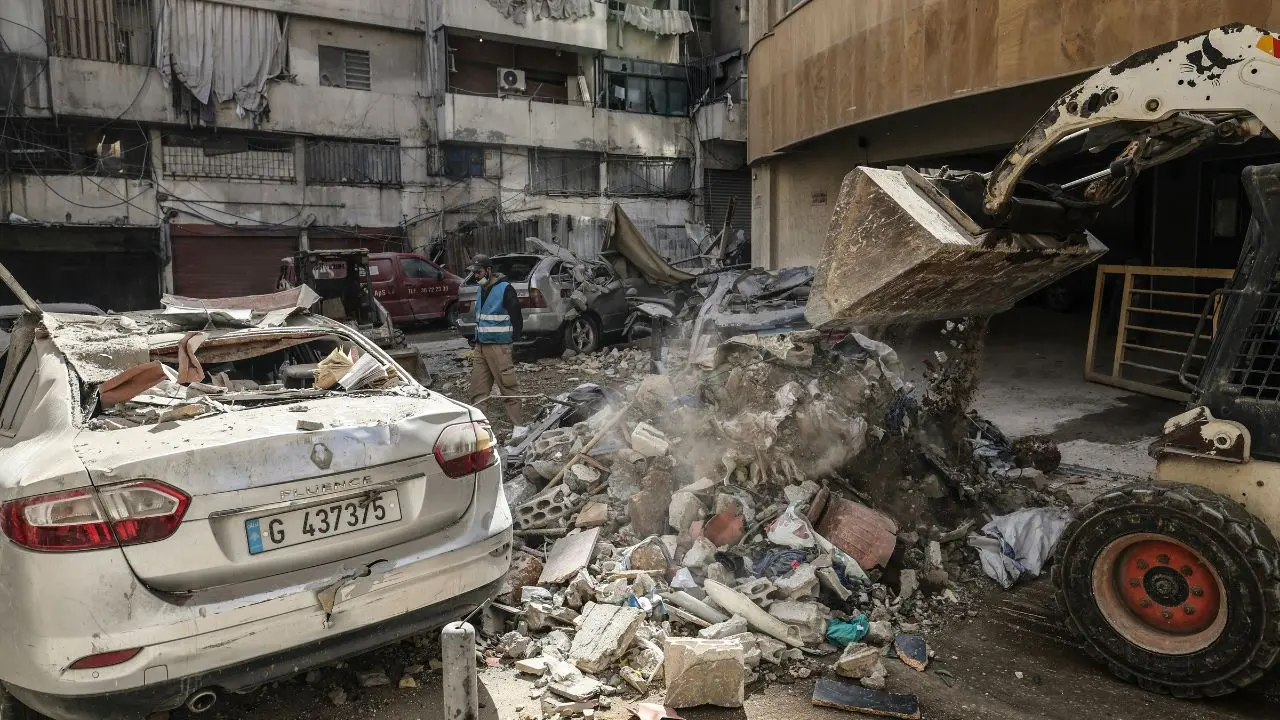
19 March,2026 08:21 AM IST | Dubai | AgenciesIsrael carried out repeated strikes on central Beirut on Wednesday, killing at least 12 people, including Mohammad Sherri, director of political programmes at Hezbollah’s Al Manar TV, AFP reported quoting Lebanese authorities. The Israeli military also announced plans to strike river crossings in southern Lebanon. Lebanon was drawn into the broader Middle East war on March 2, when Hezbollah fired rockets into Israel in retaliation for the killing of Iran’s supreme leader, Ayatollah Ali Khamenei. Israel responded with intensive airstrikes across Lebanon and launched ground operations in the south, targeting multiple regions, including central Beirut. AFP journalists in the capital reported strikes on three densely populated neighbourhoods on Wednesday. In Bashoura, a building collapsed entirely after being hit. According to an Israeli military map, the building had previously been targeted last week following an evacuation warning. “It was at 4:00 am, we were asleep,” said Sara Saleh, 29, a displaced resident from Beirut’s southern suburbs, long a Hezbollah stronghold. “We fled in our pyjamas,” she told AFP after leaving a school where her family had been sheltering. Lebanese authorities said Israeli strikes since March 2 have killed at least 912 people, with more than a million displaced. Strikes hit central Beirut Lebanon’s National News Agency (NNA) reported a strike on an apartment in the Zuqaq al-Blat neighbourhood, near the government headquarters and several embassies. Two other strikes targeted apartments in the central Basta district, also heavily populated and previously hit during the 2024 war with Hezbollah. A building collapses in Beirut following an Israeli strike after the Israeli military called on residents of the city's central neighbourhood to evacuate, warning of an imminent attack on the Lebanese capital targeting the Iran-backed militant group Hezbollah pic.twitter.com/vQpWZQs68m — AFP News Agency (@AFP) March 18, 2026 AFP correspondents saw emergency workers at Basta, where walls of apartments on two adjacent floors had been blasted off. In Zuqaq al-Blat, people were seen clearing dust and shattered glass from streets and cars after another strike later in the morning. Hezbollah’s Al Manar TV confirmed that Mohammad Sherri and his wife were killed in Zuqaq al-Blat. Unlike last week, no evacuation warning was issued before this raid. Lebanon’s Health Ministry reported a preliminary toll of 12 dead and 41 wounded in these areas. Escalation in the south Israeli strikes also hit Beirut’s southern suburbs, long a target since the start of the conflict, as well as towns and villages across southern Lebanon. In Sidon, a coastal city, a vehicle carrying displaced people was struck near the main seaside road, killing two, including a civil defence rescuer. The Israeli military said early Wednesday it had begun striking Hezbollah targets in southern Lebanon, including the Tyre area. At least four strikes were reported, including on a house. The military announced plans to target bridges and crossings over the Litani River to cut off large parts of southern Lebanon. “To prevent the transfer of reinforcements and weapons, the army intends to attack crossings on the Litani River starting this afternoon,” said Israeli army spokesman Avichay Adraee on X. Evacuation orders were issued for much of Tyre and surrounding areas, prompting residents to flee north or move to Tyre’s old quarters, exempt from the warning. Elsewhere, Lebanese authorities reported four deaths in Baalbek, including four Syrian nationals, with a two-storey building completely destroyed. In the southern town of Habboush, at least three people were killed. (With AFP inputs)
18 March,2026 07:04 PM IST | Beirut | mid-day online correspondentADVERTISEMENT








-1773906811643_d.png "Japan's PM arrives in Washington to hold talks with US President. Pic/ X (@JPN_PMO)")
-1773896343354_d.png "U.S. military's headquarters. Pic/US Department of War")
-1773895622354_d.png "US President Donald Trump. File Pic")