Amid tensions in West Asia, France and the United Kingdom are set to host a major international conference this week to address growing concerns over shipping disruptions in the Strait of Hormuz, one of the world’s most critical energy routes, reported ANI. The meeting aims to bring together more than 40 countries to work on a plan to restore safe and free navigation in the region despite US-Iran tensions on the control over route. Global efforts to restore navigation at the Strait French President Emmanuel Macron announced that the conference will be held in Paris on Friday via video link. The focus will be on creating a "multilateral and purely defensive mission" involving countries that are not part of the conflict. Je me suis entretenu hier avec le Président iranien Massoud Pezeshkian, ainsi qu'avec le Président américain Donald Trump.J’ai appelé à reprendre les négociations interrompues à Islamabad, à clarifier les malentendus, et éviter de nouvelles phases d'escalade.… — Emmanuel Macron (@EmmanuelMacron) April 14, 2026 He said the initiative is aimed at "restoring freedom of navigation in the strait when security conditions permit." Similarly, UK Prime Minister Keir Starmer said that over 40 nations have already been brought together to work on a coordinated plan. The ongoing closure of the Strait of Hormuz is deeply damaging. Getting global shipping moving is vital to ease cost of living pressures.The UK has convened more than 40 nations who share our aim to restore freedom of navigation. This week the UK and France will co-host a… — Keir Starmer (@Keir_Starmer) April 13, 2026 "The ongoing closure of the Strait of Hormuz is deeply damaging… Getting global shipping moving is vital," he said, highlighting the impact on global costs and supply chains. Talks follow stalled peace negotiations The move comes after recent peace talks between the United States and Iran in Islamabad failed to reach a breakthrough, despite long negotiations. Macron said he has spoken with both Donald Trump and Iranian President Masoud Pezeshkian, urging all sides to return to dialogue and avoid further escalation. He stressed the need to respect the ceasefire, including in Lebanon and called for the Strait to be reopened. "It is equally important that the Strait of Hormuz be reopened unconditionally, without controls or tolls, as soon as possible. Under these conditions, negotiations should be able to resume quickly, with the support of the main stakeholders", he added, reported the news agency. Strait of Hormuz : The cynosure of tensions The Strait of Hormuz has become a major flashpoint since US-Israeli strikes against Iran began earlier this year. The route is a key global energy corridor, with nearly one-fifth of the world’s oil passing through it before the conflict. Disruptions in the region have already pushed up global oil prices and raised concerns about supply chains. The proposed France-UK initiative now seeks to ease tensions and ensure the safe movement of international shipping once conditions improve. (With ANI Inputs)
14 April,2026 08:09 PM IST | Mumbai | mid-day online correspondentExternal Affairs Minister S Jaishankar on Tuesday discussed the evolving security situation in West Asia during a conversation with Australian Foreign Minister Penny Wong. In a post on X, he said that the two leaders exchanged views on the conflict in West Asia. "Appreciated the exchange of views today with @SenatorWong of Australia on the West Asia conflict." Appreciated the exchange of views today with @SenatorWong of Australia on the West Asia conflict. — Dr. S. Jaishankar (@DrSJaishankar) April 14, 2026 Earlier today, EAM also spoke to Israeli Foreign Minister Gideon Saar and discussed several aspects of the situation in West Asia with him. Had a telecon this afternoon with Israel FM @gidonsaar. Our discussion covered different aspects of the West Asia situation. — Dr. S. Jaishankar (@DrSJaishankar) April 14, 2026 Sa'ar said that Iran's harm to freedom of navigation through economic terrorism in the Strait of Hormuz requires action that will ensure the freedom of navigation for all countries, including India. In a post on X, Sa'ar said, "A good conversation, as always, with my friend, India's Minister of External Affairs S Jaishankar. We discussed Iran, the Strait of Hormuz, and Lebanon. I said that the firm American stance in the negotiations on conditions that would prevent Iran from obtaining nuclear weapons (no enrichment in Iran, removal of enriched material from Iran) is critical for the entire international community," he said. "I also said that Iran's harm to freedom of navigation and the global economy through economic terrorism in the Strait of Hormuz requires action that will ensure the freedom of navigation for all countries, including India and our friends in the Gulf," he added. The call comes after Jaishankar concluded his official visit to the UAE. Speaking on the primary focus of his high-level discussions, the External Affairs Minister told ANI, "..I met with Sheikh Mohammed, the President of the UAE. I brought with me a message from Prime Minister Narendra Modi, and our conversation focused on our strategic relationship and its various initiatives, such as energy, economic trade, and the energy and trade relationship. The UAE is a major partner for us, so we discussed that." This story has been sourced from a third party syndicated feed, agencies. Mid-day accepts no responsibility or liability for its dependability, trustworthiness, reliability and data of the text. Mid-day management/mid-day.com reserves the sole right to alter, delete or remove (without notice) the content in its absolute discretion for any reason whatsoever.
14 April,2026 05:58 PM IST | New Delhi | ANIChina has unveiled a four-point proposal aimed at promoting long-term peace and stability in the Middle East, with Xi Jinping emphasising principles such as sovereignty, peaceful coexistence, and balanced development. The proposal was detailed by Chinese Foreign Ministry spokesperson Mao Ning on Tuesday, who said the framework reflects China’s approach to addressing ongoing regional tensions through dialogue, cooperation, and adherence to international norms. President Xi Jinping made four propositions on safeguarding and promoting peace and stability in the Middle East.1️⃣ Stay committed to the principle of peaceful co-existence. The Gulf states in the Middle East are close neighbors that cannot move away. It’s important to support… pic.twitter.com/dBfGZCV9TF — Mao Ning 毛宁 (@SpoxCHN_MaoNing) April 14, 2026 Focus on peaceful coexistence and regional cooperation According to Mao, the first pillar of the proposal stresses the importance of peaceful coexistence among nations in the Middle East, particularly Gulf countries that share geographical proximity and intertwined interests. She noted that regional nations should work towards improving mutual ties and building a comprehensive and cooperative security architecture. Strengthening trust and collaboration, she added, is essential to ensuring long-term peace and stability in the Gulf region. Emphasis on sovereignty and territorial integrity The second point of the proposal highlights the need to respect national sovereignty and territorial integrity. China has underlined that sovereignty is fundamental for all nations, particularly developing countries, as it ensures their survival and growth. The proposal calls on all parties to safeguard the security of states, along with the safety of their people, infrastructure, and institutions. It reiterates that violations of sovereignty should not be tolerated under any circumstances. Upholding international law and UN principles China’s third point focuses on adherence to international law and the global order based on the framework of the United Nations. Mao said that all countries should abide by the purposes and principles outlined in the UN Charter. The proposal urges nations to support a rules-based international system, reinforcing global governance mechanisms and promoting stability through established legal frameworks. Balancing development with security The fourth component of the proposal stresses the interdependence between development and security. According to China, sustainable peace can only be achieved when economic growth and security considerations are addressed simultaneously. Mao said that countries in the region should work together to create a stable environment conducive to development. China has also expressed its willingness to share opportunities arising from its modernization efforts and collaborate with regional partners to enhance both development and security outcomes. Proposal discussed during high-level meeting The four-point initiative was put forward by Xi during a meeting in Beijing with Sheikh Khaled bin Mohamed bin Zayed Al Nahyan, Crown Prince of Abu Dhabi in the United Arab Emirates. The discussion comes amid ongoing geopolitical challenges in the Middle East, with China positioning itself as a proponent of diplomatic engagement and multilateral cooperation to resolve conflicts and foster regional stability.
14 April,2026 03:43 PM IST | Beijing | mid-day online correspondentWith the US military starting its blockade of Iran's ports, around two million barrels of Iranian oil per day is expected to be shut out from the world's markets, tightening global supply and leading to a further rise in prices of petroleum products, according to reports. A complete blockade of the Strait of Hormuz may also impact LPG supplies for India, as over the past month the country managed to have at least eight LPG tankers safely crossed through the strait,” wrote Bineet Banka, an analyst tracking the sector at Nomura in a recent note. US President Donald Trump has also announced the US will not allow any ships to pay a toll to Iran for passing through the Strait of Hormuz. While India has not paid any toll for its LPG ships that have just sailed through the Strait, it remains to be seen how the situation unfolds. "As the conflict lingers on, the effectiveness of balancing lost supplies via Strategic Petroleum Reserves may gradually become ineffective, and that may be reflected in higher oil prices," Nomura said in its note. Meanwhile, the US and Iran are reported to be considering another round of talks after negotiations in Pakistan's Islamabad, led by US Vice President JD Vance, reached a stalemate over the weekend. Crude oil prices, as a result, hit USD 107 a barrel (bbl) on Monday, before cooling off to below USD 100/bbl on Tuesday on renewed hopes of talks between the two nations. In the last one week, Brent crude oil prices have surged 6.5 per cent to nearly USD 98/bbl now. As the latest peace talks between the US and Iran have failed to yield any result, Nomura sees an increased likelihood of higher war risk premium on oil prices. With President Trump now threatening to completely block the SoH for all inbound and outbound ships, Nomura expects the oil supply situation to deteriorate further. The rise in oil prices in the last few weeks, Nomura said, has more than compensated for the fall in export volumes of Saudi Arabia, with its oil revenues rising 4 per cent year-on-year in March. Saudi Arabia, reports suggest, has achieved full oil flow capacity of 7mbpd on its East-West pipeline that bypasses the Strait of Hormuz and opens into the Red Sea. "Assuming that 2mbpd is used by its refineries in the western coast, we might still expect higher export volumes from Saudi Arabia going forward (5mbpd) compared to what it did in March 2026 (4.4mbpd). The UAE also did relatively well as compared with other gulf countries, with a minor 3 per cent y-o-y drop in oil revenues," Nomura said. Iran, according to Banka's estimates, has been the biggest beneficiary since the war broke out in terms oil revenues that rose 36 per cent y-o-y in March 2026 to USD 5.7 billion. This story has been sourced from a third party syndicated feed, agencies. Mid-day accepts no responsibility or liability for its dependability, trustworthiness, reliability and data of the text. Mid-day management/mid-day.com reserves the sole right to alter, delete or remove (without notice) the content in its absolute discretion for any reason whatsoever.
14 April,2026 03:26 PM IST | New Delhi | IANSThe foreign ministers of Iran and Oman held talks on Tuesday about ongoing ceasefire efforts and wider regional negotiations, according to Iranian media reports, reported the ANI. Abbas Araghchi spoke with Badr bin Hamad Albusaidi over the phone to review recent developments, including discussions involving the United States. During the call, Araghchi stressed Iran’s commitment to maintaining peace and stability in the region. He said this should be achieved through cooperation among regional countries and without what he described as disruptive external involvement, the news agency reported. Albusaidi expressed hope that stability would return soon, highlighting Oman’s continued support for diplomatic solutions. Oman’s role as mediator According to the ANI, Oman has played an important role in facilitating dialogue between Iran and the United States in recent months. Previous rounds of negotiations had reportedly made progress, with a possible agreement said to be close before tensions escalated again. The latest discussions come as both sides continue to manage fragile ceasefire arrangements and attempt to revive talks. Earlier, Araghchi also spoke with Sergey Lavrov, raising concerns about recent US actions in key waterways such as the Persian Gulf and the Strait of Hormuz. He warned that what he called “provocative” moves could have serious consequences for both regional and global security. Russia calls for continued dialogue Russia has welcomed the recent ceasefire and supported ongoing diplomatic efforts. Lavrov said Moscow is ready to assist in resolving the crisis and preventing further military confrontation, the news agency reported. He also suggested that the ceasefire arrangements could have wider regional implications, including for tensions involving Lebanon. US blockade on Iranian ports will only exacerbate tensions: China Meanwhile, China on Tuesday criticised the United States over its recent military actions, warning that they could further destabilise an already fragile ceasefire in the West Asian region, as reported by Al Jazeera. Chinese Foreign Ministry spokesperson Guo Jiakun said the US move to blockade vessels at the Strait of Hormuz would " exacerbate tensions" rather than ease them. According to Al Jazeera, he said, the US "increased military operations and took a targeted blockade action, which will only exacerbate tensions and undermine the already fragile ceasefire agreement." (with ANI inputs)
14 April,2026 03:15 PM IST | Tehran | mid-day online correspondentAn ex-student opened fire at his former high school Tuesday in Turkey, where school shootings are rare, wounding 16 people including students before killing himself, officials said. Special security forces were deployed to the school in southeastern Turkey's Sanliurfa province, where students were evacuated, the local governor, Hasan Sildak, told reporters. Television footage showed ambulances standing by outside the school in the Siverek district as students fled the building in panic. Sildak identified the attacker as a former student at the school, born in 2007. "He took his own life when cornered by police," the governor said. "We have evacuated the school and will carry out a thorough investigation into this tragic incident," he added. Local media reported that most of the wounded were students. This story has been sourced from a third party syndicated feed, agencies. Mid-day accepts no responsibility or liability for its dependability, trustworthiness, reliability and data of the text. Mid-day management/mid-day.com reserves the sole right to alter, delete or remove (without notice) the content in its absolute discretion for any reason whatsoever.
14 April,2026 02:50 PM IST | Istanbul | AFPMinister of Foreign Affairs of Israel, Gideon Sa'ar on Tuesday discussed Iran, the Strait of Hormuz, and Lebanon with External Affairs Minister S Jaishankar. Sa'ar said that Iran's harm to freedom of navigation through economic terrorism in the Strait of Hormuz requires action that will ensure the freedom of navigation for all countries, including India. In a post on X, Sa'ar said, "A good conversation, as always, with my friend, India's Minister of External Affairs S Jaishankar. We discussed Iran, the Strait of Hormuz, and Lebanon. I said that the firm American stance in the negotiations on conditions that would prevent Iran from obtaining nuclear weapons (no enrichment in Iran, removal of enriched material from Iran) is critical for the entire international community," he said. A good conversation, as always, with my friend, India’s Minister of External Affairs @DrSJaishankar. We discussed Iran, the Strait of Hormuz, and Lebanon.I said that the firm American stance in the negotiations on conditions that would prevent Iran from obtaining nuclear… pic.twitter.com/miTi4YlXYE — Gideon Sa'ar | גדעון סער (@gidonsaar) April 14, 2026 "I also said that Iran's harm to freedom of navigation and the global economy through economic terrorism in the Strait of Hormuz requires action that will ensure the freedom of navigation for all countries, including India and our friends in the Gulf," he added. The call comes after Jaishankar concluded his official visit to the UAE. Speaking on the primary focus of his high-level discussions, the External Affairs Minister told ANI, "I arrived in the UAE yesterday. So this morning, I met with Sheikh Mohammed, the President of the UAE. I brought with me a message from Prime Minister Narendra Modi, and our conversation focused on our strategic relationship and its various initiatives, such as energy, economic trade, and the energy and trade relationship. The UAE is a major partner for us, so we discussed that." India on Friday expressed deep concern over the rising number of civilian casualties in Lebanon amid continued strikes by Israel despite the two-week ceasefire imposed to halt the month-long conflict in West Asia, reiterating that the protection of civilians remains its foremost priority. Addressing an Inter-Ministerial Briefing on recent developments in West Asia in New Delhi, Ministry of External Affairs (MEA) Spokesperson Randhir Jaiswal said that the current situation is "very disturbing", particularly given India's longstanding commitment to peace and stability in the region. He further said that there are about 1000 Indian nationals living in Lebanon. "We are deeply concerned by reports of a large number of civilian casualties that have been reported in Lebanon. As a troop-contributing country to United Nations Interim Force in Lebanon (UNIFIL) which is invested in Lebanon's peace and security--the trajectory of events is very disturbing," Jaiswal said. On March 24, highlighting the strategic depth of the ongoing bilateral dialogue, Ambassador of Israel to India, Reuven Azar, has underscored that both nations are maintaining high-level communication regarding the current regional operations. Azar noted that Israel remains committed to ensuring India is fully briefed on the security dynamics shifting across West Asia. This story has been sourced from a third party syndicated feed, agencies. Mid-day accepts no responsibility or liability for its dependability, trustworthiness, reliability and data of the text. Mid-day management/mid-day.com reserves the sole right to alter, delete or remove (without notice) the content in its absolute discretion for any reason whatsoever.
14 April,2026 02:18 PM IST | Tel Aviv (Israel) | ANIUS and Iran could be headed toward a second round of talks, according to AP sources. The sides are weighing new in-person negotiations in a bid to reach a deal aimed at ending their six-week war before the ceasefire expires next week, two US officials and person familiar with the development said. The three said discussions were still underway about a new round of talks, while a diplomat from one of the mediating countries went further to say Tehran and Washington have agreed to it. All four spoke on condition of anonymity to discuss sensitive diplomatic negotiations. It's unclear if the same level of delegation would be expected to attend, the diplomat and US officials said. The diplomat and US officials said Islamabad, Pakistan, was once again being discussed as the host location. The US officials also said Geneva was a possibility, and that while the venue and timing had not been decided, the talks could happen Thursday. The White House didn't immediately respond to a message seeking comment. Trump told reporters earlier Monday that "we've been called by the other side" and "they want to work a deal." This story has been sourced from a third party syndicated feed, agencies. Mid-day accepts no responsibility or liability for its dependability, trustworthiness, reliability and data of the text. Mid-day management/mid-day.com reserves the sole right to alter, delete or remove (without notice) the content in its absolute discretion for any reason whatsoever.
14 April,2026 01:59 PM IST | Washington | APA Malawi-flagged, Chinese-owned vessel has reportedly, on Tuesday (local time), passed through the Strait of Hormuz despite an ongoing US blockade targeting Iranian-linked shipping, according to MarineTraffic data cited by CNN. The vessel, identified as Rich Starry, is owned by Full Star Shipping Ltd, linked to Shanghai Xuanrun Shipping Co Ltd, and has been under US sanctions since 2023 over alleged ties to Iran. The ship previously sailed under the Hong Kong flag until April 2023, as reported by CNN, citing MarineTraffic data. According to MarineTraffic, the tanker initially attempted to transit the Strait around noon UTC on Monday but briefly turned back near Iran's Qeshm Island before making a second attempt in the evening. By early Tuesday UTC, it appeared to have successfully passed through the waterway. CNN reported that it was unable to independently confirm the vessel's departure port. Data from Kpler, a maritime analytics firm, indicated that the tanker was carrying methanol and was reportedly bound for China. Meanwhile, another tanker on Monday (local time) also passed through the strategic chokepoint after the blockade took effect, according to Kpler data. The vessel, Elpis, registered in Comoros, was partially laden and had been sanctioned by the United States in 2025 for its involvement in the transport of Iranian petroleum as part of what Washington describes as Iran's "shadow fleet." Earlier, CNN reported that the United States Navy is maintaining a presence of at least 15 ships in the Middle East region, including the aircraft carrier USS Abraham Lincoln and 11 destroyers, which could potentially take part in a maritime blockade of Iran's ports, according to a US official, following orders from President Donald Trump. However, it remains unclear which specific vessels are positioned or designated for participation in the blockade, as earlier assessments indicate that the naval assets are widely dispersed across the US Central Command's area of operations. The deployed fleet includes the aircraft carrier USS Abraham Lincoln along with 11 destroyers, including the USS Bainbridge, USS Thomas Hudner, USS Frank E. Petersen Jr., USS Delbert D. Black, USS John Finn, USS Michael Murphy, USS Mitscher, USS Pinckney, USS Rafael Peralta, USS Spruance and USS Milius. In addition, the Tripoli Amphibious Ready Group, comprising USS Tripoli, USS New Orleans, and USS Rushmore, is also deployed in the region. The naval formation is accompanied by multiple support and escort vessels; however, it would need to transit either through the Suez Canal or exit the Mediterranean Sea and sail around Africa before reaching a position suitable to support any blockade operations. The US president imposed a naval blockade on Iranian ports, following marathon talks in Pakistan over the weekend that failed to yield any agreement. This story has been sourced from a third party syndicated feed, agencies. Mid-day accepts no responsibility or liability for its dependability, trustworthiness, reliability and data of the text. Mid-day management/mid-day.com reserves the sole right to alter, delete or remove (without notice) the content in its absolute discretion for any reason whatsoever.
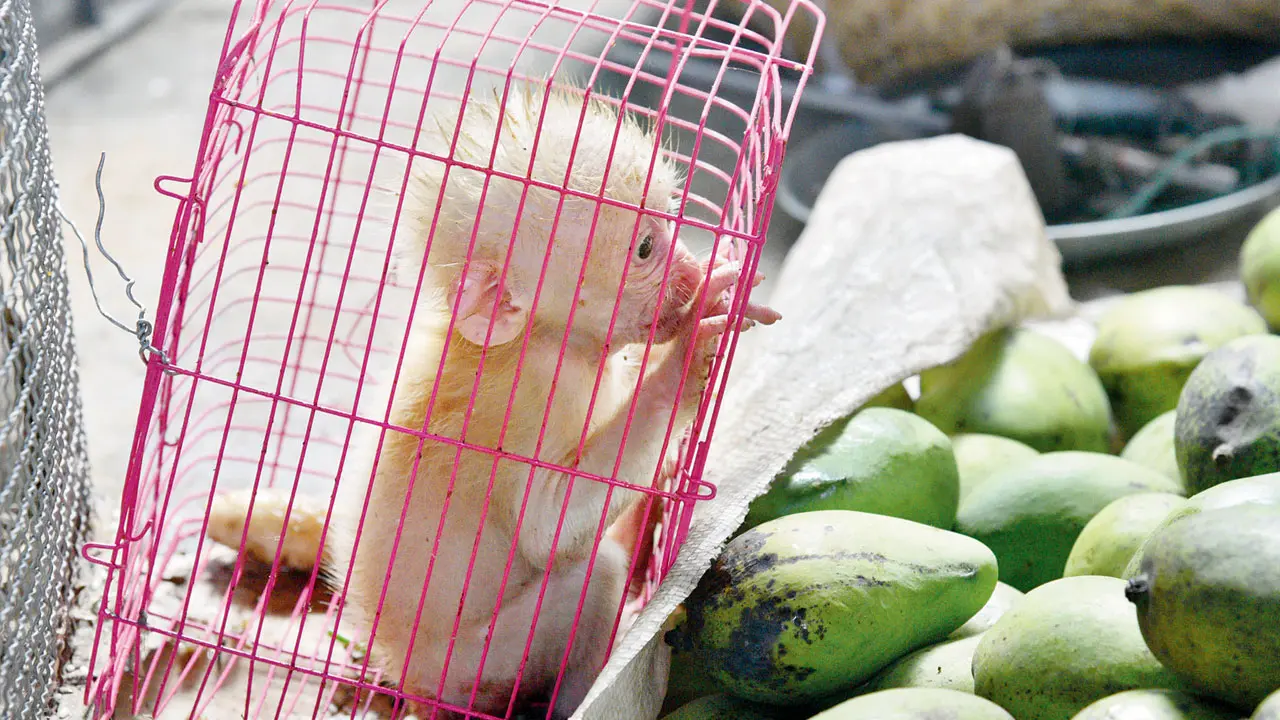
14 April,2026 01:54 PM IST | Washington | ANIWildlife trade increases the chances of pathogen transmission between animals and humans, according to a new study that combined 40 years of legal and illegal wildlife import-export data — practices concern a quarter of all mammal species. Researchers investigated host-pathogen relationships and found that wild mammals are 1.5 times more likely to share infectious agents with humans, while illegal dealings further increase these adverse interactions. This story has been sourced from a third party syndicated feed, agencies. Mid-day accepts no responsibility or liability for its dependability, trustworthiness, reliability and data of the text. Mid-day management/mid-day.com reserves the sole right to alter, delete or remove (without notice) the content in its absolute discretion for any reason whatsoever
14 April,2026 09:02 AM IST | Baltimore | AgenciesHungary’s long-serving Prime Minister Viktor Orban has conceded defeat in the parliamentary elections after results indicated a decisive victory for Peter Magyar and his Tisza party, marking a significant political shift in the country after 16 years of continuous rule by Fidesz. Magyar’s centre-right Tisza party secured 138 seats in the 199-member parliament. This story has been sourced from a third party syndicated feed, agencies. Mid-day accepts no responsibility or liability for its dependability, trustworthiness, reliability and data of the text. Mid-day management/mid-day.com reserves the sole right to alter, delete or remove (without notice) the content in its absolute discretion for any reason whatsoever
14 April,2026 08:56 AM IST | Budapest | AgenciesADVERTISEMENT








-1776169532960_d.png "EAM S Jaishankar. File Pic")

-1776160387281_d.png "US-Iran standoff triggers oil market volatility. Representational Image")


-1776155692983_d.png "External Affairs Minister S Jaishankar. File Pic")