Russian Foreign Minister Sergei Lavrov said on Monday that the fate of the nuclear non-proliferation regime is a source of grave concern amid escalating geopolitical tensions in the Middle East. In a message to participants of the Moscow Nonproliferation Conference, Lavrov said the recent military actions by Israel and the United States (US) against Iran, including strikes targetting facilities under the safeguards of the International Atomic Energy Agency, had dealt a serious blow to the authority of the Treaty on the Non-Proliferation of Nuclear Weapons. Such actions have also hurt the credibility of diplomacy as a means of resolving disputes, Lavrov said, adding that some countries may increasingly view nuclear weapons as a guarantee of security. He stressed the importance of preserving the pact as a key element of global strategic stability and urged all signatories, particularly nuclear-weapon states, to fulfill their obligations. The foreign minister also noted that the risks of the militarization of outer space are increasing as a result of "destructive actions by the United States and its allies", Xinhua news agency reported. The implementation of the US "Golden Dome" missile defence system, which envisions deploying space-based interceptor strike systems by 2028, poses a significant threat to strategic stability, he said. Last week, a US news website reported that US President Donald Trump has rejected a proposal by Russian President Vladimir Putin to move Iran's enriched uranium to Russia as part of a deal to end the US-Israeli conflict with Iran. Trump turned Putin down in a phone call earlier this week, sources told Axios, an American news website based in Arlington, Virginia. Putin raised several ideas, including the uranium proposal, for ending the war during the phone conversation with Trump on Monday (March 9), said the report. "This is not the first time it was offered. It hasn't been accepted. The US position is we need to see the uranium secured," a US official was quoted as saying. It's not clear whether Iran would accept the proposal now. In the last round of talks before the war, Iran rejected the transfer idea and proposed diluting the uranium inside its own facilities under the supervision of the International Atomic Energy Agency, according to the report. Some news reports had also said that the Trump administration is considering sending special operations forces into Iran to secure or seize the country's highly enriched uranium. This story has been sourced from a third party syndicated feed, agencies. Mid-day accepts no responsibility or liability for its dependability, trustworthiness, reliability and data of the text. Mid-day management/mid-day.com reserves the sole right to alter, delete or remove (without notice) the content in its absolute discretion for any reason whatsoever.
31 March,2026 10:13 PM IST | Moscow | IANSUS President Donald Trump on Tuesday (local time) came down heavily on France for denying the use of its airspace to American planes headed to Israel, loaded with military supplies. In a post on Truth Social, he decried France as "unhelpful" with Iran and said that Washington would remember this. "The Country of France wouldn't let planes headed to Israel, loaded up with military supplies, fly over French territory. France has been VERY UNHELPFUL with respect to the "Butcher of Iran," who has been successfully eliminated! The U.S.A. will REMEMBER!!! President DJT", Trump wrote Truth Social. Meanwhile, Jerusalem Post reported today that Israel has halted its defence sales to France, citing 'hostile attitude'. According to the Jerusalem Post, sources said that the decision was a result of France taking a hostile attitude toward Israel in the course of the last two years. It further reported that Defence Minister Israel Katz formally ordered the halt, but a decision of such significance could only take place if it was a priority of PM Netanyahu. As per the Jersualem Post, one Israeli official added that French President Emmanuel Macron's decision not to allow US aircraft to pass through French airspace en route to Israel was "the straw that broke the camel's back," which led to the decision to halt defence procurement. The latest development after reports emerged of Italy denying the United States the use of Sigonella base. Italian Defence Minister Guido Crosetto on Monday (local time) denied the United States the use of Sigonella base. The denial came after Italy came to know of the flight plan of some US air assets, which involved landing at Sigonella before heading to West Asia, according to Italian newspaper La Repubblica. However, according to the Italian newspaper, no one had requested any authorisation or consulted Italian military leaders regarding the use. The newspaper reported that the plan had in fact been communicated while the planes were already in flight. According to La Repubblica, the checks revealed that these were not normal or logistical flights and therefore were not covered by the treaty with Italy. Meanwhile, in early March, Italian Prime Minister Giorgia Meloni said in an interview with RTL radio that, "We're not at war; we don't want to go to war," as quoted by Politico. Earlier in March, Trump had reiterated his stance on cutting trade with Spain over the NATO ally's refusal to allow the use of its military bases for operations linked to the war with Iran. "We may cut off trade with Spain," the US President said when asked about bilateral ties. Since the conflict in West Asia, Spanish Prime Minister Pedro Sanchez has reiterated his opposition to the US-Israel joint military strikes killing 86-year-old Iran's Supreme Leader, Ayatollah Ali Khamenei, on February 28. Sanchez has emphasised that his government stands firmly against war. He said, "This government is consistent in its principles and values: No to war." This story has been sourced from a third party syndicated feed, agencies. Mid-day accepts no responsibility or liability for its dependability, trustworthiness, reliability and data of the text. Mid-day management/mid-day.com reserves the sole right to alter, delete or remove (without notice) the content in its absolute discretion for any reason whatsoever.
31 March,2026 07:25 PM IST | Washington DC | ANIPakistan’s recent signs of economic stability are now under fresh pressure as rising tensions in the Middle East threaten to disrupt its fragile recovery, a report has said. The escalation involving the United States, Israel, and Iran has raised concerns over the country’s heavy dependence on the Gulf region for energy, remittances and financial support, according to The News International report, reported IANS. In recent months, Pakistan had shown improvement in key economic indicators such as easing inflation, rising foreign exchange reserves, a stable currency and even a current account surplus after nearly a decade. However, the ongoing crisis in the Persian Gulf has cast doubt on how long this progress can last, the report said. Gulf crisis threatens Pakistan's oil supply through Strait of Hormuz As per IANS, a major concern is Pakistan’s dependence on oil imports through the Strait of Hormuz. Around 81 per cent of the country’s oil imports pass through this route. Any disruption in this narrow shipping lane can immediately affect supplies and increase costs. The impact of rising oil prices is already being felt. Brent crude prices, which were around $70 per barrel before the conflict, surged to over $100 within days. For a country like Pakistan, which imports most of its energy needs, such a spike directly increases the import bill and puts pressure on foreign exchange reserves. Apart from energy, remittances form another key pillar of Pakistan’s economy. In FY2025, the country received about $38.3 billion in remittances, with more than half coming from Gulf nations. Saudi Arabia and the United Arab Emirates together accounted for a large share of these inflows. Pakistani workers in Gulf fear layoffs as economic crisis deepens However, the current crisis could also affect these inflows. Economic slowdown in Gulf countries may impact sectors like construction and services, where a large number of Pakistani workers are employed. Many of these workers are in low or semi-skilled jobs, making them more vulnerable to layoffs during economic uncertainty, reported IANS. Reduced incomes and higher living costs could limit their ability to send money back home. Pakistan’s economic ties with Gulf countries go beyond trade and remittances. Nations like Saudi Arabia and the UAE have historically supported Pakistan during financial crises through deposits and deferred oil payment facilities. But regional instability may reduce the chances of such assistance in the near term. Experts warn that Pakistan’s economic structure remains highly dependent on external factors. While recent stability has been achieved, it is largely driven by short-term measures rather than deep structural reforms. This makes the economy vulnerable to global shocks such as rising oil prices and geopolitical tensions. Looking ahead, analysts suggest that Pakistan needs to diversify its energy sources and reduce reliance on imported fuel. Increasing the use of renewable energy and expanding alternative supply routes could help lower risks, as per IANS. At the same time, improving the skills of its workforce may make remittance flows more stable during global downturns. (Inputs from IANS)
31 March,2026 06:42 PM IST | Mumbai | mid-day online correspondentItalian Defence Minister Guido Crosetto on Monday (local time) denied the United States the use of Sigonella base. The denial came after Italy came to know of the flight plan of some US air assets, which involved landing at Sigonella before heading to West Asia, according to Italian newspaper La Repubblica. However, according to the Italian newspaper, no one had requested any authorisation or consulted Italian military leaders regarding the use. The newspaper reported that the plan had in fact been communicated while the planes were already in flight. According to La Repubblica, the checks revealed that these were not normal or logistical flights and therefore were not covered by the treaty with Italy. Meanwhile, in early March, Italian Prime Minister Giorgia Meloni said in an interview with RTL radio that, "We're not at war; we don't want to go to war," as quoted by Politico. According to Politico, Crosetto (Italian Defence Minister) himself conceded the "powerlessness" of America's European allies in a parliamentary debate. He admitted the attack on Iran had "certainly occurred outside the rules of international law" but added no government, European or otherwise, could have prevented the strikes. The potential use of US military bases in Italy also risks becoming politically explosive in a country where the public has historically been wary of being drawn into US-led conflicts, according to Politico. The Italian government, according to Politico, insisted that the use of bases such as Naval Air Station Sigonella in Sicily is limited to logistical and technical support covered by long-standing bilateral agreements. Using Italian soil to provide support for strikes would require the government's permission, which has not been requested, Italian Prime Minister Meloni said in her comments to RTL radio, according to Politico. Meanwhile, US President Donald Trump is considering ending the US military campaign in Iran, even if the Strait of Hormuz remains closed, reported The Wall Street Journal. He indicated to aides that he is prepared to wind down military operations against Iran within a four-to-six-week timeline, even if the Strait of Hormuz remains effectively closed. This decision would likely extend Tehran's control over the vital waterway, shifting the focus to diplomatic efforts to reopen it. Trump has expressed willingness to wind down hostilities, having achieved key objectives like weakening Iran's navy and missile capabilities. According to administration officials, the President believes the US can declare victory by achieving its "core" military goals without being bogged down in a protracted maritime clearance mission, reported The Wall Street Journal This story has been sourced from a third party syndicated feed, agencies. Mid-day accepts no responsibility or liability for its dependability, trustworthiness, reliability and data of the text. Mid-day management/mid-day.com reserves the sole right to alter, delete or remove (without notice) the content in its absolute discretion for any reason whatsoever.
31 March,2026 04:08 PM IST | Rome (Italy) | ANIUS strikes hit a city on Tuesday that is home to one of Iran's main nuclear sites, sending a massive fireball into the sky, and Tehran attacked a fully loaded Kuwaiti oil tanker in the Persian Gulf. The attacks were a testament to the intensity of the war more than a month after the US and Israel launched their first strikes. The conflict has left more than 3,000 dead and caused major disruptions to the world's supply of oil and natural gas. On Tuesday, the average price of gasoline in the US shot past USD 4 a gallon - just another sign of the war's effects far beyond the Middle East. US President Donald Trump, who has vacillated between insisting there is progress in diplomatic talks with Iran and threatening to widen the war, shared footage of the attack on Isfahan. The central city is home to one of three nuclear enrichment sites attacked by the US in a 12-day war in June, and analysts believe much of Iran's highly enriched uranium is likely stored there. The war is roiling oil markets Iran's stranglehold on the Strait of Hormuz, the waterway leading out of the Persian Gulf through which a fifth of the world's oil is transported during peacetime, has driven up global oil prices, as have Tehran's attacks on regional energy infrastructure. That has shaken stock markets around the world and pushed up the cost of many basic goods. Spot prices of Brent crude, the international standard, hovered around USD 106 a barrel on Tuesday, up more than 45 per cent since the war started Feb. 28.Trump warned this week that if a ceasefire is not reached "shortly," and if the strait is not reopened, the US would broaden its offensive, including by attacking the Kharg Island oil export hub and possibly desalination plants. Israel and the US launch a new wave of strikes on Iran Israel and the US launched a wave of strikes on Iran, hitting Tehran in the early morning.The video shared by Trump appeared to show a massive attack on Isfahan, and NASA fire-tracking satellites suggest explosions happened in a mountainous region on the city's southern edge. Iran has not confirmed the attack. A satellite image taken just before the June war suggests Tehran transferred a truckload of highly enriched uranium to a nuclear facility about 20 kilometres (12 miles) from Tuesday's strikes. Analysts believe the truck - which the image showed going into a tunnel loaded with 18 blue containers - likely carried most or all of Iran's stockpile of uranium enriched up to 60 per cent purity. That's a short, technical step to weapons-grade levels. Iran hits oil tanker in waters off Dubai An Iranian drone hit a Kuwaiti oil tanker in waters off the United Arab Emirates city of Dubai, sparking a blaze that was later put out, the Dubai Media Office said. Authorities said no oil spill resulted. Four people were also wounded when debris from an intercepted drone fell into a residential area, and loud explosions could be heard later from another attack on Dubai. Air raid sirens sounded in Bahrain, while Saudi Arabia said it intercepted three ballistic missiles launched toward its capital. Loud explosions were also heard in Israel not long after the military warned of an incoming missile barrage from Iran. Gulf allies of the United States that have been hit hard have urged Trump to continue the conflict until Iran's military capabilities are destroyed, according to US, Gulf and Israeli officials. In response to that growing anger, Iranian Foreign Minister Abbas Araghchi insisted Tuesday that Tehran is only targeting US forces in the region."Our operations are aimed at enemy aggressors who have no respect for Arabs or Iranians, nor can they provide any security," Araghchi wrote on X. Peacekeepers killed in Lebanon as Israel battles Hezbollah The UN Security Council planned to convene an emergency session on Tuesday after officials said three peacekeepers in southern Lebanon had been killed in less than 24 hours during Israel's invasion there. The UN peacekeeping mission in the country, where Israel is battling the Iran-backed Hezbollah, did not say who was responsible for the deaths.In Iran, authorities say more than 1,900 people have been killed, while 19 have been reported dead in Israel. Two dozen people have died in the Gulf states and the occupied West Bank. In Lebanon, officials said more than 1,200 people have been killed, and more than 1 million displaced. Ten Israeli soldiers have died in Lebanon, including the four announced Tuesday, while 13 US service members have been killed.
31 March,2026 04:00 PM IST | Dubai | AFPEurope's inflation rate rose to 2.5 per cent in March, according to official figures released Tuesday, as the Iran war sent fuel prices sharply higher. The annual rate for the 21 countries using the euro currency compared to 1.9 per cent for February before the war started and blocked supplies of oil and gas from the Persian Gulf. Energy prices increased 4.9 per cent in March compared to a 3.1 per cent decline in February, Eurostat figures showed. The war's impact on prices has already hit home at the vast Trionfale indoor market in Rome just north of the Vatican, where vegetable stand owner Anna Caruso said the higher cost of fuel was being reflected in prices for zucchini, eggplant and fruit. "If the price of fuel increases, those who transport will increase the general price," she said. "With many items, they say, I can't afford this ... and shift toward the cheaper items." Some prices were higher due to some produce not being in season, said stand owner Paola Ianzi, "but the increase is also partially due to the war because diesel and fuel increased and those who transport fruit and vegetables need to compensate that." Food price inflation came in at a relatively moderate 2.4 per cent while services, a broad category ranging from medical care to haircuts, rose 3.2 per cent. European Central Bank head Christine Lagarde has said that businesses may be quicker to raise prices during this outbreak of inflation due to bitter memories of the last episode of higher prices in 2022, when inflation rose to double digits. Russia cut off most supplies of natural gas to Europe and oil prices rose, sending energy costs through the roof. Iran has blocked most of the tanker traffic through the Strait of Hormuz, the waterway through which some 20 per cent of the world's oil and gas typically passes. That is raising the prospect of sharply tighter markets for fuel in the coming weeks and months. This story has been sourced from a third party syndicated feed, agencies. Mid-day accepts no responsibility or liability for its dependability, trustworthiness, reliability and data of the text. Mid-day management/mid-day.com reserves the sole right to alter, delete or remove (without notice) the content in its absolute discretion for any reason whatsoever.
31 March,2026 03:55 PM IST | Frankfurt | AFPUS and Israeli strikes hit military facilities in central Iran, damaged a major religious site in the northwest and provoked power cuts Tuesday, after President Donald Trump threatened to blow up the country's oil and energy plants. Video footage verified by AFP showed at least two massive explosions and columns of smoke in Isfahan, central Iran. State media reported the Grand Husseiniya, a Shia religious centre, was damaged in Zanjan in the northwest. Iran's Fars news agency reported explosions and power outages in parts of Tehran, where residents painted a picture of a city that is still clinging to some routine despite tight security. "When I make it to a cafe table, even for a few minutes, I can almost believe the world hasn't ended," said Fatemeh, a 27-year-old dental assistant. "And then I go back home, back to the reality of living through war, with all its darkness and weight." Oil prices were again climbing steadily as markets weighed Trump's confidence that Tehran would soon buckle to military pressure and accept a deal against fears that a possible US ground operation in the Gulf would further escalate the conflict. Explosions were heard in Dubai and near Erbil airport in northern Iraq, and sirens sounded in Jerusalem and two people were wounded when air defence intervened to intercept a drone near the Saudi Arabian capital Riyadh, civil defence said. Israeli emergency services said eight people received minor injuries from falling munitions fragments in Bnei Brak, near Tel Aviv. At least 10 blasts were heard in the Jerusalem area after missile launches from Iran were detected. Direct and malicious Kuwait's state oil company reported that one of its giant crude old tankers was on fire in Dubair Port after a "direct and malicious Iranian attack while in the anchorage area". Such attacks on oil tankers and export facilities have world markets jumpy, and all eyes were on the Strait of Hormuz, the narrow maritime channel out of the Gulf that Iran has effectively closed to all vessels except those it approves as not hailing from "hostile countries". Two Chinese container ships were able to pass the strait, and Beijing expressed gratitude to "the relevant parties", a foreign ministry spokeswoman told reporters. World oil prices have surged overall since the US and Israel launched the war more than a month ago with strikes on Tehran that killed supreme leader Ayatollah Ali Khamenei, but fall back every time Trump promises a rapid conclusion to the conflict, leaving markets jittery. "The fog of war continues," investment adviser Christopher Dembik of Pictet Asset Management said. Israeli Prime Minister Benjamin Netanyahu, Trump's partner in attacking Iran, said more than half of the operation's military aims had been achieved, but both leaders have refused to put a timeline on the war. Israel's military also reported Tuesday that four more of its soldiers had been killed in combat in southern Lebanon, where the war has spread and where they are battling Iranian-backed Hezbollah. Trump warned Monday that if Iran did not strike a war-ending deal -- which included reopening the vital Strait of Hormuz shipping lane -- US forces would destroy all of Tehran's oil wells, its main Kharg Island export terminal, power systems and possibly desalination plants. But the Wall Street Journal reported he also told aides he was willing to end the war even if the Strait of Hormuz remains largely closed -- likely strengthening Tehran's control on the waterway. Refusing to back down, an Iranian parliamentary committee voted to impose tolls on vessels in the strait, the passageway through which one-fifth of global oil passes, and completely ban ships from the United States and Israel. Ready for talks? Pakistani Foreign Minister Ishaq Dar, whose country is acting as an intermediary between Tehran and Washington, was to travel to Beijing for talks Tuesday on "global issues of mutual interest" with counterpart Wang Yi. Dar hosted foreign ministers from Saudi Arabia, Egypt and Turkey in the Pakistani capital on Sunday, saying Islamabad was ready to host talks between the United States and Iran in the "coming days". Trump has claimed to be in direct contact with senior Iranian figures, but has not identified the publicly and the Iranian foreign ministry said that Washington had sent only a request to talk via intermediaries, including Pakistan. This story has been sourced from a third party syndicated feed, agencies. Mid-day accepts no responsibility or liability for its dependability, trustworthiness, reliability and data of the text. Mid-day management/mid-day.com reserves the sole right to alter, delete or remove (without notice) the content in its absolute discretion for any reason whatsoever
31 March,2026 03:03 PM IST | Tehran | AFPIsrael's emergency services said Tuesday that eight people with minor injuries were evacuated to hospitals in the Tel Aviv area, where police reported falling munitions fragments after an alert for incoming Iranian missiles. Six of the injured were treated in the city of Bnei Brak, which is largely populated by ultra-Orthodox Jews, according to Magen David Adom, Israel's equivalent of the Red Cross. It specified that they were in mild condition with blast injuries. The military's Home Front Command said it had received "reports of damage" in the central parts of the country. Earlier on Tuesday, at least 10 blasts were heard in the Jerusalem area after missile launches from Iran were detected though no injuries were subsequently reported. This story has been sourced from a third party syndicated feed, agencies. Mid-day accepts no responsibility or liability for its dependability, trustworthiness, reliability and data of the text. Mid-day management/mid-day.com reserves the sole right to alter, delete or remove (without notice) the content in its absolute discretion for any reason whatsoever
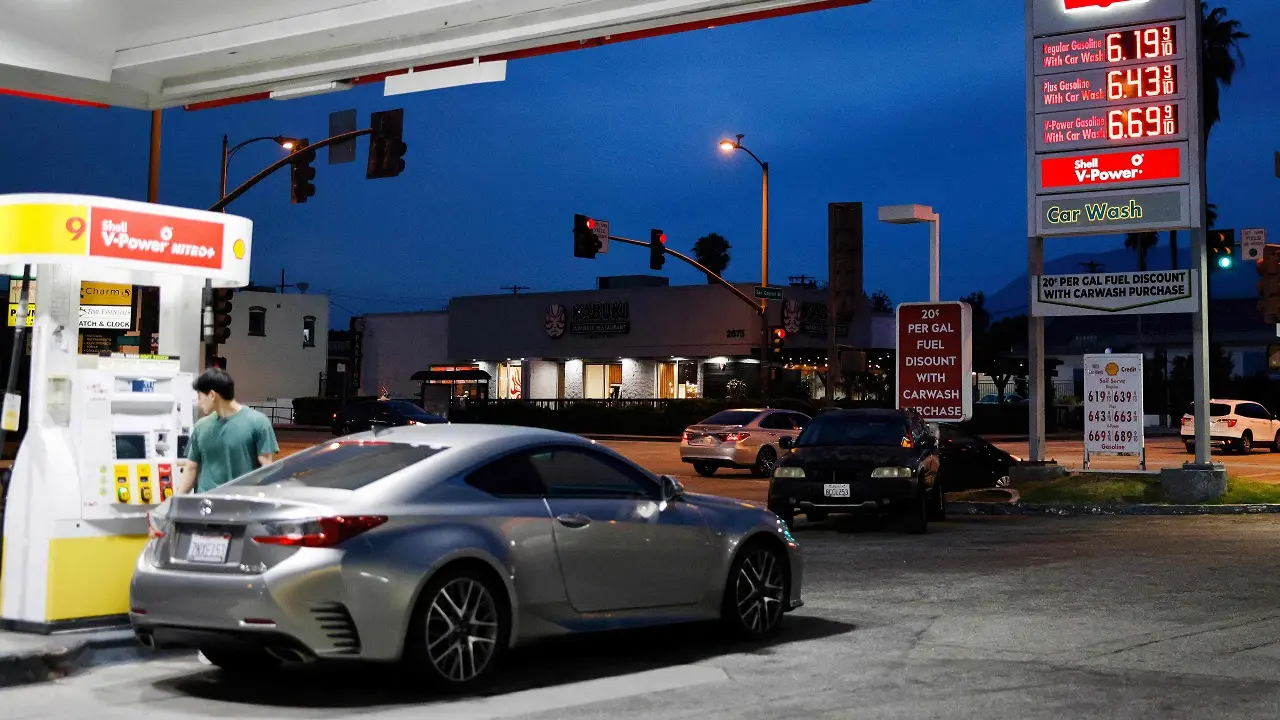
31 March,2026 02:54 PM IST | Bnei Brak, Israel | AFPFuel prices in the United States have surged sharply, with the average cost of regular gasoline crossing USD 4 per gallon for the first time since 2022. The spike comes amid escalating geopolitical tensions involving Iran, which have disrupted global oil supply chains and pushed crude prices higher, reported news agency Associated Press. Prices Hit Multi-Year High Across the US According to data from American Automobile Association (AAA), the national average price for a gallon of regular gasoline has reached USD 4.02. This marks a significant increase of over USD 1 compared to levels before the recent conflict began, reported Associated Press. The last time fuel prices in the US were at similar levels was in 2022, following the global oil shock triggered by the Russia-Ukraine War. However, prices vary across states, with some regions already experiencing higher rates due to local taxes and supply factors. Global Conflict Disrupts Oil Supply Chains The recent surge in prices has been largely driven by instability in the Middle East, particularly disruptions linked to the conflict involving Israel and Iran. The situation has impacted crude oil production and transportation, causing volatility in global energy markets. A key concern remains the Strait of Hormuz, a crucial maritime route through which nearly one-fifth of the world’s oil supply typically passes. Disruptions in this region have significantly constrained the movement of oil, leading to supply shortages and price spikes, reported Associated Press. Rising Fuel Costs Strain Households and Businesses Higher fuel prices are beginning to weigh heavily on consumers and businesses alike. For households already dealing with inflationary pressures, increased spending on fuel could lead to reduced budgets for other essentials. The ripple effects are also being felt across industries. Transportation and logistics costs have risen, which could push up prices of everyday goods, including groceries. Delivery and freight operations are particularly impacted, with diesel prices climbing to an average of USD 5.45 per gallon, reported Associated Press. Government and Global Agencies Seek Relief Measures In response to the crisis, the International Energy Agency has announced plans to release 400 million barrels of oil from emergency reserves in an attempt to stabilise markets. The US administration has also taken steps to ease supply constraints by relaxing certain sanctions to allow additional oil flow from countries like Venezuela and Russia. Additionally, temporary waivers on maritime shipping regulations under the Jones Act have been introduced to improve fuel transportation, reported Associated Press. Uncertainty Looms Despite Intervention Efforts Despite these measures, analysts caution that immediate relief may not be forthcoming. Since refineries purchase crude oil in advance, it may take time for any increase in supply to reflect in lower prices at the pump, reported Associated Press. Seasonal factors are also contributing to the rise. Increased travel demand and the shift to more expensive summer-grade fuel blends are adding further upward pressure on prices. While the US remains a net oil exporter, it is still influenced by global market trends due to the nature of oil as a globally traded commodity. As geopolitical tensions persist, fuel prices are expected to remain volatile, with the possibility of further increases if supply disruptions continue. (With inputs from Associated Press)
31 March,2026 02:50 PM IST | New York | mid-day online correspondentAn Iranian attack sparked a fire on a Kuwaiti oil tanker at Dubai Port, state media reported on Tuesday, as Tehran continues its campaign in the Gulf in response to US-Israeli strikes. "The Kuwaiti giant crude oil tanker was subjected to a direct and malicious Iranian attack while in the anchorage area of Dubai Port in the UAE," official news agency KUNA reported, citing Kuwait's state-owned oil company. There were no injuries, according to the report, and Dubai authorities later said firefighters had extinguished the blaze. KUNA reported the tanker was fully laden at the time of the attack, which had caused "material damage to the ship's hull" and "the possibility of an oil spill in the surrounding waters". Authorities in the United Arab Emirates said there had been no oil spill. They had indicated earlier that the tanker was targeted by a drone in Dubai waters. According to the Dubai government's Media Office, the ship's 24 crew members are safe. Kuwait's military also said on Tuesday its air defences were responding to "hostile missile and drone attacks", according to an X post. The oil-rich Gulf has borne the brunt of Iran's attacks in response to US-Israeli strikes that sparked the Middle East war late last month. Tehran has threatened to target vital infrastructure across the Gulf, including energy sites. This story has been sourced from a third party syndicated feed, agencies. Mid-day accepts no responsibility or liability for its dependability, trustworthiness, reliability and data of the text. Mid-day management/mid-day.com reserves the sole right to alter, delete or remove (without notice) the content in its absolute discretion for any reason whatsoever
31 March,2026 02:46 PM IST | Dubai | AFPIsrael's Parliament, the Knesset, on Monday (local time) passed a law mandating the death penalty for West Bank Palestinians convicted of terrorist acts, drawing condemnation from the European Union and the United Nations. The legislation, approved by a 62-47 vote, was backed by Israel's far-right National Security Minister Itamar Ben Gvir, The Times of Israel reported. According to a CNN report, the bill says that people in the West Bank who kill an Israeli "with the intent to negate the existence of the State of Israel" will face the death penalty. Judges may impose life imprisonment only under vaguely defined "special circumstances," while executions must take place within 90 days of sentencing. "This is a day of justice for the victims and a day of deterrence for our enemies. No more revolving door for terrorists, but a clear decision. Whoever chooses terrorism chooses death," Ben Gvir said, as quoted by The Times of Israel. The law requires only a simple majority of judges to hand down the sentence and removes any right of appeal. It is designed to apply to future cases and will not be applied retroactively, including to perpetrators of the 2023 Hamas-led attacks on October 7, whose prosecution will be addressed under a separate bill. While Israel formally allows the death penalty, executions have been extremely rare, with only one carried out - the 1962 hanging of Nazi war criminal Adolf Eichmann. Previously, capital punishment could only be imposed under narrowly defined circumstances and required a unanimous judicial panel, a threshold never met in terrorism cases. The legislation applies exclusively to Palestinians, who are tried in military courts, while Israeli citizens are tried in civilian courts, the CNN report noted. A separate provision allows the death penalty for anyone who "intentionally causes the death of a person with the aim of denying the existence of the State of Israel," a definition critics say effectively excludes Jewish perpetrators. The law has drawn condemnation from Palestinian authorities and international bodies. The Palestinian Ministry of Foreign Affairs called it "a crime and a dangerous escalation in the occupation's policies," adding that Israeli laws do not apply to Palestinians and that the legislation "reveals the nature of the Israeli colonial system, which seeks to legitimise extrajudicial killing under legislative cover." UN Human Rights Palestine said, "Israel must immediately repeal the discriminatory death penalty law passed today by the Knesset, as it contravenes Israel's obligations under international law. The United Nations opposes the death penalty under all circumstances. The implementation of this new law would violate international law's prohibition of cruel, inhuman or degrading punishment. Additionally, this law further entrenches Israel's violation of the prohibition of racial segregation and apartheid as it will exclusively apply to Palestinians in the occupied West Bank and Israel, who are often convicted after unfair trials." Secretary General of the Council of Europe Alain Berset said, "The vote in the @KnessetIL reinstating the death penalty is a major civilisational setback. A choice that distances those who made it from the system of values upheld by the @COE. They assume a historic responsibility." Italy's Deputy Prime Minister and Foreign Minister Antonio Tajani added, "Our government, together with those of Germany, France, and the United Kingdom, through a joint statement, has requested the Israeli government to withdraw the bill that introduces the death penalty for Palestinian prisoners convicted of terrorism. The commitments undertaken, especially with the resolutions voted on at the United Nations, for a moratorium on the death penalty cannot be disregarded. For us, life is an absolute value; arrogating to oneself the right to take it away in order to inflict a punishment is an inhuman measure that violates the dignity of the person." Earlier in the year, UN High Commissioner for Human Rights Volker Turk urged Israeli authorities to drop plans for mandatory death sentences exclusively for Palestinians, saying such proposals violate international law and discriminate against Palestinians. "When it comes to the death penalty, the United Nations is very clear and opposes it under all circumstances. It is profoundly difficult to reconcile such punishment with human dignity and raises the unacceptable risk of executing innocent people," Turk said. Turk further stressed that the law conflicts with Israel's obligations under the International Covenant on Civil and Political Rights. He highlighted concerns over the mandatory nature of the death sentences, which remove judicial discretion and violate the right to life, and criticised the discriminatory targeting of Palestinians. The UN High Commissioner noted that military courts in the occupied West Bank would be required to impose the death penalty for all convictions of intentional killing, while amendments to Israeli Penal Law would also allow capital punishment for killing Israelis in terrorist attacks. He warned that retroactive application to perpetrators of the October 7, 2023, attacks would breach the principle of legality under international law. This story has been sourced from a third party syndicated feed, agencies. Mid-day accepts no responsibility or liability for its dependability, trustworthiness, reliability and data of the text. Mid-day management/mid-day.com reserves the sole right to alter, delete or remove (without notice) the content in its absolute discretion for any reason whatsoever
31 March,2026 09:26 AM IST | Tel Aviv | ANIADVERTISEMENT









-1774953232892_d.png "Italy’s Defence Minister Guido Crosetto. PIC/X")