
CRAFT transforms a common liquid resin called cyclooctene into complex solid objects by projecting varying patterns of light through a commercial 3D printer
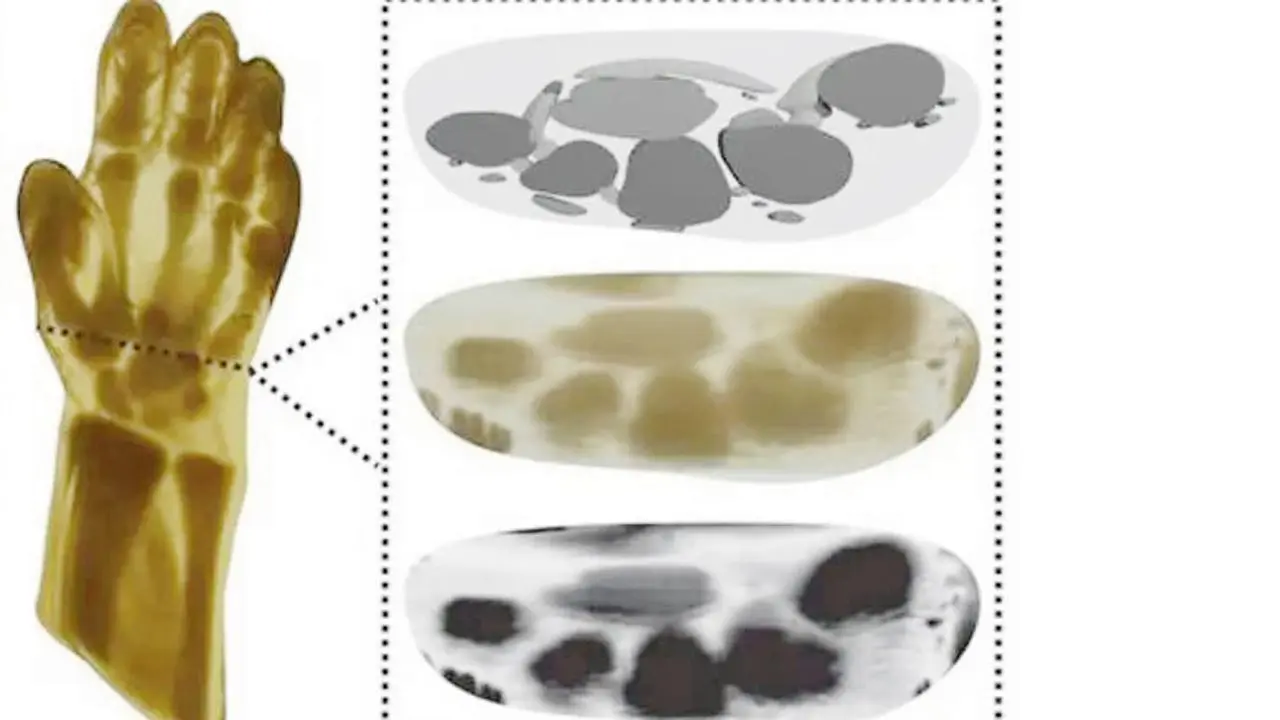
A hand created using the CRAFT method, which mimics human skin, ligaments, tendons, and bones. Pic/University of Texas
Researchers have designed a new 3D printing method called Crystallinity Regulation in Additive Fabrication of Thermoplastics (CRAFT) that turns a single, cheap liquid into a material chameleon. The method allows the creation of 3D objects with varying mechanical and optical properties — such as hardness and transparency — using a single, inexpensive material.
CRAFT transforms a common liquid resin called cyclooctene into complex solid objects by projecting varying patterns of light through a commercial 3D printer. With the adjustment of the curing light’s intensity, researchers can make one part of an object hard and see-through while the part right next to it stays soft and cloudy — all within a single piece.
The team made a realistic replica of a human hand using this method. The most immediate impact could be felt in medical schools, where currently, students practising complex surgeries rely on cadavers, which are expensive, difficult to source, and ethically complex.
This story has been sourced from a third party syndicated feed, agencies. Mid-day accepts no responsibility or liability for its dependability, trustworthiness, reliability and data of the text. Mid-day management/mid-day.com reserves the sole right to alter, delete or remove (without notice) the content in its absolute discretion for any reason whatsoever.
 Subscribe today by clicking the link and stay updated with the latest news!" Click here!