shot-button
T20 World Cup 2026 Article Details T20 World Cup 2026 Article Details
Home > Sunday Mid Day News > A BAFTA for Boong but no cinema for kids in India

A BAFTA for Boong, but no cinema for kids in India?

Updated on: 01 March,2026 09:23 AM IST  |  Mumbai
Junisha Dama | junisha.dama@mid-day.com

Manipuri film Boong won the Best Children’s and Family Film award at the BAFTAs. And even as we celebrate the film’s global triumph, children’s cinema in India has disappeared from the mainstream

A BAFTA for Boong, but no cinema for kids in India?

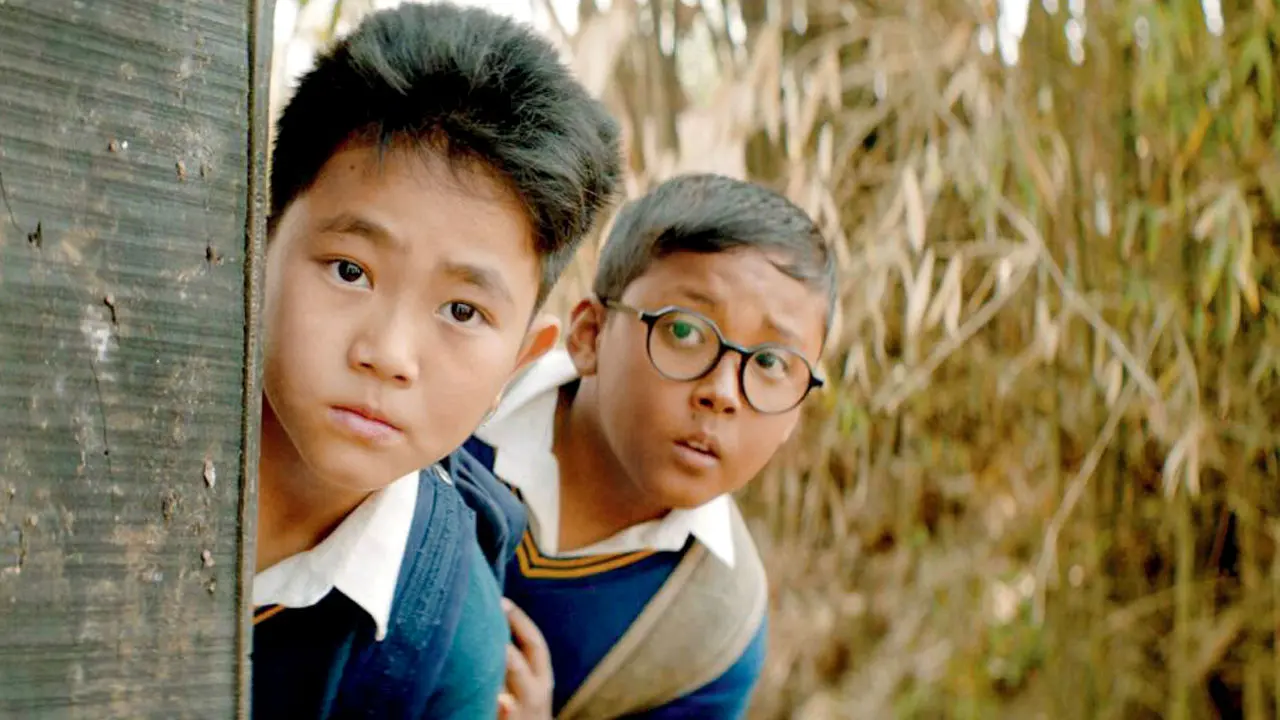
Boong film follows a young boy navigating loss, migration, and belonging

Listen to this article
A BAFTA for Boong, but no cinema for kids in India?
x
00:00

Lakshmipriya Devi’s Manipuri film Boong won the BAFTA for Best Children’s and Family Film on Monday. It is the first Indian film in that category to win the award. The film follows a young boy navigating loss, migration, and belonging. It beat films backed by larger international industries. Yet, films in India made for children have nearly vanished.

According to IMDb, National Film Development Corporation of India (NFDC) records, and festival programming archives, fewer than 10 live-action children’s films were made across all Indian languages in 2024–25, out of over 1800 films produced annually. That is less than one per cent of India’s film output. 


Village RockstarsVillage Rockstars


Festival director and filmmaker Jitendra Mishra, who runs the Smile International Film Festival for Children and Youth (SIFFCY), says, “Considering the number of films we make, like more than 2000 films are every year, the percentage of children’s cinema is very, very low.”

Filmmaker Amole Gupte, who wrote Taare Zameen Par (2007), directed Stanley Ka Dabba (2011), Hawaa Hawaai (2014), and headed the Children’s Film Society of India, asks, “When was the golden era of children’s films ever in India?” He explains the economis behind the lack of children’s films in the mainstream. “The producer is a businessman. He’s saying, ‘What is my return on investment?’ He’s not overly bothered about artistic content.”

Taare Zameen ParTaare Zameen Par

The collapse of institutional support has made things worse. Until 2022, the Children’s Film Society of India (CFSI) commissioned three to four children’s films every year, according to Gupte, who led the organisation between 2012 and 2015. Since CFSI merged into the NFDC, there is no dedicated mandate to produce children’s films. Instead, children’s cinema now competes with spy franchises, and star-driven spectacles. Vidushi Kain, General Manager at NFDC, says bluntly, “Children’s films are often high financial risk films because you don’t know how the film will turn out.” 

The irony is that children are watching more video content than ever before. According to a 2024 FICCI-EY media report, India has over 450 million viewers under the age of 18, making it one of the largest youth media markets in the world. But they are watching American superheroes, Korean dramas, and anime. “They are more interested in Marvel movies, gaming, or Korean films,” Kain says. 

Stanley Ka DabbaStanley Ka Dabba

Filmmaker Aditya Sarpotdar, director of Munjya (2024), believes Indian filmmakers underestimate children entirely. “We have always been making small to mid-budget children’s movies. But we have not been making them on scale because kids’ movies do not have big stars. It doesn’t make sense for producers to put money on them.”

Munjya, based on a Konkani children’s folktale, was deliberately built around a young protagonist. “The legend itself was a children’s fable. It was meant for dadi ki kahaniyaan.”

Amole Gupte, Shivraj Waichal and J MishraAmole Gupte, Shivraj Waichal and J Mishra

The economics of multiplexes also do not work in favour of children’s films. Ticket prices for major films in cities now range between R250 and R600. This makes family outings expensive quickly. Gupte recalls trying to negotiate cheaper shows when he was with CFSI. “I tried that chain… asked theatre chains to give morning shows, which are easy on the pocket for the child. But it didn’t reach anywhere.”

Instead, theatres prioritise films that maximise opening weekend revenue. Children’s films, which rely on slower word-of-mouth growth, rarely survive.

Aaditya Shukla and Aditya SarpotdarAaditya Shukla and Aditya Sarpotdar

Meanwhile, Europe treats children’s films as mainstream cinema. In Sweden in 2010, the Swedish comedy film, Farsan, sold 2,46,000 tickets, competing directly with global blockbusters like Avatar (2010). In Denmark, the children’s franchise Father of Four: In Japanese Mode (2010) sold 3,56,000 tickets.

These films succeeded because children were the audience. In Scandinavia, children’s cinema is serious business. Gupte says these countries have a strong culture of taking kids to theatres to watch films. Meanwhile, in India, children’s stories are still being told, but mostly outside the mainstream. Mishra says the percentage remains tiny. “Considering more than 2000 films are being made every year, the percentage of children’s cinema is very low,” he says. 

Marathi filmmaker Shivraj Waichal, whose film Arjun (2021) explored disability through a child’s perspective. “We underestimate children and think about the parents first. We believe that the parents will watch the film too, and end up catering to them,” he says.  

Even child actor Aaditya Shukla, who starred in Dice Media’s Bakaiti (2025), notices the gap. He says. “There are so many interesting stories that can be told from a child’s point of view, but we don’t see them.” As Gupte puts it, “What you give, people will eat. If you give only spectacle, they will eat spectacle.”

NFDC speaks

“We are also planning to revive the International Children’s Film Festival India… to create a vibrant platform for exhibition, discovery, and engagement,” said Prakash Magdum, Managing Director, NFDC. Boong, for example, was supported through Film Bazaar’s Work in Progress Lab. 

The missing link: How India stopped making kids’ films

The CFSI era:
.  3–4 children’s films commissioned annually
.  Dedicated institutional funding
.  Films distributed through schools and festivals

After CFSI and NFDC merger (2022 onwards):
.  No dedicated children’s commissioning mandate
.  Children’s projects compete with all film projects
.  Funding driven by market viability

No place for kids
In Hindi cinema, the number of children’s live-action films made show a clear decline. 
2005–2015: approx 25–30
2015–2025: approx 12–18

Regional cinema for kids
Across India’s major film industries, barely 40–60 live-action children’s films were made between 2015 and 2025. 

Hindi: 12–18 films
Examples: Dhanak (2015), Chidiakhana (2023)

Marathi: 8–12 films
Examples: Elizabeth Ekadashi (2014), Killa (2014)

Malayalam: 6–10 films
Examples: Kolambi (2019)

Assamese: 4–6 films
Examples: Village Rockstars (2017), Bulbul Can Sing (2018) 

Bengali: 5–8 films
Examples: Rainbow Jelly (2018

"Exciting news! Mid-day is now on WhatsApp Channels Subscribe today by clicking the link and stay updated with the latest news!" Click here!

Did you find this article helpful?

Yes
No

Help us improve further by providing more detailed feedback and stand a chance to win a 3-month e-paper subscription! Click Here

Note: Winners will be selected via a lucky draw.

Help us improve further by providing more detailed feedback and stand a chance to win a 3-month e-paper subscription! Click Here

Note: Winners will be selected via a lucky draw.

BAFTA 2026 taare zameen par amole gupte Marathi films bollywood news Sunday Mid-Day Indian cinema indian films Lifestyle news manipur

Mid-Day Web Stories

Mid-Day Web Stories

This website uses cookie or similar technologies, to enhance your browsing experience and provide personalised recommendations. By continuing to use our website, you agree to our Privacy Policy and Cookie Policy. OK