shot-button
E-paper E-paper
Home > Sunday Mid Day News > Hello theres terrible news

Hello, there’s terrible news!

Updated on: 28 September,2025 08:34 AM IST  |  Mumbai
Clayton Murzello | clayton@mid-day.com

Several cricketing personalities have heard words to this effect, informing them of a family member’s passing right in the middle of a series; the latest being Sri Lankan spinner Dunith Wellalage during the Asia Cup. We cite some examples


Hello, there’s terrible news!

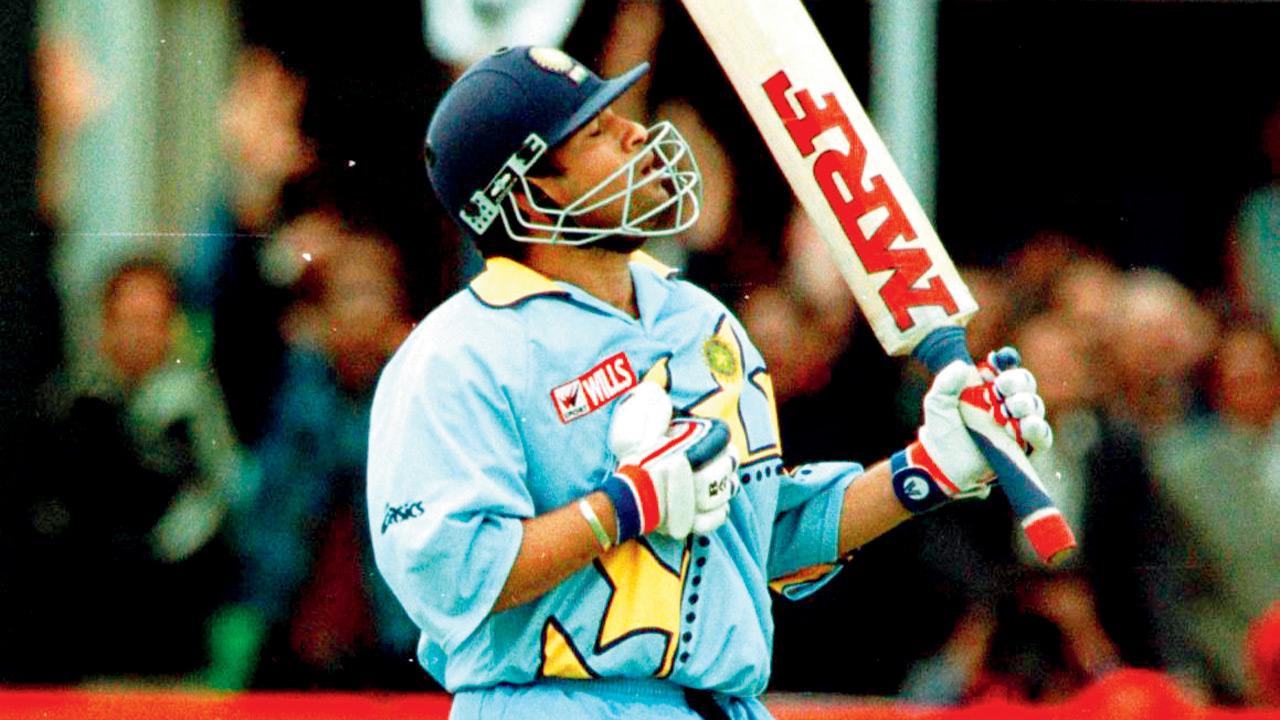
Sachin Tendulkar when he reached his century against Kenya in the 1999 World Cup at Bristol. PICs/Getty Images

The antics of some of the Pakistani cricketers in their Asia Cup game against India last Sunday was nothing short of boorish. It’s a crying shame that the noblest game (that’s what celebrated writers Neville Cardus and John Arlott titled their 1969 book on rare cricket prints) has been reduced to such lows with the offenders being blasé about their actions.

It was sad a few days earlier, too, when Sri Lanka spinner Dunith Wellalage was informed after the match against Afghanistan that his 54-year-old father had passed away in Colombo. Suddenly, the five consecutive sixes, that Afghanistan veteran Mohammad Nabi hit Wellalage Jr for, paled into an insignificant heartbreak. The Sri Lankan spinner returned home for his father’s funeral and reunited with his teammates for the match against Bangladesh.


India pace bowler Mohammed Siraj, who stayed on in Australia despite his father passing away during the 2020-21 tour of Australia. PIC/AFP


Wellalage thus joined a list of cricket personalities to hear about personal losses while on tour. Probably the most famous instance is of Sachin Tendulkar learning of his father Ramesh’s death during the 1999 World Cup in England on the eve of India’s May 19 match against Zimbabwe.  Many of us wondered how Tendulkar was delivered the crushing news in Leicester. He revealed it all in his 2014 autobiography, Playing It My Way in which he said his wife Anjali who was in London, drove down on the night of May 18 to give the news to her husband, who was already battling a back injury.

Tendulkar famously returned from Mumbai and scored a century against the Kenyans in Bristol. Tendulkar’s captain in the 1999 World Cup, Mohammed Azharuddin was waiting to go into bat for India for U-25 against the visiting 1984-85 England team at Ahmedabad, when his captain Ravi Shastri received a telegram addressed to his junior batsman. 

Accomplished commentator and writer Harsha Bhogle thus described the moment in the book Azhar – The Authorised Biography of Mohammed Azharuddin: “Shastri opened the telegram, read the contents and was preparing to put it in his pocket when he was stopped by Azhar. He had seen the name on the telegram. Left with no option, Shastri handed it to him. The telegram said, in the rather terse manner of all telegrams, ‘Grandfather serious. Start immediately.’ Azhar, padded up and ready to bat, got up and told Shastri, ‘I’m going. I have to go.’

Mohammed Azharuddin at the Sydney Cricket Ground during his debut season for India

Initially a little taken aback at the prospect of losing his No. 3 batsman, Shastri recovered, ‘Hang on,’ he said. ‘You’re batting next. I’m not letting you change your number. You are No. 3 and you will bat No. 3,’ ”. Azharuddin was very close to his grandfather, who had already passed away when the telegram arrived in the Ahmedabad dressing room, but the news was kept away from him. He scored a hundred and got included in India’s squad for the opening Test at Mumbai. He made his Test debut in the third match of the series and went on to carve centuries in his first three Tests. Leave alone the hat-trick of tons, but would Azharuddin have been included in the India squad had he returned to Hyderabad and not scored a hundred in Ahmedabad? Anyone’s guess.

Another Hyderabad player — fast bowler Mohammed Siraj — lost his father, an auto-rickshaw driver, while he was in Australia, setting up India’s historic 2-1 series win there in 2020-21. The world was gripped by the pandemic and Siraj didn’t have the physical comfort of having his friends with him to help him deal with his grief in non-playing, non-training hours. Telephone calls from India’s then fielding coach R Sridhar (also from Hyderabad) and his fiancé were more than merely helpful.

England batsman Colin Cowdrey in the 1960s

Head coach Shastri proved critical too. Siraj said on the Royal Challengers Bengaluru Season 2 podcast: “I went to training the next day after my father’s demise and Ravi Shastri told me that I have my dad’s blessing and I will take a five-wicket haul. When I took five wickets at Brisbane, he told me: ‘Look, what did I tell you, that you will take five wickets’.”

On arrival in Hyderabad, Siraj headed straight to the cemetery where his father was buried. Colin Cowdrey, the great England batsmen of the 1950s, 1960s, and 1970s too lost his father while on a tour to Australia. He was picked for the 1954-55 Ashes as a 21-year-old and got the news of his father’s death when the team arrived in Perth. A warning of his father’s dire health condition was delivered the day before their ship reached Perth, after a pre-tour game in Colombo, Sri Lanka. Cowdrey, who scored an unbeaten 66 there, revealed in MCC — The Autobiography of a Cricketer that he received a message from home that read: “Congratulations on your Colombo innings. Happy landings tomorrow. Regret father not too well. All at home.”

The following day, a telegraph sent to him said his father was no more. Going back home to attend the funeral was out of the question for Cowdrey, and he played the entire Test series to score 319 runs, including a century in the Melbourne Test. Journalist Rajan Bala lost his mother while covering India’s tour of Pakistan in 1984. On hearing the sad news in Faisalabad, a shattered Bala wanted to leave for India in the middle of the night. No one could stop him but one man did — Lala Amarnath, who was in Pakistan as a commentator. Bala stayed on, but the tour got abandoned a few days later due to the assassination of India’s then Prime Minister Indira Gandhi.

Debasish Datta, another well-travelled journalist, was covering the 1990 India vs England Test at Lord’s when his younger brother met with a ghastly road accident, and succumbed. Breaking the sad news to Debasish was going to be a challenge. His fellow journalists approached Sunil Gavaskar who was on commentary duty for the tour. As soon as Debasish saw Gavaskar and a few journalists at the door of his hotel room, he knew that his brother was no more. He left for Kolkata to be with his grieving parents and returned in time for the second Test at Manchester. Wellalage, meanwhile, is trying to cope with the hit that will, as the television commentators often say, stay hit.

"Exciting news! Mid-day is now on WhatsApp Channels Subscribe today by clicking the link and stay updated with the latest news!" Click here!

Did you find this article helpful?

Yes
No

Help us improve further by providing more detailed feedback and stand a chance to win a 3-month e-paper subscription! Click Here

Note: Winners will be selected via a lucky draw.

Help us improve further by providing more detailed feedback and stand a chance to win a 3-month e-paper subscription! Click Here

Note: Winners will be selected via a lucky draw.

asia cup sachin tendulkar Mohammed Siraj mumbai sports sports news mohammad azharuddin Lifestyle news

Mid-Day Web Stories

Mid-Day Web Stories

This website uses cookie or similar technologies, to enhance your browsing experience and provide personalised recommendations. By continuing to use our website, you agree to our Privacy Policy and Cookie Policy. OK