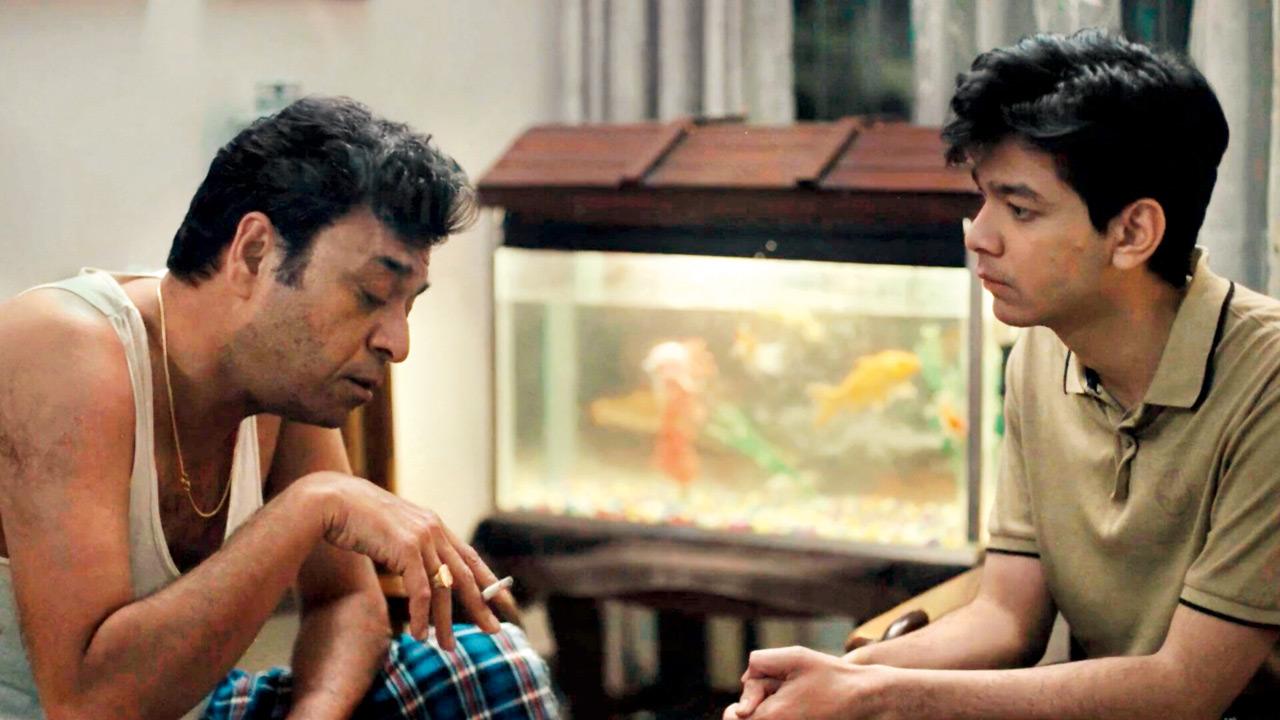
Tech-entrepreneur-turned-filmmaker Ankur Singla’s nostalgia-laced debut recalls a decade characterised by tougher parenting styles and fraught father-son ties

Ghich Pich crafts a tale of fathers and sons out of the debutant director’s memories of his school years in Chandigarh
If you don’t tell your own story, no one else will,” filmmaker Mira Nair tells aspiring directors in her MasterClass — advice that tech entrepreneur Ankur Singla found particularly encouraging. Singla had run a film club during his years at the National Law School, and after selling his tech start-up to Amazon in 2018, admits to going through “a bit of an existential crisis”. There was the long-nurtured love for cinema, but there was also the sense of a barrier in converting it into a vocation. But it was in the COVID years, after enrolling in a series of cinematography, screenwriting and filmmaking courses, that he truly took Mira Nair’s advice to heart and began revisiting and inscribing his memories of his school years in Chandigarh. The result is Ghich Pich, which releases in theatres on August 8.
“With a career shift, you have to start as a beginner. You are almost as good as an intern,” shares the first-time filmmaker. While his entrepreneurial background gave him the communication and team management skills he needed on set as a director, there were plenty of new skills to acquire in this career pivot which he describes as involving a shift from being a left-brained to a right-brained person. “Running a company requires analytical skills. You’re always thinking in the future. With writing and directing, you have to stay in the moment and observe things. It’s a very different part of your brain that gets activated when you want to make a film.”

Set in the early 2000s, Ghich Pich is a tale of fathers and sons, of three high-schoolers on the cusp of adulthood, keen on shaping their own lives, careers and identities while navigating traditional and paternal expectations. Singla, now himself a father to a nine-year-old, speaks of the insight into and understanding of those parental demands that the process of screenwriting gave him. “While writing the characters of the fathers, my understanding of their psyche changed. We [as a generation] are a little more privileged and I love my son to death as all dads do, but I don’t know if I have it in me to be so clear with him that he has to do certain things. I would rather still be friends with him.”
Singla finds screenwriting a “weird and organic process” that melds personal stories and psychological traumas “but is also like engineering” (“For example, you have to engineer act one in such a way that you get the catharsis in act three”). For him, he believes the catharsis has happened over multiple re-drafts of the story. “You don’t know at what point your trauma is getting resolved or something is changing in your brain, but it does change. It has to change. There is no way you can avoid that.”
Ankur Singla
Ghich Pich is also a tribute to the director’s hometown of Chandigarh, bringing some of its famed sites — the Capitol Complex, the Rose Garden, Sukhna Lake, the gehri route — to the screen. “We were regular middle-class people with zero understanding of architecture. We were studying, had friends… that was it,” is the director’s self-effacing response when we ask him of how he chose to weave the city into his film. Returning to Chandigarh now, the Delhi-based Singla tells us of his decision to hire an architect to help him see the city with new eyes and learn of Le Corbusier’s architectural vision for it.
Scenes such as those of a breezy picnic outside Gandhi Bhawan or a break-up on the Punjab University campus grounds were written to bring visual variety and openness to the film. But taking outdoor shots in a film set in 2001 also posed challenges. “The moment you take an exterior shot, there is invariably somebody walking in the shot with a mobile phone or there’s a new car which is passing by or there’s a mobile tower. There are lots of anachronistic elements that we had to cleverly avoid while taking these wide shots,” shares Singla. Moreover, for outdoor night scenes, it was a challenge to find yellow-tinted street lights because most cities have now switched to white LED lights. “We had to find this really far off street which had yellow lights so that we could make it feel like it was still the nineties.”
Subscribe today by clicking the link and stay updated with the latest news!" Click here!