shot-button
E-paper E-paper
Home > Sunday Mid Day News > Fuelling the future of rocket science

Fuelling the future of rocket science

Updated on: 25 May,2025 12:20 PM IST  |  Mumbai
Nishant Sahdev | nishantsahdev.onco@gmail.com

With semi-cryogenic propulsion, India is leapfrogging into the technologies of tomorrow

Fuelling the future of rocket science

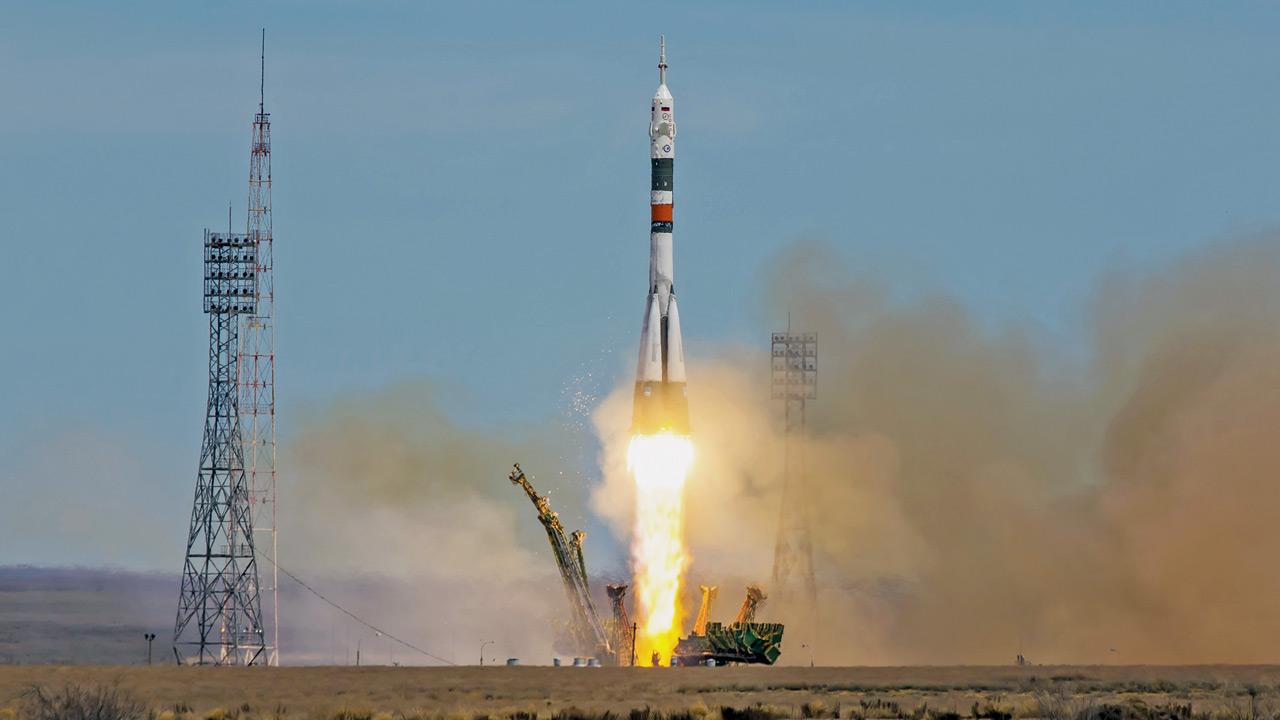
The 2017 launch of Soyuz MS-04 to the international space station from Baikonur in Kazakhstan. Pic/iStock

WHEN you think of a rocket launch, you probably imagine thunder, fire, and a blinding plume of smoke. But what makes that magic happen? It’s not just brute force — it’s precision chemistry. For decades, India’s rockets have relied on cryogenic engines — high-tech machines that burn ultra-cold liquid hydrogen and oxygen. But now, there’s a quiet revolution happening in Indian space labs, and it’s pointing in a new direction: semi-cryogenic engines. During my recent visit to India’s Space Centre, I spoke with ISRO scientists and founders of space startups across Bengaluru and Hyderabad. One thing stood out: everyone is talking about semi-cryogenic. And for good reason — it’s the tech that could change everything.

Rockets are all about power — and the type of fuel they burn plays a big role in how far they go. Traditional launchers often use solid or fully cryogenic engines. Cryogenic engines, like those used in ISRO’s Chandrayaan-3 mission, burn liquid hydrogen and liquid oxygen. They’re powerful but complex, especially because hydrogen must be stored at −253°C, demanding expensive insulation and precision systems.


Semi-cryogenic engines solve much of that. They use liquid oxygen (still supercooled) with a refined form of kerosene called RP-1. This combination strikes a golden balance: high thrust, lower cost, easier handling, and potential for reusability.


Globally, semi-cryogenic engines aren’t new. They power SpaceX’s Falcon 9, Russia’s Soyuz, and Blue Origin’s BE-4. But India’s homegrown version marks its own revolution.

India’s rocket agency ISRO has been quietly developing a powerful semi-cryogenic engine through its Liquid Propulsion Systems Centre (LPSC). The result: a 2,000 kN thrust-class engine, using LOX and kerosene, currently undergoing tests at the Mahendragiri facility in Tamil Nadu.

Why the move? Because the advantages are too big to ignore:

  • Greater thrust at liftoff—perfect for heavy payloads
  • Cheaper fuel and simpler storage compared to hydrogen
  • Reduced complexity, increasing reliability
  • Better suited for reusable stages, a key goal for future missions

India isn’t just building a new engine. It’s building a new future.

ISRO’s current heavy-lift vehicle, LVM3, is capable—but it's due for an upgrade. The upcoming HLVM3 (Human-rated LVM3), which will carry Indian astronauts under the Gaganyaan mission, is expected to swap out its older liquid stages for a new semi-cryogenic core. This single move will increase lift capacity, improve safety margins, and enable longer-term goals like space station deployment, lunar bases, and Mars missions.

Let’s put this into numbers. The SCE-200, under development at ISRO’s Liquid Propulsion Systems Centre (LPSC), is expected to deliver 200 tonnes of thrust — comparable to the best semi-cryogenic engines in the world.

The SCE-200 is currently undergoing full-duration hot tests at ISRO’s Mahendragiri facility, with earlier collaborative trials in Russia. Once certified, it will replace older stages on the LVM3, and eventually power India’s reusable launch vehicles and cargo missions to space stations or even the Moon.

One of the most exciting things happening in Indian aerospace is how government and startups are finally building together. Post-2020 reforms and the creation of IN-SPACe opened ISRO’s infrastructure to private companies. The result? A propulsion renaissance.

Skyroot Aerospace is developing semi-cryo-powered variants of its Vikram rocket series, aiming for modular, scalable launches; Agnikul Cosmos is pushing the boundaries with 3D-printed, single-piece semi-cryogenic engines like Agnilet, dramatically cutting down manufacturing time and cost; and Bellatrix Aerospace is working on semi-cryogenic and green in-space propulsion systems, key to future satellite servicing and orbital transport.

These startups aren’t just building engines — they’re building India’s new propulsion economy. They’re fast, inventive, and globally ambitious.

From 2020 to 2024, the global space economy grew from $447 billion to over $570 billion, with the satellite launch market alone projected to reach $30 billion by 2030. India currently holds less than 2 per cent of global commercial launch revenue — but that figure is poised to change.

With semi-cryogenic engines, India can dramatically improve its cost-to-payload ratio, enabling it to compete with giants like SpaceX and Arianespace. For instance, the average launch cost per kilogram to Low Earth Orbit (LEO) using India’s current LVM3 is around $3,000–$5,000. Falcon 9, thanks to its semi-cryogenic Merlin engines and reusability, has brought that down to $1,500–$2,200/kg. A semi-cryogenic upgrade could reduce ISRO’s cost per kg by 30–40 per cent, bringing it closer to global benchmarks.

Moreover, ISRO’s PSLV and LVM3 missions already boast a launch success rate of over 95 per cent, and India has launched more than 430 foreign satellites to date. With semi-cryo integration and reusability, these numbers could scale drastically—positioning India as a low-cost, high-reliability launch hub for small satellite constellations, lunar payloads, and interplanetary missions. This propulsion shift aligns with India’s ambition to claim a $10 billion share in the global space market by 2030, as projected by the Indian Space Association (ISpA). Semi-cryogenic technology is not just an upgrade—it is the engine behind that vision.

Semi-cryogenic propulsion isn’t just an incremental upgrade — it’s a transformative leap. These engines offer 30–40 per cent more thrust than conventional liquid engines, use RP-1 which is 10x denser than hydrogen (allowing compact design), and can cut launch costs by up to 20 per cent. While RP-1 is denser and easier to handle than liquid hydrogen, it offers a lower specific impulse (~300–350 s) compared to hydrogen (~450 s). However, the trade-off favors RP-1 for launch stages due to simpler cooling and lower tank volume requirements. Globally, over 70 per cent of heavy-lift commercial rockets now use semi-cryogenic stages. India’s entry into this league with indigenous development marks a critical inflection point. As a physicist, I see this as both a thermodynamic and economic optimisation — essential for scalable, reusable, and interplanetary missions. India is not catching up; it is leapfrogging into the propulsion technologies of tomorrow.

Nishant Sahdev is a theoretical physicist at the University of North Carolina at Chapel Hill, United States. His research focuses on the intersection of quantum physics, microgravity, and space propulsion. He can be contacted at nishantsahdev.onco@gmail.com

"Exciting news! Mid-day is now on WhatsApp Channels Subscribe today by clicking the link and stay updated with the latest news!" Click here!

Did you find this article helpful?

Yes
No

Help us improve further by providing more detailed feedback and stand a chance to win a 3-month e-paper subscription! Click Here

Note: Winners will be selected via a lucky draw.

Help us improve further by providing more detailed feedback and stand a chance to win a 3-month e-paper subscription! Click Here

Note: Winners will be selected via a lucky draw.

Science Technology Tech Updates Sunday Mid-Day

Mid-Day Web Stories

Mid-Day Web Stories

This website uses cookie or similar technologies, to enhance your browsing experience and provide personalised recommendations. By continuing to use our website, you agree to our Privacy Policy and Cookie Policy. OK