







A Murbad-based enterprise is taking the upcycling game to the next level, empowering its all-women workforce while making covetable products
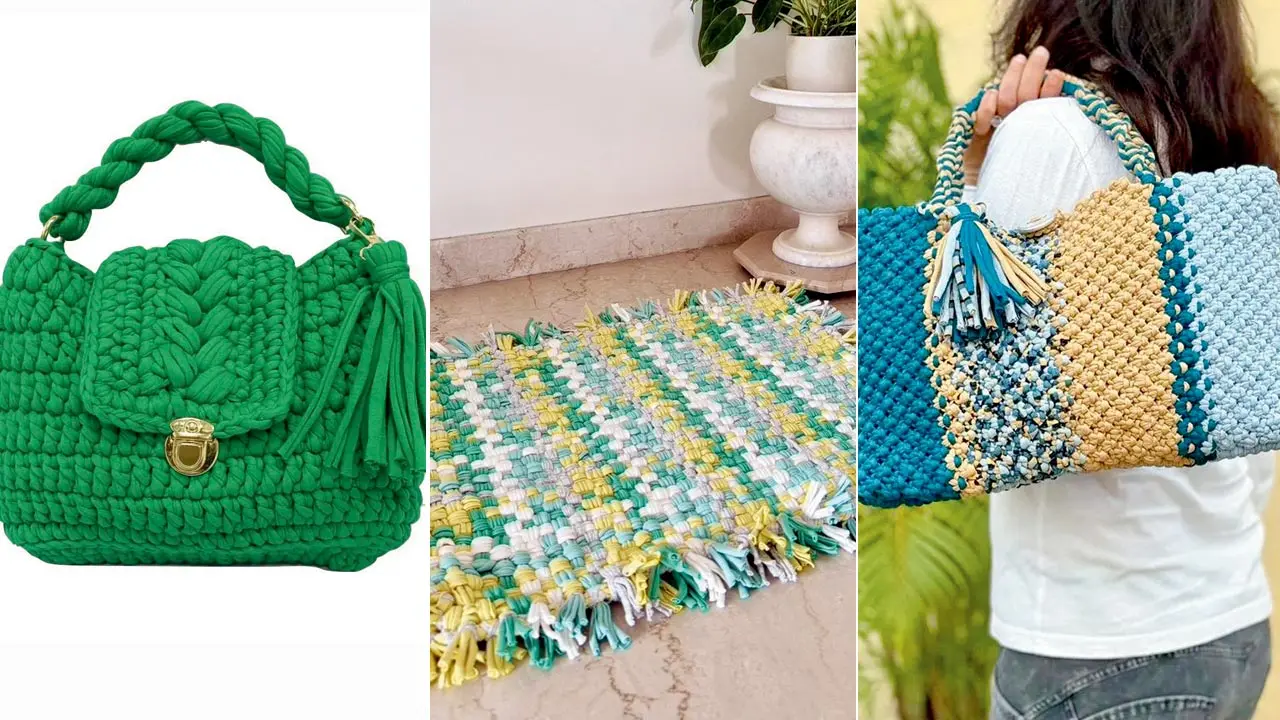
Products that are 100 per cent plastic-free and upcycled
What does a precision engineering firm have to do with shoulder bags and home décor items? When the firm also makes T-shirts and other garments, that’s the logical endpoint of its castoffs.
The Technocraft Group, predominantly drum closure and scaffolding makers, not only upcycles fabric leftovers into useful woven items, it has in the process also a created a safe haven for women employees in its manufacturing unit in Murbad.
 Gayatri was able to plan for her second child, which she is now expecting, due to flexibility and financial freedom the job brought
Part of the Shanti Seva Nidhi Trust, Technocraft’s Corporate Social Responsibility (CSR) initiative, Project 1000 (project1000.org.in), launched in 2019, has turned Technocraft’s fabric scraps into a cheerful, colourful, women-artisan-driven business.
The safe haven that has been created for women artisans is something Project 1000’s Project Director, Ritu Saraf, is extremely proud of. “The area we are based in, Murbad, is mostly an agrarian economy and there is a great need for seasonal jobs. So we do have people who might come and go, but we also have a permanent staff of around 25 people,” says Saraf.
 Ashok Pathak (right) who went from being a chauffeur to the sales manager with the Saraf family and Project 1000
The leftover and processed fabric is crocheted and knotted into macrame by these women. “We give them two months’ training if they come on board as artisans with us. If people want to pursue this as a hobby we do charge, like a class, which too goes back into Project 1000,” she adds.
The products range from fashion items like shoulder bags and clutches, to rugs and mats for home decor. One look at the products and one wouldn’t think that they are made out of scraps from T-shirt production; neither does the finish of the product show signs of being handmade. “Come and see the products in person, the photographs will not do them justice; that’s how good my artisans are,” Saraf says, pride evident in her voice as she speaks to us over the phone.
 Ritu Saraf and Ashok Pathak
One of the pillars of Project 1000’s all-women workforce is Gayatri, 35, who is expecting her second child in a few months. She moved to Murbad with her husband, who works as a labourer in the area, and did not want to stay at home. “When they told me about this factory where women can work with handmade fabrics I wanted to come and see for myself,” she says. The factory floor and the work being done by the women inspired Gayatri as well. “It was so colourful, and I was very inspired by the other women who were working here. I could see that they had so much autonomy over their life because they were working here,” she says.
Work flexibility is one of the key factors that motivates the artisans to put their heart and soul into every weave of the crochet needle and every macrame knot. “The fact that I can go to my village (Brahmanpur) and not miss work, because I can weave from anywhere, is the reason I joined — and I have no plans to leave,” she says. She can make products at her own pace and earn up to Rs 15,000, and when the family needs are more she ups her production. “Then I can earn even Rs 30,000, sometimes a little more, especially in the upcoming season. Monsoon is our off season,” says Gayatri, her voice going soft and shy as she says goodbye to us.
Another aspect of flexibility is seen in the story of Ashok Pathak. He joined the Saraf family as a chauffeur back in 2021, but his uncanny ability to deal with logistics, and interest in looking at products, doing market research, and envisioning the next level, led him to eventually take the reins as operations and field sales manager. Pathak is now the face of Project 1000 at exhibitions and its “right-hand man” as Saraf describes him. “I joined as the family’s chauffeur but eventually they made me feel like family,” says Pathak, who lives in Dombivli, visiting the office as and when needed. “From what I can see in the market, no one does what we do. Whether corporations or individual customers, when I tell them that this is all upcycled material, handmade by our sisters, they are shocked when they see the samples,” he says, equally unable to hide his pride.
Sometimes art and women empowerment comes in a shy-sweet voice like Gayatri’s, an enthusiastic leader like Saraf and a calm steady hand like Pathak’s.
 Subscribe today by clicking the link and stay updated with the latest news!" Click here!