







AI can be a powerful aid to help us explore new frontiers, as long as we maintain the wisdom to know where machines must give way to human understanding
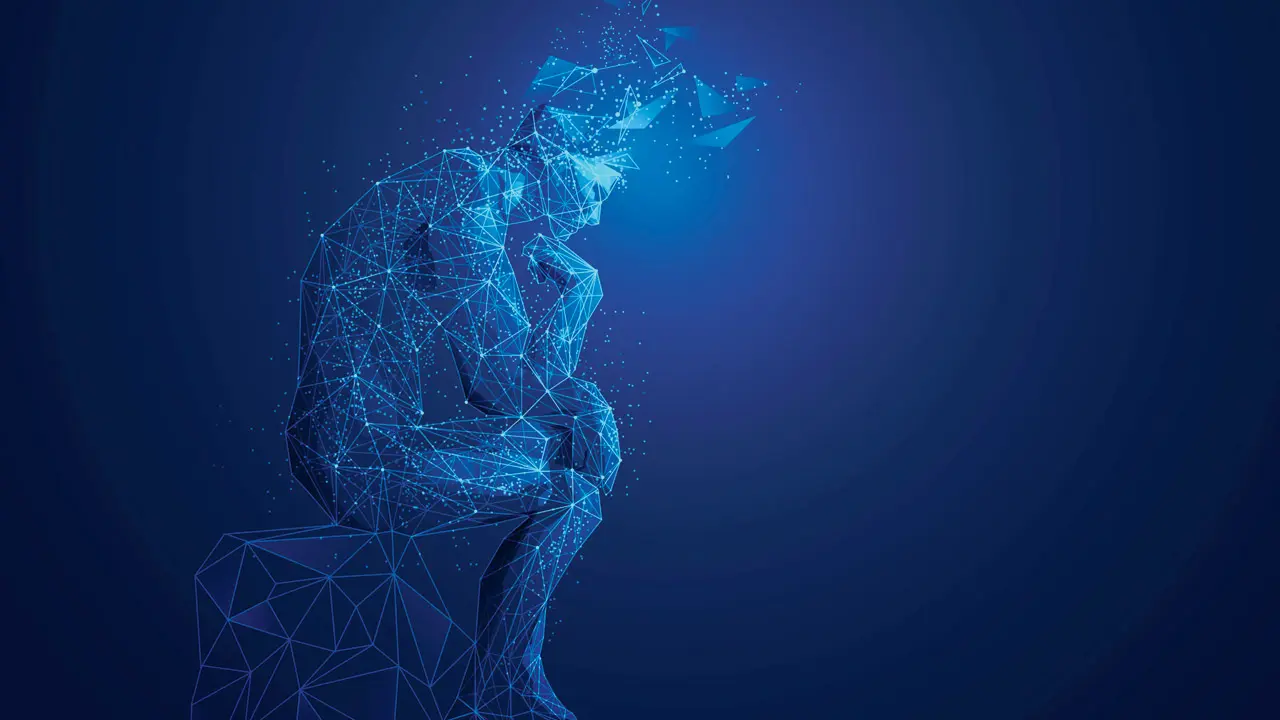
Emotions, creativity, ethics, and consciousness do not follow fixed algorithms. Representational pic/iStock
Artificial Intelligence is everywhere — in our phones, homes, even hospitals. It can write poems, compose music, recognise faces, and drive cars. AI is often described as a revolution that will change every aspect of our lives. And while there’s good reason to be happy, there’s an important question that’s too often overlooked: Are there things AI can never do? Are there limits built into intelligence itself, no matter how advanced our machines become?
To find some answers, we don’t need to look just at computer science. Instead, I invite you to journey with me through three very different yet surprisingly connected ideas — from mathematics, philosophy, and physics — that reveal AI’s fundamental blind spots.
First, we have Kurt Godel, a 20th-century logician whose work shook the foundations of mathematics. Then, there is Shiva, the cosmic dancer of Indian mythology, whose dance symbolises the rhythms of creation and destruction in the universe. Finally, we turn to quantum physics, the science that has revealed how reality behaves in strange and unexpected ways at the smallest scales.
At first glance, these three may seem unrelated. But each shows us why AI, despite its power, will always face limits — and why we should be cautious about what we expect from it.
In 1931, Kurt Godel stunned the world by proving what is now known as his “incompleteness theorem.” Simply put, Godel showed that in any system of rules powerful enough to do arithmetic, there will always be true statements that cannot be proven within the system. No matter how cleverly you design your rules, some truths lie forever beyond them. Why does this matter to AI? Because at its core, AI is a set of algorithms — step-by-step instructions following formal rules.
These rules operate within a system, whether it’s a deep learning model or a logic-based program. Godel’s theorem tells us there will always be problems and truths that such rule-based systems can never fully capture or understand. There will be limits to what AI can “know,” not because of lack of data or computing power, but because of the very nature of formal systems. This means AI is fundamentally incomplete.
There will always be questions it cannot answer and patterns it cannot decipher. No amount of improvement in hardware or software can overcome this logical boundary. If Godel warns us about limits of formal logic, Shiva’s cosmic dance teaches us about limits of fixed, predictable order in the real world. In Hindu mythology, Shiva is not only the destroyer but also the dancer — the Nataraja — whose rhythmic movements represent the eternal cycle of creation, preservation, and destruction. His dance is a powerful symbol of the universe’s constant flux, its cycles of chaos and order, life and death.
Why bring Shiva into a discussion about AI? Because AI systems are built on clear patterns and fixed data. They excel at tasks where rules and outcomes are well-defined. But real life — and especially human experience — is full of paradox, ambiguity, and constant change. Emotions, creativity, ethics, and consciousness do not follow fixed algorithms. Shiva’s dance reminds us that reality is a flowing, cyclical process, not a simple linear path. Expecting AI to fully “grasp” or predict this dynamic complexity is unrealistic. There are parts of life — its paradoxes and mysteries — that resist being turned into data points or code.
Then, there is the world of quantum physics, which reveals a universe stranger than any AI algorithm could anticipate. At the subatomic level, particles don’t have definite properties until measured. They exist in a haze of probabilities — a state called superposition. When we observe them, their state “collapses” into one outcome. This is not a bug of nature; it is how reality itself works. What does quantum physics mean for AI?
AI attempts to build models based on patterns and data, assuming an objective, stable reality. But quantum mechanics tells us the universe is uncertain and that the observer plays an active role in shaping reality. This challenges AI’s ability to fully “know” the world. It is not just that AI may lack data or understanding, but that the very nature of reality defies absolute certainty. There are fundamental limits on what any system — biological or artificial — can observe or predict.
Taken together, these three perspectives reveal why AI, for all its power, will face blind spots:
>> Godel shows us there are limits to what rule-based systems can prove or understand.
>> Shiva teaches us that life’s cycles, paradoxes, and constant change cannot be fully captured by fixed patterns.
>> Quantum physics reveals the fundamental uncertainty and observer-dependence in reality itself.
Understanding these limits is not pessimism — it is realism. It reminds us that AI is a tool, not an oracle.
This matters because AI is already making critical decisions. In healthcare, it helps diagnose diseases; in courts, it is used to predict risks; in finance, it guides investments. Overestimating AI’s abilities risks dangerous consequences. Mistakes in these areas affect real lives. AI systems can lack transparency — they often do not explain their decisions clearly. They may miss context or nuance that humans understand intuitively. Worse, if we forget that AI can never be perfect, we risk trusting it blindly.
So what should we do? First, we must approach AI with humility. AI is a powerful aid but cannot replace human judgment, creativity, and wisdom. The ethical and social dimensions of AI use require human oversight. Second, we need to keep the big picture in mind. Intelligence is more than calculating probabilities or finding patterns. It includes understanding meaning, ethics, and paradoxes — things AI struggles with. Third, we should invest in education, so people understand both AI’s capabilities and its limits. Public awareness is key to responsible adoption.
I am optimistic about AI’s potential to enhance our lives. As a physicist, I see AI as a tool that can accelerate discovery and innovation. But we must not fall into the trap of seeing AI as a magic solution that will replace human insight. Instead, we should remember the lessons from Godel, Shiva, and quantum physics. They remind us that intelligence — artificial or natural — is deeply connected to mystery, uncertainty, and paradox. There will always be questions machines cannot answer, experiences they cannot replicate, and truths they cannot grasp.
The future is not about AI becoming human. It is about humans becoming wiser. If we embrace this perspective, AI can be a powerful partner in our journey — helping us explore new frontiers while we maintain the wisdom to know where machines must give way to human understanding.
Nishant Sahdev is a theoretical physicist at the University of North Carolina at Chapel Hill, United States. He posts on X @NishantSahdev. Views are personal
 Subscribe today by clicking the link and stay updated with the latest news!" Click here!