Home / Sunday-mid-day / Article /
What’s colonial about the harmonium?
Updated On: 12 June, 2022 08:32 AM IST | Mumbai | Yogesh Pawar
The recent decision to drop the organ from use in devotional Sikh music, means the instrument of French origin must once again justify its place in music of the subcontinent





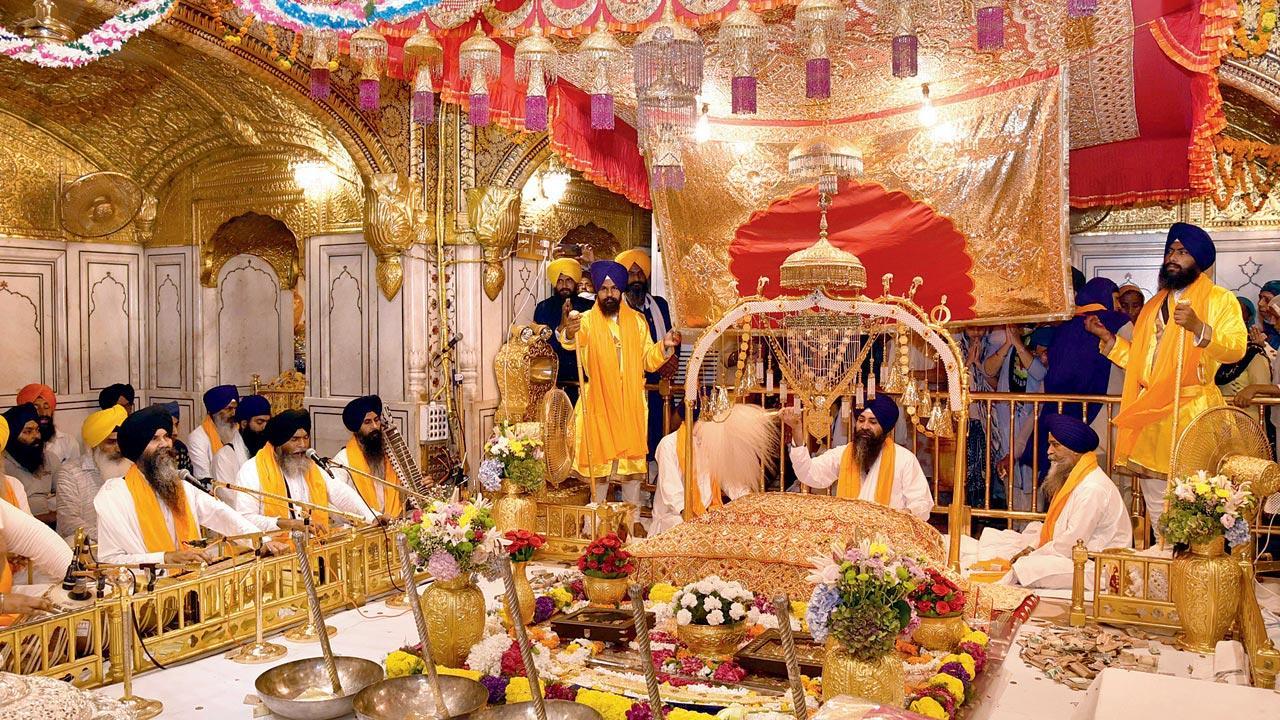
While the Akal Takht wants the harmonium banished from the Golden Temple and replaced with traditional kirtan string instruments, the Shiromani Gurdwara Parbandhak Committee feels this is easier said than done. Pic/Getty Images
When the music for Ashutosh Gowarikar’s Jodha Akbar was launched, this writer wondered why Madras Mozart AR Rahman had opened the first track, Khwaja mere khwaja with bars of the harmonium; he could’ve used any instrument in the world he fancied.
The harmonium was invented and patented by Alexandre Debain of France way back in the 1840s. A staple in church music, far larger and heavier than we know it today. Multiple interventions over the years made it more compact, allowing it to enter homes in India during the colonial rule. Back then, it had foot-operated bellows unlike the ones you see now at the rear of the instrument. It became popular in India and in Indian classical music only after musician Dwarkanath Ghose, who ran an instrument manufacturing unit, created a smaller version in 1875 with the hand-operated bellows and the addition of drone knobs that would help produce Indian classical harmonies.
Trending Stories
Latest Photos
Latest Videos
Latest Web Stories
ADVERTISEMENT

Ganeshotsav 2026

ADVERTISEMENT